
2026-09-01
Q: What is liquid fertilizer? What are its main types?
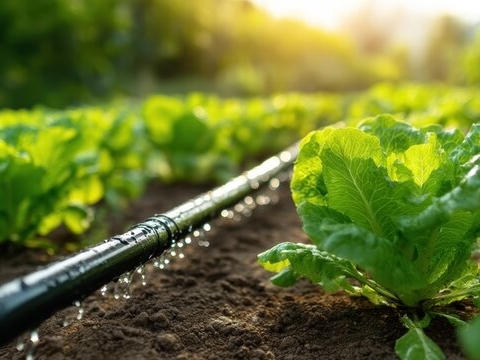
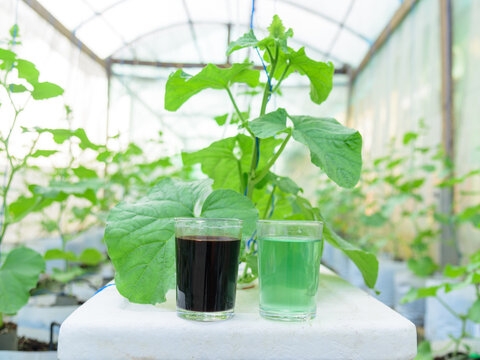
A: Liquid fertilizer (Fluid Fertilizer), also known as fluid fertilizer, refers to a liquid product containing one or more nutrients required by crops. Based on the different effective nutrients in the liquid fertilizer, it can be broadly divided into two categories: liquid nitrogen fertilizer and liquid compound fertilizer. Liquid compound fertilizer can be further divided into two types according to its form: clear liquid fertilizer and suspension fertilizer. Clear liquid fertilizer has completely dissolved nutrients, is clear and transparent, and contains no impurities, making it most suitable for automated irrigation systems and drip irrigation. Suspension fertilizer uses suspending agents (such as bentonite, magnesium silicate, etc.) to suspend tiny particles of nutrients in a saturated solution, resulting in a higher nutrient content. Compared to solid fertilizers, liquid fertilizers do not produce dust or fumes during production, transportation, and application, do not have the problems of moisture absorption and clumping, and allow for more precise fertilization.
Q: What is the production process of liquid fertilizer?
A: Liquid fertilizer production eliminates the need for evaporation and drying, simplifying the process and reducing equipment and operating costs. The production process for clear liquid fertilizers generally falls into three categories: cold mixing, hot mixing, and a combination of both. Most clear liquid fertilizers use urea-ammonium nitrate solution, potassium chloride, and ammonium polyphosphate as main raw materials. Taking the cold mixing method as an example: solid raw materials are first metered and added to a reaction vessel, where they are thoroughly mixed and dissolved under stirring and shearing to form a semi-finished liquid fertilizer. This semi-finished product is then pumped to a finished product storage tank for testing. The entire mixing process involves virtually no heat of reaction. Suspension fertilizer production requires preparing a urea solution, then using an emulsifier to add ammonium polyphosphate, potassium chloride, and trace elements, along with suspending agents such as bentonite paste. The mixture is then heated and stirred to produce the finished product. Liquid fertilizer products can also be customized by adding micronutrients, pesticides, herbicides, and plant growth promoters, depending on crop characteristics and soil nutrient levels.
Q: What are the technical challenges in the liquid fertilizer filling process?
A: The main challenge in liquid fertilizer filling is the dripping problem after filling. Liquid fertilizers have a certain degree of corrosiveness and viscosity. After filling, a small amount of fertilizer often remains on the inner wall of the filling nozzle (oil nozzle), which will slowly drip under gravity. This dripping fertilizer not only wastes raw materials but also contaminates the filling bottle and processing table, affecting the appearance and hygiene of the finished product. In addition, the foaming property of liquid fertilizers can also cause problems such as foam overflow and inaccurate measurement during the filling process.
Q: How does anti-drip filling technology solve these problems?
A: Modern liquid fertilizer filling equipment has developed a variety of mature anti-drip technologies. Currently, the mainstream anti-drip technologies include the following three categories:
Anti-drip valve technology. A special valve structure is set inside the filling nozzle. During filling, the impact force of the liquid opens the valve core, allowing the fertilizer to flow out normally; after filling stops, the spring or rubber ball quickly returns to its original position, sealing the liquid outlet and fundamentally preventing dripping.
Vacuum back-suction technology. After filling, a vacuum system draws any remaining fertilizer solution from the filling nozzle back into the pipeline, ensuring the nozzle's inner and outer surfaces are clean and residue-free. This technology completely eliminates the problem of dripping oil after filling.
Retractable nozzles and vacuum circuit breakers: During filling, the nozzle extends directly into the container, reducing splashing; after filling, the nozzle retracts, and the vacuum circuit breaker ensures a clean disconnection without dripping.
In practical applications, advanced liquid fertilizer filling machines typically combine these technologies. For example, they use specialized anti-drip nozzles with vacuum back-suction technology, along with intelligent dual-flow rate control—a high flow rate in the early stages of filling to improve efficiency, and a low flow rate in the later stages to prevent overflow. Some high-end equipment is also equipped with servo-driven filling nozzles for precise liquid level control and minimal overflow, and stainless steel drip trays and sealing devices effectively prevent accidental overflow.
Conclusion: Liquid fertilizers, with their advantages of flexible formulation, comprehensive nutrients, rapid effect, and high utilization rate, are deeply integrated with drip irrigation, sprinkler irrigation, and other fertigation technologies. The global liquid fertilizer market is projected to grow from $18.6 billion in 2025 to $31.4 billion in 2034. In this rapidly growing sector, meticulous control at every stage, from precise hot and cold mixing processes to reliable anti-drip filling technology, determines product quality and a company's competitiveness.
While liquid fertilisers offer rapid nutrient availability and precision application, they are not a standalone solution — modern fertiliser manufacturing increasingly relies on an integrated portfolio that combines liquids with high‑quality solid products. For granulated solid fertilisers, the npk fertilizer production line and npk fertilizer manufacturing process employ the rotary drum granulator for spherical, soluble granules, or the organic fertilizer granulator series (disc, drum, or extrusion) for bio‑enriched products. When dense, slow‑release pellets are required, fertilizer granules compaction technology using a fertilizer compactor applies high pressure to form robust particles without binders. For customised blends, a bulk blending (BB) fertilizer line equipped with a npk blending machine allows flexible mixing of various granular intermediates, while precise npk fertilizer formula processing ensures each batch meets specific crop and soil requirements. The synergy between liquid and solid production lines enables manufacturers to offer a complete nutrient portfolio — fast‑acting liquids for fertigation, controlled‑release granules for base fertilisation, and blended products for targeted applications. Moreover, the same quality control principles applied in liquid filling — anti‑drip, precise metering, and contamination prevention — are equally critical in granulation, blending, and packaging lines. Ultimately, a well‑designed fertiliser plant that masters both liquid and solid technologies can adapt to diverse market demands, improve resource efficiency, and deliver superior agronomic outcomes, positioning itself as a leader in the evolving global fertiliser industry.