.jpg)
.jpg)
Equipment Introduction
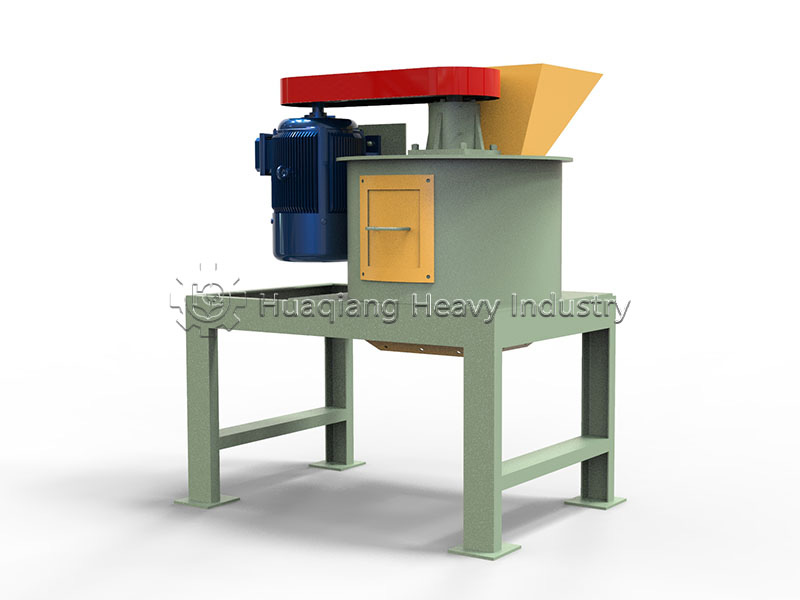
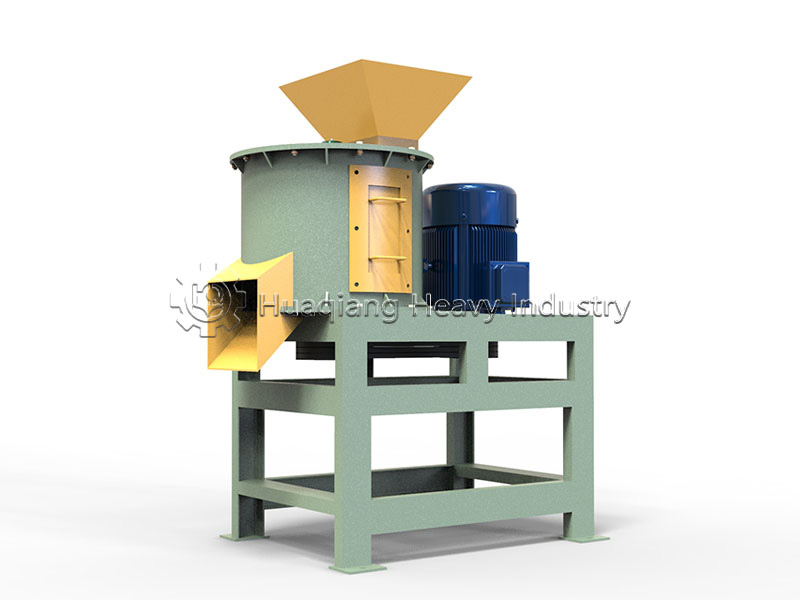
A straw crusher is an agricultural processing machine used to crush crop straw and other biomass materials. This equipment can crush corn stalks, straw, peanut shells, bean stalks, and other agricultural waste stalks, transforming agricultural waste that might otherwise be burned into reusable resources, protecting the environment and effectively developing renewable energy.
Straw crushers can be equipped with electric motors, diesel engines, or 30-50 horsepower tractors. They feature a reasonable structure, easy mobility, automatic feeding, and reliable safety. This reliable and simple-to-operate equipment is an important tool for agricultural production and waste resource utilization.
In terms of crushing methods, straw crushers are mainly divided into two categories: hammer mill crushers and blade crushers. Hammer mill crushers can achieve a crushing ratio of 10-25 or even 50, suitable for users who require a high crushing ratio and uniform particle size; blade crushers are more suitable for scenarios requiring rapid and large-scale straw processing.
Equipment Structure
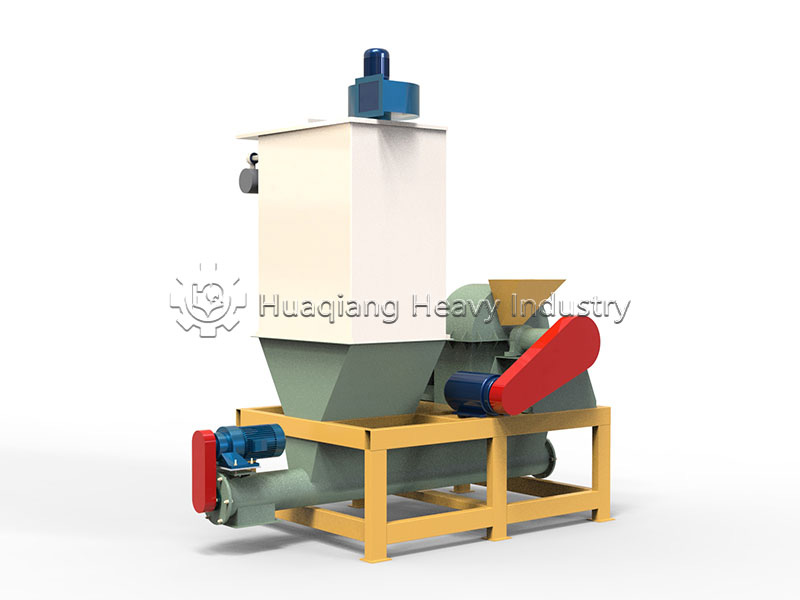
The straw crusher mainly consists of the following five systems:
| System | Components | Function Description |
|---|---|---|
| Feeding Mechanism | Feeding table, upper & lower rollers, fixed blades, fixed blade support base | Uniformly send stalks into crushing chamber, including tangential feeding, axial feeding and radial feeding types. |
| Cutting & Throwing Mechanism | Moving blades, cutter disc, locking bolts, hammer blades | Cut, impact and grind stalks; it is the core working assembly. |
| Grinding Chamber | Cutting blades, hammer blades, toothed plates, screen mesh | Materials are continuously crushed by high-speed rotating hammer blades and friction with toothed plates inside the chamber. |
| Transmission Mechanism | V-belt, transmission shaft, gears, universal joint | Transmit power from motor to main shaft to drive cutter disc and hammer blades rotating at high speed. |
| Auxiliary Mechanism | Walking wheels (base casters), protective cover, frame, fan, centrifugal discharging device | Support the whole machine, ensure operation safety, convey and collect crushed materials. |
Key Component Descriptions:
Hammer/Blade: Made of high-quality alloy steel (e.g., 65Mn), quenched to a surface hardness of HRC48–56 and a core hardness of HRC33–40. Double-sided blades with a lifespan of 500–1000 hours, and can be repeatedly re-grinded.
Screen: Located at the bottom of the crushing chamber, controlling the output particle size. The aperture can be changed as needed (commonly 1–50mm).
Fan and Centrifugal Discharger: The fan generates negative pressure to suck away the crushed material, which is then collected and discharged via a cyclone separator.
Applications of the Equipment
Straw crushers have a wide range of applications, spanning multiple industries:
1. Feed Processing: Crushed straw can be used in livestock farms to make silage, ammoniation, micro-silage, or pellets. The processed forage is soft, finely ground, and palatable, improving the feed intake and digestibility of ruminants such as cattle and sheep. Suitable for large, medium, and small-scale farms and family farms.
2. Organic Fertilizer Production: Straw crushers are core equipment in organic fertilizer production lines, chopping and crushing straw, branches, and other organic fertilizer raw materials. The crushed straw powder is uniform in texture, fluffy, and fine, and can be mixed with livestock and poultry manure for fermentation to produce organic fertilizer.
3. Biomass Energy: Crushed straw can be processed into energy-saving and environmentally friendly pellet fuel by a briquetting machine for use in power plants. It can also be used in straw power generation and ethanol refining.
4. Industrial Raw Materials: It can be used in the paper, engineered wood, and particleboard industries.
5. Edible Fungus Cultivation: Crushed corn cobs and other raw materials can be used for cultivating edible fungi such as oyster mushrooms. 6. Other Industries: Straw crushers are also widely used in the chemical, building materials, pharmaceutical, health care, and mosquito coil industries. The crushing range includes sawdust, shavings, branches, wood chips, and various agricultural crop straws.
The equipment's raw materials mainly cover all agricultural crop residues:
1. Cereal straw: Corn stalks, rice straw, wheat straw.
2. Cash crop straw: Cotton stalks, tobacco stalks, soybean stalks, chili seedlings.
3. Forestry waste: Branches, bark, weeds, etc.
Equipment Operation and Maintenance Methods
(I) Installation and Debugging
Installation Location: The crusher should be fixed on a cement floor. If the work location needs to be frequently changed, the crusher and motor should be installed on a base made of angle steel.
Installation Inspection: After installation, check the tightness of each component, the belt tension, and whether the motor shaft and crusher shaft are parallel.
Pre-start Inspection: Before starting, manually rotate the wheels to check if the operation is normal, whether there is any collision inside the casing, whether the rotation direction of the wheels is consistent with the direction indicated by the arrow on the machine, and whether the motor and crusher are well lubricated.
No-load Test Run: After starting, run the machine idle for 2-3 minutes (or perform a dynamic no-load test run for 3-5 minutes). Only begin feeding materials after confirming there are no abnormalities.
(II) Operating Procedures
Uniform Feeding: Feed materials evenly to prevent blockage and stalling. Do not operate under overload for extended periods.
Material Inspection: Carefully inspect the materials to prevent metal, stones, or other hard objects from entering the crushing chamber and causing accidents. Safe Operation: Operators should not wear gloves. When feeding material, stand to the side of the crusher to prevent injury from rebounding debris. Do not grip long stalks too tightly. If blockage or overload occurs, stop the machine immediately. Never force material feeding with a wooden stick or your hands.
Abnormal Handling: If abnormal noise, excessively high bearing or machine body temperature, or material spraying outwards are detected, stop the machine immediately for inspection and troubleshooting. If vibration or abnormal noise is detected, immediately disconnect the power and stop the machine for inspection.
Shutting Down Operation: Before stopping the machine, stop feeding material and wait until all material is removed from the machine before disconnecting the power. Never stop the machine with material inside.
(III) Maintenance and Care Points
Daily Inspection: Clean the machine promptly after each workday and check for loose screws and wear on easily damaged parts. After approximately 10 days of operation, open the cover and inspect the rotor, hammers, and other moving parts.
Lubrication and Maintenance: Bearings require regular lubrication with grease. After 300 hours of operation, the bearings of the crusher must be cleaned and the oil changed. The bearing should be filled with oil to about 1/3 of its clearance, and no more than 1/2. When the crusher is to be idle for an extended period, the belt should be removed.
Hammer Maintenance: Regularly check the wear of the hammers. Replace severely worn hammers symmetrically. The weight difference between symmetrical hammers should be less than 5 grams.
Motor Maintenance: Regularly check the heat dissipation around the motor. Clean any blockages in the motor cover's ventilation openings promptly. Check for aging wiring connections.
Transmission System: Regularly check and adjust belt tension. The length difference between V-belts in the same group should be controlled within 5 mm.
Common Equipment Problems and Solutions
| Fault Category | Fault Phenomenon | Root Cause | Solution |
|---|---|---|---|
| Crushing Quality Problem | Poor crushing quality | Forward speed too fast | Use 3rd gear of tractor |
| Machine height from ground is improper | Adjust the hole position of ground support leg or adjust pull rod length | ||
| Poor crushing quality | Low rotor speed | Adjust speed by changing V-belt transmission ratio; recommended rotor speed:1800–2000 rpm | |
| Hammer blades & cutting blades worn, V-belt aging | Tension or replace V-belts and blades timely | ||
| Abnormal Vibration | Severe machine vibration | Misalignment between motor rotor and crusher rotor | Shift motor left/right; add gaskets under motor base |
| Crusher rotor misalignment | Add copper shims at bearing base; install adjustable iron wedges under bearing support | ||
| Uneven weight & inconsistent wear of hammer blades | Match hammer blade sets; weight difference of symmetric blades less than 5g | ||
| Anchor bolts loose or uneven foundation | Tighten anchor bolts evenly; install shock absorbers between foundation and crusher | ||
| Broken hammer blades or hard foreign materials inside crusher | Inspect regularly; replace worn blades in symmetric pairs | ||
| Blade falling off | Blade loss | Supplement new blades promptly | |
| Bearing Fault | Overheated bearing | Insufficient lubricant or grease failure | Refill lubricating grease timely |
| Over-tight V-belt | Replace V-belts with proper length | ||
| Damaged bearing | Replace bearing immediately | ||
| Abnormal bearing temperature | Transmission shaft torsion interference | Check & calibrate transmission shaft to eliminate torsion friction | |
| Blockage Fault | Crusher blockage | Fast feeding speed, excessive load | Reduce feeding quantity; install feeder to control feeding rate |
| Blockage at outlet pipe or mismatched conveying equipment | Clear discharge opening; replace matched conveyor equipment | ||
| Cracked & aged hammer blades | Replace cracked and heavily aged hammer blades regularly | ||
| Screen mesh blocked or broken | Inspect screen mesh periodically | ||
| Blockage | Excessive material moisture | Control material moisture; dry materials before crushing | |
| Transmission Belt Fault | Severe V-belt wear | Different lengths of V-belts | Replace timely; length difference within 5mm for one set |
| Uneven tension | Adjust tension bracket to keep pulley vertical | ||
| Drive pulley & driven pulley misaligned | Install adjusting gaskets beside driving pulley |
Applications of the Equipment in Production Lines
In biomass pellet production lines, straw crushers are typically used in the "coarse crushing" stage. The process is: straw baler → straw crusher → dryer → fine crusher → pelletizer.
1. Application in Organic Fertilizer Production Lines
Straw crushers are the core front-end equipment in straw organic fertilizer production lines. Straw organic fertilizer production lines are customized to address the characteristics of straw: high fiber content, difficulty in composting, and easy agglomeration.
Complete Processing Flow:
Straw and other agricultural waste → Straw crusher for fine processing → High-temperature sterilization → Constant-temperature fermentation → Room-temperature maturation → Organic fertilizer production
In organic fertilizer production lines, straw crushers serve as supporting equipment for fermentation. By finely crushing raw materials such as straw, they effectively shorten the fermentation time. The crushed agricultural plant debris has a uniform texture, is fluffy and delicate, and is easy to mix with livestock and poultry manure and other materials for fermentation.
2. Application in Feed Processing
Straw crushers can be used in feed production to make silage, ammonified feed, micro-silage, or pelleted feed. The processed forage has good palatability, solving the problem of excessive energy expenditure for ruminants such as cattle and sheep during grazing.
3. Application in Biomass Energy
The crushed straw can be processed into pellet fuel for power plants using a briquetting machine, and can also be used in straw power generation, ethanol refining, and other fields.
4. Production Line Capacity
Straw organic fertilizer production lines can be customized with solutions for annual production of 10,000-50,000 tons, suitable for straw recycling companies and small and medium-sized organic fertilizer plants.
Target Users of the Equipment
The main target users of straw crushers include:
1. Feed processing enterprises: to crush straw and process it into roughage or compound feed for cattle and sheep;
2. Livestock farms/farmers: for self-production and self-use, reducing feed costs;
3. Organic fertilizer production enterprises: as front-end crushing equipment in organic fertilizer production lines;
4. Biomass energy enterprises: to provide raw materials for biomass pellet mills and briquetting machines;
5. Edible mushroom cultivation bases: to prepare raw materials for edible mushroom culture media;
6. Wood-based panel/paper mills: to provide wood fiber raw materials;
7. Landscaping/municipal departments: to handle garden pruning waste;
8. Rural cooperatives/family farms: for comprehensive utilization such as straw return to the field and straw charcoal processing.
Straw crushers are key equipment for the resource utilization of agricultural waste. Through a combination of cutting, hammering, and grinding, they efficiently convert various types of straw into feed, fertilizer, fuel, or industrial raw materials. When selecting a model, factors such as raw material characteristics, production capacity requirements, power conditions, and downstream processes should be comprehensively considered. A standardized daily maintenance system should also be established to ensure the long-term stable operation of the equipment.
| Model | Power(kW) | Capacity(t/h) |
| 9Z-0.5 | 3 | 0.5 |
| 9Z-1.2 | 3 | 1.2 |
| 9Z-2.5 | 5.5 | 2.5 |
| 9Z-5.0 | 5.5 | 5 |
| 9Z-8.0 | 7.5 | 8 |
| 9Z-10.0 | 15 | 10 |
| 9Z-12.0 | 18.5 | 12 |
| 9Z-30.0 | 37 | 30 |