
2026-07-08
Answer: Biuret (also known as urea) is a substance with osmotic properties formed by the condensation reaction of urea under high-temperature conditions. In compound fertilizer production, the reaction temperature of mainstream processes such as high-tower granulation, drum granulation, and ammoniation granulation is above 130℃. If the temperature is not properly controlled or the production process fluctuates, urea will condense to form biuret. Biuret can cause toxicity to crops through a chain reaction of "cell dehydration - root inhibition - nutrient absorption obstruction."
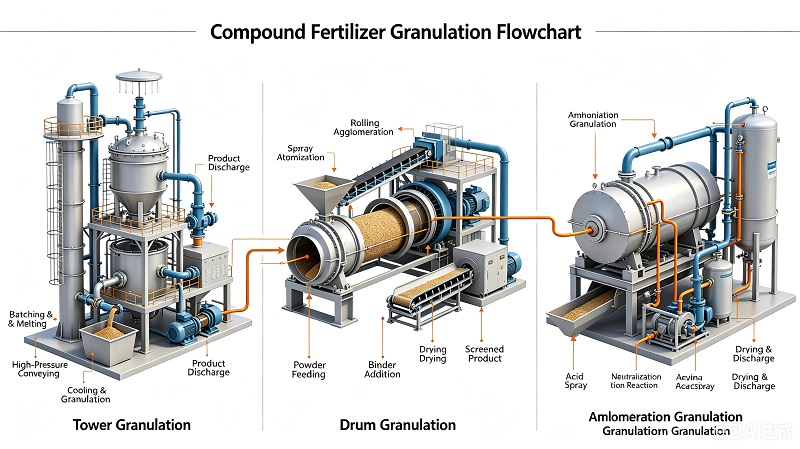
Its core risks are as follows:
1. Cell dehydration and seed germination inhibition: Biuret has osmotic properties and can cause seed cell dehydration after being applied to the soil. When the biuret content in fertilizer exceeds 2%, it will have a significant toxic effect on seeds and seedlings. After entering seeds and seedlings, biuret will denature proteins, directly inhibiting seed germination and seedling growth.
2. Root Damage and Impaired Nutrient Absorption
Biuret inhibits and damages the fine roots of seedlings, and even the fine roots of mature fruit trees are affected. Studies have shown that when the concentration of biuret in the soil reaches 60 mg/kg, root activity is significantly reduced, and root length and root surface area are noticeably decreased. Excessively high concentrations can also cause salt damage, leading to root burn and rot. After root damage, the crop's ability to absorb fertilizer nutrients decreases.
3. Hazard Classification and Application Contraindications for Different Biuret Contents
The degree of harm and application contraindications increase progressively according to the biuret content:
Content < 0.5%: Safe range, can be applied normally.
Content > 0.5%: Not suitable for foliar application.
Content > 1%: Cannot be used as seed fertilizer, seedling fertilizer, or foliar fertilizer.
Content > 2%: Toxic to crop seeds and seedlings; excessively high concentrations can cause root burn and rot.
4. [Production Recommendations] How to Reduce Biuret Risk Through Process Control?
As a fertilizer production equipment manufacturer, we recommend the following control measures in compound fertilizer production lines:
Precise Temperature Control:Employ a low-temperature melting process, completing melting at 104℃~114℃, or control the urea solution temperature at 80~90℃ during tower conveying to reduce biuret formation.
Shorten High-Temperature Residence Time:Optimize the process flow, shortening the conveying distance and residence time of molten urea in the high-temperature section, effectively controlling the biuret content in the product to below 1.2%.
If you still have any questions about fertilizer production equipment or would like to learn more about customized solutions, please contact us immediately. Whether it's equipment selection and quotation, installation, commissioning and operation training, or later maintenance and process upgrades, we can provide you with professional and timely answers and support to help your project be implemented efficiently.