
Equipment Overview
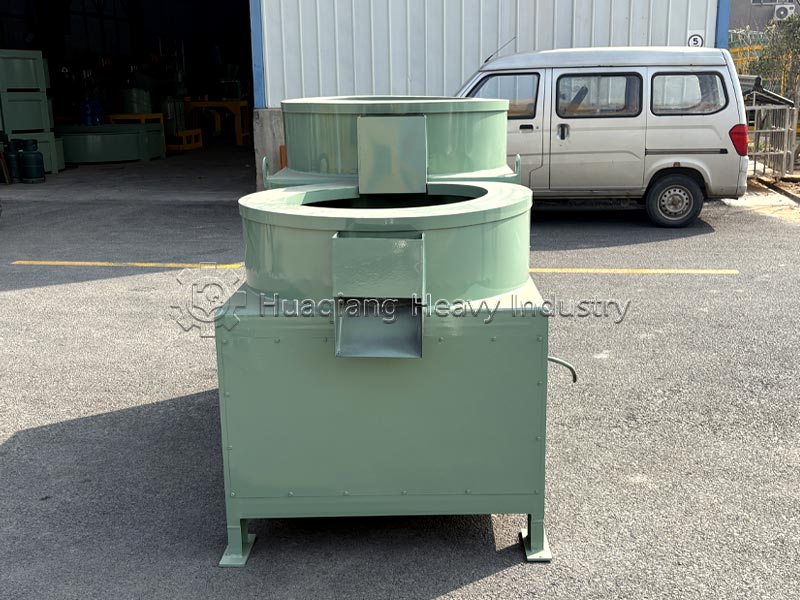
A ball-shaping machine, also known as a fertilizer polisher, spherical shaping machine, or granulation shaping machine, is a key post-processing piece of equipment in organic fertilizer and compound fertilizer production lines. This equipment is primarily used to shape irregular, rough-surfaced, and angular granules produced in the preceding granulation process into smooth, uniform, and highly spherical granules through mechanical friction and rolling grinding. This series of ball-shaping machines achieves a granulation rate of over 95%. The motor uses a flexible belt drive, ensuring smooth start-up, reducing impact force, and effectively extending the equipment's service life. The polishing disc undergoes special processing, making it sturdy, durable, and deformation-resistant; the base design is robust, allowing for production without anchor bolts.
The ball-shaping machine is a specialized piece of equipment for rounding and polishing cylindrical granules with good plasticity produced from extrusion granulators. Its core function is to transform granules of varying shapes and sizes after granulation into high-sphericity, high-commercial-quality end products through physical polishing.
A ball-shaping machine, commonly known as an "organic fertilizer ball-shaping machine" or "shaping machine" in the field of organic fertilizer and compound fertilizer production, is a key piece of equipment used after the granulation process to process columnar, flaky, or irregular granules into uniform spherical granules through centrifugal force and friction.
Structural Components of the Equipment
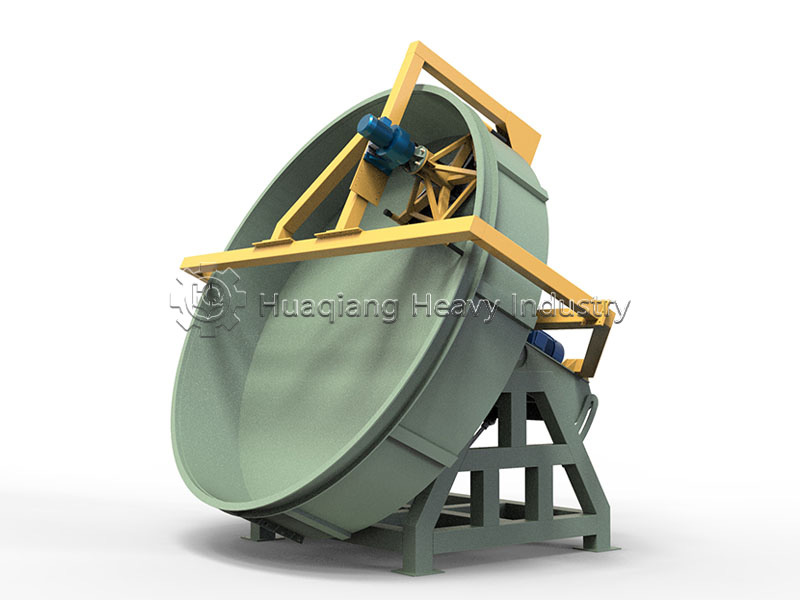
The machine can be divided into five main parts:
1. Frame Section
Since the entire machine's transmission and rotating parts are supported by the frame, it experiences significant stress. Therefore, the frame is constructed from high-quality carbon channel steel and has undergone rigorous quality certification and specific technical requirements to ensure the machine's stability and load-bearing capacity.
2. Adjustment Section
An adjuster is located at the outlet of the granulation disc to adjust the outlet size and obtain satisfactory particle size to meet different production needs.
3. Transmission Section
The transmission section is crucial to the entire machine. The motors mounted on the transmission adjustment frame are all ISO/9001 quality system certified, inspection-free products, ensuring reliable quality. The motor drives the pulleys and V-belts to drive the disc, facilitating maintenance and featuring a reasonable design. The main motor drives the pulleys and belts, transmitting power to the large pulley, which is fixed to the main shaft. The disc is concentrically fixed via a coupling.
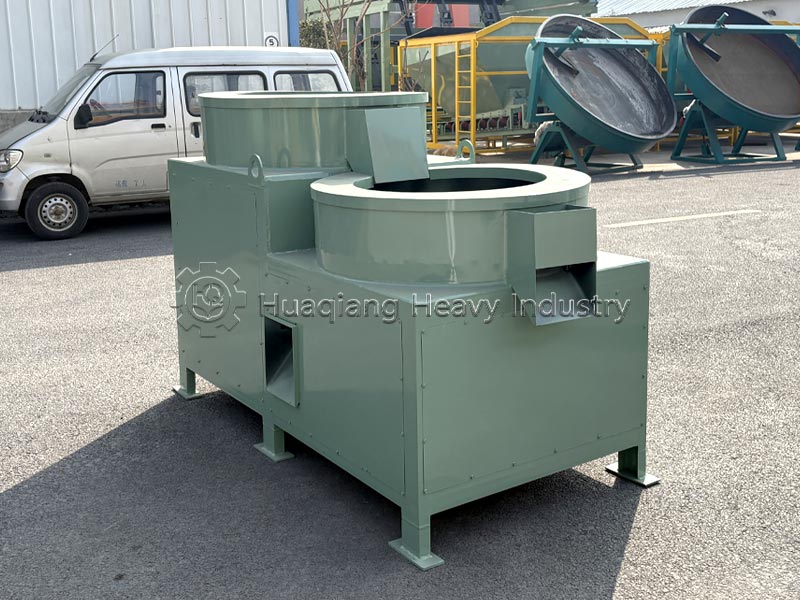
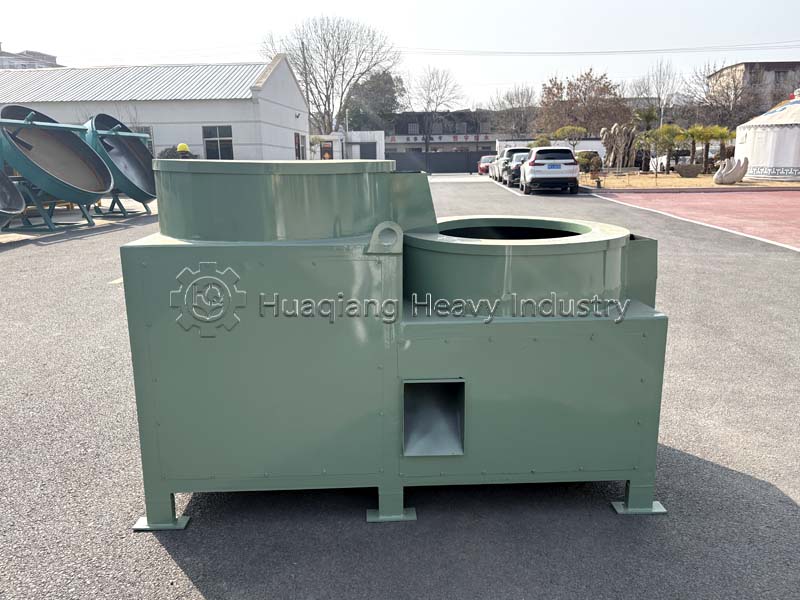
4. Automatic Cleaning Section: This section, installed below the large disc, is equipped with an automatic cleaning plate. It removes material adhering to the bottom of the disc during production, significantly extending equipment lifespan and saving labor. According to industry data, polishing machines typically consist of two or more polishing cylinders arranged in series. The material is centrifugally polished multiple times before being discharged from the outlet, with the roundness gradually improving.
5. Polishing Disc Section: The disc undergoes specialized processing for durability. The large disc is rigidly connected to the main shaft via a flange, with its outer edge contacting the inner wall of the cylinder. A discharge chute is located on one side of the cylinder, through which the shaped particles are discharged.
Equipment Working Principle
The working principle of the rounding machine is to use centrifugal force and friction to shape and polish particles. The specific process is as follows:
First Stage – Material Input and Centrifugal Acceleration: The main motor drives the pulley and belt, which transmits power to the large wheel, which in turn drives the main shaft to rotate the disc at high speed. After the material enters the rounding disc, it rotates at high speed within the disc under the influence of centrifugal force.
Second Stage – Rounding and Polishing: The columnar particles rotate along with the rounding disc under the action of friction. Since the rounding cylinder is stationary, the columnar material inside the cylinder, under the action of centrifugal force, reciprocates along the edge of the rounding disc and the inner wall of the rounding cylinder in a twisting motion. Under the combined action of centrifugal force, friction, and gravity, the particles continuously roll, collide, and rub against the cylinder wall, gradually smoothing out their edges. Friction between the particles and the sidewalls makes the particles smoother in appearance, increases their strength, and reduces surface moisture.
Third Stage – Continuous Discharge: When the continuous feed reaches the discharge port height of the rounding disc, the material automatically enters the next rounding disc. After undergoing the same motion of multiple polishing discs, the columnar material gradually transforms into uniform, shiny, round particles.
Fourth Stage – Screening: The formed particles are screened using grading screens. Qualified particles proceed to the subsequent drying process, while unqualified particles are returned to the hopper for re-polishing.
For multi-stage polishing machines (two-stage or three-stage), two or three polishing cylinders are arranged sequentially. After multiple polishing processes, the material is discharged from the discharge port. The finished particles are uniform in size, high in density, and round and smooth. A small amount of powder falls through the gaps at the edge of the discs and flows out along the waste outlet.
Product Advantages
1. High Pelletizing Rate and Beautiful Granules
The finished product yield reaches 95%-98%. The finished granules are uniform in size, high in density, and round and smooth. Granule roundness can be improved by 30%-50%.
2. High Output and Flexible Process Arrangement
It can be used simultaneously with one or more granulators, solving the drawbacks of the past where each granulator required a separate pelletizing machine, such as complex processes, high equipment investment, and inconsistent product quality from multiple machines.
3. Continuous Operation and High Efficiency
The new pelletizing machine achieves continuous feeding and discharging, unlike older equipment that requires batch feeding. It can maintain continuous operation for extended periods.
4. Simple Structure and Convenient Operation and Maintenance
Aesthetically pleasing, with a simple structure and working principle, safe and reliable, small in size, and lightweight. It can be operated simply by following the instruction manual.
5. Energy Saving and Consumption Reduction
Low power consumption, low electricity usage, low production costs, and high economic benefits. Energy consumption can be reduced by more than 25% compared to traditional shaping equipment. 6. Strong Overload Resistance: Strong overload resistance, adaptable to various working environments.
7. Small Footprint: Compact design, requiring only 2-5 square meters of space.
8. Robust and Durable: The polishing disc undergoes processing, making it robust, durable, and resistant to deformation. The sturdy base design eliminates the need for anchor bolts for immediate production.
Common Equipment Problems and Solutions
| Fault Phenomenon | Possible Causes | Solutions |
|---|---|---|
| Poor pellet rounding effect (rough surface, low sphericity) | Improper moisture content; mismatched rotation speed; insufficient rounding time | Adjust moisture content to proper range; optimize rotation speed (150-300rpm); extend rounding duration |
| Pellet agglomeration & caking | Excessively high moisture content; material sticking to the inner wall of rounding tray | Reduce moisture content; clean the rounding tray; apply anti-stick coating |
| Oversmall pellets or excessive powder | Too low moisture content; excessively high rotation speed | Increase moisture content; appropriately lower rotation speed |
| Excessive equipment vibration | Loose parts; friction between rotating tray and cylinder; belt slipping | Check and fasten all bolts; inspect clearance between rotating tray and cylinder; adjust belt tension |
| Abnormal noise | Worn bearings; damaged components | Shut down the machine for inspection immediately; replace damaged parts |
| Reduced output | Uneven feeding; changed material properties; worn equipment components | Inspect feeding system; adjust process parameters; check and replace wearing parts |
Equipment Application in Production Line
In a complete fertilizer production line, the rounding machine is typically located after the granulator and before or after the dryer (depending on the process):
Typical Process Flow:
Raw material pretreatment → Fermentation → Crushing → Batching → Mixing → Granulation → Rounding and Shaping → Drying → Cooling → Sieving → Coating → Packaging
Key Roles in the Production Line:
Improving Product Appearance: Makes the granule surface smooth and round, increasing commercial value.
Increasing Granule Strength: Through friction compaction, the granules become denser and harder.
Reducing Powdering Rate: Reduces breakage and dust during subsequent transportation and storage.
Improving Storage Performance: Rounded granules have good air permeability and are less prone to moisture absorption and clumping.
Saving Drying Energy: The polishing process can slightly reduce the surface moisture of the granules.
Granulation Process of the Equipment
The rounding machine itself does not directly participate in "granulation" (i.e., the formation from powder to granules), but rather shapes and polishes existing granules. Its process characteristics include:
Wet Polishing: Used in conjunction with a spraying device, water is sprayed appropriately during polishing to assist in surface finishing of the granules.
Dry Polishing: No water is sprayed; shaping is achieved solely through mechanical friction, suitable for granules with low moisture content.
Multi-stage Polishing: Rounding is gradually improved through 2-3 stages of series polishing, achieving a sphericity rate of 95%-98%.
Continuous Operation: Can be seamlessly integrated with the front-end granulator and the back-end dryer to achieve continuous production.
Key Process Parameter Control Points:
1. Disc Rotation Speed: Directly affects the polishing effect and residence time of the granules.
2. Feeding Speed: Determines the throughput and polishing quality.
3. Spray Volume: Affects the surface humidity and adhesion of the granules.
4. Discharge Port Opening: Controls the residence time of the material in the disc.
| Fertilizer Granules Ball Shaping Machine | ||||
| Model | Diameter (mm) |
Motor Power (Kw) |
Capacity (t/h) |
Outside Dimension (mm) |
| PY800-1 | 800 | 4 | 1-1.5 | 970*1050*1000 |
| PY800-2 | 800 | 4+4 | 1-1.5 | 1800*1050*1300 |
| PY1000-1 | 1000 | 5.5 | 1.5-2.5 | 1150*1050*1000 |
| PY1000-2 | 1000 | 5.5+5.5 | 1.5-2.5 | 2150*1050*1300 |
| PY1000-3 | 1000 | 5.5+5.5+5.5 | 1.5-2.5 | 3150*1050*1600 |
| PY1200-2 | 1200 | 7.5+7.5 | 2.5-3.5 | 2700*1260*1470 |
| PY1200-3 | 1200 | 7.5+7.5+7.5 | 2.5-3.5 | 3800*1260*1780 |
| PY1500-2 | 1500 | 11+11 | 3.5-4.5 | 3380*1700*1920 |
| PY1500-3 | 1500 | 11+11+11 | 3.5-4.5 | 4920*1700*2320 |