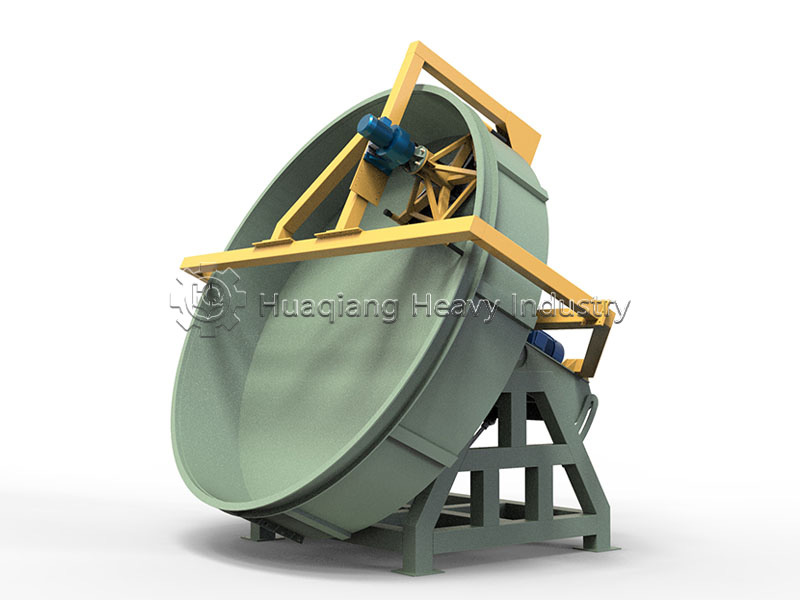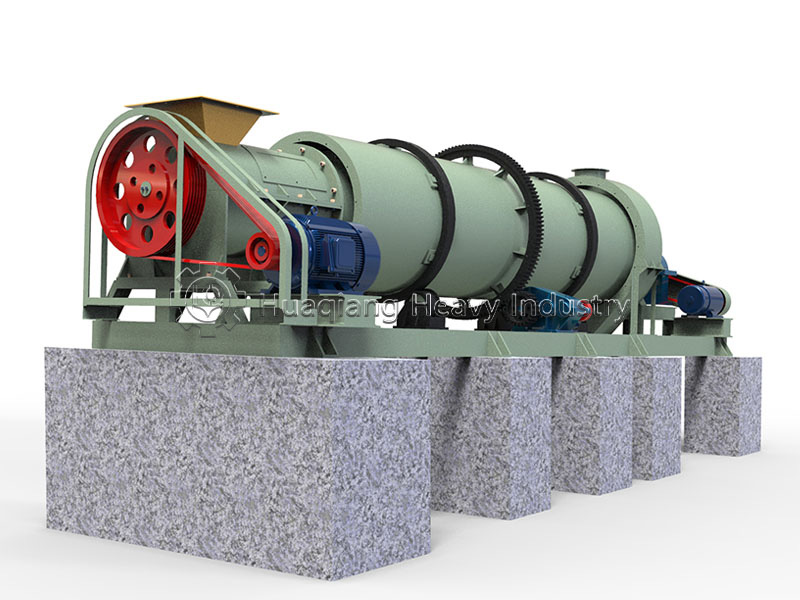
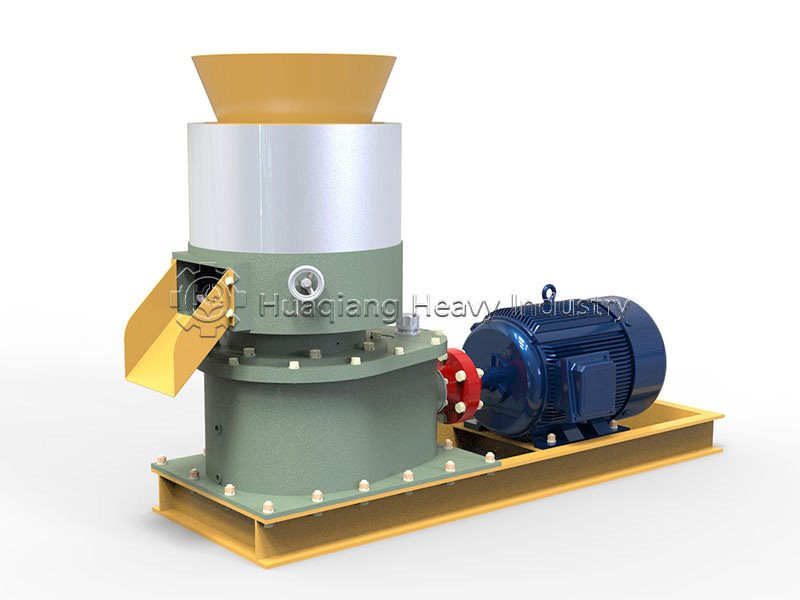
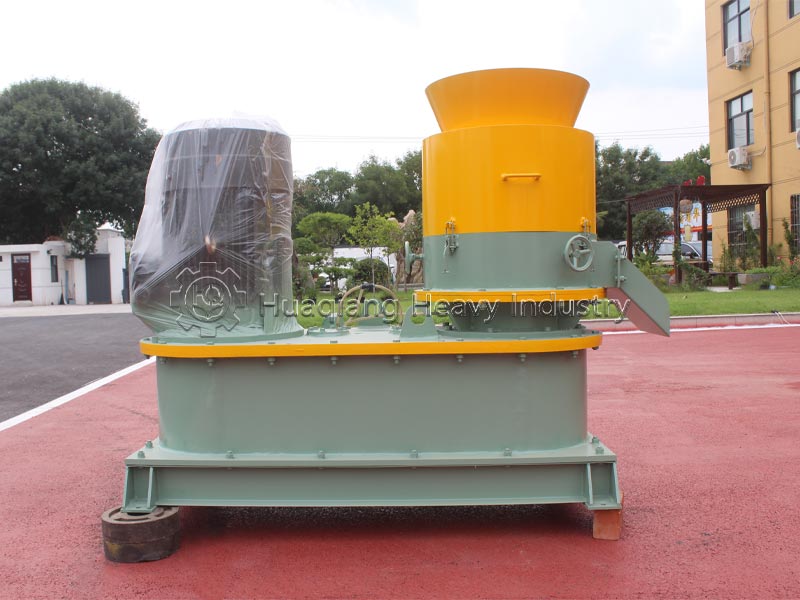
Equipment Introduction
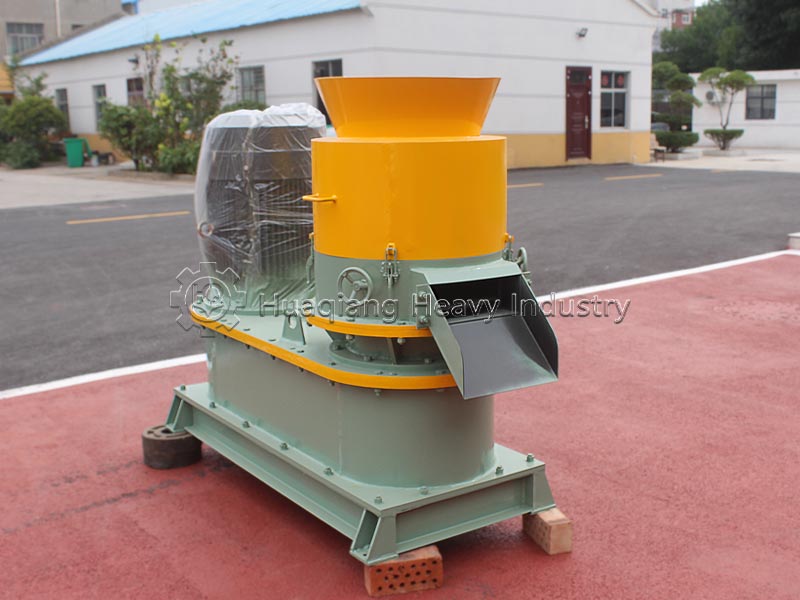
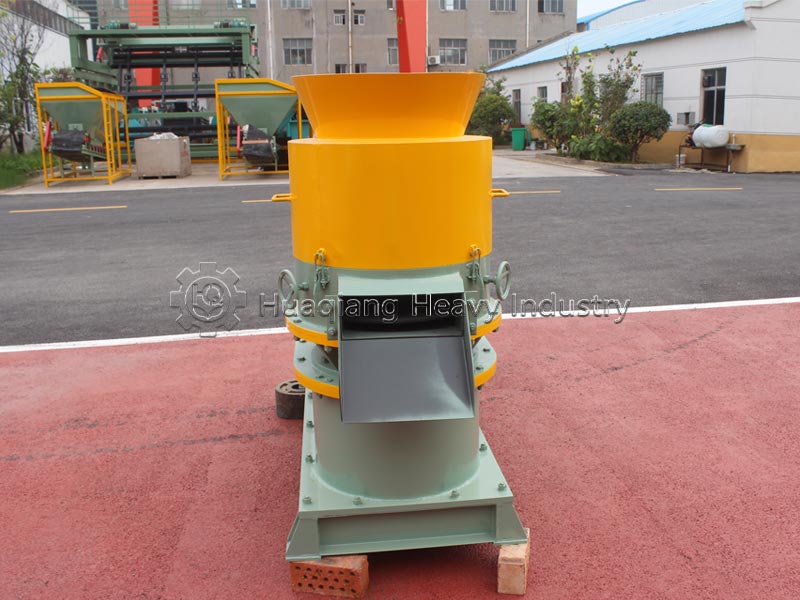
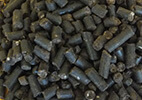
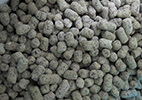
A flat die pelleting machine is a mechanical extrusion molding device with a horizontally placed circular flat die and a cylindrical press roller as its core working components. Essentially, it applies extrusion pressure to the material on the surface of the flat die during the rotation of the press roller, forcing the material into the die holes. After pressure holding and shaping within the die holes, the material is extruded to form cylindrical granules with a certain density and strength. This equipment adopts a conical wheel flat die structure and a screw center pressure adjustment mechanism, which can adapt to the pressing requirements of different materials by adjusting the die gap. The core press roller assembly adopts a multi-uniformly distributed structure, possessing the characteristics of pressure resistance, wear resistance, and stable operation. The flat die pelleting machine can produce cylindrical granules with a diameter of Φ1.5-Φ50mm, with a low temperature rise during processing (<30℃), which can better preserve the internal nutrients of the raw material. Flat die pelleting machines can be divided into three types according to the movement state of the working components: moving roller type (press roller rotates actively, flat die is fixed), moving mode type (flat die rotates actively, press roller rotates passively), and double-moving die and roller type (both rotate actively). Both moving-roller and double-moving die-roller types are commonly found in small-scale equipment, while moving-roller types are generally used in larger models.
Flat die pellet mills are characterized by low investment costs, wide applicability, simple operation, and low energy consumption, making them the preferred pelleting equipment for small and medium-sized organic fertilizer plants, feed processing plants, and biomass fuel enterprises.
Equipment Structure Composition
The flat die pelleting machine mainly consists of the following components:
| Component | Function Description |
|---|---|
| Hopper | Receive raw materials and ensure continuous feeding supply |
| Feeding System | Adopt screw conveying or gravity feeding to control feeding rate |
| Flat Die | Circular flat mold with multiple die holes, the core forming component |
| Press Rollers | 2-4 cylindrical or tapered rollers that roll and extrude materials on the die surface |
| Main Shaft | Transmit power and drive the rotation of flat die or press rollers |
| Gearbox | Reduce motor speed and output sufficient torque |
| Cutter | Installed under the flat die, cutting extruded strip pellets to target length |
| Discharge Scraper | Convey finished pellets out from the discharge outlet |
| Power Unit (Motor / Diesel Engine) | Provide power source, common power range: 7.5–55 kW |
| Frame | Support the whole machine and maintain equipment stability |
| Control Cabinet | Integrate functions of start, stop, speed regulation, current and voltage monitoring |
The flat die is typically made of high-quality alloy steel, which undergoes heat treatment to improve its hardness and wear resistance. Common die hole diameters are 2.5 mm, 4 mm, 6 mm, and 8 mm, and can be changed according to product requirements. The pressure roller surface is grooved to enhance its gripping ability on materials.
Applications of the Equipment
The flat die pelleting machine has an extremely wide range of applications, spanning multiple industries:
1. Fertilizer Industry: Primarily used for the production of columnar granules for (biological) organic fertilizers, compound fertilizers, and bio-fertilizers. Particularly suitable for granulating organic materials with high crude fiber content.
2. Feed Processing Industry: Produces various livestock and poultry feed pellets (chicken, duck, pig, sheep, cattle, rabbit, fish, etc.). Can also be used for granulating soybean cake, hay, etc.
3. Biomass Energy Industry: Processes biomass fuel pellets such as sawdust, branches, straw, rice husks, peanut shells, and stalks.
4. Chemical and Environmental Protection Industry: Processes powdery materials such as tobacco dust, tea dust, coal powder, silicon-calcium fertilizer, ore powder, and sodium sulfate; also processes municipal solid waste and factory waste.
5. Other Fields: Also applicable to the pharmaceutical and food industries.
Applicable Raw Materials
The flat die pelleting machine can process the following types of raw materials:
| Raw Material Category | Specific Raw Materials | Pretreatment Requirements |
|---|---|---|
| Grain Materials | Corn, Wheat, Soybean Meal, Wheat Bran | Pulverize to 2–3 mm |
| Straw Materials | Corn Straw, Wheat Straw, Rice Straw | Shred or crush to 3–5 cm |
| Sawdust & Wood Shavings | Sawdust, Wood Shavings, Wood Powder | Moisture content <20%, particle size <3 mm |
| Livestock Manure | Chicken Manure, Pig Manure, Cow Manure | Fully fermented and ripened, dry to moisture content <20% |
| Peat & Humic Materials | Peat Moss, Humic Acid, Turf | Pulverize and adjust moisture content |
| Additives | Minerals, Vitamins, Binders | Mix evenly |
Moisture content of raw materials is a key parameter. Too low a moisture content makes pellet formation difficult and results in a high pulverization rate; too high a moisture content leads to loose pellets, easy mold growth, and easy blockage of the die orifices. Generally, it should be controlled at 10–18%. The particle size of the raw material should be less than 1/3 to 1/2 of the die orifice diameter. Raw materials with high fiber content (such as straw) need to be properly crushed, as excessively long fibers are prone to tangling around the pressure rollers.
Working Principle of the Equipment
The flat die pelleting machine works on the principle of die roller extrusion molding. The entire process can be divided into the following stages:
Stage 1: Uniform Material Distribution
Material enters from the feed hopper and falls onto the flat die under gravity. The distributor and scraper evenly distribute the material on the die surface.
Stage 2: Extrusion Molding
The motor drives the main shaft through a reducer, causing the pressure rollers to move in a circular motion on the flat die (moving roller type), or rotating the flat die while the pressure rollers remain stationary (moving mode). The rotating pressure rollers continuously roll over the material layer, forcibly squeezing the material into the die holes. The material is subjected to high pressure at the front of the die hole, undergoing compression and molding.
Stage 3: Shape Retention and Shaping
The preliminarily shaped material enters the shape retention section of the die hole. In this section, residual stress that is detrimental to shape retention is eliminated, and the granules are finally shaped.
Stage 4: Cutting and Discharge
The formed cylindrical material is extruded from the lower end of the die hole and cut into granules of a certain length by a rotating cutter. Finally, it is discharged from the machine by a sweeping plate or a discharge disc. The length of the columnar particles can be controlled by adjusting the cutter.
Granulation Process of the Equipment
Flat die granulation belongs to the dry extrusion granulation process. The core process parameters and control points are as follows:
1. Process Principle: The material is subjected to high pressure between the pressure roller and the flat die, forced through the die holes on the flat die to form granules. After undergoing compression, shaping, and shaping processes within the die holes, it is cut into granules by a cutter.
2. Key Process Parameters
Gap between pressure roller and flat die: Ideal gap 0.1-0.3mm
Material moisture content: Organic fertilizer 28%-35%, biomass fuel 12%-18%
Feed particle size: 2-5mm
Working pressure: 8-12MPa
Spindle speed: Approx. 60rpm, pressure roller linear speed approx. 2.5m/s
3. Process Characteristics
Low-temperature granulation: Low temperature rise during processing <30℃, preserving the activity of heat-sensitive materials
One-time forming: No drying required, dry in, dry out
High granulation rate: One-time granulation rate reaches over 90%, pelletizing rate >95%
No return material: No need for screening and return material
High particle strength: Compressive strength greater than 8N
Wide particle diameter range: Adjustable from Φ1.5-Φ50mm
Applications in Production Lines
Flat die pellet mills are typically used as the core molding equipment in a production line. A typical production line configuration is as follows:
| Process Step | Equipment | Description |
|---|---|---|
| Raw Material Receiving & Storage | Raw Material Silo | Ensure continuous feeding supply |
| Pretreatment | Crusher / Pulverizer / Screener | Bring raw material particle size and moisture up to standard requirements |
| Batching & Proportioning | Automatic Batching Scale | Accurately weigh each component according to the formula |
| Mixing | Mixer | Blend all components uniformly |
| Conditioning (Optional) | Conditioner | Add steam or water to adjust material state |
| Pelletizing | Flat-die Pellet Machine | Core forming process |
| Cooling | Cooler / Counter-flow Cooler | Cool pellets to room temperature and reduce moisture to safe storage level |
| Sieving & Grading | Vibrating Screen / Drum Sieve | Separate qualified finished pellets, oversized lumps and fine powder |
| Packaging | Automatic Packaging Machine | Weighing and filling finished products |
In feed production lines, flat die pellet mills are often used in conjunction with conditioners. The conditioner softens the material through steam heating, improving pelleting quality and production efficiency. In biomass pellet production lines, conditioners are typically not used; the material relies on its own frictional heat to soften and bind. In organic fertilizer production lines, raw materials usually have a high moisture content and must be dried to a suitable range before entering the pellet mill.
Matching the capacity of the flat die pelleting machine with upstream and downstream equipment is crucial. The upstream mixer's capacity should be slightly greater than the pellet mill's, and the downstream cooler's capacity should be slightly greater than or equal to the pellet mill's to avoid bottlenecks.
Equipment problems and solutions
| Common Problems | Possible Causes | Solutions |
|---|---|---|
| No pellets output or low pellet output | Too high >30% or too low moisture content; uneven raw material particle size >5 mm; excessive gap between press roller and flat die >1 mm; blocked die holes | Adjust moisture content to 20%-25%; sieve out large impurities; calibrate the gap to 0.3-0.5 mm; clear blocked die holes |
| Loose and fragile pellets | Insufficient roller pressure (normal working pressure: 8-12 MPa); excessively high crude fiber proportion >60%; worn inner wall of die holes | Adjust spring compression or hydraulic system pressure; add sticky binders; replace a new flat die |
| Blocked die holes | Excessively high material moisture; poor finish of die holes; no cleaning after shutdown | Manually clear holes with drill bits slightly smaller than die holes after shutdown; reverse flush with high-pressure water gun; soak in 50°C hot water for 1 hour |
| Rough pellet surface | Low moisture content; severely worn flat die, insufficient die thickness | Increase material moisture; replace a new flat die |
| Low production output | Poor finish of new die holes on first use; improper moisture content; excessive roller-die gap; slipping or aging V-belt | Grind and lubricate die holes with oil abrasive; adjust moisture content; calibrate the gap; replace or tension the V-belt |
| Uneven pellet cutting length | Worn cutter; improper cutter position | Replace the cutter (recommended replacement every 500 working hours); adjust the gap between cutter and flat die to 0.5-1 mm |
Flat die pelleting machines, with their unique advantages such as simple structure, low investment cost, strong raw material adaptability, low-temperature extrusion, and one-time molding, have become core equipment for small-scale production in the three major fields of organic fertilizer, feed, and biomass fuel. Their core technology lies in the extrusion action of pressure rollers and a flat die, which forces materials through die holes to form cylindrical granules. The equipment is simple to operate, requiring only ordinary workers and no specialized technicians; it also boasts low operating costs and convenient maintenance.
We have been deeply involved in the fertilizer equipment field for many years, offering comprehensive services including process design, equipment manufacturing, installation, commissioning, and after-sales maintenance for various production lines of organic fertilizer, compound fertilizer, BB fertilizer (blended fertilizer), and bio-fertilizer.
| Model | KP-210 | KP-260 | KP-400 | KP-500 |
| Capacity (t/h) | 0.2-0.3 | 0.4-0.5 | 1-1.2 | 2-5 |
| Pelleting Rate (%) | >95% | >95% | >95% | >95% |
| Rotation Speed(r/min) | 370 | 260 | 260 | 125 |
| Power(Kw) | 7.5 | 11 | 30 | 55 |