
2026-09-22
Poor granulation formation, low pelletizing rate, and easy breakage are the three most common pain points in fertilizer granulation. These not only reduce output and increase rework, but also directly affect the appearance and market price of the finished product. To avoid these pitfalls, a systematic investigation must be conducted from five dimensions: raw materials, moisture content, equipment parameters, binders, and drying and cooling. Regardless of whether a fertilizer granulator machine, rotary drum granulator, or disc granulator machine is used, the core logic remains the same: to ensure that the powder is uniformly pelletized under optimal conditions and achieves sufficient strength.
I. Raw Material Moisture Content is the First Hurdle for Pelletizing Excessive moisture content results in excessively sticky material, easily forming large lumps and clogging the screen; insufficient moisture content prevents effective agglomeration, causing a sharp drop in pelletizing rate. Disc granulation and rotary drum granulation typically require a moisture content of 25%–35%, while roller extrusion granulation needs to be controlled at 2%–4%. The fertilizer granules compaction process is particularly sensitive; moisture content exceeding 5% can clog the die orifices. It is recommended to check the material moisture content every 2 hours, and adjust immediately if the fluctuation exceeds ±1.5%.

II. Equipment parameters determine pelletizing rate.
For disc granulator machines, the recommended tilt angle is 40°–50°, and the rotation speed is 50%–60% of the critical speed. Water spray must be atomized; direct water jets are strictly prohibited. For rotary drum granulators, the drum rotation speed, residence time, and steam addition amount must be controlled to avoid excessive pellet enlargement or breakage. In NPK fertilizer production lines, the granulator must be matched with the screening and return systems, and the return material ratio must be stable at 20%–30% to maintain uniform particle size.
III. Binders and formulation affect pellet strength.
In the NPK fertilizer manufacturing process, the critical relative humidity decreases after urea and potassium chloride are mixed, making the material prone to hygroscopic agglomeration. Strict control of drying temperature and final moisture content is necessary. For organic fertilizer granulation, organic fertilizer granulator series can be used, and pelletizing rate can be improved by adding humic acid, bentonite, or starch-based binders. The formula should have a reasonable balance of fine powder and coarse particles to avoid excessively fine particles that result in loose granules.
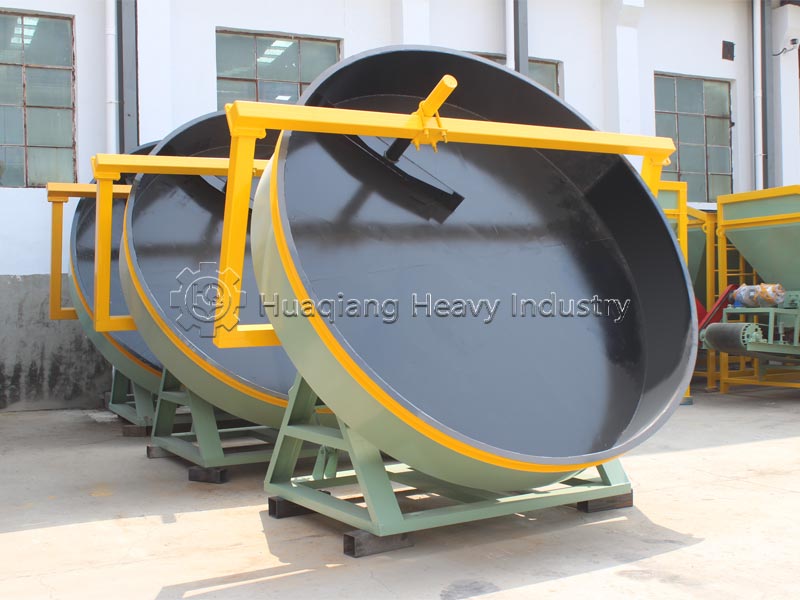
IV. Improper drying and cooling can lead to breakage. Freshly formed granules have high moisture content and low strength. If the drying temperature is too high or cooling is insufficient, internal stress will form in the granules, making them extremely prone to breakage during transportation. The recommended drying temperature for organic fertilizer is no more than 80℃, and for compound fertilizer, it should be controlled at 70–90℃. After cooling, the granule temperature should be reduced to below 40℃.
V. Avoidance measures: Test moisture content before adjusting the equipment; ensure water spraying is atomized; match the disc tilt angle and rotation speed; control the residence time of the drum; strictly control moisture during roller extrusion; add binder according to the formula; avoid rapid drying and cooling; maintain stable sieved return material. When selecting a model, prioritize manufacturers that can provide complete fertilizer granulator machine line solutions. Conduct small-scale trials based on the characteristics of the raw materials to fundamentally solve the problems of poor granule formation, low pelleting rate, and easy breakage.