
2026-08-25
Driven by both agricultural waste resource utilization and green agriculture, commercial organic fertilizer production lines are upgrading from simple composting workshops to standardized, large-scale industrial manufacturing systems. The core task of a complete commercial organic fertilizer production line is to process organic waste such as livestock and poultry manure and crop straw into commercial organic fertilizer that meets national standards through systematic physical and biological transformation. Understanding the overall picture of this production line is the first step for investors and practitioners to make scientific decisions.
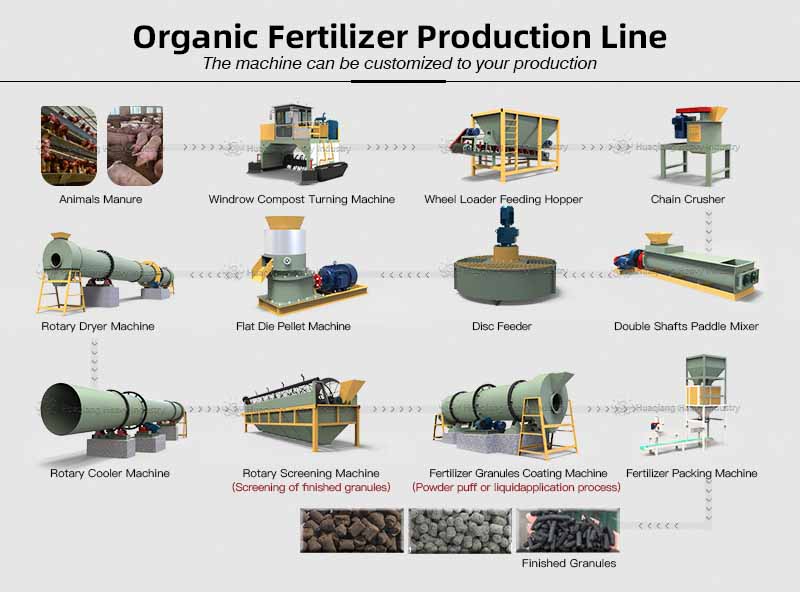
I. Standard Technological Flow of the Production Line A typical commercial organic fertilizer production line follows the basic logic of "raw material pretreatment → aerobic fermentation → deep processing granulation → finished product packaging." Specifically, raw materials (such as chicken manure, pig manure, and cow manure) first enter the pretreatment stage. After mixing and moisture adjustment, they enter the fermentation system for high-temperature microbial composting. The semi-finished product after fermentation and composting is screened, crushed, and then enters the granulation system. The granulated material undergoes drying, cooling, and screening processes, and finally, after metering and sealing, the finished product is stored in the warehouse. The complete set of equipment mainly consists of a fermentation system, a granulation system, a drying and cooling system, a deodorization and dust removal system, and a finished product packaging system.
II. Core Equipment Configuration
At the equipment level, a complete commercial organic fertilizer production line uses crushers, mixers, and granulators as core equipment, equipped with auxiliary devices such as screening, fermentation, and drying systems. The fermentation system is the "first workshop" of the entire production line, equipped with a feeding conveyor, a mixer, a dedicated compost turner, an oxygen supply system, and an automatic control system. For processing high-moisture, viscous materials (such as bacterial residue and distiller's grains), the production line needs to be equipped with a dedicated semi-wet material crusher and a horizontal mixer.
In the granulation stage, depending on the product positioning, different types of equipment such as disc granulators, drum granulators, or extrusion granulators can be selected. The drying and cooling stages are usually completed by a rotary dryer and a cooler working together. The screening process uses a drum screen to classify the granules. The finished product packaging stage is equipped with an automatic quantitative packaging scale and a conveyor and sewing system. Seamless material connection between the various process equipment is achieved through belt conveyors and bucket elevators.
III. Production Capacity and Configuration Plan The construction scale of commercial organic fertilizer production lines is typically 10,000 to 50,000 tons per year. Small new plants are best suited for 10,000 tons (1.4 tons/hour) or 20,000 tons (2.8 tons/hour) per year, medium-sized plants for 30,000 to 50,000 tons per year, and large plants for 50,000 to 200,000 tons per year. Specific configurations require comprehensive consideration of multiple factors, including raw material resource characteristics, local soil conditions, planting structure and main crop varieties, plant site conditions, and the degree of automation.
With increasingly intelligent and energy-efficient equipment technology, commercial organic fertilizer production lines are evolving towards higher levels of automation. From fermentation and turning to automatic batching, from granulation and molding to finished product packaging, full-process mechanization and automation are becoming industry standards. For investors, choosing a commercial organic fertilizer production line that matches their raw material characteristics, production capacity targets, and market positioning is a key starting point for achieving efficient operation and sustainable development.
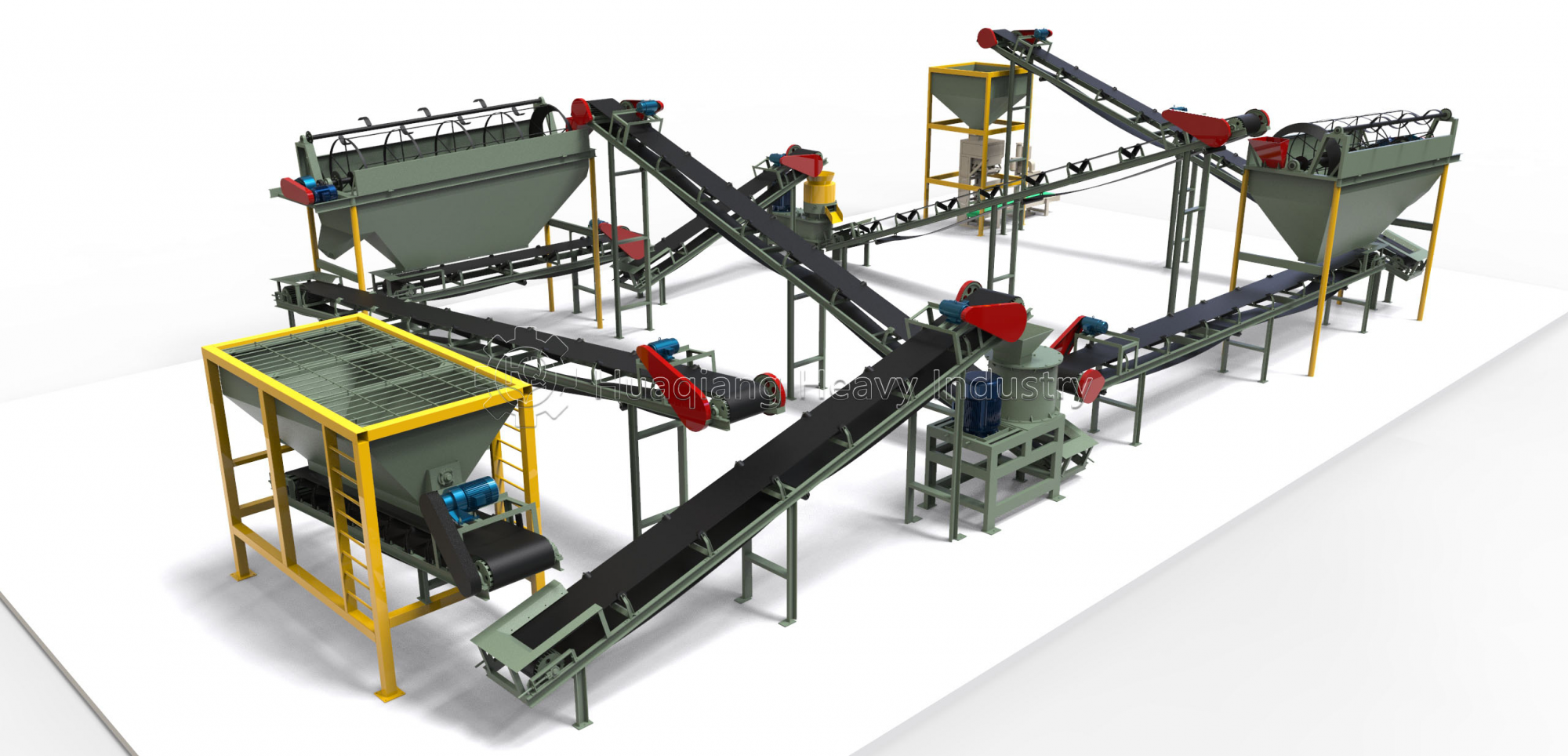
The journey from raw organic waste to market‑ready fertiliser is a finely orchestrated sequence of biological and mechanical transformations, and the choice of granulation technology ultimately defines product quality and production economics. After the organic fertilizer fermentation process — where temperature, oxygen, and moisture are carefully controlled to achieve pathogen‑free, stabilised humus — the matured material enters the granulation stage, which is the heart of any bio organic fertilizer production line. Here, the organic fertilizer granulator series offers multiple pathways: the organic fertilizer disc granulation production line provides gentle, low‑temperature shaping ideal for preserving beneficial microbes, while the rotary drum granulator delivers high throughput and robust granules for large‑scale operations. For producers targeting dense, slow‑release products, fertilizer granules compaction technology — using a fertilizer compactor or fertilizer compaction machine — applies mechanical pressure to form strong, uniform pellets without the need for binders, significantly reducing dust and improving handling. These granulation options, combined with advanced fertilizer production machine technology, enable precise control over particle size, hardness, and disintegration rate, ensuring that the final organic fertilizer production granulation step delivers consistent, high‑value products tailored to specific crop and soil requirements. Ultimately, a well‑designed commercial line integrates fermentation, crushing, mixing, granulation, drying, screening, and packaging into a seamless, automated flow, where each piece of equipment — from turners to compactors — works in harmony. This holistic approach not only maximises resource efficiency and minimises environmental impact but also empowers producers to adapt to market demands, whether for powdered organic fertiliser, bio‑enriched granules, or compacted slow‑release formulations, making the entire system a cornerstone of sustainable agriculture.