
2026-02-04
Fertilizer caking problems not only plague storage and transportation but also directly affect fertilization efficiency and crop absorption. Modern fertilizer technology, through precise anti-caking and coating techniques, allows fertilizer granules to both "breathe freely" and "release intelligently." The core of these technologies lies in understanding and controlling the physicochemical interactions between fertilizer granules and the environment.
Caking Mechanism: From Microscopic Physicochemical Processes to Macroscopic Agglomeration Phenomena
Fertilizer caking is essentially the result of changes in the interaction forces between particles, driven primarily by three key factors.
The vicious cycle of hygroscopicity-dissolution-recrystallization is the primary mechanism of caking. Most chemical fertilizers are water-soluble salts. When the relative humidity of the air exceeds their critical relative humidity (CRH), the particle surface begins to absorb moisture and dissolve, forming a thin film of saturated salt solution. For example, urea and ammonium chloride have CRH values of approximately 75% and 79%, respectively, and this process is easily initiated in humid environments. As environmental humidity fluctuates, these salt solutions recrystallize at the particle contact points, forming hard "salt bridges" that firmly bind the particles together.
Plastic deformation and cold welding under storage pressure are also not negligible. In storage, the lower layers of fertilizer bear enormous pressure (up to several tons per square meter). Some fertilizers with lower glass transition temperatures (such as ammonium nitrate) undergo plastic flow, increasing the actual contact area between particles and promoting adhesion. Simultaneously, under prolonged static conditions, molecular diffusion may even occur at the particle contact interface, producing a solid-state bonding similar to "cold welding."
Temperature changes induce physicochemical changes that exacerbate this problem. Diurnal temperature fluctuations cause repeated small expansions and contractions of fertilizer particles. This, on the one hand, compresses the particles, making them tighter, and on the other hand, may induce crystal transformations (such as the crystal transformation of ammonium nitrate near 32°C). The accompanying volume changes can damage the particle structure, producing fine powder, filling voids, and further promoting caking.
Anti-Caking Technologies: Building a Dual Physical and Chemical Barrier
Modern anti-caking technologies aim to interrupt the caking chain at its source, mainly divided into two categories: internal modification and surface treatment.
Internal conditioning agents are trace substances added during the granulation process. For example, adding approximately 0.2%-0.5% formaldehyde to molten urea can generate a small amount of urea-formaldehyde polymer through copolymerization. These polymers act as an "internal framework" within the urea crystal lattice, significantly enhancing particle strength, reducing hygroscopicity, and inhibiting crystal rearrangement. For compound fertilizers, adding inorganic inert powders (such as diatomaceous earth and kaolin) as separating agents can physically block direct contact between salt particles.
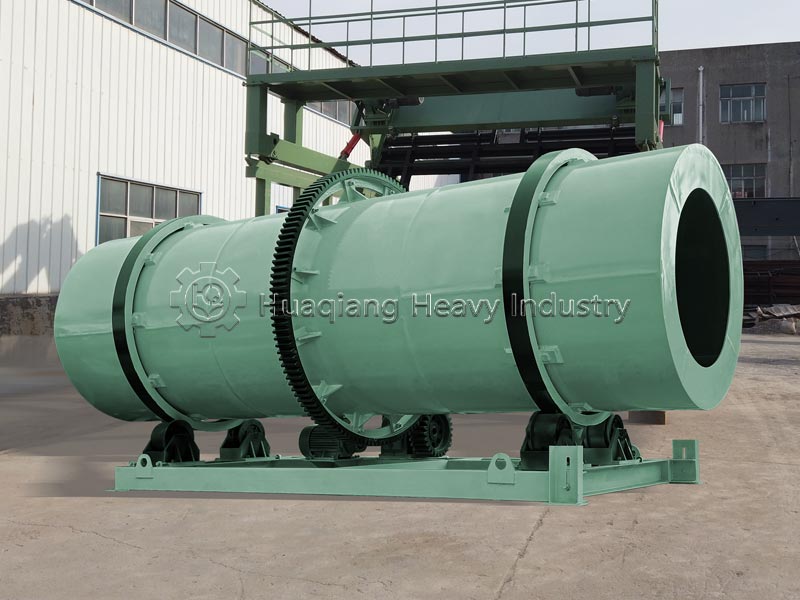
Surface coating treatment is a more common and efficient final line of defense. In a rotary coating machine, screened hot particles (40-60℃) are uniformly sprayed with atomized anti-caking agents. Traditional inert powder coatings (such as talc and silicates) mainly provide physical isolation and moisture absorption. Modern liquid anti-caking agents are complex systems containing multiple active ingredients:
Hydrophobic film-forming agents: Mineral oil, paraffin wax, or polyolefins form a continuous hydrophobic film, blocking water molecules.
Surfactants: Reduce the surface tension of the liquid, ensuring that the solution spreads evenly and coats each particle, even those with irregular surfaces.
Antistatic agents: Reduce electrostatic adsorption caused by friction between particles, maintaining fluidity.
Crystallization inhibitors: Such as certain phosphate esters, which interfere with the salt bridge crystallization process, preventing the formation of strong bridges even if a small amount of moisture penetrates.
A well-designed anti-caking system can control the caking rate of fertilizer to below 5% after six months of storage under standard conditions, ensuring its free flow.
Functionalized coating: A leap from "anti-caking" to "controlled release"
When coating technology upgrades from simple physical protection to a designable nutrient controlled-release system, it gives rise to the high-end category of slow- and controlled-release fertilizers. Its core is to control the diffusion rate of water entry and nutrient dissolution through the coating layer.
Diffusion-controlled type is the most common physical barrier type. Taking polymer-coated urea as an example, its coating is a dense polymer film (such as polyurethane, polyolefin). Nutrient release is divided into three stages: water permeates through the coating into the core; urea dissolves, generating internal pressure; and the nutrient solution diffuses to the outside through micropores or by osmotic pressure. The release period (e.g., 90 days, 120 days) can be "programmed" by precisely controlling the coating material, thickness, and number of micropores. For example, using fluidized bed coating technology, the urea nutrient core is suspended in hot air while multiple layers of polymer solution are sprayed, resulting in a product with a uniform coating and precise release curve.
Reaction-controlled release relies on the chemical or biological degradation of the coating material. Sulfur-coated urea (SCU) is a classic example. Its release mechanism is complex and orderly: first, water in the soil penetrates through the microcracks in the coating; then, microorganisms begin to oxidize the sulfur layer, producing sulfuric acid, which further expands the coating channels; finally, the internal urea dissolves and is released through these enlarged channels. Therefore, the release rate of SCU is affected by soil temperature, microbial activity, and coating thickness, and is more closely matched to the growth curves of many crops.
In addition, matrix-composite technology uniformly disperses fertilizer nutrients in a hydrophobic polymer matrix (such as natural rubber or asphalt mixtures), controlling release through the swelling and erosion of the matrix. Even more advanced are stimulus-responsive smart coatings, whose release can respond to specific soil pH, enzyme activity, or temperature changes, achieving true on-demand supply.
Technological Value and Agricultural Benefits
The benefits of advanced coating technology are revolutionary. At the agronomic level, it increases nitrogen fertilizer utilization from the traditional 30%-40% to over 60%, meaning that 30%-50% less nitrogen fertilizer can be used while maintaining yield. This not only reduces farmers' input costs but, more importantly, significantly reduces non-point source pollution and greenhouse gas emissions caused by nitrogen leaching and volatilization.
From an economic and practical perspective, good anti-caking properties ensure that the fertilizer remains loose throughout the entire chain from factory to application, facilitating precise mechanical application and preventing equipment blockage. The slow-release characteristics reduce the number of fertilizations, saving labor, and are particularly suitable for large-scale farms, orchards, and crops that are difficult to fertilize repeatedly.
From anti-caking to controlled release, coating technology upgrades fertilizer from a simple nutrient carrier to an intelligent system that can interact with the environment and provide nutrients on demand. This technology is undergoing rapid development, with the emergence of new materials (such as biodegradable polymers) and new processes (such as nanolayer self-assembly) constantly expanding its performance boundaries and application scenarios, providing crucial technological support for the development of resource-efficient and environmentally friendly modern agriculture.
The effectiveness of anti-caking and coating technologies is intrinsically linked to the quality of the initial granules produced. This begins with robust fertilizer granulation processes. For NPK fertilizers, the npk manufacturing process often utilizes a roller press granulator production line where a fertilizer compactor achieves dry fertilizer granules compaction. Alternatively, a rotary drum granulator can be used for agglomeration. For organic fertilizers, the process starts with the organic fertilizer fermentation process, efficiently managed by equipment like a windrow composting machine, large wheel compost turning machine, or a chain compost turning machine. These are key equipments required for biofertilizer production. The cured compost is then shaped in an organic fertilizer disc granulation production line, which is part of a comprehensive organic fertilizer manufacturing system. The high-quality, dense granules produced by these various lines—whether through fertilizer compaction or agglomeration—provide the ideal substrate for subsequent anti-caking and controlled-release coating treatments, maximizing the efficacy of the final fertilizer production machine technology.