
2026-05-15
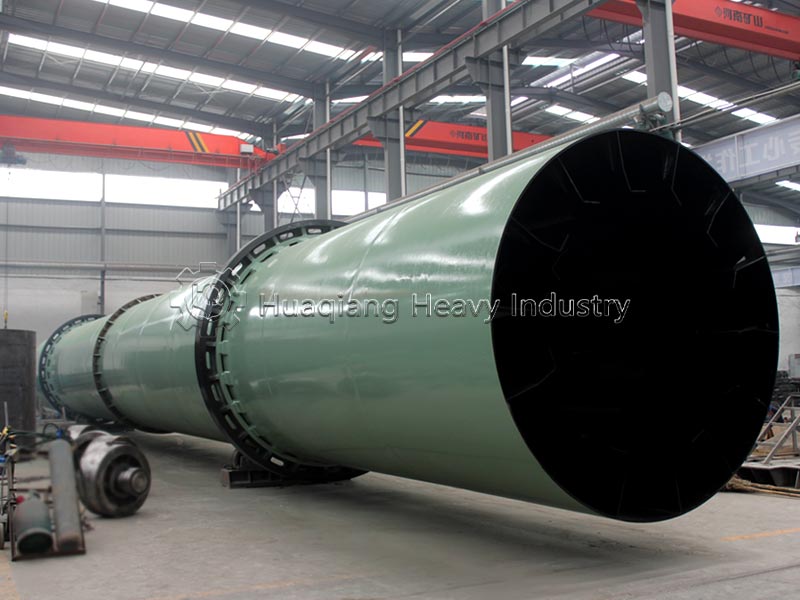
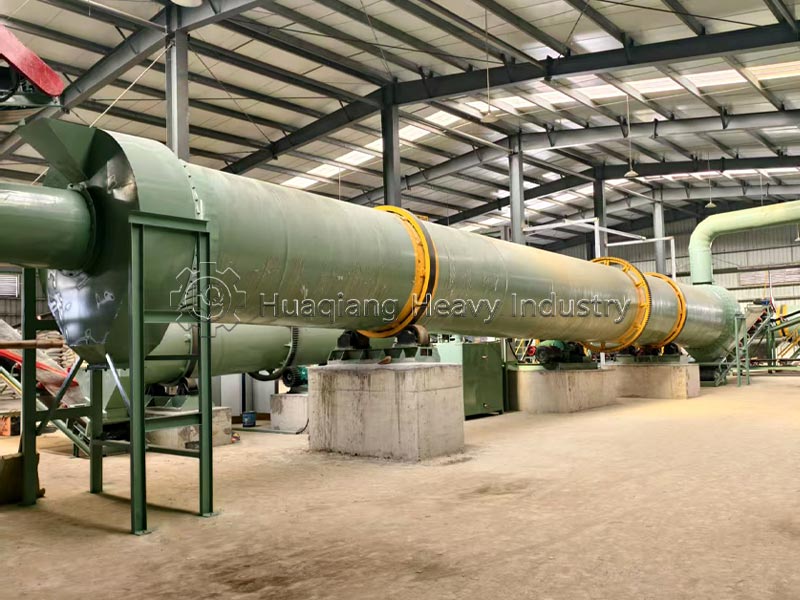
The rotary cooling drum is not merely a mechanical tumbling device—it is a sophisticated counter-flow heat exchanger where convective, conductive, and evaporative heat transfer modes operate in parallel. Optimizing air-to-solids mass flow ratio to 0.25-0.35 kg air per kg product, extending effective residence time by adjusting longitudinal dam height to 12-15% of drum diameter, and installing a chilled air preconditioning coil to maintain inlet air at 10°C dew point can collectively reduce cooler energy consumption by 30% while improving final granule cooling uniformity by ±2°C. This integrated thermal optimization simultaneously prevents the crystal bridge formation responsible for post-storage caking.
The Three-Mode Heat Transfer Reality
A rotary cooler’s performance is often oversimplified to convective cooling, yet thermodynamics inside the rotating shell involve simultaneous conduction through the steel wall, convection from the counter-flowing air stream, and evaporative cooling from residual surface moisture. The dominant mechanism shifts along the drum length: in the first third, evaporative flux from hot granules entering at 80-90°C removes up to 40% of thermal load; in the middle zone, forced convection dominates; and in the final discharge section, wall conduction to the ambient environment plays a measurable role. Ignoring any one mode leads to undersized equipment or excessive energy waste.
Optimization Parameter 1: Air-to-Solids Mass Ratio
Standard cooling drums operate at an air-to-solids mass flow ratio of 0.4-0.6, creating unnecessary fan power consumption and entrainment dust. Reducing this ratio to precisely 0.25-0.35 while increasing air velocity through the annular space maintains the same convective heat transfer coefficient while cutting fan energy by 20-25%. The key is balancing the thermal driving force against the allowable pressure drop across the lifting flights. This fine-tuned ratio directly supports the thermal discipline required for effective anti-caking treatment, which demands granules exit the cooler at a moisture-stable 28-30°C.
Optimization Parameter 2: Residence Time Control via Adjustable Dams
Granule residence time inside the drum is governed by rotational speed, inclination angle, and internal dam height. A fixed dam plate often creates either insufficient cooling (under-sized) or excessive particle attrition (over-sized). Installing a variable-height weir plate adjustable from 10% to 15% of drum diameter allows operators to modulate residence time between 18 and 25 minutes depending on throughput. Particles with the mechanically interlocked morphology produced by a high-pressure roller press granulator specification exhibit lower thermal diffusivity than porous steam granules, requiring the longer end of this residence window for thorough core cooling without surface cracking.
Optimization Parameter 3: Inlet Air Preconditioning
Ambient air humidity determines the evaporative driving force, yet most coolers draw unconditioned plant air. Adding a chilled water coil to precool and dehumidify inlet air drops the dew point from ambient 20-25°C down to 10°C, dramatically increasing the moisture removal gradient. This preconditioning prevents summertime cooling capacity collapse and enables the precise post-cooling moisture control integrated into automated NPK blending systems where nutrient ratio shifts occur without production interruption.
Rotary cooler optimization demands treating the drum as a multi-mode heat exchanger with defined air ratios, tunable residence time, and conditioned air supply. These three adjustments typically deliver a 30% reduction in cooling-specific energy while producing granules that remain free-flowing through extended storage cycles.
Thermal Discipline Across the Granulation Workflow
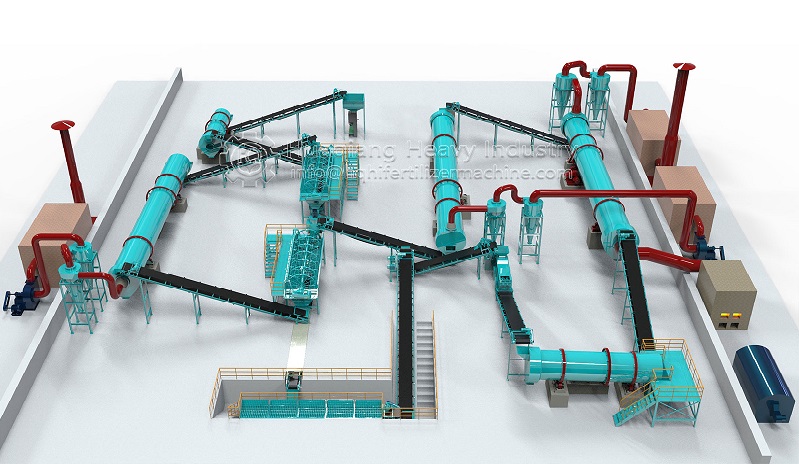
The 30% energy reduction and ±2°C cooling uniformity achieved through optimized rotary cooler operation are not isolated gains—they are the thermal foundation of a resilient npk fertilizer production line. In modern fertilizer production machine technology, the fertilizer cooler machine must be designed as a counter-flow heat exchanger with conditioned air supply, working in precise thermal harmony with the upstream fertilizer dryer machine to ensure granules enter at 80-90°C and exit at moisture-stable 28-30°C. For fertilizer granules compaction workflows, where a fertilizer compactor or rotary drum granulator produces dense, interlocked particles, the cooler's adjustable dam system provides the extended 18-25 minute residence time required for thorough core cooling without surface cracking. An organic fertilizer granulator series handling bio-active formulations demands even stricter thermal discipline, as post-cooling moisture migration directly threatens microbial viability and shelf stability. By treating cooling as an integrated thermal discipline—matching air-to-solids ratios, tuning residence time, and preconditioning inlet air—manufacturers transform the cooler from a passive tumbling device into an active quality gate that prevents crystal bridge formation, eliminates caking complaints, and ensures every bag leaving the line meets the spreading uniformity and storage resilience standards demanded by precision agriculture.
FAQ: Fertilizer Cooling Drum Thermodynamics
Q1: How do I determine if my cooler is operating with insufficient air flow?
Measure the temperature differential between granule inlet and outlet against the air temperature rise. If exit air temperature exceeds granule outlet temperature by more than 15°C, air flow is likely too low. Conversely, if exit air temperature is within 5°C of inlet air, flow is excessive and wasting fan energy.
Q2: Why does summer humidity cause my granules to exit the cooler with higher moisture than winter operation?
The evaporative cooling mechanism depends on the vapor pressure gradient between granule surface and air. High-humidity summer air reduces this gradient, suppressing evaporation. Without inlet air dehumidification, the cooler loses 30-40% of its heat removal capacity precisely when thermal load is highest.
Q3: Can I increase cooling drum throughput without replacing the equipment?
Often yes. Extending residence time by raising the discharge dam, increasing air flow within the fan's safe operating curve, and adding chilled water precooling to the inlet air can collectively boost throughput by 15-20% without modifying the drum shell. Verify structural load ratings and drive motor amperage before implementing.