
2026-04-01
In fertilizer production, the strength and uniformity of granules directly determine the product's performance during transportation, storage, and application. Insufficient strength leads to granule pulverization, causing not only nutrient loss but also uneven fertilization; excessive particle size deviation affects the accuracy of mechanized application. To solve these problems, a deep understanding of the technical logic of the core process of "fertilizer granule compaction" is essential.
Pellet Compaction: A Qualitative Change from Powder to Hard Granules
The compaction of fertilizer granules is essentially the physical force that binds fine powdery raw materials into granules with a certain strength. The core value of this process lies in: increasing granule density, making them less prone to breakage during handling; improving flowability, adapting to automated fertilization equipment; and controlling the nutrient release rate, thereby improving fertilizer utilization.
Different granulation processes correspond to different compaction principles. Double-roller press granulators employ a room-temperature extrusion compaction process: the material is subjected to a high pressure of 10-50 MPa between the two rollers, maximally compressing the voids between particles, increasing density by 1.5-3 times, and producing particles with a compressive strength of 20-30 N. This "dry compaction" method requires no added water or binders, making it particularly suitable for moisture-sensitive raw materials such as ammonium sulfate and potassium chloride. Its typical process flow is: batching → mixing → double-roller compaction → crushing → screening, forming a closed-loop cycle.
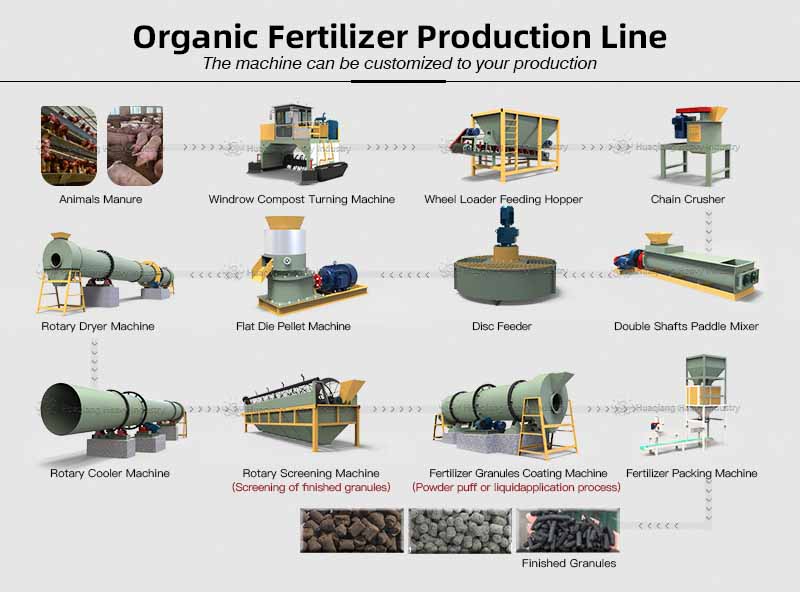
Drum granulators, on the other hand, employ a steam-assisted rolling compaction process. The material rolls into spheres within the rotating drum under the influence of centrifugal force and gravity, while steam conditioning softens the particle surface, gradually densifying the particles during rolling. This "wet rolling compaction" produces particles with high sphericity, but requires a drying process, and the particle compressive strength is typically 10-15 N.
Compaction Process Differences: The Technical Difference Between Dry and Wet Methods
The core difference between the two compaction processes lies in the energy input method. Roller extrusion directly compacts particles using external mechanical force, offering controllable pressure and rapid forming. Drum granulation relies on rolling friction and capillary action between particles, a gentler process but requiring heat assistance. Regarding raw material adaptability: roller extrusion is suitable for dry powders with a moisture content ≤5%, while drum granulation can handle materials with a moisture content of 15%-25%.
Key parameters affecting compaction effectiveness include: roller pressure and gap of the roller extrusion machine—insufficient pressure leads to loose particles, while excessive pressure increases energy consumption; drum speed and tilt angle—excessive speed results in short particle residence time and reduced roundness; and particle size distribution of the raw material—a higher proportion of fine powder leads to tighter particle bonding.
Common compaction problems and solutions: Particle breakage is a common problem in dry granulation. This is often caused by fluctuations in raw material moisture content or unstable roller pressure. Solutions include using a variable frequency pressure regulation system to adjust hydraulic pressure in real time according to material characteristics; and optimizing the roller die surface by using high-hardness alloy materials to improve particle density.
Uneven particle density is often caused by fluctuations in feed. By installing a buffer hopper and a variable frequency feeding screw before the granulator, the continuous and stable entry of material into the roller gap can be ensured, keeping the particle density deviation within ±5%. For drum granulation, installing an online moisture detector and adjusting the steam addition in real time can effectively prevent particle loosening caused by humidity changes.
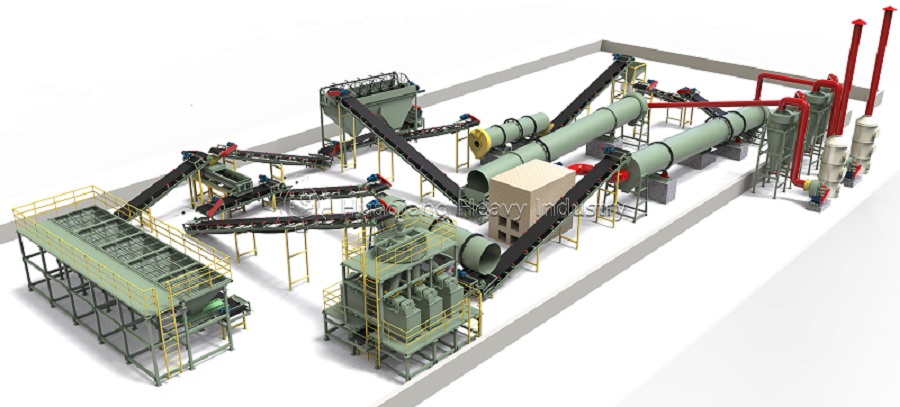
Irregular particle shape is another challenge in the compaction process. The output from the roller mill is flattened spherical, which can be further processed by a subsequent polishing and shaping machine to make the particles closer to a spherical shape, reducing dust generated by edge friction.
From dry extrusion to wet rolling, every breakthrough in fertilizer particle compaction technology has propelled product quality towards higher standards. For production enterprises pursuing particle strength and uniformity, understanding the compaction principle and precisely controlling process parameters are indispensable technological cornerstones for building market competitiveness.
The principles of fertilizer granules compaction are realized through distinct technological pathways, each suited to different scales and product requirements. Drum granulation, using a rotary drum granulator, is a wet compaction process that relies on steam and tumbling action to form spherical granules. It is the workhorse of large-scale npk fertilizer production lines, valued for its high throughput and excellent sphericity. In contrast, dry compaction technologies offer a different value proposition. A fertilizer compactor, such as a double roller press granulator, achieves fertilizer compaction through high mechanical pressure, creating dense, high-strength granules without the need for heat or binders. This method is ideal for moisture-sensitive materials and for producers seeking to minimize energy consumption. For very small-scale or specialty applications, a flat die pelleting machine provides a simple, low-cost entry point into dry compaction. The selection between these technologies is a fundamental strategic decision for any fertilizer manufacturer. It determines not only the physical characteristics of the final product—its density, shape, and strength—but also the energy footprint and operational complexity of the entire production process. Understanding the distinct compaction mechanisms of the rotary drum granulator and the fertilizer compactor is essential for aligning the production line with the specific demands of the target market.