
2026-06-10
In fertilizer production, uneven particle size is a common problem affecting product appearance and market price. Large particles are prone to stratification, while small particles are prone to dusting, not only reducing fertilizer efficiency but also increasing the risk of agglomeration. In fact, the core problem often lies not in the granulation stage, but in whether the grading screen is properly adjusted. This article analyzes how to ensure particle uniformity and proper placement by focusing on three key parameters: screen mesh size, vibration frequency, and return ratio.
I. Screen Mesh Size: The Benchmark for Defining the "Qualified Zone"
Grading screens use different mesh sizes to separate particles into three categories: oversized particles (oversize), qualified particles (middle particle), and fine powder (undersize). Inappropriate mesh size selection is the primary cause of particle inhomogeneity.
Too dense a mesh: Qualified particles are mistakenly sieved as fine powder, reducing the yield rate. A large amount of particles that should have been qualified enters the return system, causing waste.
Too loose a mesh: Larger particles are mixed into the finished product, resulting in an uneven appearance, and these large particles are easily crushed after packaging.
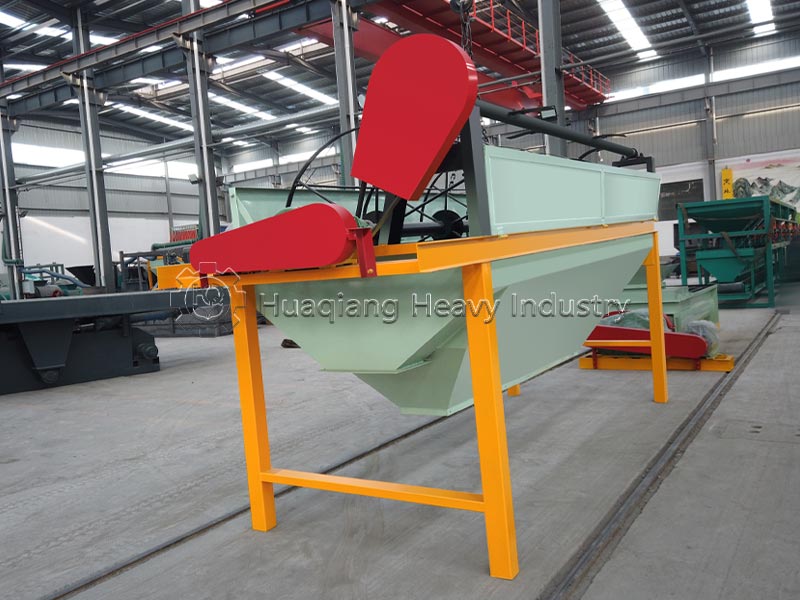
Adjustment strategy: Based on the target particle size (e.g., 3-5mm for compound fertilizer), select an upper screen of 4-5 mesh (to remove particles >5mm) and a lower screen of 8-10 mesh (to retain fine powder <2mm). For organic fertilizer (target 4-6mm), a 6-mesh upper screen and an 8-mesh lower screen can be used. It is recommended to check the screen wear after every 200 tons of production and replace deformed or clogged screens promptly.
II. Vibration Frequency: The Throttle for Controlling "Sieving Efficiency"
Vibration frequency determines the jumping and stratification speed of particles on the screen surface. If the frequency is too low, the material accumulates and does not disperse, and fine powder cannot fall quickly, resulting in small particles mixed into the finished product; if the frequency is too high, the particles jump too violently, and large particles will also force their way through the upper screen, causing the upper limit of the finished product particle size to become uncontrollable.
Adjustment Principles: For granules with low moisture content and good flowability, use low frequency and large amplitude (800-900 rpm, amplitude 4-5 mm) to allow the granules to fully disperse.
For moist or highly viscous organic fertilizer granules, use medium frequency and small amplitude (1000-1100 rpm, amplitude 2-3 mm) to prevent material from "jumping" without being screened.
A simple judgment method: Observe the screen surface. If the material moves forward at a uniform speed in a wave-like pattern and the layers are clear, the frequency is appropriate; if the material splashes and does not form layers, the frequency is too high; if the material accumulates into a thick pad, the frequency is too low. A variable frequency drive is standard equipment for grading screens. It is recommended to gradually increase the frequency from low to high after startup to find the optimal operating point.
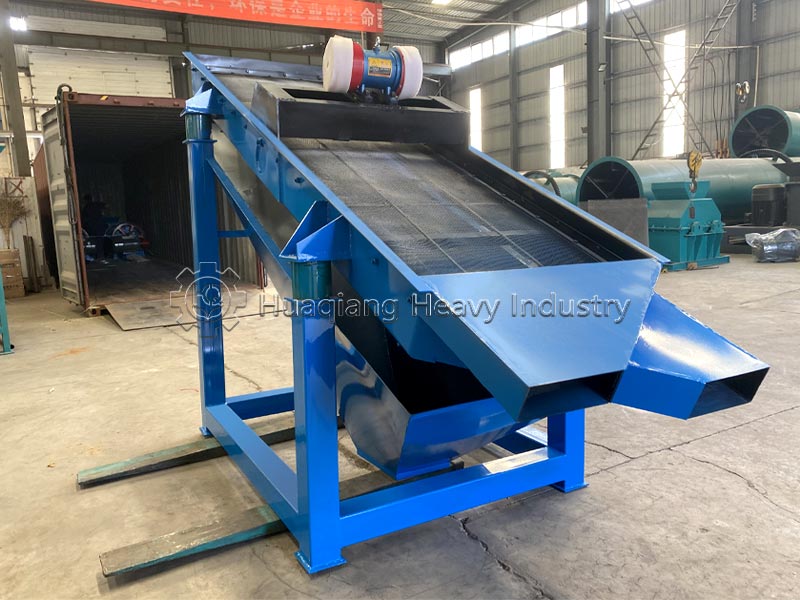
III. Return Material Ratio Control: The "Balance Beam" of Closed-Loop Adjustment
The fine powder undersized by the grading screen (i.e., return material) will be returned to the granulation system for reuse. An excessively high or fluctuating return material ratio will directly affect the particle size distribution within the granulator, resulting in inconsistent particle sizes in the next batch.
Ideal return ratio: Generally controlled between 30% and 50%. Below 30%, there is insufficient fine powder in the granulated material, making it difficult to form new nuclei, resulting in larger particles; above 50%, there is excessive fine powder, resulting in smaller particles that are prone to agglomeration.
Adjustment method: Install a small belt scale at the discharge port of the grading screen or estimate the flow rate. If the proportion of fine particles (<2mm) in the finished product exceeds 15%, it indicates that the return ratio is too low, and the return amount of undersize powder should be appropriately increased; conversely, if large particles (>5mm) exceed 10%, the return should be reduced or the mesh size of the upper screen should be increased.
Closed-loop logic: The grading screen is not only a sorting device but also a "regulator" of the granulation system. By stabilizing the return ratio, the material gradation within the granulator can be kept constant, reducing particle size fluctuations from the source.
Achieving consistent particle size distribution is not merely a screening challenge but a systemic imperative that spans the entire production workflow. Whether operating a rotary drum granulator for high-volume spherical output, a fertilizer compactor for dry fertilizer granules compaction, or specialized units within an organic fertilizer granulator series, the upstream granulation modality fundamentally shapes the particle population that reaches the grading screen. Advanced fertilizer production machine technology now integrates real-time particle size analyzers with variable-frequency drives and automated return-ratio controllers, transforming what was once an operator-dependent art into a closed-loop science. Beyond granulation and screening, the final integration with an automatic fertilizer packaging machine ensures that only uniformly graded product enters retail bags, eliminating customer complaints about dust or oversized clumps. By treating screen mesh selection, vibration optimization, and return-material balancing as interconnected control variables rather than isolated adjustments, producers can sustain finished-product uniformity above 90%—translating directly into premium pricing, reduced agglomeration losses, and strengthened brand reputation in competitive fertilizer markets.
Conclusion: The root cause of inconsistent fertilizer particle size often lies in the grading screen. Choosing the right screen mesh size to define the acceptable boundary, adjusting the vibration frequency to control screening accuracy, and stabilizing the return ratio to achieve system self-balancing—these three measures combined can easily achieve a finished product uniformity of over 90%. Remember: the grading screen is not just a screening process; it determines the quality consistency of the entire production line.