
2025-12-15

Technology Overview
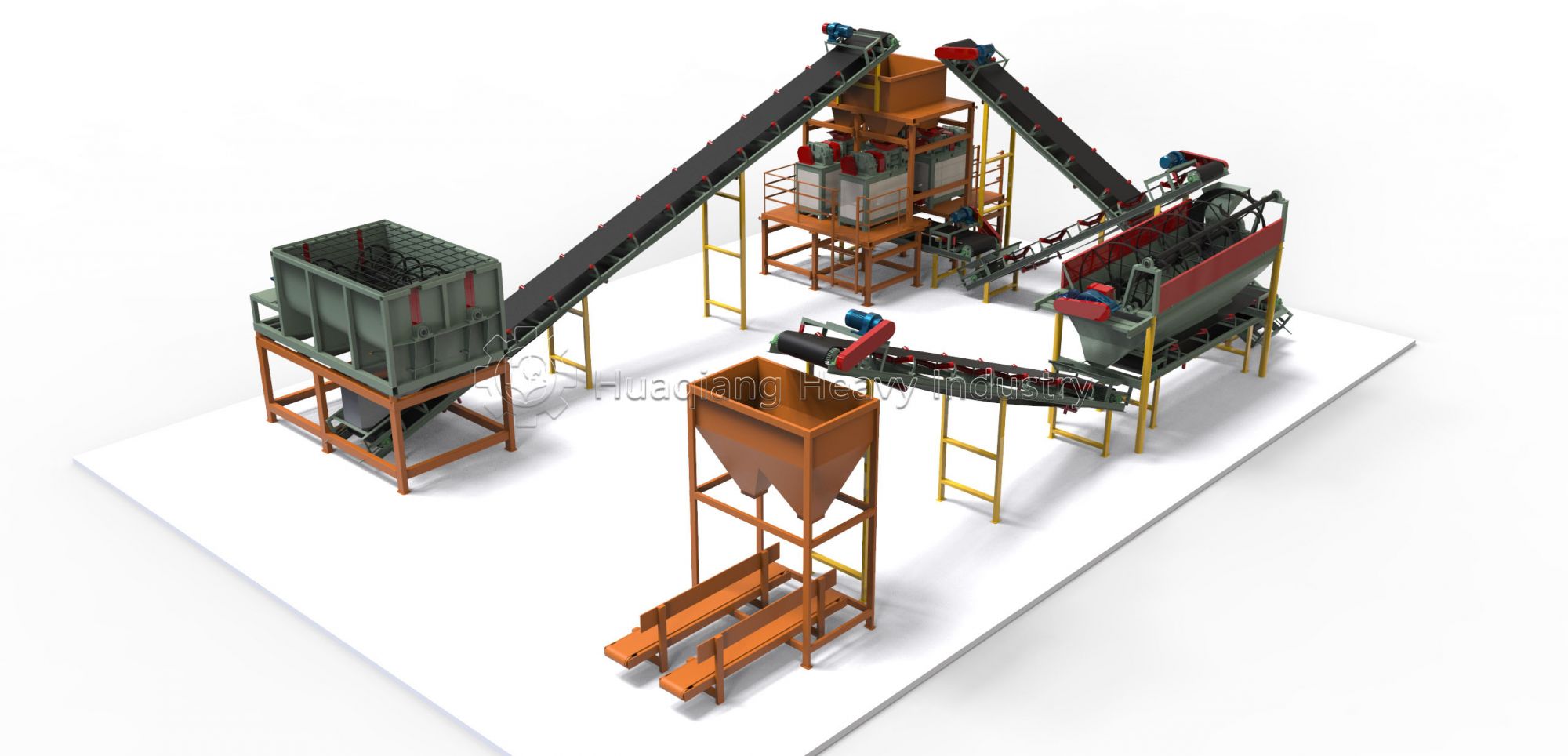
Roller compaction granulation production line represents a revolutionary dry granulation technology, centered around roller compaction granulators that directly process powdered raw materials into uniform granules at room temperature. This technology eliminates the need for traditional wet drying processes and has found extensive applications in fertilizer, chemical, and feed industries, particularly suitable for large-scale NPK compound fertilizer production.
Compared with traditional wet granulation methods, roller compaction technology offers outstanding advantages including low energy consumption, pollution-free operation, and strong adaptability, representing the development direction of modern granulation processes.
Core Equipment Components
Pre-treatment System
The production line front end features precision batching machines and horizontal mixers. Batching machines accurately control the proportions of raw materials such as urea, monoammonium phosphate, and potassium chloride through electronic belt scales, ensuring precise product nutrient content. Mixers thoroughly blend various raw materials and trace elements, laying the foundation for subsequent granulation processes.
Core Granulation Equipment
The roller compaction granulator serves as the heart of the entire production line, consisting of two counter-rotating high-strength alloy steel rollers. The roller surfaces can be designed with different groove patterns as needed, providing powerful compression force through hydraulic or spring mechanisms to compress powdered materials into dense sheets or strips.
Post-treatment System
Post-treatment equipment includes crushers, grading screens, and polishing machines. Crushers break the compacted sheet materials into granules, grading screens separate qualified products of 3-10 mm, while polishing machines refine the granule surfaces for better appearance.
Complete Production Process
Raw Material Preparation and Mixing
Powdered raw materials are first stored in dedicated silos, precisely measured by the batching system, then transported to mixers via conveying equipment. At this stage, various raw materials and micronutrients are thoroughly mixed to ensure final product uniformity.
Compaction and Forming
The uniformly mixed powder enters the roller compaction granulator, where it undergoes high pressure ranging from tens to hundreds of megapascals between two counter-rotating rollers. During this process, air between particles is fully expelled, and materials coalesce into dense sheet structures through intermolecular forces.
Crushing and Classification
The compacted sheet materials are processed by crushers to form granules, which then enter grading screens for separation. Qualified granules proceed to the next process, while overly fine powder and oversized particles return to the mixer or crusher respectively, forming an efficient closed-loop system.
Technical Advantages and Features
Energy Saving and Environmental Protection
Using dry granulation technology, the drying step required in traditional wet granulation is completely eliminated, reducing energy consumption to 30%-50% of that of wet granulation production lines. The entire production process generates no wastewater or exhaust gas emissions, meeting modern industrial environmental standards.
Strong Adaptability
The production line can process over 20 different raw materials, suitable not only for NPK compound fertilizer production but also for processing chemical materials like ammonium chloride, graphite powder, lime powder, and various feed pellets, demonstrating excellent raw material versatility.
Excellent Product Quality
With granulation success rates exceeding 95%, the produced granules feature high density and strength, resisting breakage during transportation and storage. Meanwhile, uniform nutrient distribution within granules ensures consistent performance.
Flexible Production Capacity
Production line capacity can be adjusted within the range of 1-50 tons/hour, with annual capacity covering 50,000 to 350,000 tons, meeting the production needs of both small and medium-sized enterprises as well as large-scale production requirements.
Application Prospects
Roller compaction granulation technology is gaining worldwide adoption due to its unique advantages. With continuously increasing environmental requirements and rising energy costs, this energy-saving and environmentally friendly dry granulation technology is destined to become the mainstream choice for future granulation processes, providing strong support for sustainable development across various industries.
Comparing Granulation Pathways: Dry Compaction and Wet Granulation
The roller press granulator production line exemplifies a leading dry granulation processes technology, centered on the principle of fertilizer granules compaction. This method utilizes a specialized fertilizer compaction machine to physically compress powder into dense granules without added moisture or heat. This approach stands in stark contrast to the widely used wet granulation methods within the standard npk manufacturing process, which often employ a rotary drum granulator in a disc granulation production line.
The choice between these technologies involves a fundamental trade-off. Dry fertilizer compaction offers significant advantages in energy efficiency and eliminates drying steps, making it ideal for moisture-sensitive materials and sustainable production goals. Wet granulation, however, often produces granules with higher sphericity and may be preferred for certain formulations. Understanding this distinction is crucial for designing an efficient fertilizer production system, as each fertilizer compaction machine or drum granulator serves a specific purpose within the diverse landscape of modern fertilizer manufacturing.