
2026-06-26
In fertilizer granulation, roller extrusion granulators and disc granulators are the two most widely used types of equipment. However, their granulation mechanisms are completely different—extrusion granulation is a dry forced molding process, while disc granulation is a wet adhesion growth process. Incorrect selection will directly lead to low granulation rate, soaring energy consumption, and even the entire production line failing to meet capacity standards. This article provides a quantitative comparison from four dimensions: granulation rate, energy consumption, applicable material properties, and investment cost, offering a decision-making basis for fertilizer plant equipment selection.
Comparison of Granulation Rate and Granule Quality
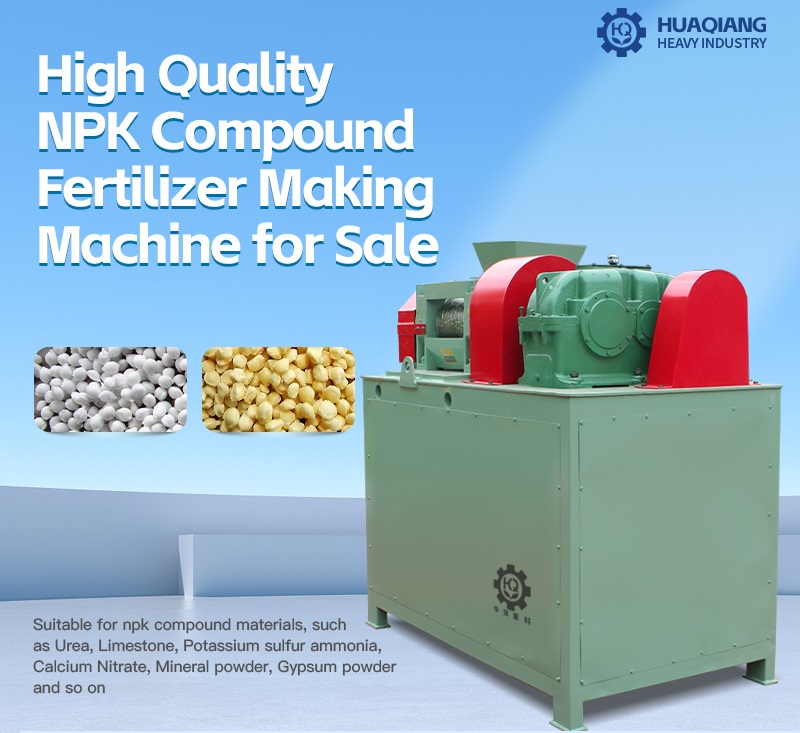
Disc granulators rely on the combined effect of centrifugal force and friction generated by the rotation and tilt angle (40°–55°) of the disc to cause powder to adhere layer by layer into spheres in a wet state. The single-pass granulation rate is typically 70%–85%. The granules are spherical and smooth in appearance, but their strength is relatively low, making them prone to pulverization during packaging and transportation. Roller extrusion granulators use two counter-rotating rollers to compress materials into thin sheets or rods, which are then crushed and granulated to obtain irregular granules. The single-pass granulation rate can stably reach 85%–95%, with high particle density and compressive strength of 8–15 N (disc granulation typically yields 3–6 N). This makes them particularly suitable for commercial fertilizers requiring high particle hardness and resistance to pulverization. However, extrusion granulation produces irregular, multi-faceted prisms, with a less rounded appearance compared to disc granulation.
Energy Consumption and Operating Cost Differences: Disc granulation itself consumes less power, with a single machine typically having an installed power of 15–45 kW (depending on the disc diameter). However, because the wet process requires the material moisture content to be controlled at 25%–35%, the subsequent drying process requires a significant amount of additional heat energy—approximately 250,000–350,000 kcal per ton of finished product, resulting in higher overall energy costs. Roller extrusion granulation is a dry process; the material moisture content only needs to be maintained at 8%–15% for direct forming, eliminating the need for pre-wetting and high-energy-consuming drying. The overall power consumption per ton of finished product is approximately 60%–70% of that of disc granulation. However, the pressure rollers and wear-resistant liners of the extrusion granulator are high-consumption parts. When processing materials with high sand content, the cost of roller wear must be included in the long-term operating budget.
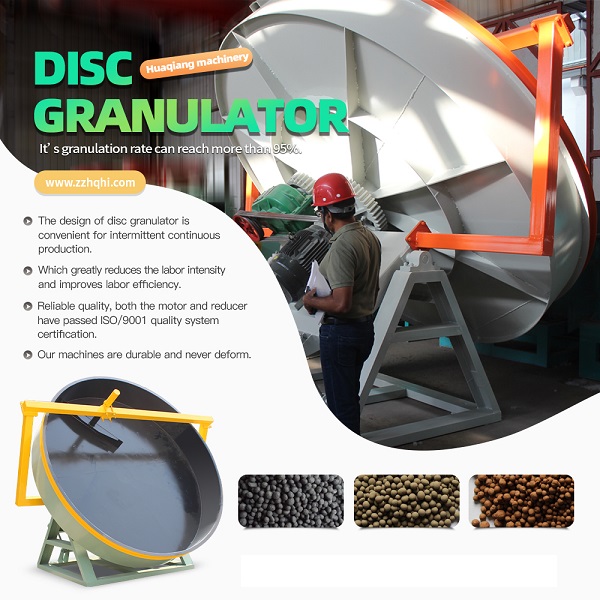
Compatibility Boundaries of Applicable Material Properties: Disc granulation has more lenient requirements on material particle size and viscosity, making it suitable for processing organic fertilizers or bio-fertilizers with high organic matter content, high fiber content, and low specific gravity. It can also handle some compound fertilizers. However, it is extremely sensitive to material moisture content—too low a moisture content makes pelleting difficult, while too high a moisture content easily leads to clumping. It is also unsuitable for formulas containing strong acidic or alkaline components. Roller extrusion granulation is more suitable for inorganic compound fertilizers, high-nitrogen formula fertilizers, and free-flowing powders such as superphosphate. Its advantage lies in the fact that it can form without the addition of binders and can handle mixtures with significant differences in particle hardness. However, roller extrusion requires high feed fineness (typically over 80% passing through an 80-mesh sieve) and cannot handle materials containing coarse fibers or lumpy impurities; otherwise, the rollers are prone to damage due to uneven loading.
Investment Cost and Scale Suitability
Selection Recommendations and Decision Logic
Based on the above indicators, the following judgment principles can be followed: If the material is high-fiber organic fertilizer, has high requirements for granule appearance, has a medium to low output, and local energy costs are low, disc granulators should be given priority; if the material is inorganic or compound formulation, requires high-strength granules and aims to reduce drying energy consumption, and has stable fine grinding capabilities, then roller extrusion granulators are more suitable. The final selection should be based on a complete material analysis report and trial run data; do not make decisions blindly based solely on price or experience. We focus on the R&D and manufacturing of fertilizer granulation equipment, covering both roller extrusion and disc granulation series—from complete material analysis to trial run verification, our professional team provides you with four-dimensional precise selection, ensuring the granulation rate, energy consumption, material suitability, and return on investment are just right.
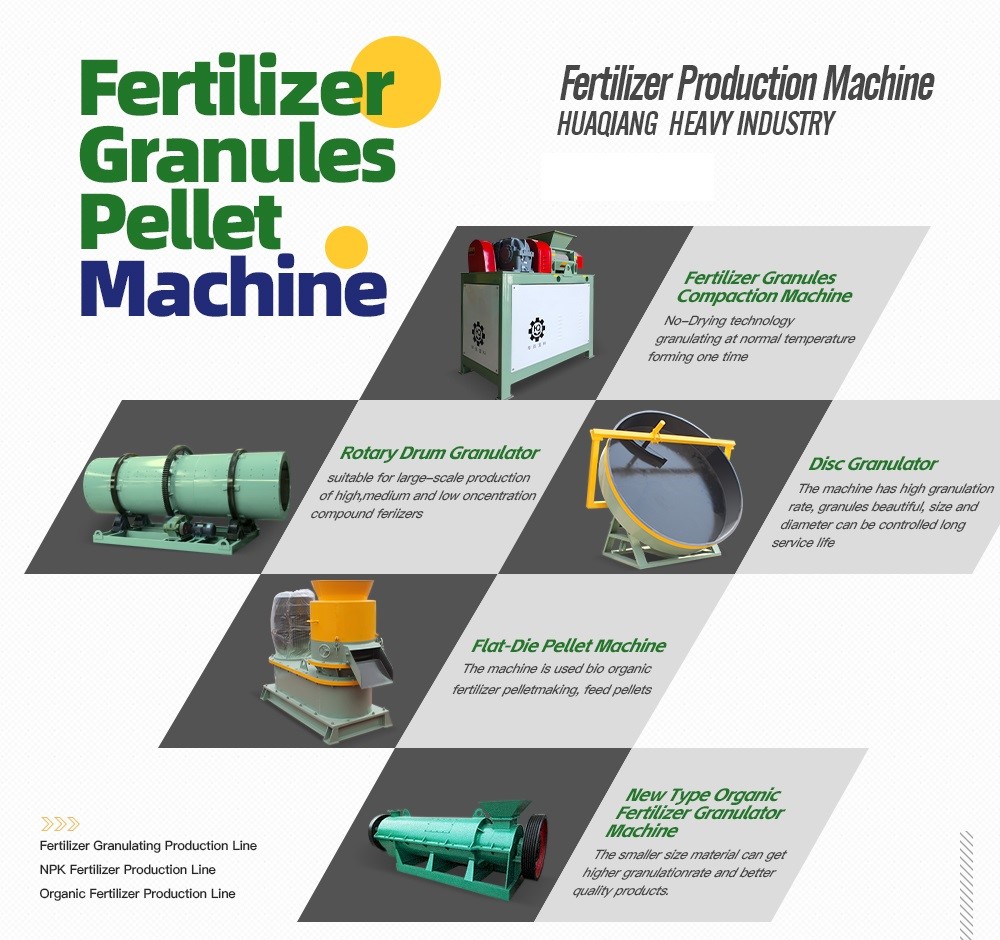
The choice between a double roller extrusion granulator and a disc granulator machine ultimately depends on matching the equipment's inherent strengths to your material characteristics, product quality targets, and energy economics. For applications demanding high fertilizer granules compaction – such as high‑strength, low‑dust granules for bulk blending or long‑distance transport – the roller press, as a fertilizer compaction machine, delivers superior density (8‑15 N) and a single‑pass granulation rate exceeding 90%, while eliminating the need for energy‑intensive drying. Conversely, when spherical appearance, gentle handling of organic or heat‑sensitive materials, and lower mechanical wear are priorities, the disc granulator remains an excellent choice, despite its higher drying load. Both technologies are integral to modern fertilizer production machine technology, and the right selection can significantly reduce operating costs and improve product consistency. A systematic evaluation – including material analysis, pilot testing, and lifecycle cost comparison – is essential to determine whether the fertilizer granulator machine should be a roller press or a disc unit. By aligning the equipment's granulation mechanism with your process requirements, you can achieve optimal granulation efficiency, product quality, and return on investment, ensuring your production line operates at its full potential for years to come.