
2026-05-22
In a fertilizer production line, the mixer is the crucial link connecting batching and granulation. Choosing a mixer that is too small will result in insufficient material supply, causing the entire line to wait for materials; choosing one that is too large will lead to overkill and wasted energy. This article provides a practical method for selecting a mixer based on production capacity, helping manufacturers find the most suitable model in one step.
I. What are the Selection Criteria for Fertilizer Mixers?
The selection criteria for fertilizer mixers refer to the calculation logic for determining the effective volume, motor power, mixing cycle, and batch capacity of the mixer under a given target hourly capacity (tons/hour). The core formula is: Batch capacity (tons/batch) = Target capacity (tons/hour) × Mixing cycle (hours/batch)
Where the mixing cycle includes feeding time, mixing time, and unloading time. A reasonable selection should ensure that the actual processing capacity of the mixer matches the needs of the entire granulation line, avoiding capacity bottlenecks or idleness.

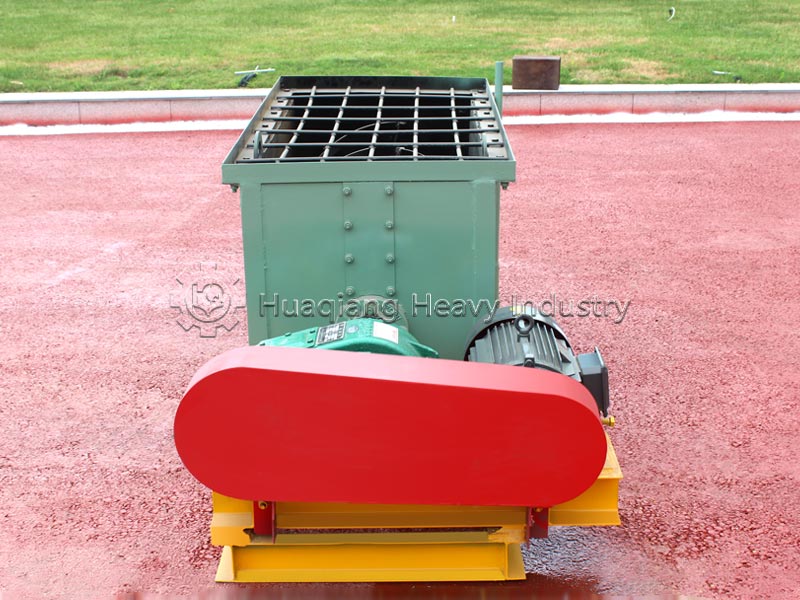
II. Matching Machine Types by Production Capacity Range
Based on industry standard configurations and parameters provided by equipment suppliers such as Zhengzhou Tianci Machinery, production capacity can be divided into the following four ranges:
2.1 1-3 tons per hour (Small Line)
Recommended Machine Type: Vertical Mixer (Single Spiral) or Small Single-Shaft Horizontal Mixer
Effective Volume: 1-3 cubic meters
Motor Power: 7.5-15kW
Mixing Cycle: 15-25 minutes/batch
Batch Capacity: 0.5-1.5 tons/batch
This range is primarily for intermittent production. Vertical mixers have low investment costs (approximately 15,000-30,000 RMB) and require little space, making them suitable for small organic fertilizer or compound fertilizer plants with an annual production capacity of 5,000-15,000 tons. Note that each batch must be completely emptied before the next batch is added to avoid residue buildup and cross-contamination of the formula.
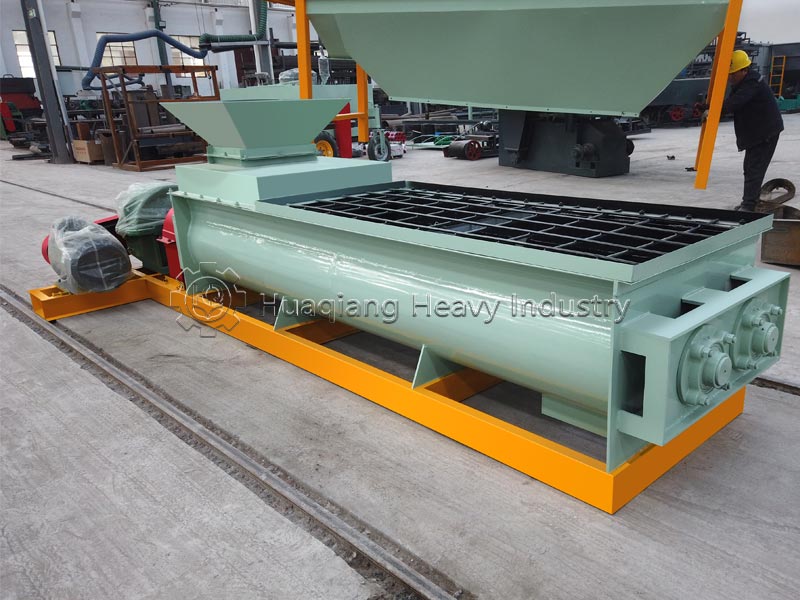
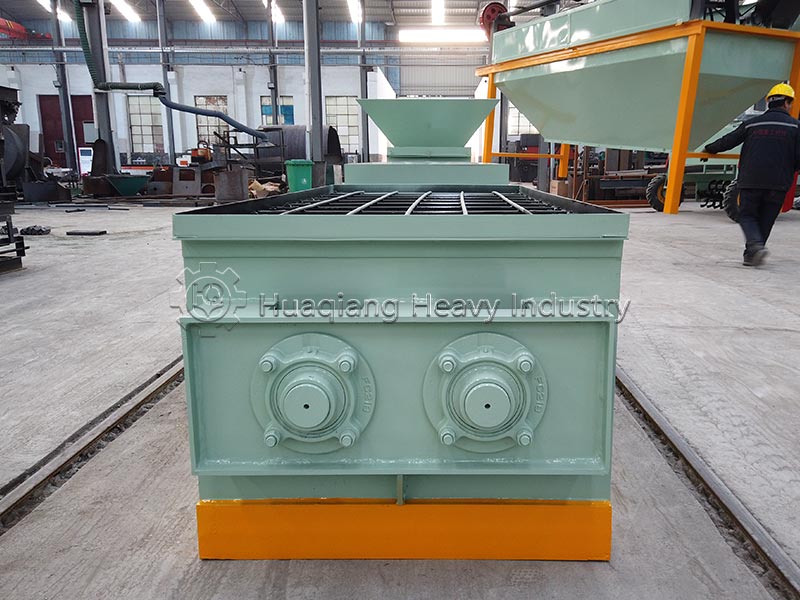
2.2 3-8 tons/hour (Medium-sized line)
Recommended model: Twin-shaft horizontal mixer
Effective volume: 3-6 cubic meters
Motor power: 18.5-37kW
Mixing cycle: 3-5 minutes/batch
Batch capacity: 1.5-4 tons/batch
The twin-shaft horizontal mixer uses counter-rotating blades, achieving a mixing uniformity CV value of 5%-7% with a short mixing time. This range is the most widely used configuration, meeting the needs of annual production of 15,000-40,000 tons. According to actual uniformity measurement data, the efficiency of the double-shaft horizontal mixer is significantly better than that of the vertical model.
2.3 8-15 tons per hour (large-scale line)
Recommended model: Double-shaft horizontal mixer (heavy-duty) or continuous single-shaft mixer
Effective volume: 6-10 cubic meters
Motor power: 45-75 kW
Mixing cycle: 2-3 minutes/batch (intermittent) or continuous feed/discharge
Batch capacity: 4-8 tons/batch
For this range, a heavy-duty horizontal mixer driven by dual motors is recommended, with impellers and liners made of wear-resistant alloy. For continuous production lines, a continuous single-shaft mixer can be selected, where feeding and discharging are synchronized, eliminating batch waiting time, but the uniformity is slightly lower than that of intermittent lines (CV is typically 8%-10%). 2.4 15-30 tons/hour (Ultra-large line)
Recommended model: Double-shaft horizontal mixer (ultra-large capacity) or two mixers in parallel
Effective volume: 10-15 cubic meters (single unit) or two 8 cubic meter units in parallel
Motor power: 90-132kW
Mixing cycle: 2-3 minutes/batch
Batch capacity: 8-15 tons/batch
For single-line capacity requirements exceeding 15 tons/hour, it is recommended to use two mixers operating in parallel, alternating feeding and unloading to ensure continuous material supply to the granulator. The manufacturing and transportation of a single ultra-large capacity mixer is more difficult; the parallel configuration offers greater flexibility.
III. Detailed Explanation of Key Parameters in Selection
Filling coefficient: The actual loading capacity of the mixer should be 60%-80% of its effective volume. Too low (<50%) will reduce mixing efficiency, while too high (>90%) will prevent material from being agitated, resulting in decreased uniformity.
Mixing Uniformity Requirements: For formulations containing trace elements (such as boron, zinc, iron) or functional bacteria: CV ≤ 7%, a double-shaft horizontal mixer must be used. For bulk raw materials containing only nitrogen, phosphorus, and potassium: CV ≤ 10%, a vertical mixer is acceptable. Influence of Material Characteristics: Organic fertilizer (containing fiber, moisture 15%-25%): a double-shaft horizontal mixer is recommended, with wear-resistant scrapers on the impellers to prevent tangling. Compound fertilizer (dry powder, containing salt): a horizontal mixer with stainless steel lining is recommended to avoid chloride ion corrosion. IV. Selection Decision Process Complete the selection process in the following five steps: Determine the target hourly capacity: Calculate annual production target ÷ annual working days ÷ daily working hours, then multiply by a margin factor of 1.1-1.2. Confirm material characteristics: organic matter content, fiber length, moisture content, corrosivity. Select mixer type: vertical (low budget, small capacity) → single-shaft horizontal (medium capacity) → Double-shaft horizontal mixer (high uniformity requirement)
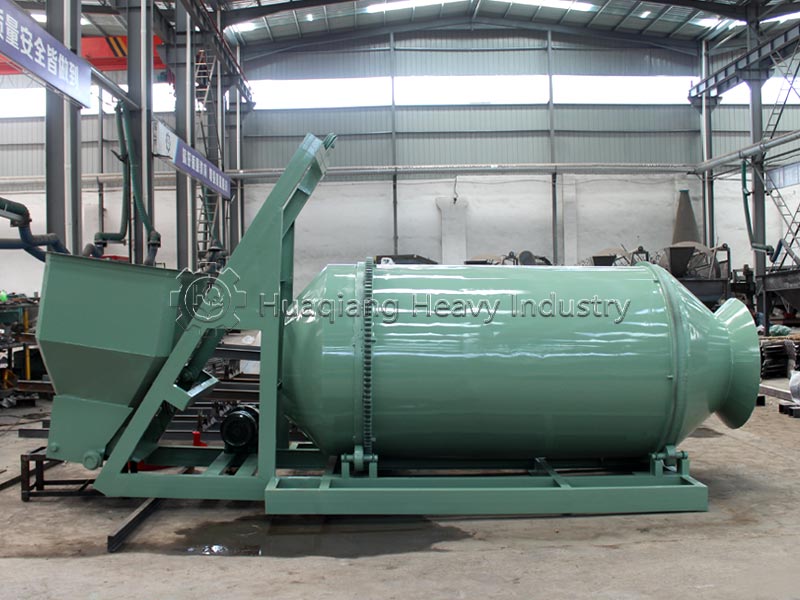
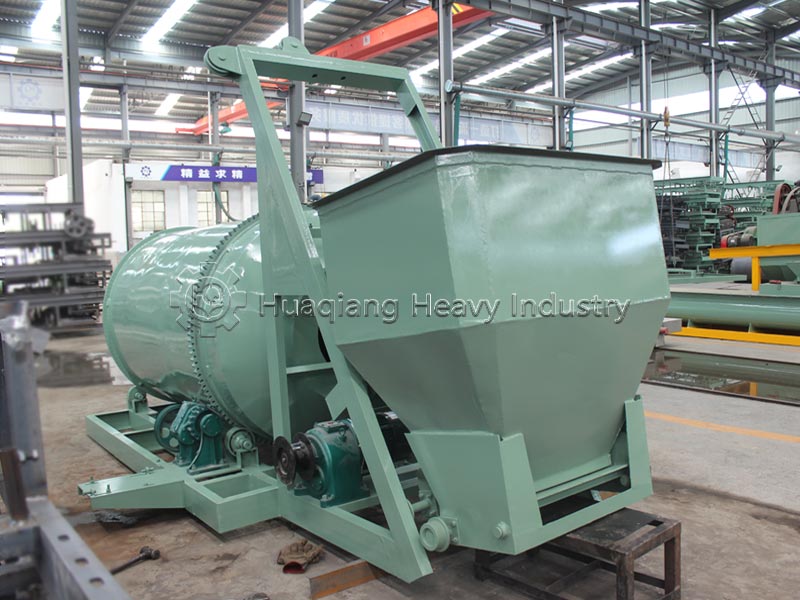
Calculate effective volume: Batch throughput ÷ Material bulk density ÷ Filling coefficient
Confirm interface dimensions: Ensure the mixer inlet matches the upper batching system and the outlet smoothly connects to the lower conveyor belt or elevator.
Based on industry equipment parameters, for most medium-sized fertilizer plants with an annual output of 20,000-50,000 tons, a twin-shaft horizontal mixer with an effective volume of 4-6 cubic meters (power 30-45kW) is the most economical and reliable choice.
Mixer Precision as the Synchronization Hub
The mixer is not merely a blending vessel—it is the synchronization hub that dictates whether the entire production train operates at design capacity or bleeds efficiency through bottlenecks and idle time. In a modern roller press granulator production line or steam-based rotary drum granulator circuit, mastering npk fertilizer production technology means selecting a fertilizer mixer machine whose batch cycle, filling coefficient, and uniformity CV are precisely calibrated to the granulator's feed rate. A heavy-duty fertilizer horizontal ribbon mixer with 60%-80% filling coefficient and 5%-7% CV ensures that every tonne entering the fertilizer granules compaction stage carries uniform nutrient distribution, preventing the strength and dissolution heterogeneity that destroys product value. For organic fertilizer production granulation, where fiber content and moisture variability challenge mixing consistency, a twin-shaft fertilizer mixer machine with wear-resistant scrapers prevents tangling while maintaining the homogeneity essential for subsequent pelletizing. In npk blending fertilizer production line configurations, a precision BB fertilizer blender operates downstream of the granulator to dynamically fortify base granules with micronutrients, achieving ±0.5% accuracy without interrupting the main compound circuit. Ultimately, treating mixer selection as a capacity-engineering decision—matching effective volume to target throughput, motor power to material density, and cycle time to granulator demand—transforms this seemingly simple equipment choice into the operational backbone of profitable, low-waste fertilizer manufacturing.