
2025-12-25
In the agricultural field, the term "fertilizer compaction" encompasses two distinctly different concepts: one is a beneficial process in fertilizer manufacturing—compaction granulation—and the other is a negative environmental problem caused by long-term fertilization—soil compaction. Although the names are similar, their principles, effects, and countermeasures are vastly different.
Fertilizer Compaction Granulation: A Manufacturing Process to Enhance Efficiency
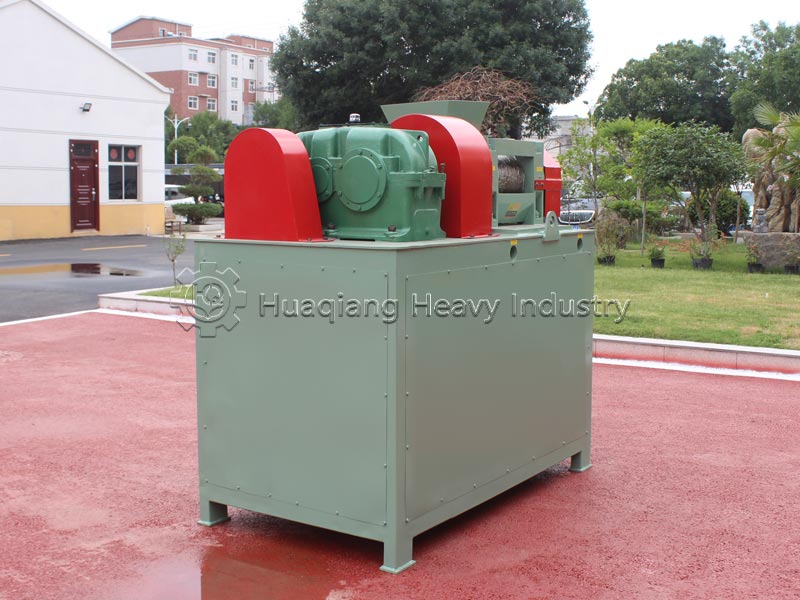
Fertilizer compaction granulation is a production technology that transforms powdered fertilizer raw materials into dense, uniform granules through high-pressure physical action. This process is a core component of modern compound fertilizer (such as NPK fertilizer) production.
The process mainly consists of three steps: First, powdered raw materials such as nitrogen, phosphorus, and potassium are thoroughly mixed according to the formula to ensure uniform nutrient distribution. Next, the mixed powder is fed between a pair of counter-rotating rollers, where it is compressed into solid sheets under high pressure without additional heating or humidification. Finally, these sheets are crushed and then sieved through vibrating screens of different mesh sizes to obtain finished fertilizers with uniform particle size.
This technology has multiple core advantages. The granular fertilizers produced have a high nutrient concentration, significantly increasing the effective nutrient content per unit mass. The granular form also greatly reduces dust pollution during production, transportation, and application. At the same time, the uniform particle size helps achieve precise and uniform fertilization, improving crop absorption efficiency. From an environmental perspective, the entire process does not require heating or humidification equipment, reducing energy consumption and carbon emissions. In addition, the formula can be flexibly adjusted according to the needs of different crops and soils, enabling "customized" fertilizer production.
Soil Compaction Caused by Fertilization: An Ecological Problem Requiring Urgent Attention
On the other hand, soil compaction refers to the negative phenomenon caused by long-term application of chemical fertilizers, resulting in the accumulation of mineral salts in the soil, leading to reduced soil porosity, increased density, and hardened soil structure.
Its formation stems from two key processes: first, the accumulation of mineral salts. A large number of mineral ions in chemical fertilizers (such as ammonium ions, sulfate ions, and chloride ions) remain in the soil after being absorbed by crops. Second, soil colloid aggregation occurs. These ions react with soil colloids, disrupting the soil's aggregate structure, causing soil particles to compact tightly, drastically reducing the number of large pores, and ultimately forming a hard, compacted layer.
Soil compaction has far-reaching consequences. It hinders the normal circulation of air and water, leading to poor soil aeration and permeability, affecting crop root respiration. Hardened soil also restricts root growth, resulting in shallow roots and weakening the crop's ability to absorb water and nutrients. Furthermore, microbial activity is inhibited in compacted soil, affecting the transformation of organic matter and slow-release nutrients, leading to low fertilizer utilization efficiency and ultimately destroying the soil ecosystem composed of earthworms, beneficial bacteria, and other organisms.
Comprehensive Strategies to Address Soil Compaction
Solving soil compaction requires comprehensive improvement measures. On the one hand, specialized soil improvement products can be used, such as some lawn care products, which typically contain biostimulants and surfactants. Biostimulants promote the reproduction of beneficial microorganisms and decompose compacted soil aggregates; surfactants reduce the surface tension of water, improving the penetration of water and nutrients in compacted soil. These products are more effective when applied in moist soil environments.
On the other hand, improving agricultural management practices is crucial. This includes promoting the combined application of organic and chemical fertilizers, supplementing organic matter through the application of compost (such as oil palm empty fruit bunch compost) and farmyard manure to improve soil structure. Adopting reduced tillage or no-till techniques can reduce mechanical damage to the soil structure, protecting soil pores and the microbial environment. Implementing crop rotation and planting green manure crops (such as clover and vetch, which are legumes) can both fix nitrogen and improve soil structure through root growth.
In summary, "fertilizer compaction" has a dual nature in agricultural production. As a manufacturing process, compaction granulation is a positive technology that improves fertilizer performance and promotes clean production. However, as an environmental problem, soil compaction is an ecological challenge caused by over-reliance on chemical fertilizers, requiring scientific improvement and sustainable agricultural practices to address it. Clearly distinguishing between these two aspects is crucial for promoting the development of agriculture towards efficiency and environmental protection.
Conclusion: Bridging Production Technology with Soil Health
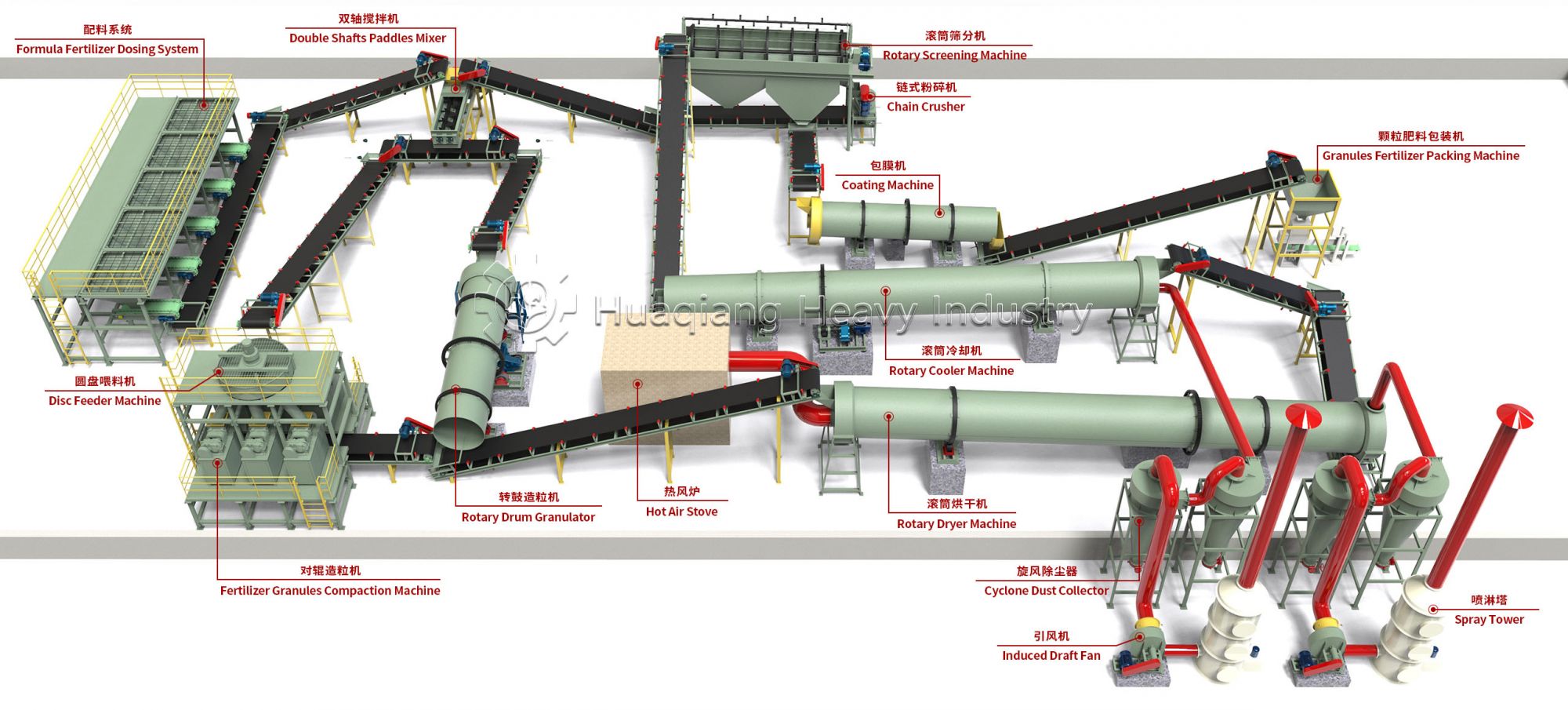
The dual meaning of "fertilizer compaction" encapsulates modern agriculture's central challenge: producing nutrients efficiently while preserving soil ecosystems. Industrial fertilizer compaction via specialized equipment like a fertilizer compaction machine or roller press granulator production line is fundamental to the npk manufacturing process. This fertilizer production machine technology—whether utilizing a drum granulator for drum granulation or a fertilizer compactor for dry fertilizer granules compaction—enables precise, dust-free manufacturing of npk fertilizer. Such npk fertilizer production technology enhances nutrient delivery and minimizes environmental footprint during production.
Conversely, preventing soil compaction requires integrating organic solutions. Equipment like a chain compost turning machine or large wheel compost turning machine becomes essential for producing compost to rebuild soil structure, complementing the output from fertilizer processing machine lines. Thus, the synergy between advanced granulation technologies (like the rotary drum granulator) and organic matter management creates a balanced system—where high-efficiency production supports, rather than undermines, long-term soil vitality and sustainable crop yields.
Integrated Technologies: fertilizer granules compaction, fertilizer compaction machine, npk manufacturing process, rotary drum granulator, roller press granulator production line, drum granulator, npk fertilizer production technology, drum granulation, fertilizer compaction, fertilizer compactor, chain compost turning machine, fertilizer production machine, manufacturing of npk fertilizer, fertilizer processing machine, large wheel compost turning machine.