
2026-05-25
In fertilizer production, packaging is the final hurdle. The accuracy of the packaging scale directly determines whether the product is "weighted"—overweight means lost profits, while underweight leads to customer complaints and regulatory penalties. This article analyzes the accuracy calibration methods and core error compensation algorithms of fertilizer packaging scales to help manufacturers control weighing errors to a minimum.
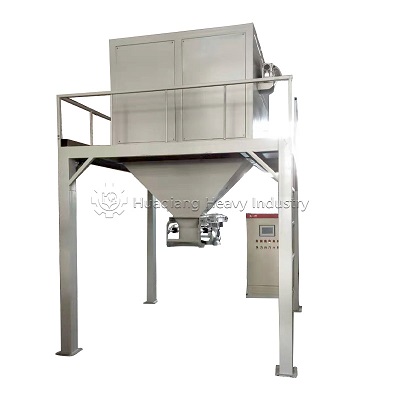
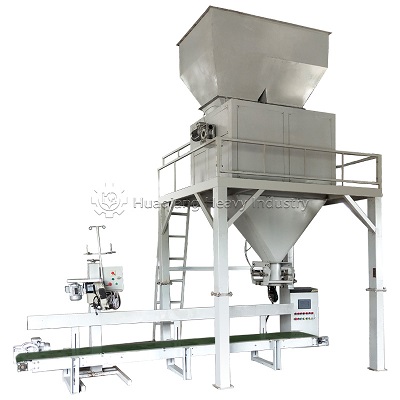
I. What is the Dynamic Accuracy and Error Sources of Packaging Scales?
The dynamic accuracy of a packaging scale refers to the deviation range between the actual weighed value and the set target value during continuous automatic weighing, usually expressed as ±X grams or ±X% (in grams). According to the national standard "Regulations on the Supervision and Management of Quantitatively Packaged Commodities," the allowable shortage for 50kg bags of fertilizer is ±0.5% (i.e., ±250 grams), but industry internal control standards typically require a shortage within ±100 grams.
The main sources of error fall into three categories:
Mechanical Errors:Aging of the weighing sensor, improper closure of the discharge gate, and material sticking to the hopper.
Material Characteristic Errors:Batch variations in material flowability, changes in bulk density due to moisture content fluctuations, and dust adhesion.
Control Algorithm Errors:Inaccurate drop compensation, insufficient sampling frequency, and failure to filter vibration interference.
Two- or Three-Step Calibration Method:A complete process from zero point to the weighing range.
Standardized Packaging Scale Calibration:The following three steps should be included in a standard calibration procedure, recommended to be performed monthly or after each major overhaul.
2.1 Zero Point Calibration (No-Load Calibration)
Operation:Empty the weighing hopper, ensuring no material residue or mechanical obstruction. Execute the "Zero Point Calibration" command through the instrument; the system automatically records the current sensor output value as the zero point reference.
Standard:The zero point reading should be within 0% ± 0.5% of the sensor's range. If the deviation exceeds the limit, check if the sensor is damaged or if the hopper is blocked by foreign objects.
2.2 Range Calibration (Weight Calibration)
Operation: Place a standard weight (usually 80%-100% of the set weighing value) into the weighing hopper. For example, a 40kg standard weight can be used for a 50kg packaging scale. The instrument records the sensor output value corresponding to the weight, establishing a linear relationship between weight and voltage.
Standard: The allowable deviation is ±0.1% of the weight of the weight (i.e., ±40 grams for a 40kg weight). If the deviation exceeds the limit, check the sensor linearity or replace the damaged sensor.
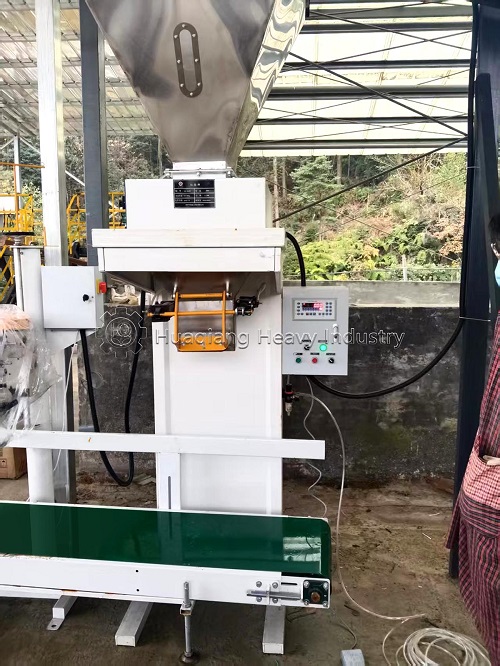
2.3 Material Testing and Correction
Operation: Conduct 10-20 consecutive packaging tests using actual produced fertilizer. Weigh each bag using a verification scale and calculate the average error and standard deviation.
Adjustment: If the average error is +50 grams (overweight), lower the target value by 50 grams in the control parameters; if it is -30 grams (underweight), increase it by 30 grams. This step compensates for the difference between the weight and the actual material flow characteristics.
III. Error Compensation Algorithm: Intelligent Correction of Dynamic Drop Drop is the largest source of systematic error in packaging scales—after the feed gate closes, a section of material remains falling through the air, causing "overshoot."
3.1 Fixed Drop Compensation Early packaging scales used a fixed compensation value: With a target weight of 50kg, the feed gate was closed when the instrument displayed 49.5kg, and the remaining 0.5kg was compensated by material falling through the air. However, when material flowability changes, the actual drop may fluctuate between 0.3-0.8kg, inevitably leading to errors with fixed compensation.
3.2 Dynamic Drop Learning Algorithm
Modern packaging scales employ a moving average filter + self-learning algorithm:
The system records the most recent 5-10 drop values (actual weight - weight at the moment of door closing).
The weighted moving average is calculated as the compensation amount for the next drop.
For example: If the target weight is 50kg, and the first three drops are 0.52kg, 0.48kg, and 0.50kg, then the fourth drop will be pre-compensated by 0.50kg, and the door will close when the displayed weight is 49.50kg.
This algorithm can stabilize packaging accuracy within ±0.1%-±0.2% (e.g., ±50-100 grams for a 50kg bag), far exceeding national standards.
3.3 Vibration and Interference Filtering
A digital low-pass filter (such as an IIR filter) is used to smooth the sensor signal, filtering out high-frequency interference such as equipment vibration and material impact. The filter cutoff frequency is typically set to 10-15Hz, achieving a balance between response speed and stability.
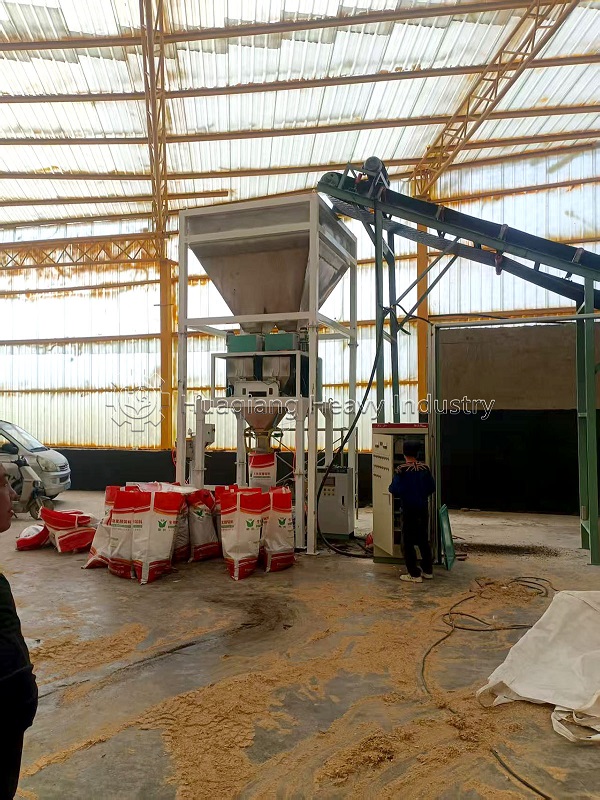
IV. Practical Maintenance Recommendations
In addition to regular calibration, please note the following during daily maintenance:
Weekly check the unloading door seal: Wear or material jamming can cause leakage and negative deviation. Clean the sealing surface; replace the polyurethane sealing strip if severely worn.
Monthly clean the sensor: Use compressed air to blow away dust from the sensor surface and junction box to prevent electrostatic interference and insulation degradation.
Quarterly perform repeatability testing: Weigh the same bag of material repeatedly 5 times. The difference between the maximum and minimum values should be ≤0.2% of the sensor's range. Poor repeatability is the primary sign of sensor aging.
According to industry equipment parameters, an automatic packaging scale configured with a dynamic drop compensation algorithm and digital filtering can control the annual cumulative weighing error within 0.1%. For a fertilizer plant with an annual output of 50,000 tons, this means a reduction of 50 tons of material loss annually, while completely eliminating underweight complaints. When selecting a model, it is recommended to prioritize models that provide a self-learning drop compensation algorithm and real-time sensor diagnostic functions.
From Granule Quality to Weighing Precision
While dynamic drop compensation and sensor calibration ensure the final weighing stage operates within ±0.1%, the upstream granulation profile fundamentally determines packaging consistency. Whether pellets are produced via a rotary drum granulator for high-volume compound formulations, an organic fertilizer granulator series for compost-based products, or a fertilizer flat die pelleting machine for specialized feed-grade fertilizers, particle size uniformity and bulk density stability directly dictate flowability at the packaging hopper. A fertilizer compactor or fertilizer granules compaction process further densifies material, reducing intra-batch density fluctuations that otherwise trigger weighing overshoot. Integrating a rotary drum fertilizer screening machine immediately after granulation eliminates oversized clumps and fines, ensuring only uniform granules reach the fertilizer packing machine. Within a fully synchronized npk fertilizer production line, this closed-loop quality control—from granulation and compaction through screening to intelligent packaging—minimizes both mechanical wear on the scale and material giveaway, delivering quantifiable savings that compound across every ton shipped.