
2026-01-28
Amid the global energy transition, wood pellets, as a crucial carrier of biomass energy, are experiencing unprecedented development opportunities. The global market size is projected to reach $11.5 billion to $18.5 billion by 2026, offering substantial profit margins for investors and businesses. However, success in this sector requires a comprehensive understanding of market dynamics and key profitability factors.
Cost Structure and Profit Margin
The production cost of wood pellets typically ranges from $80 to $120 per ton, depending on plant size and operational efficiency. Raw material costs account for 50% to 60% of total costs, making them a crucial factor influencing profits. In resource-rich regions, such as British Columbia, Canada, local sawmills generate substantial amounts of wood waste annually, providing an ample and low-cost source of raw materials for pellet production.
Sales Prices Show Significant Market Differences
The retail price of wood pellets in the North American market is approximately $200 to $250 per ton, while premium bagged products targeting the residential heating market can fetch $275 to $385 per ton. A German manufacturer focusing on the high-end market, producing certified A1-grade pellets, sells its products at €380 per ton with a gross profit margin exceeding 40%.
Market Demand Drives Growth
Industrial demand is the primary driver of growth in the wood pellet market. Policy support for renewable fuels in Europe and the Asia-Pacific region has created a huge market space. Following the Fukushima nuclear accident in 2012, Japan has vigorously developed biomass power generation, importing over 1 million tons of wood pellets annually from Canada and Vietnam. The South Korean government plans to increase the proportion of biomass power generation to 5% by 2030 to achieve carbon neutrality, providing wood pellet producers with long-term, stable orders.
In the residential market, with the increasing popularity of household pellet stoves, European households are continuously growing their demand for high-quality heating pellets. A pellet manufacturer in the suburbs of Stockholm, Sweden, has successfully sold its products directly to end users through branded stores and online sales platforms, achieving a price of $350 per ton, 30% higher than the wholesale price.
Economies of Scale and Investment Strategies
The choice of production scale directly affects the return on investment. Small-scale factories are characterized by low investment risk and high flexibility. A small pellet plant in Norway with an annual output of 2,000 tons, with an investment of approximately $800,000, primarily serves the local community heating market. Due to its proximity to raw material suppliers and consumer markets, transportation costs are low, and it became profitable after three years of operation.
Large-scale industrial-grade factories reduce costs through economies of scale. A pellet plant in Georgia, USA, with an annual output of 100,000 tons, had an investment of $12 million, but its unit production cost was 25% lower than that of a small-scale factory. The plant's products are mainly exported to Europe, and it effectively controls logistics costs through long-term transportation agreements with shipping companies.
High-Value-Added Product Opportunities
Besides traditional heating pellets, the specialty wood pellet market offers higher profit margins. Food-grade hardwood pellets for barbecues are a typical example. A company in the American Midwest specializes in producing hickory and cherry wood barbecue pellets. Although its annual output is only 5,000 tons, its products target the high-end market, with a selling price of $850 per ton, three times that of ordinary heating pellets.
Premium household pellets (A1 grade) are also high-profit products. A factory in the Austrian Alps uses local spruce and pine to produce ultra-low ash pellets. Through strict quality control and environmental certification, its products sell well in the high-end markets of Germany and Switzerland, maintaining an annual profit margin of over 35%.
Risks, Challenges, and Countermeasures
The stability of raw material supply is one of the main risks. When particleboard plants or pulp mills expand production, the price of wood waste can fluctuate significantly. A pellet producer in the UK effectively mitigated price volatility risk by signing long-term supply agreements and establishing raw material reserves.
Initial investment costs are also an important consideration. Even small pellet plants require hundreds of thousands of dollars in equipment investment. A Czech investor adopted a phased investment strategy, first building a production line with an annual capacity of 3,000 tons, and then expanding to 10,000 tons as the market matured, reducing initial financial pressure.
Logistics cost control is particularly crucial. Due to the low value density of wood pellets, transportation costs account for a high proportion of total costs. A pellet plant near the Port of Rotterdam in the Netherlands fully utilizes the port's advantages, distributing products via inland waterway and sea transport, reducing transportation costs by 40% compared to land transport.
Success Case Study: A pellet company on Vancouver Island, Canada, demonstrates a complete path to successful operation. First, it secured a 10-year long-term supply contract with Japanese industrial clients to guarantee sales channels; second, it established partnerships with multiple local sawmills to ensure a stable supply of raw materials; and third, it invested in a dedicated wharf, significantly reducing shipping costs. Through this series of strategic moves, the company achieved an annual output of 150,000 tons, becoming one of the largest pellet exporters on the west coast of North America.
Future Prospects: As the global carbon neutrality process accelerates, the status of wood pellets as a renewable energy source will be further consolidated. Technological innovation is driving industry upgrades, with new-generation pellet production equipment reducing energy consumption by 20% and significantly increasing automation. Simultaneously, the improvement of the carbon trading market will bring new revenue streams to pellet production companies.
For companies planning to enter this field, it is recommended to first conduct detailed market research and feasibility analysis, choosing a scale and technology route suitable for their own conditions. Establishing a stable raw material supply chain and sales channels, and emphasizing product quality and brand building will be key to long-term success. Against the backdrop of the green energy revolution, the wood pellet industry is providing rare business opportunities for visionary entrepreneurs.
Shared Pelletizing Principles Across Industries
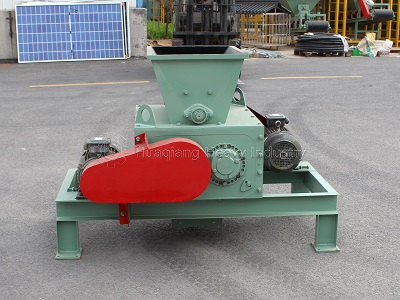
The economic analysis of wood pellet production highlights the universal importance of efficient densification technology, a principle that is equally central to fertilizer manufacturing. While the raw materials differ, the core mechanical process of fertilizer granules compaction is shared. In the wood industry, a flat die press pellet machine for sale is a common piece of equipment for this purpose. In fertilizer production, similar compaction is achieved by a double roller press granulator or a fertilizer compactor, which applies high pressure to powders in a dry process. This contrasts with the wet drum granulation method often used in the npk fertilizer manufacturing process, which employs a rotary drum granulator and a liquid binder.
This diversity of fertilizer production machine technology allows for adaptation to different material properties. For organic materials like compost, a new type organic fertilizer granulator or an organic fertilizer disc granulation production line might be used for gentle shaping. The choice between these technologies—dry fertilizer compaction versus wet agglomeration—mirrors the strategic decisions in wood pellet production, balancing factors like raw material characteristics, energy consumption, and desired final product form to maximize profitability.
Therefore, advancements in densification and pelletizing technology in one industry often inform and benefit the other. The drive for efficiency, low energy consumption, and high-quality pellet production is a common goal that unites biomass energy and modern fertilizer manufacturing.