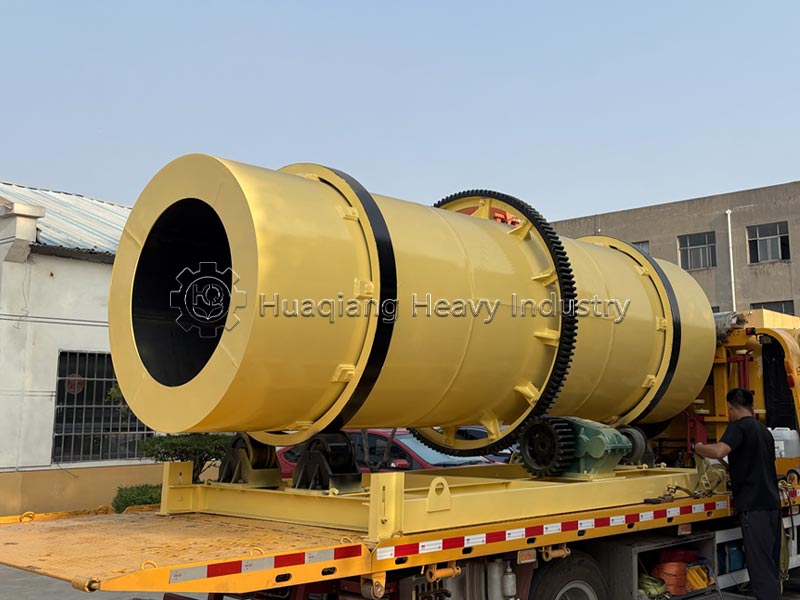

Equipment Introduction
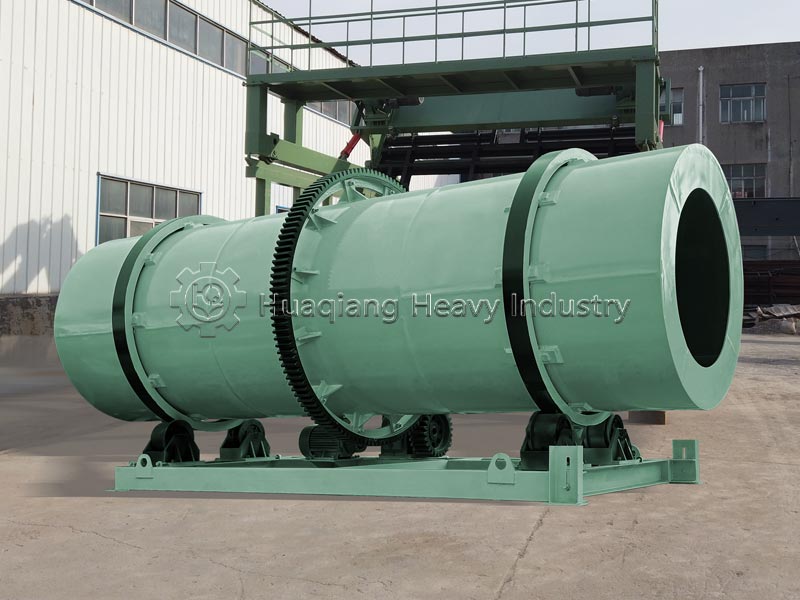
A coating machine (Fertilizer Coating Machine), also known as a rotary coating machine or fertilizer coating machine, is a core post-processing device at the end of a fertilizer production line for granule surface treatment. It uses powder coating or liquid coating processes to evenly coat the surface of organic fertilizer, compound fertilizer, and blended fertilizer granules with a functional protective film.
The main function of the coating machine is to prevent fertilizer clumping—during storage and transportation, fertilizer granules are prone to salt bridging and surface moisture absorption, leading to granule adhesion and clumping. By forming a protective film on the granule surface to isolate it from the outside air, this industry pain point is effectively solved. Simultaneously, coating can improve the surface gloss of the granules (better appearance) and allows for the addition of trace elements or functional microbial agents to enhance fertilizer efficiency. For controlled-release fertilizers, coating can also achieve controlled-release nutrient function.
This equipment is suitable for anti-caking coating operations on various granular fertilizers, including organic fertilizers, inorganic fertilizers, bio-fertilizers, compound fertilizers, and BB fertilizers. The main unit typically uses a polypropylene liner or acid-resistant stainless steel, providing excellent corrosion resistance and durability. The equipment features high pellet strength, corrosion resistance, and low energy consumption, and is suitable for the combined processing of dry powder and liquid coating agents.
Equipment Structure
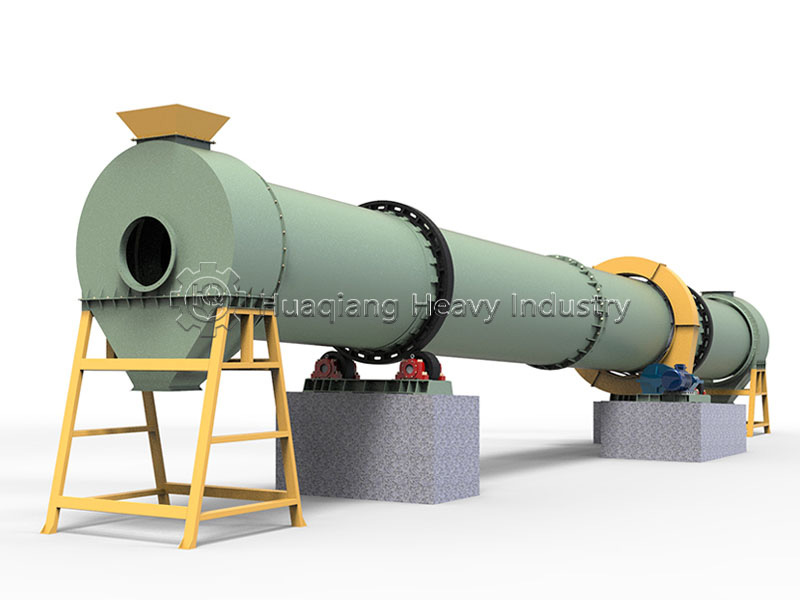
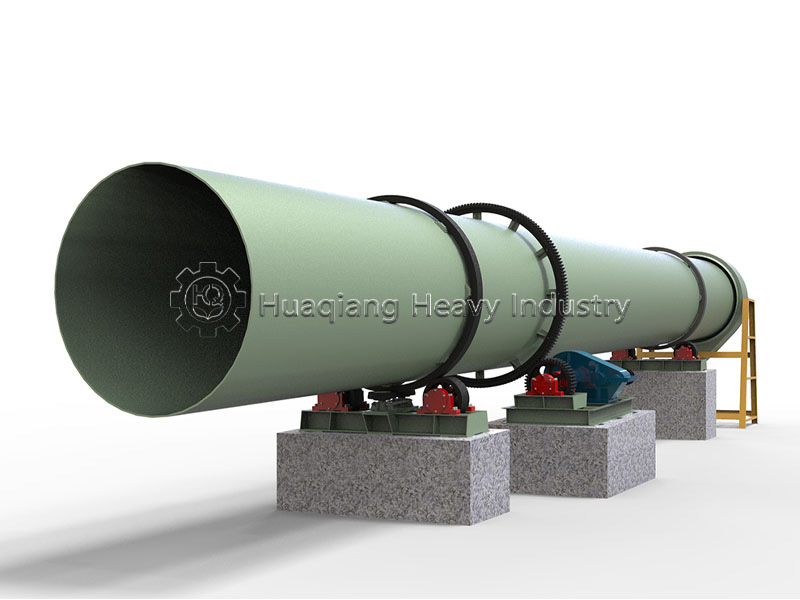
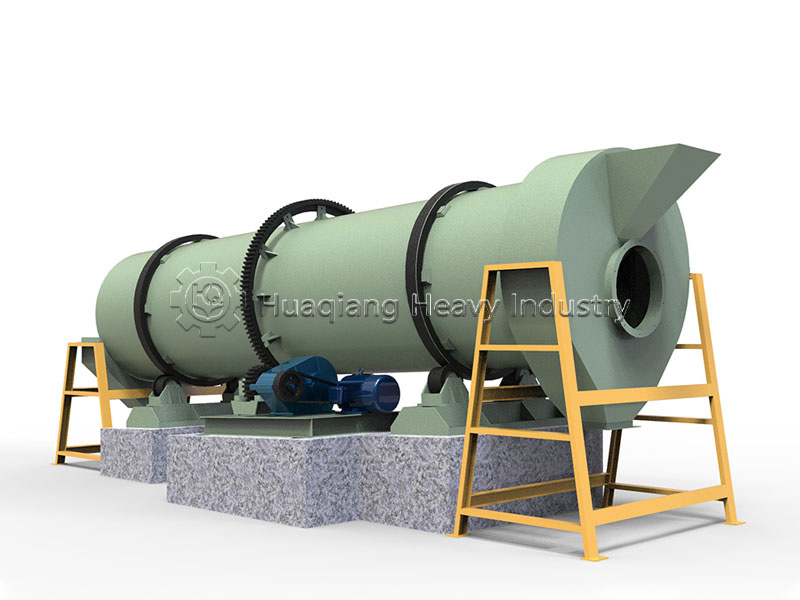
The complete coating machine consists of a screw conveyor, mixing tank, oil pump, and main unit. The main unit can be divided into five main components:
1. Frame and Support: The rotating parts of the entire machine are supported by the frame, which bears significant force. The support roller frame is welded from medium carbon steel plate and channel steel. The support rollers fixed to the frame are made of high-quality anti-corrosion and wear-resistant materials, greatly improving service life. The support roller frame adopts integrated casting technology, and lifting hooks are provided at the four corners for easy loading, unloading, and transportation.
2. Transmission: The transmission part drives the entire machine. The transmission frame is welded from high-quality channel steel. The main motor and reducer installed on the transmission frame are of reliable quality. The motor drives the pulley, V-belt, and reducer to transmit power to the main shaft. The transmission reducer and the working part of the main shaft are connected by a nylon pin coupling for drive transmission.
3. Large Gear Ring: Fixed to the machine body, it meshes with the transmission pinion gear, driving the machine body in opposite directions. It is made of high-tech wear-resistant materials. 4. Roller Belts: Fixed to both sides of the machine body, used to support the entire machine.
5. Machine Body (Cylinder): The cylinder is the most important part of the entire coating machine, welded from medium carbon steel plates. The inner wall of the cylinder is equipped with lifting plates to lift and spread the granular material into a uniform material curtain. The main body is lined with polypropylene or acid-resistant stainless steel, making it corrosion-resistant and durable.
6. Spraying/Powdering System: Includes a spraying system (nozzles, pipes, delivery pump) and a powdering device, used to evenly apply the coating agent to the surface of the granules. Some equipment is also equipped with a temperature control system to precisely control the temperature and humidity of the spraying area, ensuring rapid curing of the coating agent.
Applicable Raw Materials (Scope of Processed Materials)
1. Main Materials for Granular Fertilizers
Inorganic Compound Fertilizers: Urea-based, sulfur-based, and chlorine-based compound fertilizers, BB fertilizers, high-tower spray granulation granules, extrusion granulation compound fertilizers;
Organic Fertilizers: Fermented livestock and poultry manure organic fertilizers, bio-fertilizers, humic acid granular fertilizers, straw/mushroom residue fertilizer granules;
Special Slow-Release Fertilizers: Resin-coated controlled-release fertilizers, sulfur slow-release fertilizers, functional granular fertilizers containing trace elements.
2. Coating Consumables (Coating Raw Materials)
Liquid Coating Agents: Mineral oil, vegetable oil, paraffin wax, resin, water-soluble trace element solution, bio-bacterial suspension;
Solid Powder Coating Agents: Talc, diatomaceous earth, bentonite, sulfur powder, functional coloring powders.Applicable Raw Materials (Scope of Processed Materials)
1. Main Materials for Granular Fertilizers
Inorganic Compound Fertilizers: Urea-based, sulfur-based, and chlorine-based compound fertilizers, BB fertilizers, high-tower spray granulation granules, extrusion granulation compound fertilizers;
Organic Fertilizers: Fermented livestock and poultry manure organic fertilizers, bio-fertilizers, humic acid granular fertilizers, straw/mushroom residue fertilizer granules;
Special Slow-Release Fertilizers: Resin-coated controlled-release fertilizers, sulfur slow-release fertilizers, functional granular fertilizers containing trace elements.
2. Coating Consumables (Coating Raw Materials)
Liquid Coating Agents: Mineral oil, vegetable oil, paraffin wax, resin, water-soluble trace element solution, bio-bacterial suspension;
Solid Powder Coating Agents: Talc, diatomaceous earth, bentonite, sulfur powder, functional coloring powders.
Working Principle of the Equipment
The coating machine operates on a combination of mechanical tumbling and uniform spraying:
1. Cylinder Rotation and Material Tumbling: The main motor drives the belt and pulley, transmitting power to the drive shaft via a reducer. A split pinion on the drive shaft meshes with a large gear ring fixed to the machine body, causing the machine to rotate. Material is added from the feed end; as the cylinder rotates, internal lifting plates continuously lift and scatter the particles, forming a uniform material curtain.
2. Coating Agent Application: Liquid Coating Process: Coating agents (such as paraffin wax, resin, coating oil, etc.) are evenly sprayed in a mist form onto the surface of the tumbling particles through atomizing nozzles. The nozzles are typically installed at a certain angle to the cylinder axis to ensure complete coverage of the particle flow. A pump draws the coating agent from the storage tank and delivers it through pipelines to the nozzles for atomization and spraying.
Powder coating process: Powdered coating agents (such as talc, diatomaceous earth, etc.) are evenly spread onto the surface of granules coated with liquid coating agents using a powder coating machine, forming a powder-liquid composite coating.
3. Uniform coating: Granules are tumbled inside the drum while being coated with the coating agent, ensuring each granule is evenly coated with a film. The coating thickness can be precisely adjusted by spraying time and flow rate. Under specific temperature conditions, the coating agent rapidly solidifies or forms a film on the granule surface.
4. Finished product discharge: Coated granules flow out from the discharge port. The equipment can continuously feed and discharge, enabling large-scale continuous production.
Target Users of the Equipment
The coating machine is primarily intended for the following user groups:
1. Compound fertilizer manufacturers: NPK compound fertilizer production lines with an annual output of 10,000–500,000 tons, requiring anti-caking and surface treatment of finished granules.
2. Organic fertilizer/bio-organic fertilizer plants: Producing powdered or liquid microbially enhanced organic fertilizers, requiring the addition of functional microorganisms during the low-temperature stage (after cooling).
3. Slow-release/controlled-release fertilizer manufacturers: Needing to achieve slow nutrient release through coating technology to meet the needs of precision agriculture.
4. Large-scale fertilizer trading and warehousing companies: Providing post-processing anti-caking treatment for bulk granular fertilizers to extend inventory lifespan.
5. Seed and feed processing companies: Production scenarios requiring granule coating, surface spraying with oils or pesticides.
Equipment operation procedures and maintenance methods
| Category | Step / Stage / Cycle | Technical Points / Operation Content |
|---|---|---|
| Installation & Commissioning | Foundation Preparation | Lay out elevation and horizontal position according to process drawing; install inclined base with general inclination of 2.5° (adjustable per process requirements) |
| Shim Adjustment | Place shaped shims between machine base and foundation with thickness 30‑35 mm; adjust base height by shims and guarantee 2.5° inclination angle | |
| Drum Positioning | Place drum assembly on supports, adjust supporting roller positions to ensure even contact between riding ring and supporting rollers | |
| Transmission Installation | Install motor, reducer and coupling; ensure coaxiality of main shaft and reducer | |
| Secondary Grouting | Pour concrete after alignment; trial run is allowed after 8‑10‑day curing period | |
| No‑load Test Run | Run 8‑hour no‑load test; stable bearing temperature, max stop temperature ≤50℃; even gear meshing; check no severe impact or damage on components | |
| Operation Procedure | Before Startup | Inspect bearings, spraying system and safety devices; confirm good lubrication for all bearings and friction pairs; check grounding cable integrity |
| Start‑up | Start main motor of coater; after stable rotation start feeding and discharging conveyors; then start spraying / powder feeding system | |
| During Operation | Monitor current, bearing temperature and gear noise; keep drum bottom free of obstacles; do not open access covers for internal inspection while running | |
| Shutdown | Stop feeding raw materials first; shut down drive motor after most material inside drum is discharged; finally stop conveying equipment | |
| Maintenance | Daily | Clean residual material inside drum and discharge port; inspect V‑belt tension |
| Weekly | Grease riding ring and supporting rollers; check anchor bolts and supporting roller fastening status | |
| Every 3 Months | Replenish or replace bearing grease; inspect pinion and big‑gear wear condition | |
| Every 4 Months | Replace gear oil for reducer (must replace initial gear oil for first‑time use) | |
| Every Half‑year | Check wear and corrosion of drum lining plates; inspect wear of supporting rollers and riding‑ring contact surfaces |
Application of Coating Machines in Complete Fertilizer Production Lines
Complete Standard Production Line Process Flow:
Raw Material Crushing → Batching and Mixing → Granulation (Disc/Drum/Extrusion) → Rotary Dryer → Rotary Cooler → Rotary Coating Machine (Fine Processing Section) → Rotary Screening Machine → Automatic Packaging Machine
Section Matching Logic:
Prerequisite: Granules must be cooled to ≤40℃ by a cooler. Direct coating of high-temperature granules will damage the protective film and lose its anti-caking effect.
Process Value: Coating extends the fertilizer's storage period by 3-6 months, prevents moisture absorption and clumping, results in smooth granule appearance, and increases the selling price.
Detailed Supporting Solutions:
Small-scale Organic Fertilizer Line (1-3t/h): BM1000/BM1200 Coating Machine + Simple Liquid Spraying System;
Medium-scale Compound Fertilizer Line (5-10t/h): BM1500×6000 Coating Machine + Liquid-powder composite coating equipment; Large-scale slow-release fertilizer base (10~15t/h): BM1500×7000 extended coating machine + heat-insulating oil pump + hot air curing system; Waste recycling: A small amount of crushed fine powder from the coating section is returned to the front-end mixer for regranulation, resulting in zero raw material loss.
Selection and Usage Recommendations
1. Material Selection: If the coating agent contains strong acids, strong alkalis, or highly corrosive components, acid-resistant stainless steel lining is preferred; for general anti-caking powder coating, polypropylene lining is a better choice due to its cost-effectiveness.
2. Tilt Angle and Rotation Speed: A standard tilt angle of 2.5° is suitable for most materials; if a longer coating time is required (e.g., multi-layer coating of slow-release fertilizer), the tilt angle or rotation speed can be appropriately reduced.
3. Drying Requirements: Before coating, ensure the particles are fully cooled and dried; otherwise, the coating layer will be difficult to solidify, easily leading to particle sticking and wall clogging.
4. Liquid Spray Quantity Control: The spray quantity of liquid coating agent must match the particle flow rate. Excessive spraying will cause particle sticking, while insufficient spraying will result in incomplete coating. It is recommended to equip the system with a metering pump and flow meter for precise control.
5. A fan is recommended for liquid coating processes to accelerate air circulation within the cylinder, promote solvent evaporation, and prevent the coating layer from being damaged by subsequent particles.
| Model | Barrel | Prod Capacity | Power | |||
| Internal Diameter | Length | Inclination | Rotation speed | |||
| mm | mm | mm | 0 | r/min | t/h | kw |
| BM1200×4000 | 1200 | 4000 | 3 | 14 | ~5 | 5.5 |
| BM1400×4000 | 1400 | 4000 | 3 | 13 | ~7 | 7.5 |
| BM1600×6000 | 1600 | 6000 | 3 | 12 | ~15 | 11 |
| BM1800×8000 | 1800 | 8000 | 3 | 12 | ~30 | 15 |