
2026-10-19
The answer depends on the material characteristics. For high-fiber, high-moisture materials, low-speed granulation should be selected, with the rotation speed controlled at 15-20 r/min. This speed range effectively prevents material entanglement, sticking to the wall, and excessively rapid pelleting, ensuring uniform granules and meeting strength standards. For low-fiber, low-moisture materials, the rotation speed can be appropriately increased to 20-30 r/min to improve pelleting efficiency.
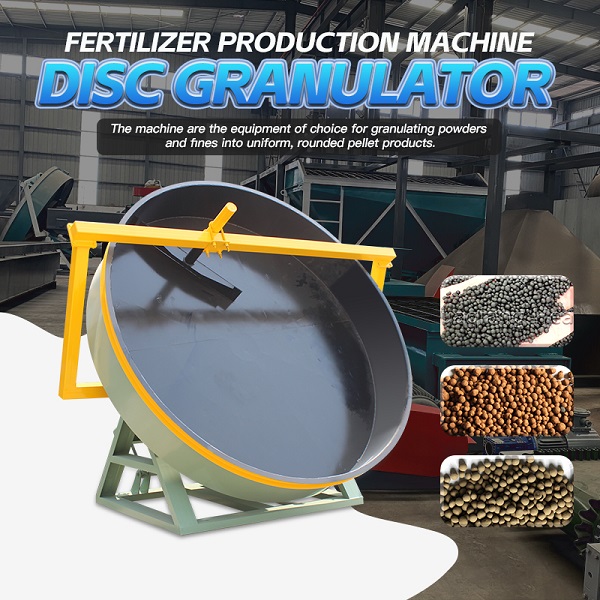
I. Why Must High-Fiber, High-Moisture Materials Be Granulated at Low Speed?
High-fiber materials (such as straw, mushroom residue, and distiller's grains) and high-moisture materials (30%-40% moisture content) have two significant characteristics during granulation: First, fibers easily entangle around the granulator's main shaft and blades, forming "twisted" clumps; second, high moisture content and high viscosity cause the material to easily adhere and form oversized particles when rolling in the disc or drum. If the rotation speed is too high, the centrifugal force is too great, and the material is quickly thrown to the edge of the disc, failing to form a stable material flow. This leads to polarization in particle size and a sharp drop in pelleting rate.
At a low speed of 15-20 r/min, the material tumbles gently within the disc or drum, allowing sufficient time for fiber shearing and dispersion, and sufficient time for moisture to penetrate evenly. The material exhibits an ideal stratified state within the disc, with large particles on the inside and fine powder on the outside. The particles gradually encapsulate and grow, ultimately forming a rounded, high-strength finished product. Practice shows that reducing the rotation speed from 25 r/min to 18 r/min can increase the pelleting rate of high-fiber materials by 15%-20% and improve particle compressive strength by more than 20%.
II. What scenarios are suitable for high-speed granulation?
High-speed granulation (25-35 r/min) is not without its advantages. For low-fiber, low-moisture powdery materials, such as raw materials for compound fertilizers and BB fertilizers, high speed can accelerate the material tumbling frequency, shorten the pelleting time, and increase the output per machine. However, high speed brings problems: particles tend to over-grow, resulting in a wider particle size distribution; equipment wear accelerates, and energy consumption increases. Therefore, high-speed granulation must be combined with a strict screening and return system; otherwise, the finished product qualification rate cannot be guaranteed.
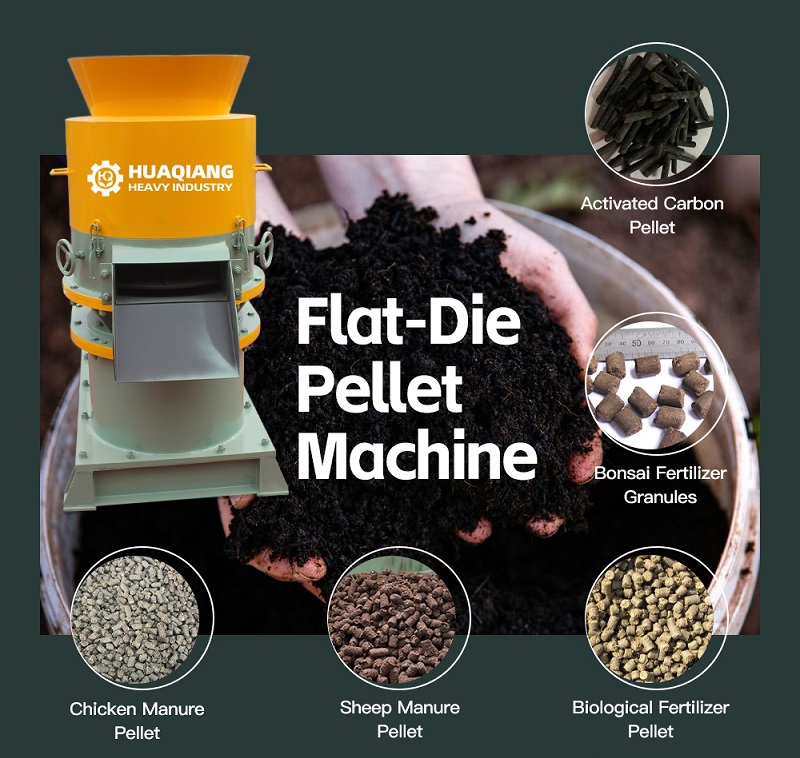
III. How to Determine the Optimal Rotation Speed?
The optimal rotation speed is not fixed but dynamically adjusted according to the material characteristics. There are three criteria for judgment: First, observe the material flow; the material in the pan should be in a stable tumbling state, without clumping or splashing. Second, observe the particle size; the finished product particle size should be uniform, with 2-4mm accounting for more than 85%. Third, observe the current; the granulator motor current should be stable between 70% and 85% of the rated value. If the current is too high, it indicates that the rotation speed is too fast or the material is too sticky, and the speed should be reduced; if the current is too low and pelletizing is slow, the speed can be appropriately increased.
IV. Recommended Adjustments After selecting low-speed granulation, the following adjustments are necessary: Water spray must be atomized, with the water volume controlled to the point where it can be formed into a ball when squeezed in the hand, but not dripping between the fingers; the disc inclination angle should be maintained at 40°-50°, and the drum residence time extended by 10%-15%; the screening and return material system should be kept stable, with the return material ratio controlled at 20%-30%. Only when the rotation speed, moisture content, inclination angle, and return material are properly matched can the advantages of low-speed granulation be fully realized.
V. Summary Should organic fertilizer granulation be low-speed or high-speed? For high-fiber, high-moisture materials, 15-20 r/min is recommended; this is crucial for ensuring pelleting rate and granule quality. For low-fiber, low-moisture materials, the speed can be appropriately increased. During production, it is crucial to avoid blindly pursuing high output by increasing the rotation speed, otherwise, the losses will outweigh the gains. Scientifically setting the rotation speed according to the material characteristics, combined with moisture and return material management, is essential to achieving efficient, stable, and high-quality organic fertilizer granulation production.