
2026-08-22
Why is Cooling Necessary After Granulation?
The granulated material must undergo cooling treatment. The fundamental reason is that freshly dried granules are at a high temperature (typically 60℃–90℃). Direct packaging will cause condensation inside the bag, leading to problems such as granule clumping, powdering, and mold growth. Cooling lowers the granules to near room temperature (generally no higher than ambient temperature +5℃), while significantly increasing granule strength and surface hardness. The cooling process is crucial for ensuring the long-term storage stability of the finished fertilizer product.
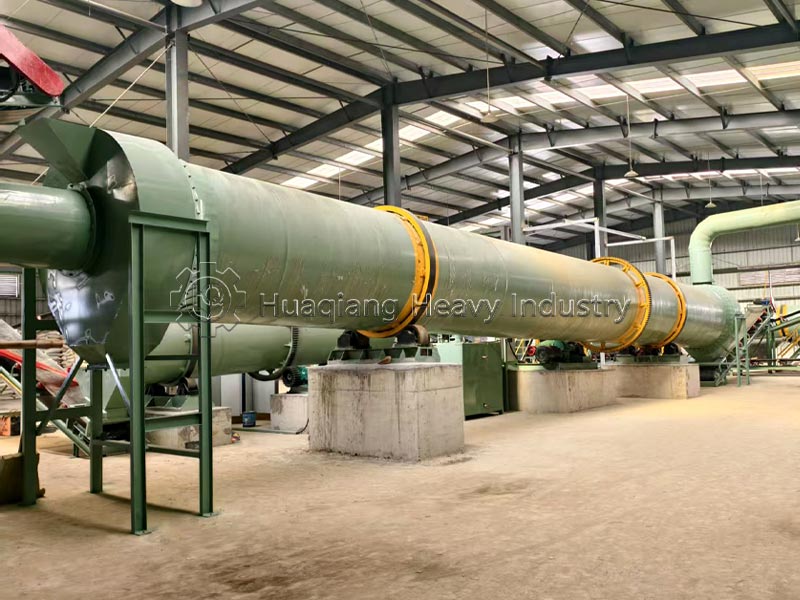
I. Core Purpose of Cooling
1. Preventing Condensation and Eliminating Clumping
Although the moisture content of the hot granules discharged from the dryer has been reduced to a safe range (below 10%), the granule temperature itself is still much higher than the ambient temperature. If directly packaged without cooling, the hot and humid air inside the bag will condense into liquid water on the inner wall of the bag and the surface of the granules upon cooling (especially at night or in a low-temperature warehouse environment). This moisture will cause the granule surface to redissolve and become sticky, gradually solidifying with pressure to form hard lumps, leading to product spoilage. The cooling process lowers the granule temperature to room temperature (30℃–40℃), ensuring that the temperature and humidity inside the bag are balanced with the external environment, eliminating the risk of condensation at the source.
2. Increased Granule Strength and Surface Hardness: Hot granules have a relatively loose internal structure. During cooling, the binding substances inside the granules (such as starch gelatinization, lignin, etc.) gradually solidify as they cool, significantly increasing the compressive strength of the granules. Fully cooled granules are less prone to breakage and pulverization during packaging, transportation, and storage, resulting in a high percentage of intact finished granules.
3. Protection of Packaging Equipment and Bag Materials: Excessively high granule temperatures accelerate the aging and brittleness of packaging bags (especially woven plastic bags), shortening the lifespan of packaging materials and even causing problems such as insecure heat seals and damaged heat seals.
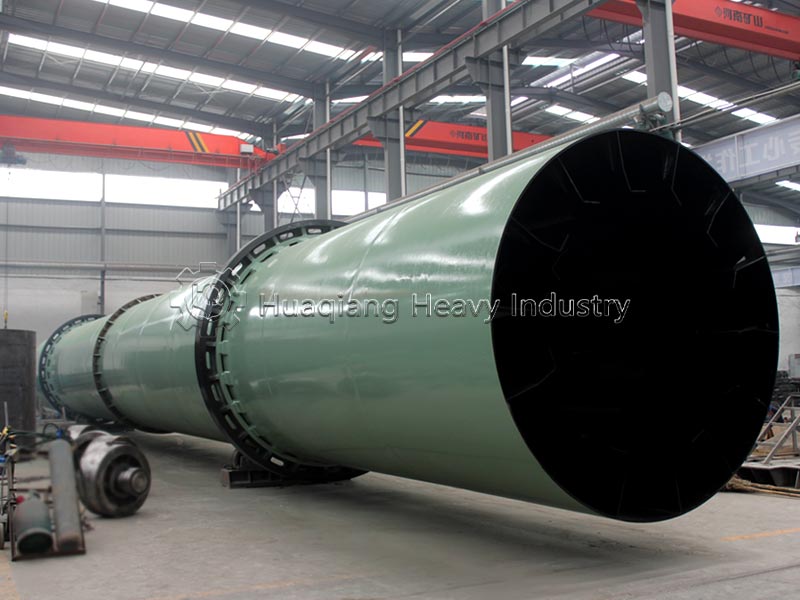
II. Cooling Equipment and Working Principle: Fertilizer production lines commonly use rotary coolers (also known as cooling cylinders), whose structure is similar to a dryer, but which uses room temperature air (or cold air). Hot particles enter the slowly rotating, inclined cylinder from the feed end. Cold air is drawn in by a fan at the discharge end (i.e., negative pressure operation), flowing counter-currently to the particles and carrying away heat through heat exchange. The cylinder is equipped with lifting plates, causing the particles to fall evenly in a "material curtain" state, ensuring full contact with the cold air and high cooling efficiency. For large production lines, fluidized bed coolers are often used, utilizing airflow to fluidize the particles for more uniform and rapid cooling.
III. Cooling Process Parameter Control The temperature of the cooled particles should generally be controlled below 40℃, which can be relaxed to around 45℃ in summer, but should not exceed the ambient temperature by more than 5℃. The cooling airflow and material flow rate must be matched to avoid incomplete cooling due to insufficient cold air, and to avoid fine dust caused by excessive airflow. A cyclone dust collector or bag filter is usually installed at the cooling cylinder outlet to recover dust carried by the airflow.
IV. Impact of Cooling on Subsequent Processes Fully cooled granules result in higher screening efficiency and less screen clogging when entering the screening machine; the coating agent adheres more firmly during the coating process; and during automatic packaging and weighing, the granules have better flowability, ensuring higher weighing accuracy.
In short, cooling is not merely an "additional step" after drying, but a core guarantee to ensure that fertilizer granules do not clump, do not pulverize, and meet strength standards over the long term. All legitimate commercial organic fertilizer production lines are equipped with rotary coolers and adhere to a rigid process sequence of "cooling first, then packaging."