
2026-09-05
Slow-release fertilizers are a crucial technological pathway for modern agriculture to achieve the goal of "reducing fertilizer use and increasing efficiency." Unlike ordinary fast-acting fertilizers, which release nutrients rapidly after application to the soil, easily leading to leaching and waste, slow-release fertilizers use specific physical or chemical methods to ensure a continuous and stable supply of nutrients throughout the crop's growth period, thereby significantly improving fertilizer utilization. So, how is a complete slow-release fertilizer production line constructed? What are the key technical points of its core processes and equipment? This article will provide a detailed analysis from a popular science perspective.
I. What is Slow-Release Fertilizer? How Does it Difference from Controlled-Release Fertilizer?
To understand a slow-release fertilizer production line, it's essential to clarify two concepts: slow-release fertilizer and controlled-release fertilizer. Slow-release fertilizers use chemical and biological factors to slow down the release rate of nutrients, and their release process is influenced by external factors such as soil pH, microbial activity, and moisture content. Controlled-release fertilizers, on the other hand, encapsulate water-soluble fertilizers in a membrane, allowing nutrients to be released according to a predetermined pattern that aligns with the crop's absorption patterns. In simple terms, controlled-release fertilizer is a more advanced form of slow-release fertilizer, capable of more precisely controlling the rate and cycle of nutrient release.
II. Main Technical Routes for Slow-Release Fertilizers
Currently, the production of slow-release fertilizers mainly follows two technical routes: coating (film coating) type and chemical synthesis type.
Coated slow-release fertilizers are the mainstream products on the market today. They control the rate of water ingress and nutrient dissolution by coating the surface of fertilizer granules with a semi-permeable or low-permeability membrane material. Coating materials can be divided into two main categories: inorganic materials (such as sulfur, zeolite, and phosphate rock powder) and organic polymers (such as polyurethane and polyolefin resins). Chemically synthesized slow-release fertilizers are represented by urea-formaldehyde fertilizers, which generate polymers with low water solubility through the chemical reaction of urea and aldehydes, achieving the slow release of nutrients.
III. Core Equipment Composition of a Slow-Release Fertilizer Production Line
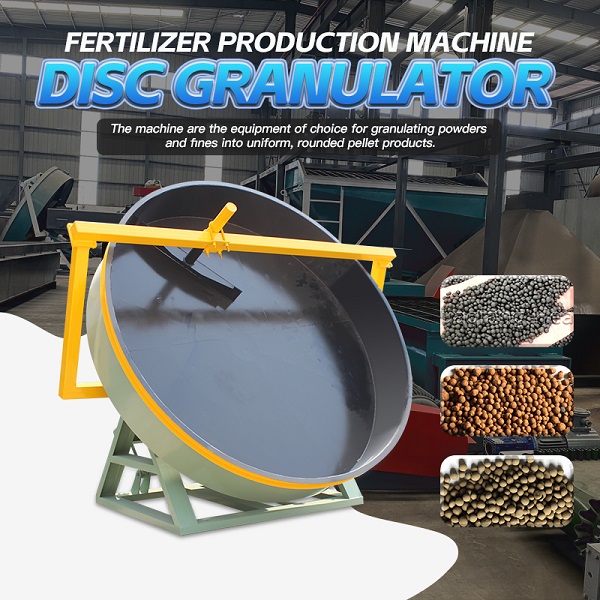
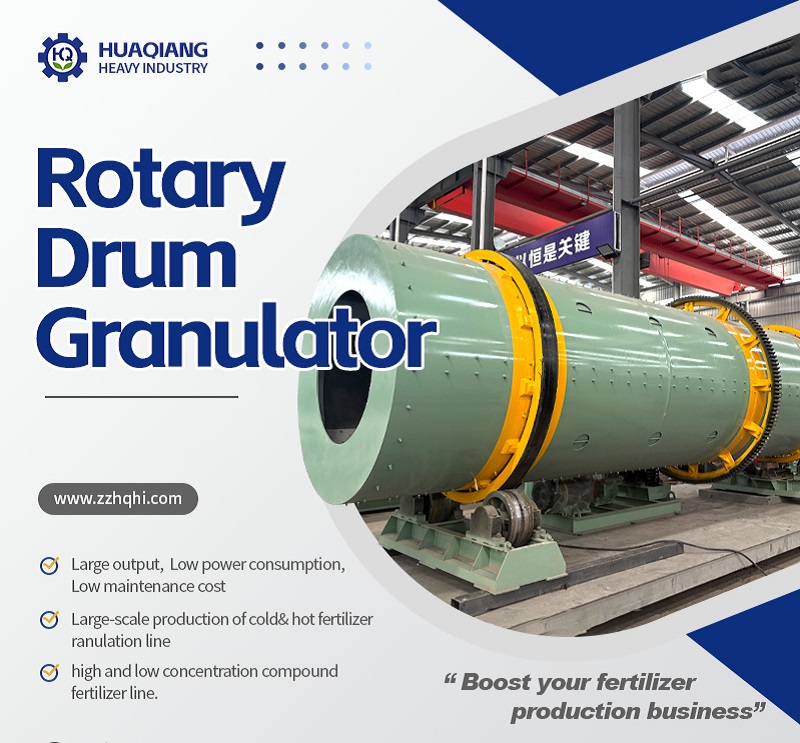
A typical slow-release fertilizer production line usually consists of the following core equipment connected in series: The granulation system is the starting point of the production line. Raw materials are batched and mixed before being fed into a granulator (such as a rotary drum granulator or disc granulator) to produce granular fertilizer cores. For chemically synthesized slow-release fertilizers, a reaction vessel is also required to complete the synthesis reaction of polymers such as urea-formaldehyde.
The drying and cooling system is responsible for removing excess moisture from the granules and cooling them. The granulated wet granules sequentially enter a dryer and a cooler to ensure low moisture content and high strength.
The screening system classifies the dried and cooled granules, separating out unqualified fine powder and oversized particles, which are then returned to the granulation system for reuse or crushed for further processing.
The coating system is the core process of the slow-release fertilizer production line. Coating equipment mainly falls into two categories: rotary drum and fluidized bed. The rotary drum is currently the mainstream equipment in fertilizer production, capable not only of coating but also of pre-treating the fertilizer surface, featuring multi-functionality, high yield, and ease of operation. During the coating process, fertilizer granules are first heated to 40-60°C in the preheating zone of the coating roller, then uniformly coated with coating material through multi-point spraying in the coating zone. Finally, the film is cured in the curing zone. Fluidized bed coating technology uses airflow to suspend the fertilizer granules, and the coating liquid is atomized and uniformly sprayed onto the granule surface, resulting in higher coating uniformity.
The packaging system is the final link in the production line. After coating, the finished slow-release fertilizer is cooled and then enters an automatic packaging machine for metering, sealing, and palletizing.
IV. Typical Process Flow Taking coated slow-release fertilizer as an example, its standard process flow can be summarized as: raw material batching → mixing → granulation → drying → cooling → sieving → preheating → coating spraying → curing → cooling → finished product packaging. The entire production line achieves automated continuous operation through a PLC control system, and the production capacity can range from 10,000 tons to over 300,000 tons per year depending on investment needs.
Conclusion The slow-release fertilizer production line is a systematic engineering project integrating chemical synthesis, physical coating, and automated control. From granulation and molding to precise coating, from temperature control to spray uniformity—the precision of each process directly impacts the slow-release performance and efficacy of fertilizer products. Driven by both fertilizer reduction and efficiency improvement and the green transformation of agriculture, understanding the technical composition of slow-release fertilizer production lines not only helps investors make informed equipment selection decisions but also helps industry practitioners better capitalize on this rapidly growing market opportunity.
The foundation of any slow‑release production line lies in selecting the right granulation and coating equipment. The disc granulator machine offers gentle, low‑temperature shaping ideal for bio‑enriched formulations, while the rotary drum granulator provides high throughput and robust granules for large‑scale operations. When combined with advanced Fertilizer coating technology — whether rotary drum or fluidised bed — these granulators enable precise polymer or sulphur encapsulation, controlling nutrient release over weeks or months. Moreover, bio-organic fertilizer production technology can be integrated by coating beneficial microbes onto the granule surface after the slow‑release layer, creating a dual‑function product that both feeds and protects crops. This synergy between granulation, coating, and biological enhancement transforms standard fertilisers into high‑performance, environmentally friendly solutions — meeting the dual goals of yield improvement and sustainable agriculture.