
2026-09-10
During fertilizer production, processes such as drying, granulation, cooling, and screening generate large amounts of dust-laden exhaust gas. Simultaneously, combustion in hot blast stoves or boilers releases acidic gases such as sulfur dioxide (SO₂) and nitrogen oxides. If these pollutants are emitted directly without treatment, they not only severely pollute the atmosphere but also subject companies to increasingly stringent environmental penalties. Dust removal and desulfurization systems serve as the "last line of defense" on fertilizer production lines—they are responsible for intercepting dust and harmful gases before they are released into the atmosphere, ensuring compliance with emission standards.
I. Where Does the Exhaust Gas Come From?
Polluting processes in fertilizer production are present throughout almost the entire process: raw material crushing and screening generate large amounts of dust; drying and cooling processes discharge high-humidity, dust-laden exhaust gas; granulation releases ammonia (NH₃) and dust; and combustion in hot blast stoves or boilers produces SO₂ and nitrogen oxides. The characteristics of exhaust gases from different processes vary significantly—drying exhaust gases have high humidity and high dust concentration; granulation exhaust gases contain ammonia and acidic gases; and combustion flue gas is mainly composed of SO₂. Single treatment methods are insufficient to handle such a complex pollutant composition; a multi-stage series dust removal and desulfurization system is necessary for graded treatment.
.jpg)
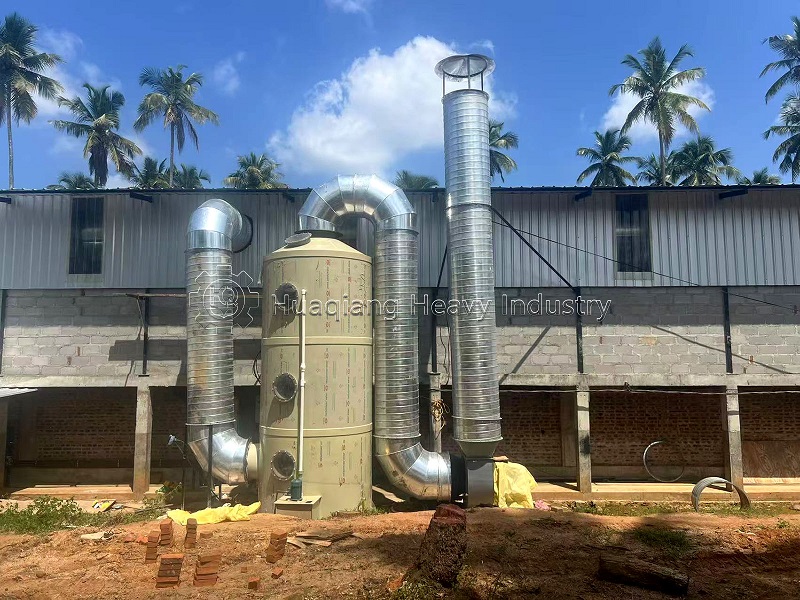
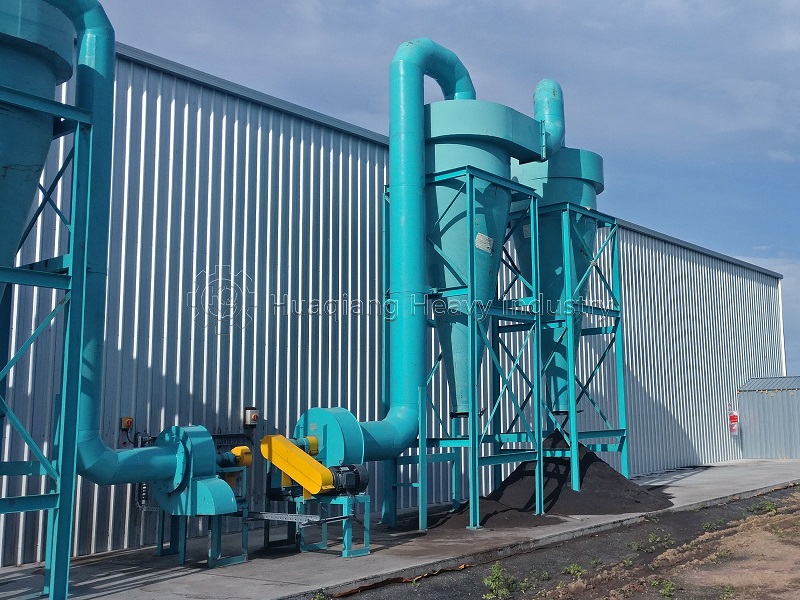
II. Core Technology: Multi-stage Series, Layer-by-Layer Interception A complete dust removal and desulfurization system typically employs a combination of "dry dust removal + wet desulfurization." Front-end dry dust removal primarily uses cyclone dust collectors and bag filters—cyclone dust collectors utilize centrifugal force to capture coarse dust particles; bag filters have excellent purification effects on fine dust particles, achieving a dust removal efficiency of over 99%. Back-end wet desulfurization absorbs acidic gases such as SO₂ through alkaline spraying in a scrubbing tower. Taking a 400,000-ton compound fertilizer project as an example, its coal-fired boiler exhaust gas is equipped with "SNCR denitrification + bag filter + sodium alkali desulfurization" facilities, while the high-tower granulation exhaust gas is treated separately by a water cyclone dust collector. III. Results? Data Speaks for Itself
The advanced dust removal and desulfurization systems have demonstrated remarkable effectiveness. After treatment with a combination of electrostatic precipitator and baghouse filter + magnesium oxide desulfurization, the overall dust removal efficiency reaches 99.8%. One company, after upgrading its desulfurization and denitrification equipment, achieved stable sulfur dioxide emission concentrations below 5 mg/m³. In organic fertilizer production, some projects employ a combined process of cyclone dust collector + settling chamber + spray tower + water mist separator, achieving particulate matter treatment efficiency of over 99%. These figures far exceed the limits of 10 mg/m³ for particulate matter and 50 mg/m³ for sulfur dioxide in the "Emission Standard for Air Pollutants from Chemical Fertilizer Industry."
IV. Policy-Driven: The Defense Line Must Be Fortified
With the successive promulgation of "Emission Standards for Air Pollutants from Chemical Fertilizer Industry" across various regions, the environmental protection threshold for fertilizer companies continues to rise. Dust removal and desulfurization systems are no longer an "optional" requirement, but a "mandatory" and "rigid bottom line" for production line operation. For fertilizer companies, dust removal and desulfurization systems are not only the last line of defense for meeting environmental standards, but also a "passport" to achieving green and sustainable development—only by guarding this line of defense can production go far.
While dust removal and desulfurization systems form the final barrier against emissions, their effectiveness is intimately linked to upstream process choices — particularly the granulation method, which determines dust generation, exhaust volume, and pollutant composition. In a npk fertilizer production line, the rotary drum granulator and drum granulation routes produce relatively high dust and ammonia emissions during drying and cooling, demanding robust cyclone, baghouse, and scrubbing stages. Conversely, fertilizer granules compaction using a fertilizer compactor operates with minimal moisture and no high‑temperature drying, drastically reducing dust and acidic gas loads — a significant environmental advantage within the npk fertilizer manufacturing process. For organic‑based products, the organic fertilizer granulator series (disc, drum, or extrusion) also influences particulate release and odour potential, requiring tailored emission controls. Thus, optimising the entire npk production process — from raw material handling through granulation and fertilizer compaction to final packaging — is the most proactive way to reduce the burden on end‑of‑pipe treatment. When combined with advanced multi‑stage scrubbing, these process‑level improvements ensure compliance with increasingly strict standards while lowering operating costs. Ultimately, the “last line of defense” is strongest when it works in harmony with smart, low‑emission production technology, turning environmental compliance from a regulatory obligation into a competitive advantage for sustainable fertilizer manufacturing.