
Equipment Introduction
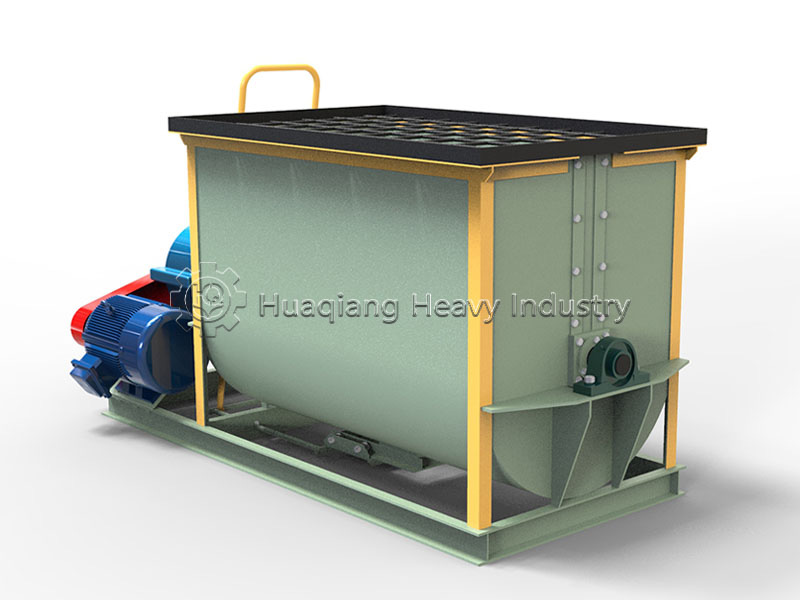
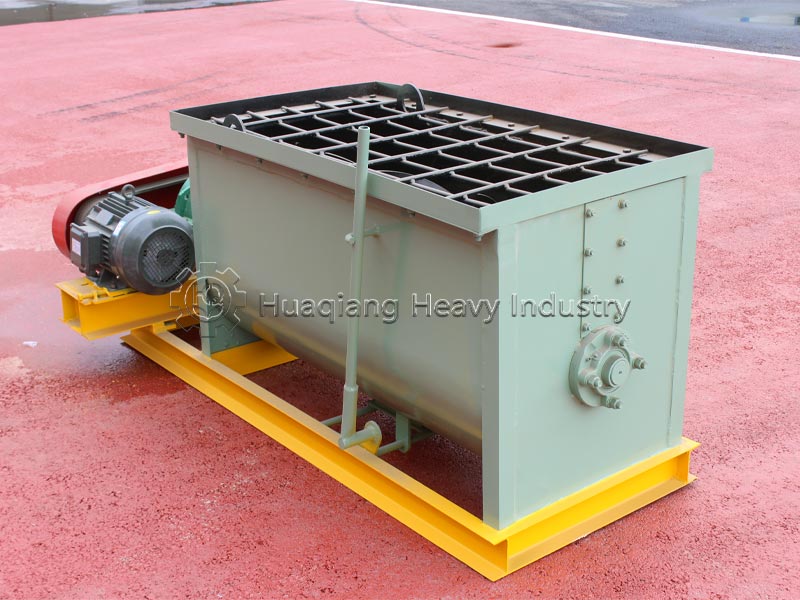
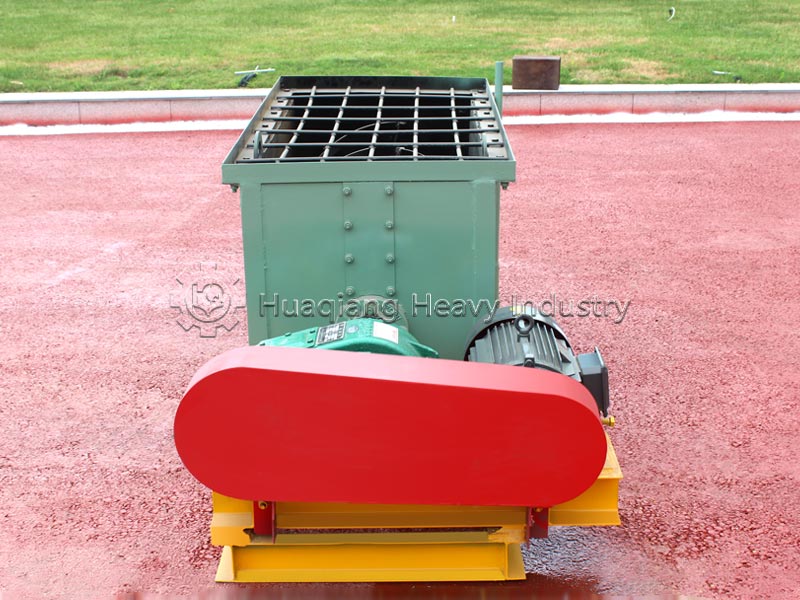
Horizontal ribbon mixers, also known as horizontal ribbon mixers, are core mixing equipment used in the fertilizer, feed, chemical, and food industries for the fine homogenization of multi-component materials. Their core structure consists of a U-shaped cylinder and built-in double-layered counter-rotating spiral blades (ribbons).
This equipment, characterized by its fast mixing speed, high uniformity, and low residue, serves as a crucial link between the crushing and granulation processes in organic fertilizer, compound fertilizer, feed, and chemical powder production lines. Compared to vertical mixers, horizontal ribbon mixers offer faster mixing speeds, no dead zones, and less residue, making them particularly suitable for processing formulations with large specific gravity differences or requiring the addition of trace amounts of microbial agents.
Horizontal ribbon mixers boast high mixing efficiency, a large loading coefficient, a compact structure, and clean discharge. They can also be equipped with jackets for heating or cooling. This equipment embodies the "three highs, two lows, and one low" characteristic—high efficiency, high uniformity, high loading coefficient, low energy consumption, low pollution, and low breakage.
Structural Components of the Equipment
The horizontal ribbon mixer mainly consists of the following five systems:
1. Mixing Container (Cylinder)
Typically a U-shaped elongated structure with a smooth inner wall to reduce material movement resistance. Some models have a jacket on the outer wall of the cylinder for introducing heating or cooling media to achieve temperature control. The cylinder cover can be designed as arched (pressure-bearing) or fully open (easy to clean). Considering the characteristics of organic fertilizer raw materials, the inner wall of the cylinder is often lined with 304 stainless steel or high-molecular-weight polyethylene plate for corrosion resistance and to prevent sticking.
2. Mixing Components (Core Working Parts)
Constitutes double or triple-layer spiral blades (ribbons) mounted on a horizontal main shaft. The spiral directions of the inner and outer layers of the ribbon are opposite:
Outer spiral ribbon: gathers material from both sides of the cylinder towards the center.
Inner spiral ribbon: conveys material from the center to both sides.
The edges of the ribbon blades are usually overlaid with wear-resistant alloy to resist sand and gravel erosion.
3. Transmission System
Composed of a motor, reducer, pulleys, V-belts, and couplings. The system employs a belt-driven cycloidal reducer, whose elastic connection offers the advantage of protecting transmission components under overload conditions. The motor and mixing shaft are directly connected via a cycloidal pinwheel reducer, resulting in a simple structure, high operational reliability, and convenient maintenance.
4. Discharge Device: A pneumatic or manual large-opening arc-shaped discharge port with a discharge angle greater than 70 degrees is installed at the bottom. Powder materials utilize a pneumatic large-opening structure, offering advantages such as fast discharge and no residue; high-fineness materials or semi-fluid materials use a manual or pneumatic butterfly valve.
5. Auxiliary Systems: Includes a shaft end packing seal device, a liquid injection device (for injecting liquid during solid-liquid mixing), and a flying knife device (for special materials).
Raw materials for equipment
Working Principle
Raw Material Category
Detailed Material List
Organic Fertilizer Raw Materials
Composted livestock and poultry manure (chicken manure, pig manure, cow manure, sheep manure, etc.); straw powder, mushroom residue, distiller's grains, culture soil; sludge, biogas residue, kitchen waste and other organic wastes
Chemical Fertilizer & Mineral Raw Materials
N‑P‑K chemical fertilizer powder; medium and trace element fertilizers; compound fertilizer particles, bulk‑blended fertilizer raw materials
Feed Raw Materials
Corn flour, soybean meal powder, fish meal and other powdered feeds; various grains and oil‑meal raw materials
Chemical & Food Raw Materials
Solid‑solid powder‑powder mixtures; solid‑slurry powder‑gel liquid mixtures; various viscous materials
Raw Material Adaptation Features
✅ Suitable for viscous and agglomerative powder‑granule materials;
✅ Compatible with materials of special specific gravity;
❌ Poor mixing performance for high‑fiber content materials;
Processable particle size range: 20‑1400 mesh
After the equipment starts under no-load, the motor drives the main shaft to rotate at low speed via a reducer. The inner and outer double-layered counter-rotating spiral ribbons operate synchronously, creating a bidirectional convection circulation field:
1. The outer spiral ribbon pushes material close to the cylinder wall towards the center of the cylinder;
2. The inner spiral ribbon pushes material in the axial center area towards both ends of the cylinder;
3. Under the dual action of axial bidirectional pushing and radial tumbling, the material continuously convects, permeates, and mixes, achieving multi-component homogenization in a short time;
4. After mixing is complete, the bottom discharge gate opens, and the spiral ribbons continue to rotate, pushing the material completely out, reducing residue inside the cylinder.
Standard single-batch mixing time: 6~15 min. Recommended filling volume coefficient: 0.6~0.7 (60%~70% effective volume). Overfilling will significantly reduce mixing efficiency and increase motor load.
Equipment Applications:
1. Organic Fertilizer/Environmental Protection Industry: Mixing of chicken manure fermentation materials, cow and sheep manure organic fertilizer, compound fertilizer, bio-fertilizer, and sludge fermentation auxiliary materials, with supporting drying and granulation production lines;
2. Feed and Livestock Industry: Complete feed, concentrated feed, vitamin and trace element premixes, protecting feed pellet integrity and ensuring uniform dispersion of trace additives;
3. Food Processing Industry: Baking premix powder, compound seasonings, solid beverages, milk powder compounding, meal replacement powders; 304 stainless steel sanitary grade models are washable and disinfectable;
4. Pharmaceutical and Chemical Industry: Mixing of solid preparations, pesticide powders, dyes, rubber additives, and lithium battery cathode powders; 316L stainless steel for corrosion resistance;
5. Building Materials and Coatings Industry: Mixing of interior wall putty, exterior wall dry powder mortar, stone paint, waterproof coatings, and tile adhesive;
6. New Materials Industry: Ceramic blanks, catalysts, plastic filler masterbatches, and lithium battery conductive agent slurries.
Equipment Operation and Maintenance Methods
1. Installation and Commissioning
1) Construct the foundation according to the foundation drawing, reserving foundation holes (no particularly strong concrete foundation is required);
2) After installation, check whether the bolts in all parts are loose and whether the main unit's door is secure;
3) Install the power supply and control switch according to the equipment's power configuration;
4) After inspection, conduct a no-load test run. Production can only begin after normal operation.
2. Operating Procedures
1) Start-up: Must be started under no-load conditions. Starting with material is strictly prohibited to avoid overloading and damaging the motor;
2) Inspection: Before starting, check all bolts, bearing seats, reducer oil level, and rotation direction;
3) Feeding: Large stones, iron blocks, and other hard objects must not be mixed into the material;
4) Shutdown: Before stopping, stop feeding first, and stop the machine only after the material in the mixing chamber has been emptied. Stopping the machine with material is strictly prohibited.
3. Daily Maintenance
1) Check the tightness of bolts and the wear of vulnerable parts every shift;
2) Regularly clean residual material in the mixing chamber to prevent clumping;
3) Check the tension of the V-belt and adjust or replace it in time;
4) Stop the machine immediately for inspection if the bearing oil temperature rises.
Common Equipment Faults, Causes, and Solutions
1. Poor Mixing Uniformity, Material Segregation and Agglomeration
1) Causes: Excessive feed rate, insufficient mixing time, excessive wear and clearance of the screw belt, large density difference of materials, motor reverse rotation;
2) Solutions: Reduce feed rate to 60%~70% of rated volume, extend mixing time, repair and replace worn screw belts, reverse motor wiring to correct rotation direction, reduce speed and add guide scrapers for materials with large density differences.
2. Motor Overload Tripping, Weak Starting
1) Causes: Starting with material, hard foreign objects stuck in the drum, excessively viscous material, screw belt deformation and jamming, loose belt;
2) Solutions: Empty the material in the drum and restart under no-load conditions, stop the machine and remove iron blocks and stones, reduce feed rate or add water to dilute viscous materials, correct and repair the screw belt, tighten the V-belt.
3. Abnormal operating noise, metallic friction noise
1) Causes: Worn or insufficient lubrication of bearings, deformed helical ribbon rubbing against the cylinder wall, worn coupling pins, hard debris mixed in the cylinder;
2) Solutions: Add grease or replace bearings, calibrate the helical ribbon clearance, replace nylon pins, thoroughly clean foreign objects from the cylinder.
4. Poor unloading, large amount of residue in the cylinder
1) Causes: Material sticking to the unloading gate, high material moisture content sticking to the wall, insufficient air pressure in the pneumatic unloading system, worn helical ribbon reducing pushing capacity;
2) Solutions: Clean valve sealing surfaces after each unloading, pre-dry material to reduce moisture, adjust air compressor pressure, replace worn helical ribbons.
5. Powder leakage from shaft end, dust leakage
1) Causes: Aging and worn seals, insufficient lubrication and overheating of bearings damaging the seal, insufficient negative pressure during feeding;
2) Solutions: Replace mechanical seal/packing, add grease on time, install a dust removal device to balance the air pressure inside the cylinder. 6. Gearbox oil leakage and excessive temperature rise
1) Causes: Aging oil seal, excessive/insufficient lubricating oil, long-term overload;
2) Solutions: Replace gearbox oil seal, add standard level gear oil, control feed rate to avoid long-term overload.
Application of the Equipment in the Production Line
In fertilizer and chemical production lines, horizontal ribbon mixers are typically located after the batching process and before the granulation or packaging process:
Raw Material Storage → Metering and Batching → [Horizontal Ribbon Mixer] → Granulation/Reaction → Drying → Cooling → Sieving → Packaging
Core Process Functions:
1. Uniform Batching: Precisely and uniformly mixes nitrogen, phosphorus, and potassium raw materials, organic matter, trace elements, binders, etc., according to the formula;
2. Liquid Addition: During the mixing process, a spray system evenly sprays microbial agents, binders, or water to achieve uniform solid-liquid mixing;
3. Crushing Agglomerates: Utilizes a special rotor structure to crush large clumps in the raw materials, preventing them from affecting subsequent granulation;
4. Continuous/Batch Production: Can be operated in single batches or connected to an automatic batching system for continuous production.
Target Customers for this Equipment
1. Organic Fertilizer/Environmental Protection Equipment Manufacturers and Organic Fertilizer Processing Plants: Processing livestock manure, sludge, and straw fermentation and mixing; Huaqiang Heavy Industry's WJ series is a primary suitable choice.
2. Feed Companies and Premix Processing Plants: Batch mixing of complete feeds and trace element premixes.
3. Food Seasoning Factories, Baking Raw Material Factories, and Solid Beverage Manufacturers: Hygienic stainless steel mixing requirements.
4. Pharmaceutical Raw Material, Veterinary Drug, and Pesticide Powder Manufacturers: Anti-corrosion and high-uniformity mixing conditions.
5. Building Material Factories, Putty Mortar, and Stone Paint Manufacturers: Large-scale continuous mixing of dry powders.
6. Chemical New Material Factories, Lithium Battery Material, Pigment and Dye, and Plastic Filler Masterbatch Processing Plants.
7. Laboratories and University Research Institutions: Small-scale experimental horizontal ribbon mixers for small-scale formulation testing.
8. Powder Equipment Complete Set Engineering Companies: Providing customers with complete mixing main units for their entire production line.
| Model | Prod capacity(t/h) | Power(kw) |
| 600×1200 | 2-3 | 5.5 |
| 700×1500 | 3-5 | 7.5 |
| 900×1500 | 4-8 | 11 |
| 1000×2000 | 8-10 | 15 |