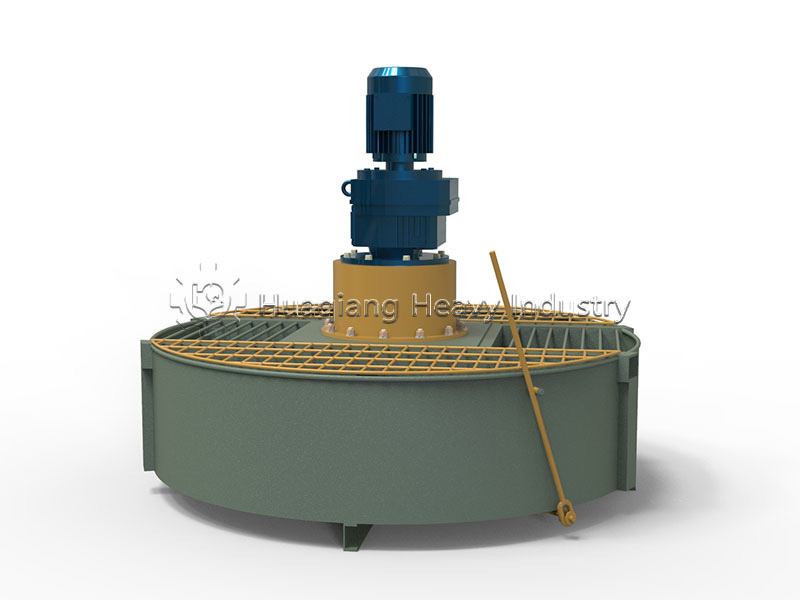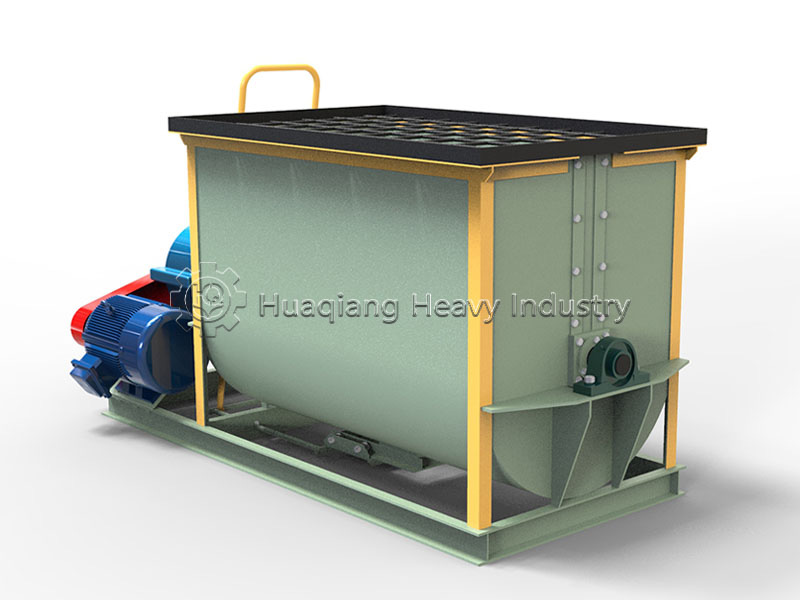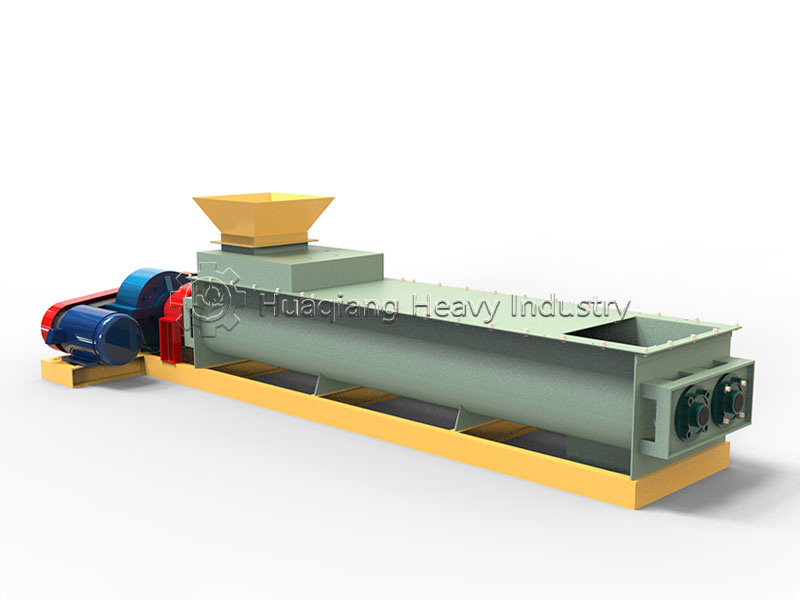
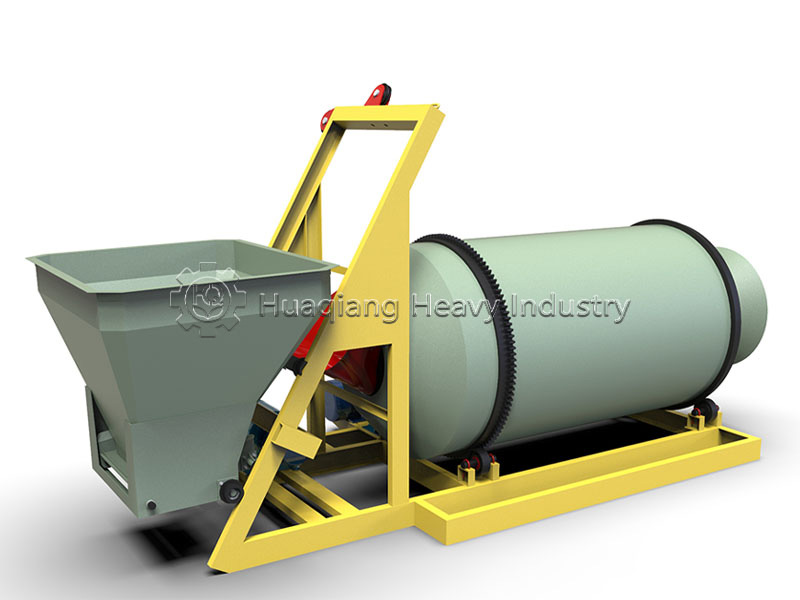
Equipment introduction
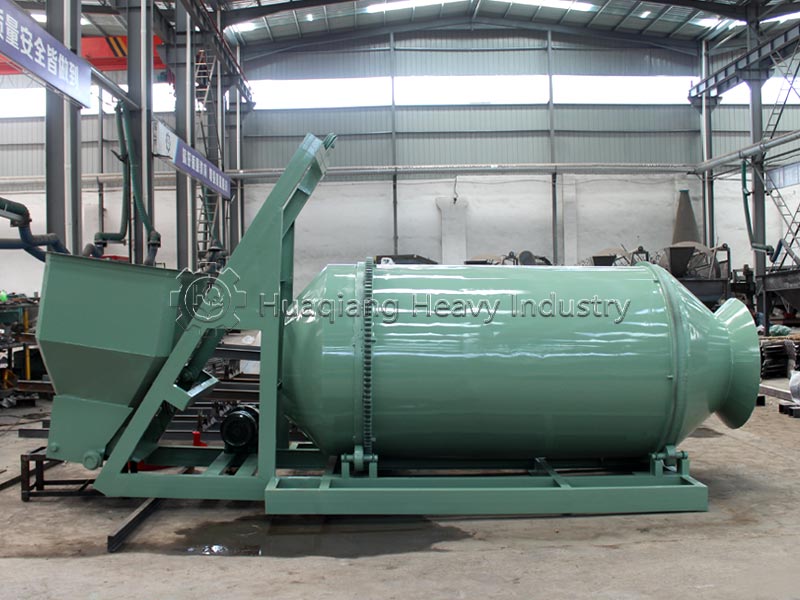
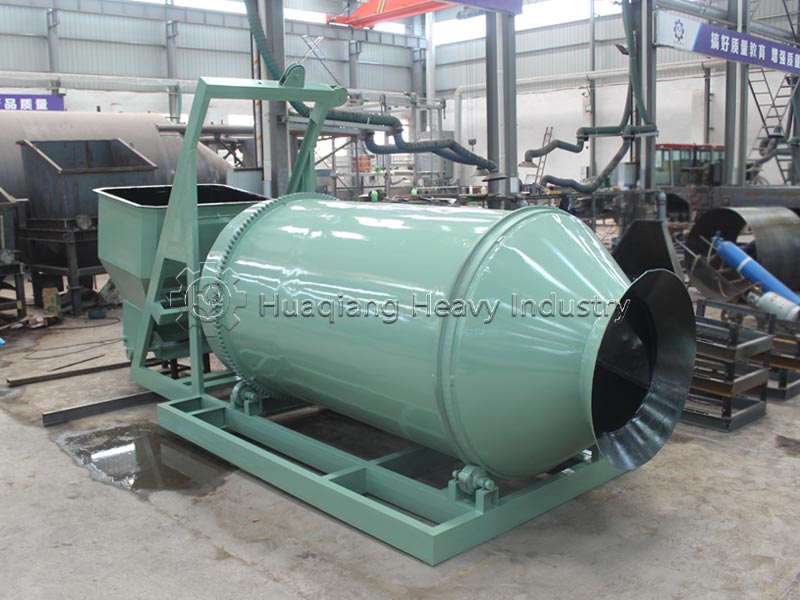
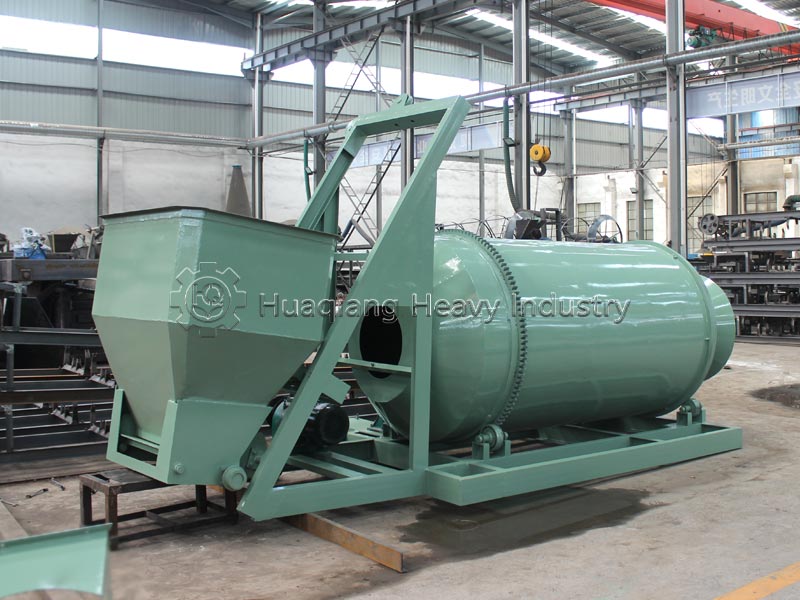
BB fertilizer mixer, also known as Bulk Blending Fertilizer Mixer, is the core mixing equipment of the BB fertilizer (blended fertilizer) production line. Its main function is to physically mix two or more simple fertilizers (such as urea, ammonium phosphate, potassium chloride, etc.) in a set proportion to make a compound fertilizer containing nitrogen, phosphorus, potassium and medium and trace elements. The entire mixing process is physical mixing and no significant chemical reactions occur. Therefore, the equipment structure is relatively simple, the investment cost is low, and the formula adjustment is flexible. It is especially suitable for the personalized needs of soil testing and formula fertilization.
The BB fertilizer mixer overcomes the chromatography (segregation) and diversion phenomena of the mixture caused by differences in raw material specific gravity and particle size, significantly improves the batching accuracy, and is an ideal choice for BB fertilizer manufacturers.
Equipment Structure and Composition
The BB fertilizer mixer is typically divided into three main parts, along with a complete auxiliary system and electrical control system:
| Components | Description |
|---|---|
| Frame Part | Fabricated by high‑quality carbon steel plates and channel steel welding with strict process treatment. It bears the whole working body and ensures stable equipment operation. |
| Transmission Connection Part | Composed of energy‑saving motor (2.2‑18 kW), belt pulley, V‑belt and hard‑tooth‑surface reducer. The reducer gear meshes with the body gear to drive cylinder rotation, featuring smooth operation and low noise. |
| Cylinder Working Part | Cylinder is made of high‑quality carbon steel or industrial‑grade stainless steel. Special spiral mixing blades are installed on inner wall. Mixing and discharging are realized by forward‑reverse rotation. |
| Feeding System | Elevating hopper or belt conveyor transports raw materials from storage bin to top feeding port of mixer. Zero‑residue feeding design avoids blockage. |
| Discharging System | Pneumatic valve at bottom controls discharging with adjustable discharge speed. Some models cooperate with screw conveyor to realize automatic packaging. |
| Electric Control System | PLC‑centered control equipped with touch‑screen interface. Supports manual / automatic / composite modes. Mixing time, discharging time and ratio parameters are configurable. Fault alarm and emergency‑stop functions are available. |
A complete BB fertilizer production line also includes: material storage silos, automatic batching machines, weighing scales, high-angle belt elevators, quantitative packaging machines, automatic bag sewing machines, finished product conveyor belts, and a computer control system.
Working Principle of the Equipment
The BB fertilizer mixer mainly adopts forward and reverse rotation operation, using a special internal spiral mechanism and a unique three-dimensional structure to mix and output materials.
1. Drum Mixing Working Principle (Mainstream Model)
The equipment uses a drum mixing device, which is placed horizontally with the inlet and outlet at both ends of the drum. Forward rotation is for feeding and mixing, and reverse rotation is for discharging. After the material enters through the inlet, it is evenly mixed by the tumbling of the spiral mixing blades. The drum mixing method can prevent segregation of the mixed product, resulting in high mixing uniformity.
2. Vertical Spiral Mixing Working Principle
The rapid rotation of the screw lifts the raw material from the bottom of the drum to the center, then scatters it in an umbrella-like pattern back to the bottom. The raw material tumbles and mixes inside the drum, and a large amount of raw material can be evenly mixed in a short time.
3. Core Process Advantages
The equipment adopts a batch intermittent mixing method, which does not damage the original particle shape of the material during the mixing process. For granular raw materials with large differences in specific gravity (such as urea 1.33 g/cm³ and monoammonium phosphate 1.74 g/cm³), they can be mixed evenly in a very short time (usually 1 to 3 minutes), with a mixing uniformity coefficient of variation (CV) ≤5% and an extremely low particle breakage rate (usually <0.5%).
Suitable Raw Materials:
1. Basic Granular Single-Element Fertilizers: Urea, Potassium Chloride, Potassium Sulfate, Monoammonium Phosphate, Diammonium Phosphate, Ammonium Chloride (particle size 2-4mm);
2. Functional Fertilizer Granules: Slow-Release Fertilizer, Controlled-Release Fertilizer, Coated Compound Fertilizer, Organic Fertilizer Granules;
3. Auxiliary Materials: Trace Elements in Granules (Zinc, Boron, Magnesium, Calcium), Humic Acid Granules, Bio-bacterial Granules, Anti-caking Powder;
4. Limitations: Not suitable for highly moist, sticky manure or sludge-like materials (for these, a twin-shaft mixer for organic fertilizers is recommended). Material Characteristics Compatibility: Can mix various granules with a density difference of 0.3-0.5 g/cm³ and a particle size difference of 1-3 mm, without easily separating into layers.
Applications of the Equipment
BB fertilizer mixers have a wide range of applications, mainly concentrated in the following areas:
1. BB Fertilizer/Blended Fertilizer Production (Core Application)
BB fertilizer mixers are specialized mixing equipment for producing BB fertilizer (blended fertilizer), and are also core equipment in compound fertilizer and formulated fertilizer processing lines. They are widely applicable to BB fertilizer processing plants with an annual output of 10,000 to 100,000 tons, formulated fertilizer customization workshops, and soil testing and formula fertilization service stations of large agricultural input dealers.
2. Soil Testing and Formula Fertilization
Based on soil nutrient data and crop nutrient requirements in different regions, the nitrogen, phosphorus, and potassium ratio can be adjusted in real time to produce various specifications of specialized fertilizers, such as general-purpose (15-15-15), high-nitrogen (28-6-6), and high-potassium (16-8-24), meeting the personalized nutritional needs of different crops such as corn, wheat, fruit trees, and vegetables.
3. Functional BB Fertilizer Production
Functional BB fertilizers can be produced by uniformly coating or mixing trace elements such as zinc, boron, and molybdenum onto the surface of granules using a premixed carrier.
4. Other Industries The BB fertilizer mixer can also be used for mixing materials in industries such as fertilizer, pharmaceuticals, food, mining, and dry powder. It is suitable for mixing two or more fertilizers and premixes.
Equipment Application in the Production Line
1. Composition of a Complete BB Fertilizer Production Line
A complete BB fertilizer production line includes: a fully automatic batching system, a lifting conveyor, a dedicated BB fertilizer mixing system, a finished product storage silo, an automatic quantitative packaging weigher, and a bag-sewing machine, among other core components.
Complete Process: Storage System → Feeding System → Metering System → Conveying and Lifting System → Mixing and Stuffing → Automatic Packaging and Sewing → Finished Product Belt Conveying → Computer Control System.
2. Fully Automated Production
The BB fertilizer production line consists of three parts: an automatic batching system, a mixing system, and a quantitative packaging machine. It is computer-controlled and fully automated. The batching system is computer-controlled and uses electronic weighing to strictly control the proportions. The equipment uses fully automatic computer control; both batching and packaging are done using electronic weighing.
3. Core Technological Advantages
The process utilizes direct feeding from the lifting trough and direct unloading from the mixer, achieving almost zero material spillage. Integrating batching, mixing, and quantitative packaging, it can automatically prepare 3-6 types of materials according to the formula.
4. Flexible Formula Switching: Formulas can be modified at any time to produce different BB fertilizer products for different crops and soil conditions in different regions. The equipment discharges completely without residue, is easy to clean, and allows for quick switching between different fertilizer formulas, avoiding cross-contamination of materials.
5. Enclosed Operation: The enclosed operation design eliminates dust pollution and complies with environmental protection standards for agricultural input production.
Equipment Operation and Maintenance Methods
1. Daily Operating Procedures:
1) Pre-start Inspection: Confirm that the power supply (380 VAC ±10%) and air supply (0.5 ± 0.1 MPa) are normal; check that all fasteners and seals are intact; confirm that there are no foreign objects inside the drum.
2) Parameter Setting: Set the formula ratio, mixing time (usually 3–5 minutes/batch), speed, and other parameters via the touch screen.
3) Start-up Sequence: Start the dust removal system first → feeding system → batching system → mixer → packaging system.
4) Operation Monitoring: Observe the equipment's operating status, paying attention to abnormal vibration, unusual noise, or temperature rise.
5) Shutdown Sequence: Stop the feeding system first → stop the mixer after the material inside the drum is emptied → finally turn off the main power supply.
2. Maintenance and Upkeep Points:
| Maintenance Item | Cycle | Content |
|---|---|---|
| Lubrication | Each shift / Weekly | Regularly add lubricating oil(grease) to reducer, bearings and gears. |
| Sealing Inspection | Weekly | Check the sealing of cylinder joint surface and discharge port to prevent material leakage. |
| Blade Inspection | Monthly | Check the wear condition of spiral blades, replace high‑wear‑resistant alloy blades in time. |
| Electrical System | Monthly | Check PLC, sensors and circuit connections, clean dust inside control cabinet. |
| Comprehensive Overhaul | Annually | Carry out complete disassembly‑inspection and maintenance for reducer, motor and cylinder. |
Target Customers for the Equipment:
1. BB Fertilizer/Blended Fertilizer Manufacturers: The core customer group for BB fertilizer mixers is BB fertilizer (blended fertilizer) manufacturers, widely applicable to BB fertilizer processing plants with an annual production capacity of 10,000 to 100,000 tons.
2. Formula Fertilizer Customization Workshops and Agricultural Input Distributors: Large agricultural input distributors' soil testing and formula fertilization service stations need to flexibly formulate different BB fertilizer formulas based on soil test results.
3. Compound Fertilizer and Blended Fertilizer Manufacturers: The equipment is designed to support compound fertilizer and formulated fertilizer processing lines.
4. Small and Medium-Sized Fertilizer Processing Plants: BB fertilizer mixers are suitable for mass production in small and medium-sized fertilizer processing plants. They can flexibly adapt to different production capacities and formulas of BB fertilizer, covering all scenarios from small and medium-sized processing plants to large-scale agricultural input enterprises.
5. Agricultural Input Workshops and Township Fertilizer Distributors: Small BB fertilizer mixers are mobile and require no fixed installation; they can be started simply by plugging in a power source. They are suitable for use in agricultural input workshops and small planting bases, allowing a single person to complete the entire process of feeding, mixing, and discharging.
6. Family Farms and Planting Bases
Can be used for compounding and mixing BB fertilizer raw materials, and blending compound fertilizer formulations.
7. Selection Recommendations
1) Small Users (Agricultural Input Workshops, Family Farms): Choose batch-type small models (ZYC-1250, etc.), which are easy to operate and flexible to move.
2) Medium Users (Small and Medium-sized Fertilizer Plants): Choose models with a batch capacity of 500kg-1000kg or an hourly output of 5-10 tons.
3) Large Users (Large-scale BB Fertilizer Plants): Choose continuous production lines with an hourly output of 10-30 tons, equipped with a fully automatic batching and packaging system.
4) High Requirements for Particle Protection: Prioritize drum mixers, which offer the gentlest mixing and the lowest breakage rate.
5) Frequent Switching Between Multiple Formulas: Prioritize models equipped with a PLC automatic control system and thorough unloading with no residue.
Summary table of common faults, causes and solutions for BB fertilizer mixers
| Common Problems | Cause Analysis | Solutions |
|---|---|---|
| Material Segregation (Layering) | Large difference in raw‑material particle size; big specific‑gravity variation; excessive mixing time; too fast discharging speed | Strictly control particle‑size consistency (particle‑size difference ≤1mm); optimize mixing duration (standard mixing time: 3‑5 minutes); adopt two‑stage buffer and multi‑stage deceleration process to stabilize material state and avoid layering caused by fast discharging |
| Inaccurate Metering | Mechanical vibration, air‑pressure fluctuation, unstable working voltage, zero‑point drift of sensors | Adopt PLC & high‑precision sensor closed‑loop control system; enable auto zero‑tracking, tare‑weight and drop‑compensation functions; install shock‑absorbing supports in high‑vibration areas; stabilize air source and power‑supply voltage |
| Material Blockage / Jamming | Caking caused by high moisture content of raw materials; too‑fast feeding speed, instant over‑feeding; material accumulation and blockage at discharge port | Strictly control raw‑material moisture ≤12%; install anti‑blocking device; adjust feeding speed evenly to prevent over‑feeding; regularly clean accumulated material at discharge port for smooth discharging |
| Poor Sealing & Material Leakage | Aging and failure of sealing gaskets; loose bolts on joint surfaces; corrosion‑deformation after long‑time cylinder operation | Regularly inspect and replace aged sealing parts; evenly fasten bolts on joint surfaces; adopt industrial stainless‑steel cylinder to resist corrosion‑deformation and eliminate leakage fundamentally |
| Uneven Mixing | Severe wear of mixing blades; insufficient mixing power; operating speed below rated value; single‑batch feeding volume exceeds rated capacity | Inspect and replace worn spiral blades timely; adjust rotating speed to rated standard; strictly control single‑batch feeding within the rated capacity range |
| Abnormal Noise & Equipment Vibration | Severe bearing wear or damage; oil shortage and jamming; reducer gear wear, abnormal transmission; loose anchor bolts | Replace worn bearings regularly and replenish lubricant grease; inspect reducer gear wear and renew gear oil; fully tighten anchor bolts and calibrate equipment level |
| Dust Emission | Insufficient negative pressure of dust‑removal system, poor dust‑collecting effect; poor sealing at feeding inlet leading to dust leakage | Equip negative‑pressure dust‑removal system, control dust emission ≤10 mg/m³; install dust‑proof sealing device at feeding inlet to strengthen sealing and prevent dust overflow |
Core Technological Advantages of the Equipment:
1. Low Particle Breakage and Preservation: Gentle tumbling/ribbon structure, particle breakage rate <0.5%, preserving the appearance of fertilizer particles and the slow-release effect of the coating;
2. Anti-Segregation and Precise Mixing: Three-dimensional convection mixing offsets specific gravity differences, nutrient variation coefficient ≤5%, meeting national standards for blended fertilizers;
3. Adaptable to Multiple Formulas and Rapid Production Changeover: No dead corners in the cylinder, extremely low discharge residue, minimizing cross-contamination when switching between different fertilizer formulas;
4. Environmentally Friendly Closed Production: Fully enclosed cylinder + matching dust removal system, no dust emission, meeting environmental impact assessment requirements;
5. Model Coverage of Full Capacity: From small 1-ton intermittent machines to 60-ton/hour continuous horizontal machines, adaptable to production lines of different sizes;
6. Low Maintenance Costs: Easily replaceable and removable parts, simple overall structure, low operator threshold;
7. Strong Automation Adaptability: Can be connected to PLC batching systems and fully automatic packaging machines to achieve unmanned continuous production.
Analysis of the advantages and disadvantages of the equipment
| Category | Item Description | Detailed Description |
|---|---|---|
| Advantages | Particle‑friendly | Adopts gentle counter‑mixing principle with full‑physical mild mixing. Very low particle‑breakage rate (<0.5%), maximally retaining the integrity of fertilizer granules. |
| Advantages | High mixing uniformity | Achieves uniform mixing at 1:10000 ratio, with standard deviation as low as 3/100000. |
| Advantages | Fast mixing speed | Single‑batch mixing completed within 1‑3 minutes, 6‑10 times efficiency improvement compared with ordinary mixers. |
| Advantages | Anti‑segregation | Effectively solves material segregation and demixing caused by differences in specific gravity and particle size. |
| Advantages | Simple structure & Easy operation | Simple equipment structure, low operation threshold and convenient later‑stage maintenance. |
| Advantages | Small footprint | Compact overall structure to save workshop space. |
| Advantages | High‑level automation | Compatible with intelligent batching and interlocking control systems for automatic production. |
| Advantages | Flexible formula | Production formula can be adjusted according to different crops and soil conditions. |
| Advantages | Closed‑operation | Closed‑production with little dust overflow, complying with environmental‑protection requirements. |
| Disadvantages | Strict particle‑size requirement | Particle‑size difference ≤1 mm; high requirement for particle integrity. |
| Disadvantages | Powder‑material forbidden | Powder, wet or caked materials are not allowed into the equipment. |
| Disadvantages | Limited liquid‑adding capacity | Not suitable for adding liquid materials over 3%. |
| Disadvantages | Chemical‑compatibility restriction | Cannot mix chemically unstable materials that may react with each other. |
| Disadvantages | Only physical mixing | Only physical blending of granules, no chemical reaction of materials. |
| Disadvantages | Moisture‑sensitive | Material moisture content must be controlled below 12%. High moisture will affect production performance. |
| Size | Production Capacity(t/h) | Power(KW) | Mix Amount |
| ZYC-1250 | 1-5 | 7.5+4 | 500kg |
| ZYC-1500 | 2-6 | 7.5+4.5 | 750kg |
| ZYC-2000 | 3-8 | 11+4.5 | 1000kg |