Equipment Introduction
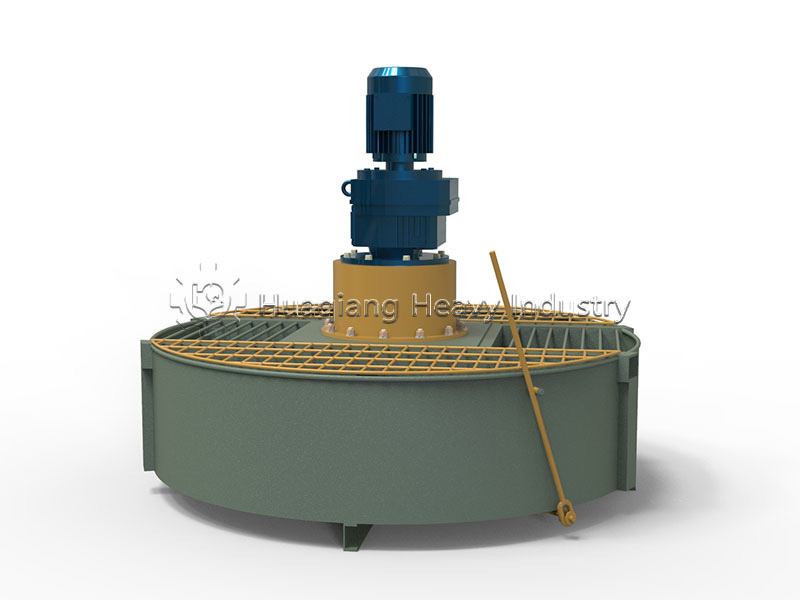
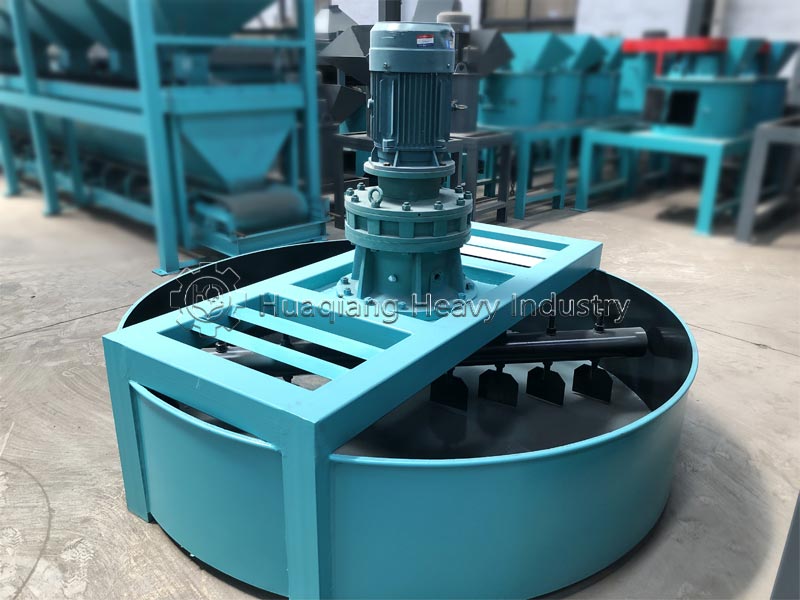
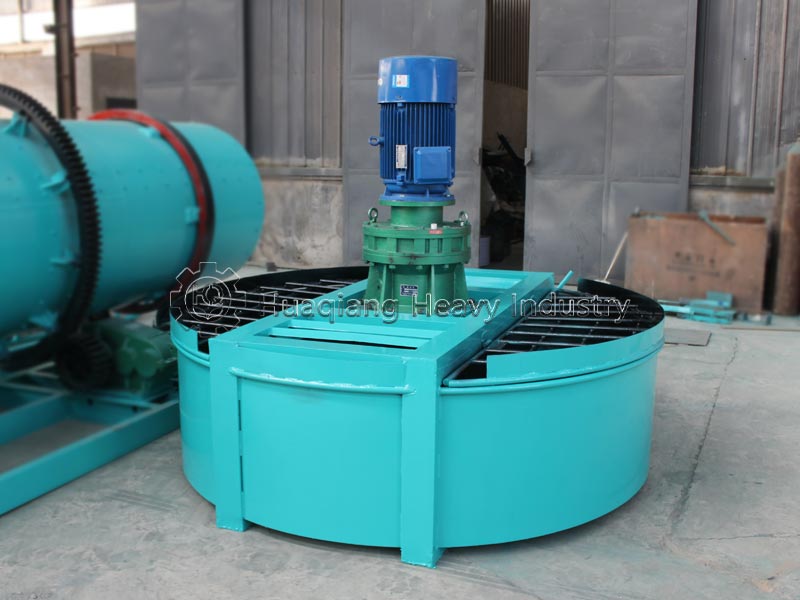
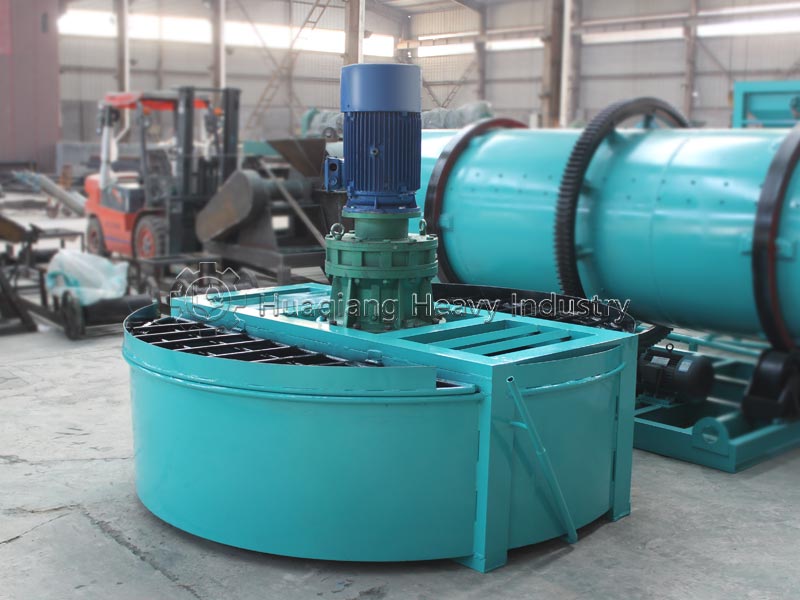
The vertical disc mixer is a new type of vertical continuous mixing equipment, mainly used for the uniform mixing of powdery and granular materials. Its core design concept utilizes the mixing mechanism within the disc to generate three-dimensional tumbling motion, enabling raw materials with different specific gravities and particle sizes to achieve a high degree of homogenization in a short time. This equipment features a compact structure, small footprint, low energy consumption, high mixing efficiency, and continuous operation, and is widely used in industries such as organic fertilizer, compound fertilizer, chemicals, building materials, and feed.
Compared to horizontal twin-shaft mixers, vertical disc mixers have a lower investment threshold for small- to medium-scale production scenarios. Furthermore, their open or semi-open structure allows operators to observe the material status in real time, making them an economical link between crushing, screening, and granulation processes.
Equipment Structure Composition
The entire machine is divided into three main parts: the frame assembly, the transmission connection assembly, and the mixing assembly. It is equipped with a feed inlet, bottom discharge door, lubrication system, and sealing components:
1. Frame Assembly
1) Material: High-quality carbon steel plate and channel steel welded as a whole, after aging stress relief treatment;
2) Function: Bears all working parts including the motor, reducer, and mixing disc; pre-drilled mounting holes at the bottom;
3) Features: High rigidity, low vibration, lightweight design, and simple on-site installation.
2. Transmission Connection Assembly
1) Drive Motor: Three-phase industrial asynchronous motor, standard configuration with optional frequency conversion speed regulation;
2) Cycloidal Pinwheel Reducer: Compact structure, large reduction ratio, overload resistant, providing stable torque to the main shaft;
3) Pin Coupling (Nylon Pin): Buffer and dampen vibration, easy to disassemble and assemble; only the pin needs to be replaced after damage, resulting in low maintenance costs;
4) Main Shaft Seal: Labyrinth + packing double seal to prevent fine powder from entering the bearings and causing wear. 3. Mixing Assembly (Core Mixing Unit)
1) Circular Mixing Pan: Carbon steel body, lined with polypropylene/304 stainless steel wear-resistant lining; pan wall height increases with model.
2) Mixing Main Shaft: Solid, thickened alloy steel main shaft, running through the center of the pan.
3) Multi-layer Mixing Blades (Impellers): High-chromium wear-resistant alloy material, 2-3 layers staggered, 5-10mm gap between blade tips and pan bottom to prevent material accumulation.
4) Feed Inlet: Top grid feed; can be equipped with iron removal/screening devices to intercept hard impurities.
5) Bottom Discharge Port: Electric/pneumatic discharge gate, compatible with belt conveyors and granulators.
6) Inspection and Cleaning Door: Side opening for easy cleaning of clumps in the pan and replacement of mixing blades.
Application scope of equipment
Application Industry
Specific Application Scenarios
Organic & Bio‑organic Fertilizer Production (Core Application)
Serves as core pre‑mixing equipment before fermentation for organic fertilizer, bio‑organic fertilizer and organic‑inorganic compound fertilizer production lines. It accurately and evenly mixes composted livestock‑poultry manure powder, chemical fertilizer powder, medium‑trace elements and conditioners according to formula. Suitable for small‑to‑medium organic fertilizer plants with annual output of 3,000‑20,000 tons.
Compound & Bulk‑Blended Fertilizer Production
Matched with compound fertilizer and BB fertilizer production lines. It can handle high‑humidity organic powder and mix N‑P‑K granular raw materials. Gentle mixing action keeps granules intact without crushing finished particles.
Feed Processing
Used for mixing complete feed, concentrated feed and premix for livestock and poultry. Achieves uniform proportion mixing between micro‑ingredients such as vitamins, minerals, feed carriers and main raw materials.
Chemical & Building‑material Industry
Mixing for chemical powder additives, refractory materials and ceramic raw materials. Suitable for dry‑mix mortar and dry powder building materials, as well as dust ash mixing treatment for thermal power plants.
Other Industries
Widely applied in mixing processes for powder and granular materials in chemical metallurgy, mining, light‑industry and other sectors, featuring strong versatility and rich applicable scenarios.
Working Principle of the Equipment
The working principle of the vertical disc mixer can be summarized as a combination of "centrifugal dispersion" and "gravity diffusion":
1. Power Transmission: After the motor starts, the speed is reduced and the torque increased by a cycloidal pinwheel reducer, and the power is transmitted to the vertical main shaft through a pin coupling.
2. Material Movement: The material falls into the rotating disc from the top feed inlet. The mixing main shaft drives the impeller/mixing teeth to rotate. Under the action of centrifugal force, the material is pushed against the disc wall, and at the same time, it is turned up from the bottom by the lifting plates, forming a continuous circulating flow of material that rises along the disc surface, is dispersed, and falls back to the center.
3. Homogeneous Mixing: In this process, high-frequency collisions, interpenetration, and diffusion occur between material particles, allowing components with large differences in specific gravity (such as light organic fertilizer powder and heavy chemical fertilizer granules) to be fully interwoven.
4. Discharge: The uniformly mixed material is discharged from the bottom discharge outlet under the action of gravity, entering the next process (such as granulation or packaging). By adjusting the disc tilt angle (usually 30°–60°) and the spindle speed, the residence time of the material in the disc (generally 3–5 minutes) can be controlled, thereby precisely controlling the mixing uniformity.
Raw Materials for the Equipment
This equipment is suitable for processing materials in various forms, but has certain requirements regarding the characteristics of the raw materials:
1. Form: Powdered, fine granular, and lightweight flake materials are best.
2. Moisture Content: The suitable range is 20%–30%. Too high a moisture content (>35%) can easily lead to sticking to the walls and clumping; too low a moisture content will result in more dust.
3. Particle Size: The raw materials should be pre-crushed and screened to prevent large stones, iron blocks, woven bags, and other hard foreign objects from entering, thus preventing damage to the impeller and main shaft.
4. Common Raw Materials: Fermented and decomposed livestock and poultry manure, straw powder, nitrogen, phosphorus, and potassium fertilizers, recycled materials (unqualified particles after screening), bentonite, humic acid, functional microbial agents, etc.
Equipment Applications in Production Lines
1. Core Position in Organic Fertilizer and Compound Fertilizer Production Lines
The vertical disc mixer is typically located after crushing and screening and before the granulator in the entire organic fertilizer production line, serving as the core mixing hub for ingredients.
Complete Processing Flow: Livestock and poultry manure and other raw materials → Crushing and screening → Mixing and batching in a vertical disc mixer → Granulation → Drying → Screening → Packaging
2. Specific Role in the Production Line
Coarse Mixing/Pre-wetting: Particularly suitable for the initial blending of organic fertilizer raw materials with a moisture content of 30%–40% after fermentation with backfill material.
Precise Batching: Allows for the mixing of crushed and screened organic fertilizer powder, nitrogen, phosphorus, and potassium fertilizer powder, trace element powder, and conditioner according to the formula ratio.
Quality Control: The open structure facilitates observation of the material's state; any uncrushed impurities or large crusts can be removed at any time.
3. Impact on Subsequent Processes
Materials uniformly mixed by the vertical disc mixer result in higher pellet formation and more consistent particle strength after entering the granulator. Nutrients are released evenly after application to the soil, avoiding the risk of root and seedling burn due to excessively high local concentrations.
4. Automated Configuration
The equipment can be equipped with a variable frequency speed control system, allowing for free adjustment of the mixing speed and operating time based on material moisture, form, and production capacity. It can be connected to conveyors, batching machines, and granulators to form a fully automated production line.
Equipment operation and maintenance methods
| Category | Step / Cycle | Operation & Maintenance Points |
|---|---|---|
| Operating Procedure | Before Startup | Check whether anchor bolts and blade fixing bolts are tightened; confirm the oil level of reducer and bearing housing; ensure feeding and discharging ports are free of blockage |
| Operating Procedure | Startup | Must start under no‑load condition; never start with materials loaded. After starting main motor, immediately verify correct rotation direction |
| Operating Procedure | During Operation | Feed materials gradually and evenly, overload prohibited. Monitor current, abnormal noise and vibration in real‑time. Prevent large stones and iron blocks from entering materials |
| Operating Procedure | Shutdown | Stop feeding first; shut down after materials inside disc are mostly discharged. Shutdown with loaded materials is strictly forbidden |
| Maintenance | Daily | Clean residual materials on disc inner wall, blades and discharge port; inspect equipment for abnormal noise and oil leakage |
| Maintenance | Weekly | Fully tighten all connecting bolts; check heat dissipation condition of motor |
| Maintenance | Every 3 Months | Replace grease for main shaft bearing housing |
| Maintenance | Every 4 Months | Replace gear oil for reducer (first replacement after 50 working hours; subsequent replacement every 500 working hours) |
| Maintenance | Quarterly | Inspect wear condition of blades and liners, replace heavily‑worn parts; check coupling coaxiality |
| Notes | — | Use plastic or wooden scrapers for residual‑material cleaning to avoid scratching anti‑stick liners. For long‑term shutdown (over 15 days), thoroughly clean equipment and apply anti‑rust oil |
Common Equipment Faults and Solutions
Fault 1: Abnormal operating noise, metallic friction and impact sounds
Causes: Loose stirring tooth bolts, hard iron blocks/stones entering the disc, insufficient lubrication and wear of bearings, misalignment of the main shaft;
Solution: Immediately stop the machine and disconnect the power; open the cover and clean out hard debris; tighten the stirring tooth bolts; add grease to the bearings, replace worn bearings directly; correct the coaxiality of the main shaft.
Fault 2: Discharge blockage, slow discharge
Causes: High moisture content of material, high viscosity and clumping; insufficient opening stroke of the discharge gate; material accumulation at the discharge port;
Solution: Stop the machine and use plastic/wooden tools to clean the blockage (do not use iron tools to scratch the liner); adjust the discharge gate limit switch; clean the accumulated material at the discharge port every shift; for high-moisture materials, appropriately reduce the feed rate and shorten the single mixing time.
Fault 3: Motor overload, tripping, and difficulty starting
Causes: Starting with material; accumulated material in the disc; increased resistance due to wear of the mixing teeth; insufficient lubrication in the reducer; unstable voltage;
Solutions: Strictly follow the no-load start procedure; thoroughly clean the disc; replace worn mixing teeth; replenish reducer lubricating oil; stabilize the power supply voltage.
Fault 4: Main shaft seal leakage and dust overflow
Causes: Aging of the packing seal, blockage of the labyrinth groove; excessive feed dust;
Solutions: Replace the sealing packing, clean the labyrinth groove of accumulated dust; install a dust removal device for the feed to reduce dust generation.
Fault 5: Poor mixing uniformity and material stratification
Causes: Severe wear of the mixing teeth, insufficient number of layers; excessive feed speed, insufficient material mixing time; mismatched speed;
Solutions: Replace the entire set of mixing teeth; reduce the feed flow rate; for frequency converters, adjust the speed downwards/upwards to match the material characteristics; extend the single mixing time.
Fault 6: Gearbox overheats too quickly and leaks oil.
Causes: Insufficient/deteriorated lubricating oil; stuck or overloaded coupling pins; aging oil seals.
| Category | Detailed Description |
|---|---|
| Advantages | 1. Small footprint: Occupies only 1/2‑1/3 space compared with horizontal mixers of equal capacity, suitable for plants with limited site space 2. Low investment cost: Equipment purchase cost is about 60%‑70% of horizontal mixers of equal capacity, low upfront investment 3. Fast mixing speed: One‑batch mixing completes within 3‑8 minutes for high intermittent‑production efficiency 4. High mixing uniformity: Material coefficient of variation (CV value) stably controlled within 5%, meeting organic fertilizer batching standards 5. Low residual volume: Discharge residual rate below 0.3%, reducing raw‑material waste 6. Excellent anti‑sticking performance: Equipped with polypropylene lining or stainless‑steel plates inside the disc to effectively mitigate material adhesion 7. Low energy consumption: Effective loading coefficient reaches 0.7‑0.9 with lower unit‑material energy consumption 8. Stable operation: Smooth running, noise lower than 75dB(A), friendly working environment 9. Easy maintenance: Compact overall structure with open inner space for convenient inspection and cleaning 10. Strong material adaptability: Stably processes high‑moisture organic‑fertilizer raw materials with moisture content 30%‑40% |
| Disadvantages | 1. Limited single‑batch capacity: More suitable for small‑and‑medium intermittent production lines, not for ultra‑large‑capacity continuous production 2. Restricted material‑density adaptability: Not recommended for materials with huge specific‑gravity difference; layering may occur 3. Not fit for extremely viscous slurry: Heavy‑viscous materials such as pure manure slurry with moisture>40% tend to stick and cake 4. Pre‑treatment required for long‑fiber materials: Coarse fibers longer than 5 cm must be pre‑crushed 5. Limits on high‑precision mixing: For premium premix requiring CV ≤5%, horizontal, double‑helix or V‑type mixers are preferred 6. High overall center‑of‑gravity: Higher requirements for installation foundation flatness and firmness |
| Model | Mixer | Rotate Speed | Power | Prod Capacity | Overall dimensions (L*W*H) | Quality | |
| Diameter | Wall Height | ||||||
| mm | mm | r/min | kw | t/h | mm | Kg | |
| PJ1600 | 1600 | 400 | 12 | 5.5 | 3-5 | 1612×1612×1368 | 1200 |
| PJ1800 | 1800 | 400 | 10.5 | 7.5 | 4-6 | 1900×1812×1368 | 1400 |
| PJ2200 | 2200 | 500 | 10.5 | 11 | 6-10 | 2300×2216×1503 | 1668 |
| PJ2500 | 2500 | 550 | 9 | 15 | 10-16 | 2600×2516×1653 | 2050 |