
2026-02-27
In fertilizer production, the granulator is a core piece of equipment determining the commercialization level of the product—it directly determines the appearance, strength, and uniformity of the granules, thus affecting market prices and farmer acceptance. Currently, there are three main types on the market: disc granulators, drum granulators, and twin-roll extruders. Each has its own advantages and disadvantages, suitable for different raw material characteristics and production needs. This article will provide a detailed comparison from six core dimensions to help you accurately select the right "key piece of equipment."
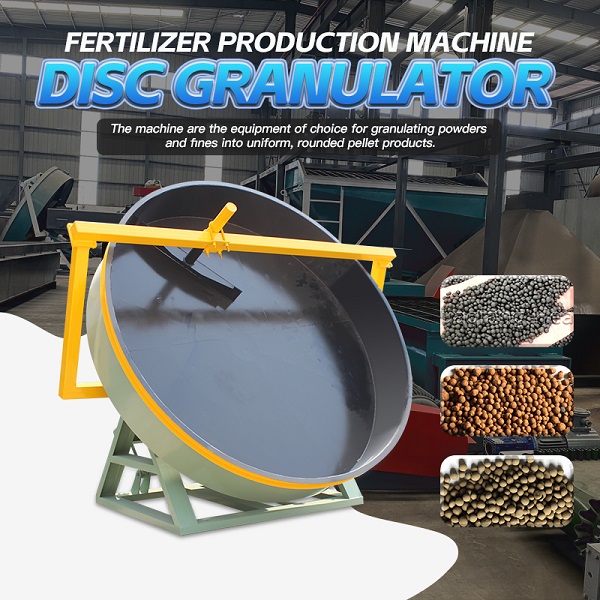
Disc granulators are best suited for granulating pure organic fertilizers. Utilizing the material's own viscosity, it rolls into spheres under the centrifugal force and friction of the rotating disc, requiring no added chemical binders, and the finished product can have an organic matter content close to 100%. For well-rotted chicken manure, cow manure, mushroom residue, etc., disc granulators are an ideal choice.
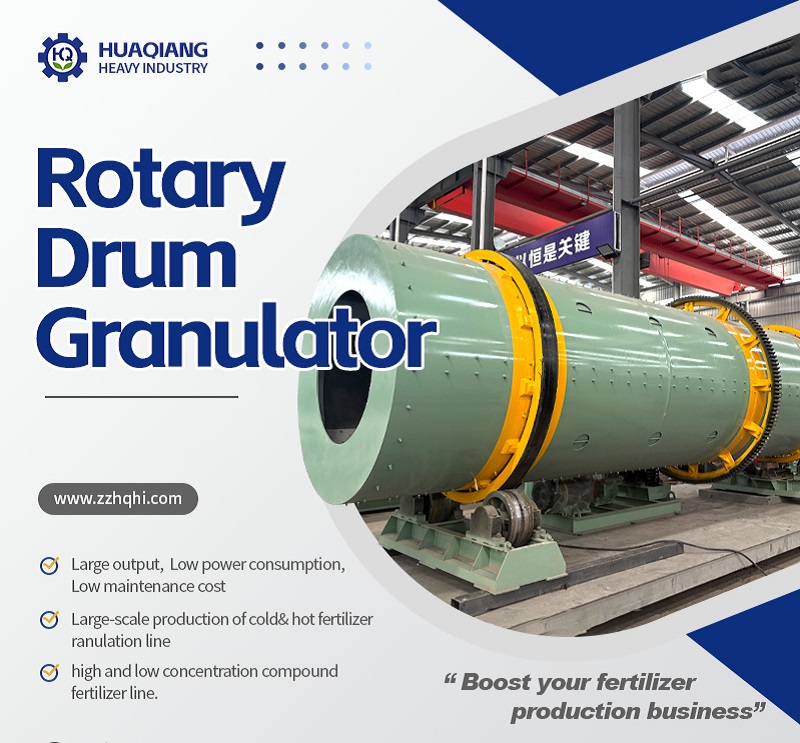
Drum granulators are more suitable for organic-inorganic compound fertilizers. It employs a wet granulation process, using steam or water mist to agglomerate materials into spheres. It can process mixed raw materials containing inorganic nutrients such as urea and ammonium phosphate, offering wide adaptability.
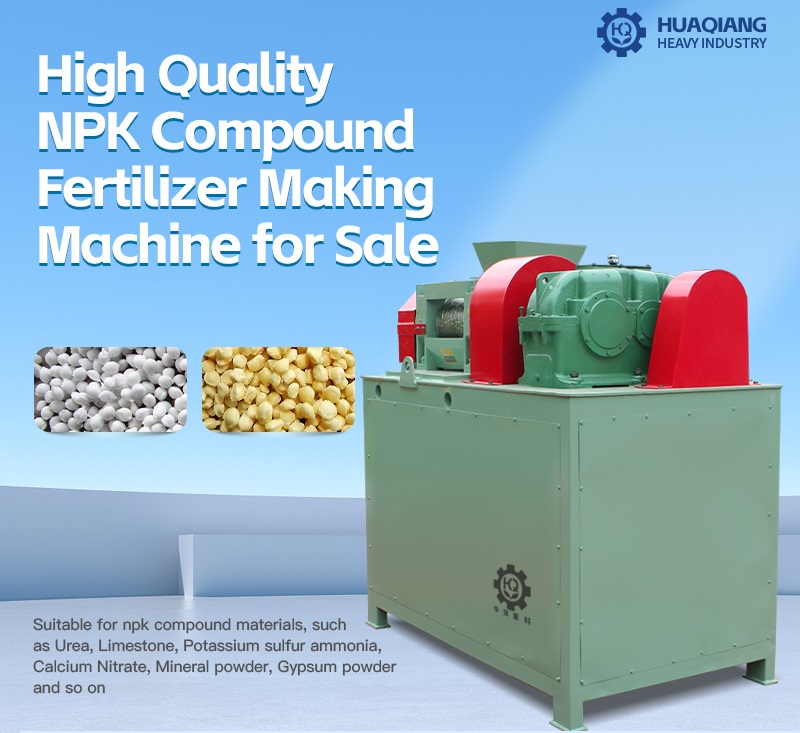
The double-roll extrusion granulator specializes in the dry granulation of compound fertilizers and blended fertilizers. It relies on two counter-rotating rollers to high-pressure extrude dry powder materials into flakes, which are then crushed and shaped into granules. No water needs to be added, and no subsequent drying is required.
The disc granulator typically has a single-machine hourly output between 1-10 tons, suitable for small to medium-scale production. The drum granulator represents large-scale production, with a single-machine hourly output reaching 10-40 tons, making it the mainstream choice for large compound fertilizer plants. The double-roll extrusion granulator has a moderate capacity, typically 5-20 tons/hour, balancing efficiency and flexibility.
The disc granulator produces perfectly spherical granules with a smooth surface, uniform color, and the best appearance, making it particularly suitable for the high-end market with high requirements for product appearance. The drum granulator has good granule uniformity and high capacity, but its sphericity is slightly inferior to that of the disc granulator. Twin-roll granulators produce flat, round, or irregularly shaped granules with the highest hardness, making them less prone to breakage during transportation and storage, suitable for markets requiring long-distance transport.
Both disc granulators and drum granulators are wet granulation processes, resulting in granules with a high moisture content (20%-30%). They require dryers and coolers to reduce the moisture content to safe storage standards. This necessitates greater equipment investment and a larger footprint.
Twin-roll extrusion granulators use a dry process, maintaining a relatively constant moisture content after extrusion (usually below 10%). No drying is required, allowing for direct screening and packaging. This significantly simplifies the process and saves on equipment investment and energy costs for drying systems.
Disc granulators are simple in structure, intuitive to operate, and easy to maintain, making them the ideal choice for small-scale users. Drum granulators are larger, require more auxiliary equipment, and have relatively higher operation and maintenance requirements. Twin-roll granulators are highly automated, equipped with hydraulic adjustment and intelligent control systems, greatly reducing manual intervention, but initial commissioning requires professional guidance.
Disc granulators have the lowest overall cost—the equipment is affordable and requires no complex auxiliary equipment, making them an economical choice for start-ups and small and medium-sized enterprises. Rotary drum granulators have a higher initial investment and require a supporting drying and cooling system, but they offer high single-machine capacity and low energy consumption per ton of product, making them suitable for large-scale production. Double-roller granulators have slightly higher equipment costs (high requirements for hydraulic systems and roller materials), but they eliminate the drying process, resulting in lower operating costs and a significant overall advantage over dry-process granulation.
If you produce pure organic granular fertilizer and prioritize perfect spherical shape and a premium appearance: a disc granulator is your best choice. It uses the simplest process to produce the most aesthetically pleasing granules.
If you produce organic-inorganic compound fertilizer and require large-scale continuous production: a rotary drum granulator better meets your needs. Its high capacity and wide adaptability provide a reliable guarantee for large-scale production.
If you produce compound or blended fertilizers and desire a simplified process and energy savings: a double-roller extrusion granulator is worth considering. It uses dry forming, eliminating the need for drying, and achieves stable production with lower operating costs.
From the perfect spherical shape of the disc granulator to the capacity advantage of the rotary drum granulator, and the dry energy saving of the double-roller granulator—each of these three granulators has its strengths. There is no absolute "best," only the one most suitable for your needs. Huaqiang Heavy Industry offers a full range of granulation equipment. We can recommend the optimal configuration based on your raw material characteristics, production capacity targets, and product positioning, helping you create competitive fertilizer products from the granulation stage.
Quick Troubleshooting Common Crusher Faults: Reducing Downtime and Improving Efficiency
The crusher is the "first hurdle" in fertilizer raw material pretreatment. Long-term processing of high-moisture, hard, and coarse-fiber materials inevitably leads to malfunctions. The key is to quickly locate the cause and resolve the problem, minimizing downtime. This article summarizes solutions and preventative measures for five common faults to help you improve equipment uptime.
Causes: Feed speed too fast, exceeding equipment processing capacity; raw material moisture content too high, high viscosity; large hard objects stuck in the raw material.
Solutions: Immediately stop the machine, open the cleaning door, and manually remove the blocking material. Check for hard objects and remove them. After restarting, slow down the feed speed and gradually increase it after the operation stabilizes.
Preventive Measures: Pre-treat raw materials before feeding – break large pieces into smaller pieces, and appropriately mix in dry materials or allow them to dry in the sun if the moisture content is too high. Install a screen or iron separator at the feed inlet to intercept stones, nails, and other debris.
Causes: Hard debris (stones, metal) enters; blades or hammers are loose; bearings are worn due to lack of lubrication.
Solutions: Stop the machine immediately and open the casing for inspection. Remove any foreign objects immediately; check the blade fixing bolts and tighten them if loose; check the bearing temperature and add grease if overheated.
Preventive Measures: Strengthen raw material screening before feeding and install a debris removal device. Check the blade tightness before each shift and regularly add grease to the bearings.
Causes: Blades or hammers are severely worn and the cutting edge is dull; the gap between the blade and the liner is too large; the screen is damaged or partially blocked.
Solutions: Check the wear of the blades; replace or reverse severely worn blades; adjust the gap between the blade and the liner to the standard value (usually 5-8 mm); clean or replace the screen.
Preventive Measures: Check the blade condition every 50 hours of operation and the screen every 100 hours. Grind or replace easily worn parts periodically according to the hardness of the raw material.
Causes: Excessive feed rate, prolonged overload operation of the equipment; blocked cooling fan or poor ventilation; unstable voltage.
Solutions: Stop the machine immediately and allow the motor to cool naturally. Clean the dust accumulated on the motor casing and cooling fan. After restarting, reduce the feed rate, controlling it at 80%-90% of the rated current.
Preventive Measures: Strictly adhere to the equipment's rated capacity for feeding, avoiding underloading. Maintain ventilation around the motor, and enhance heat dissipation during high temperatures in summer.
Causes: Crushing hard metals or stones; poor blade material with cracks or defects; fatigue fracture after long-term wear.
Solutions: Stop the machine and replace the broken blade, while also checking other blades for damage. Clean debris from inside the machine to prevent damage to other components.
Preventive Measures: Raw materials must pass through an iron removal device before feeding and be strictly screened. Choosing high-manganese steel blades, while slightly more expensive, offers superior toughness and wear resistance compared to ordinary steel, resulting in a longer service life and lower risk of breakage.
Daily routine: Clean residual material from inside the machine, check blades and bolts for looseness, and listen for any abnormal operating sounds.
Weekly routine: Check the tension of the V-belts; too loose and slippage will affect efficiency, while too tight will damage the bearings; add grease to the bearings.
Monthly routine: Check the stability of the motor current, clean dust from the control cabinet, and check the grounding wire for a secure connection.
Crusher malfunctions are 30% repair and 70% maintenance. Mastering quick solutions to common problems and establishing a standardized daily maintenance system will minimize downtime and ensure this "first line of defense" remains unobstructed. Huaqiang Heavy Industry not only provides stable crushing equipment but also offers operational training and lifetime technical support to every user, helping you use and maintain your equipment effectively.
The choice of granulation technology is a pivotal decision in any fertilizer production venture, shaping both the process efficiency and the final product characteristics. For classic wet granulation, the rotary drum granulator is the workhorse of large-scale compound fertilizer plants, central to the npk fertilizer manufacturing process. For organic and small to medium-scale production, a disc granulator machine is often the centerpiece of an organic fertilizer disc granulation production line, prized for its ability to create perfectly spherical, premium granules from fermented organic matter using the material's inherent stickiness. In contrast, dry compaction technologies offer a different value proposition. A double roller press granulator, the core of a roller press granulator production line, acts as a fertilizer compactor, achieving fertilizer granules compaction through immense mechanical pressure without heat or binders. For very small-scale or specialized applications, a flat die pelleting machine provides a simple, low-cost entry point. Understanding the spectrum—from the wet agglomeration of a rotary drum granulator to the dry extrusion of a fertilizer compactor—is essential for selecting the optimal technology to match your raw materials, production scale, and market goals.