
2026-02-26
In fertilizer production, granule uniformity is one of the core indicators of product quality. Uniform granules not only have a higher degree of marketability in appearance, but more importantly, they ensure consistent nutrient distribution during application, avoiding localized nutrient excess or deficiency. Whether using drum granulators, disc granulators, or extrusion granulators, the problem of uneven granule size often troubles many producers. In fact, this is usually not a quality problem with the equipment itself, but rather that the key process parameters are not optimally matched. By systematically adjusting the following core parameters, you can significantly improve granule uniformity.
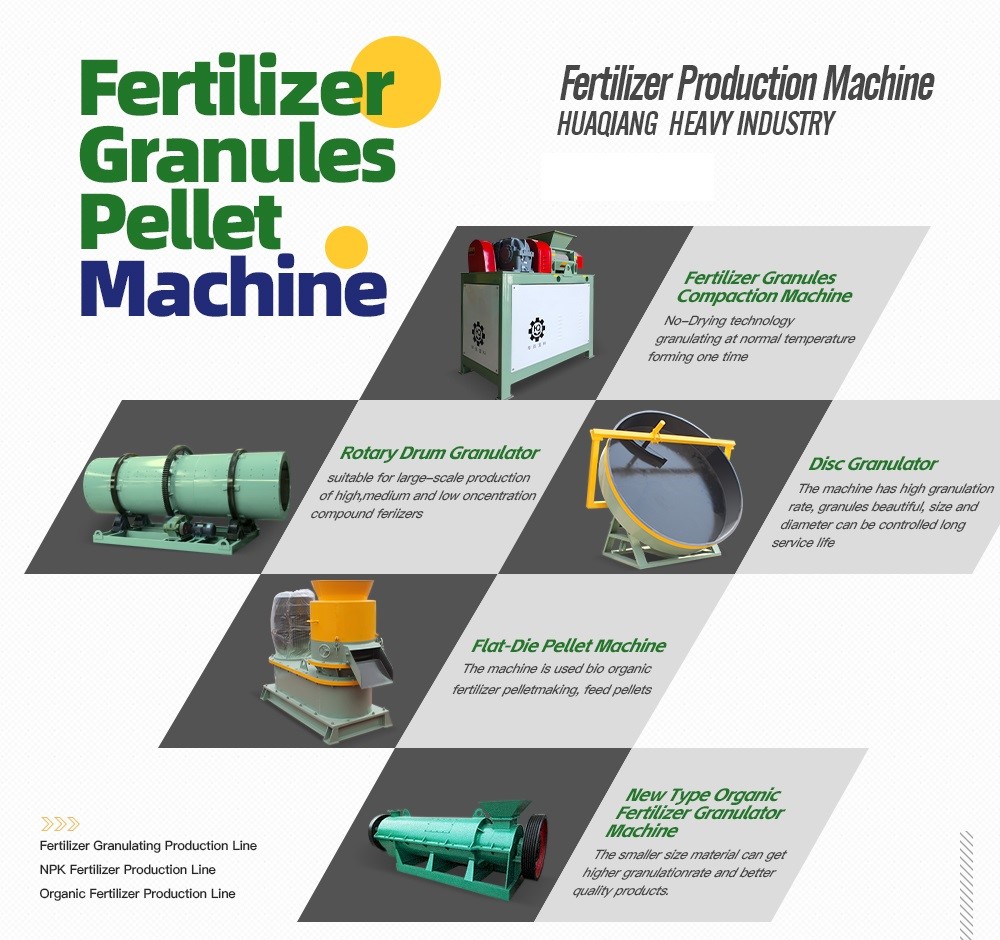
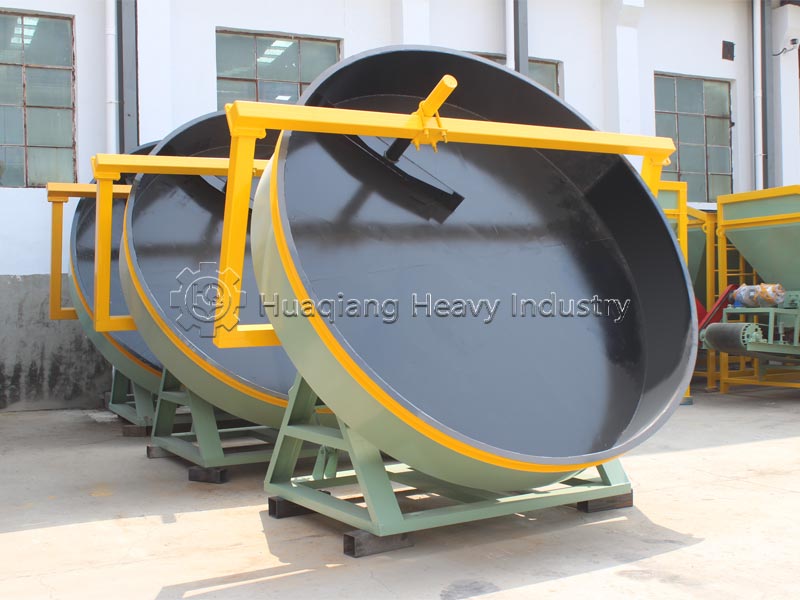
I. The "Triangular Balance" Adjustment Method for Disc Granulators
Disc granulators are known for their intuitive adjustability, and the core of their uniformity control lies in the dynamic balance of the disc angle, rotation speed, and spray liquid.
Disc Angle: The angle directly determines the rolling trajectory and residence time of the material in the disc. A larger angle results in faster material rolling speed, greater kinetic energy, and smaller, denser granules; a smaller angle allows the granules more time to adhere and grow, resulting in larger but potentially looser granules. When there is a significant difference in granule size, the angle should be checked and fine-tuned first, usually within the range of 40 to 55 degrees, to find the optimal angle that creates a stable "fluidized bed" of material.
Disc Rotation Speed: The rotation speed works in conjunction with the angle. The rotation speed provides centrifugal force. Too slow a speed prevents the material from being carried to a sufficient height, resulting in insufficient rolling, leading to excessive fine powder and non-spherical granules; too fast a speed causes small granules to be prematurely thrown out of the disc, while large granules continue to grow in the disc, causing polarization. The goal of adjustment is to find a critical speed that allows most of the material to rise to a certain height with the disc body before uniformly falling like a waterfall.
Spray Liquid (Binder) Flow Rate and Atomization: This is the "accelerator" for controlling granule growth. The spray liquid must be precise in terms of position, flow rate, and atomization. Too much or too concentrated flow will lead to localized material becoming too wet, instantly bonding into large lumps; too little flow will result in a low granulation rate and excessive fine powder. The key techniques are: ensuring uniform spray coverage and using well-atomizing nozzles. At the same time, the nozzles should be aimed at the "nucleation zone" of the material (usually the area where the material rises from the bottom of the pan), rather than the already formed particle stream.
II. Raw Material Pre-treatment: The "Hidden Cornerstone" of Uniformity
The performance inside the granulator is largely determined by the state of the raw materials before entering the machine.
Raw material moisture content: This is the most important pre-treatment parameter. Uneven moisture content is a common cause of uneven particle size. The ideal moisture content is the critical point where the material "forms a ball when squeezed, but crumbles easily when touched." Too much moisture can cause the material to stick to the inner wall of the equipment and roll into irregular large lumps; too little moisture makes granulation difficult and produces a large amount of dust. The mixing process must be thorough and uniform; if necessary, steam humidification can be used, which is easier to control for uniformity than adding water directly.
Raw material particle size and consistency: The particle size of the powder entering the granulator should be as uniform as possible. Overly large raw material particles will form a "core," causing the particles to grow irregularly around it; overly fine powder may directly become dust or be unevenly coated. The preceding crushing and screening processes must be strictly controlled.
III. The "Gatekeeping" and "Feedback" Role of the Screening System
Screening is not only the final grading process, but also the "quality sensor" of the entire granulation system.
Screen selection and maintenance: The mesh size of the screen must be strictly matched to the target particle size. Damaged or worn screens are a direct cause of unqualified particles mixing into the finished product and must be regularly inspected and replaced. For easily adsorbed organic materials, screen clogging can also lead to reduced screening efficiency, resulting in apparent uneven particle size.
Recycle system balance: The oversized particles (after crushing) and undersized powder screened out need to be returned to the granulator in a scientifically determined proportion. This recycle ratio needs fine-tuning. Too much or too little recycling will disrupt the material balance established in the granulator, affecting the stability of particle growth. Maintaining a dynamic balance between the amount of recycled material, new material, and finished product is a system engineering process to ensure continuous and uniform granulation.
Improving particle uniformity is by no means a one-time fix achieved by simply adjusting a single "knob." This requires operators to have a deep understanding of the intrinsic relationship between "raw material characteristics—equipment parameters—product requirements" and to manage the process with a systematic approach. It is recommended to establish process record cards for key parameters, meticulously documenting the optimal tilt angle, rotation speed, humidity, and other data for different formulations to achieve standardized operation. When your adjustments shift from "experience-driven" to "data-driven," stable and uniform particle output will become the norm for your production line, thus earning your product a reliable market reputation.
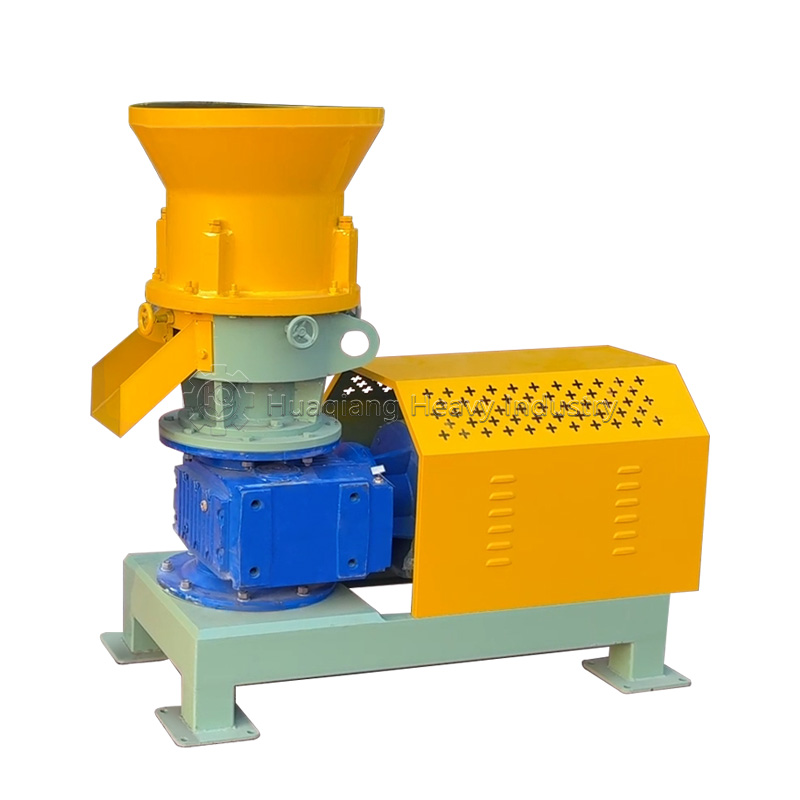
The pursuit of granule uniformity extends across all granulation platforms. For a rotary drum granulator, the key parameters are steam flow, drum rotation speed, and inclination, which control the tumbling and agglomeration process. A disc granulator machine relies on the "triangular balance" of disc angle, speed, and liquid spray. In contrast, dry granulation methods like those using a double roller press granulator (the core of a roller press granulator production line) achieve uniformity through a different mechanism: precise control of feed rate and roll pressure. This ensures consistent fertilizer granules compaction. For very small-scale production, a flat die pelleting machine requires careful adjustment of die speed and roller clearance. Regardless of the equipment—whether a wet rotary drum granulator or a dry fertilizer compactor—achieving uniform granules is a systematic task that balances machine parameters, raw material characteristics, and the integral role of the screening and recycle system, transforming the art of granulation into a precise, data-driven science.