
2026-02-25
In agriculture, bentonite is playing an increasingly important role—it's a high-quality soil conditioner, increasing the water and fertilizer retention capacity of sandy soils, and an ideal fertilizer carrier and granulation binder. However, natural bentonite is mostly in powder form, causing dust during transportation and inconvenience during application. Processing it into granules is a crucial step in enhancing product value. Currently, the mainstream bentonite granulation processes are divided into dry and wet processes, each with its own advantages and disadvantages in equipment configuration, investment costs, and product characteristics. This article will break down these two processes in detail to help you find the production solution best suited to your needs.
I. The Value and Challenges of Bentonite Granulation
Bentonite possesses strong hygroscopicity, high viscosity, and excellent binding ability, making it an ideal granulation raw material. Processing powdered bentonite into granules significantly reduces dust and improves flowability, facilitating mechanized application and long-distance transportation. Whether applied directly to the field as a soil conditioner or used as a functional carrier for compound fertilizers, granular bentonite is more favored by the market.
However, bentonite granulation also faces unique challenges: it swells easily when wet and has excessive viscosity, which can easily cause equipment to stick or granules to clump if not handled properly; bentonite from different origins and with different degrees of sodiumization also exhibits different granulation characteristics. Therefore, choosing a suitable process route is the first step to successful production.
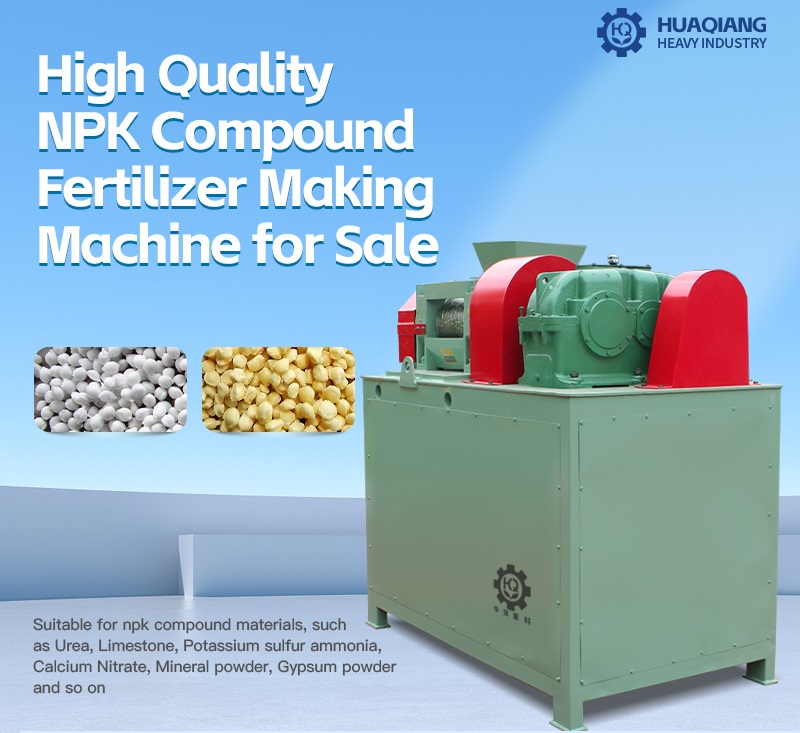
II. Wet Granulation Process: Classic Route, Round Granules
Wet granulation is the traditional process for bentonite granulation. Its core lies in activating the inherent viscosity of bentonite by adding water, causing it to agglomerate into spheres during rolling.
Process Flow: After being metered, the raw bentonite powder enters the mixer, and an appropriate amount of water is sprayed (usually controlling the material moisture content to 15%-25%) to uniformly wet the powder. The moist material then enters the disc granulator. Under the rotation of the inclined disc (30°-50°), the material continuously rolls, rubs, and adheres, gradually growing into round granules. By adjusting the disc speed, inclination angle, and water spray volume, the particle diameter can be flexibly controlled within the range of 2-8mm. The wet granules exiting the disc need to be dried in a drum dryer to reduce the moisture content to below 10%, and then cooled, screened, and packaged for storage.
Equipment Configuration: The core equipment consists of a disc granulator (forming rate can reach over 90%), a drum dryer, a cooler, a vibrating screen, and a packaging machine.
Process Advantages: Wet granulation produces smooth, rounded granules with high strength, suitable for markets with high requirements for product appearance. The disc granulator has a simple structure, moderate investment (50,000-100,000 RMB per unit), and is easy to operate and maintain, especially suitable for pure raw materials with high bentonite content.
Applicable Scenarios: Suitable for large factories with abundant water supply and high requirements for granule appearance, with a capacity of 10-20 tons/hour. In a typical wet granulation production line case, a project used a disc pelletizer to process a mixture of phosphogypsum and a small amount of bentonite, successfully producing 20-30mm soil conditioner granules.
III. Dry Granulation Process: Energy-Saving and Highly Efficient, No Drying Required
Dry granulation is a popular alternative in recent years. Its biggest advantage is that it eliminates the need for added moisture, directly using mechanical pressure to extrude dry powder into granules.
Process Flow: Bentonite dry powder (moisture content typically below 10%) is evenly fed to a double-roller extrusion granulator via a feeder. The surfaces of the two counter-rotating rollers are distributed with semi-circular grooves. When the material passes between the rollers, it is instantly subjected to a high pressure of 10-30MPa, forcibly compressed into flakes or granules. The extruded material enters the crushing and granulation system, and is then screened to obtain qualified granules. The undersized fine powder is returned to the granulator for reprocessing, achieving a closed-loop cycle.
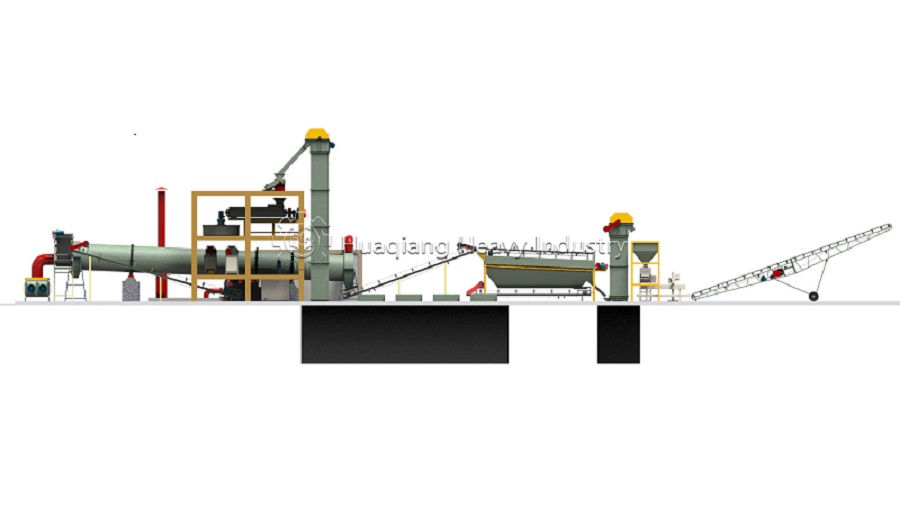
Equipment Configuration: The core equipment is the double-roller extrusion granulator, equipped with a screening machine and a return system. No dryer or cooler is required, significantly shortening the process.
Technical Advantages: The biggest advantage of dry granulation is energy saving—eliminating the energy consumption of the drying process, reducing equipment investment by 30%-40% compared to wet granulation. The entire production process generates no wastewater, minimizing environmental impact. Roller granulators have wide raw material adaptability, suitable not only for bentonite but also for processing organic materials such as chicken manure, pig manure, and straw. Pellet strength can be flexibly controlled by adjusting the roller pressure to meet different application requirements.
Applicable Scenarios: Particularly suitable for water-scarce areas, raw materials sensitive to moisture, and start-ups who wish to control investment scale. Small plants can choose a 5-ton/hour dry granulation production line, with low investment threshold and rapid production.
IV. Comparison of the Two Processes and Selection Recommendations
Cost Comparison: Based on an annual production scale of 10,000 tons, the total investment for dry granulation is approximately 150,000 yuan, with an annual operating cost of approximately 100,000 yuan; the total investment for wet granulation (disc + drying) is approximately 250,000 yuan, with an annual operating cost of approximately 150,000 yuan. Although wet granulation requires higher initial investment, the product selling price can typically be 100-200 RMB/ton higher, allowing for cost recovery within 2-3 years.
Product Features: Wet-processed granules have a rounded appearance and uniform density, suitable for high-end commercial fertilizers or functional carriers; dry-processed granules have a relatively irregular shape and a slightly rougher surface, but their strength is adjustable and production is flexible, making them suitable for cost-sensitive bulk applications.
Selection Recommendations: If your raw material bentonite has high purity, abundant water supply, and your target market has strict requirements for granule appearance, and you have sufficient financial resources, a wet disc granulation line is a safe choice. If your raw material contains other additives, water supply is limited, and you want to enter the market quickly at the lowest cost, a dry roller extrusion line is more advantageous. Some companies can also adopt a "dry-wet combination" model, flexibly switching according to raw material fluctuations to adapt to diverse needs.
From the simplicity and efficiency of dry granulation to the rounded granules of wet granulation, both bentonite granulation processes have their supporters. Regardless of the chosen route, the key is to match it with your own raw material characteristics, production capacity targets, and financial strength. When your granular products are neatly bagged and shipped to the fields, you will understand: choosing the right process is choosing the right shortcut to the market.
Bentonite Granulation Technologies and Equipment
The two primary granulation approaches for bentonite rely on different fertilizer granulation technology principles. The wet process utilizes a rotary drum granulator or disc granulator machine to roll moistened powder into rounded, dense spheres through tumbling agglomeration. This classic method produces premium granules but requires subsequent drying. In contrast, the dry process achieves fertilizer granules compaction by employing a double roller press granulator as the core of a roller press granulator production line. Here, dry powder is compressed under high pressure into compacted flakes or granules, eliminating the need for drying entirely. For very small-scale or specialized applications, a flat die pelleting machine offers a simple, low-cost entry point for dry bentonite granulation. The choice between a rotary drum granulator and a double roller press granulator fundamentally determines the production cost, energy consumption, and final product characteristics of your bentonite processing operation.