
2026-03-09
Whether you're a novice farmer just starting out or a newcomer to the agricultural input industry, you might be wondering about the wide variety of fertilizers on the market: how are these different colored fertilizer granules with different functions produced? Today, we'll explain the entire fertilizer production process in the simplest terms.
Step 1: Raw Material Preparation – Choosing the Right "Ingredients" is Half the Battle
Producing fertilizer is like cooking; you first need to prepare the right "ingredients."
For organic fertilizers, the main "ingredients" are various organic wastes, such as common livestock and poultry manure, crop straw, and food processing byproducts. These raw materials are rich in organic matter, but direct use not only fails to promote crop growth but may also "burn" seedlings or even spread pests and diseases, so they must undergo special treatment.
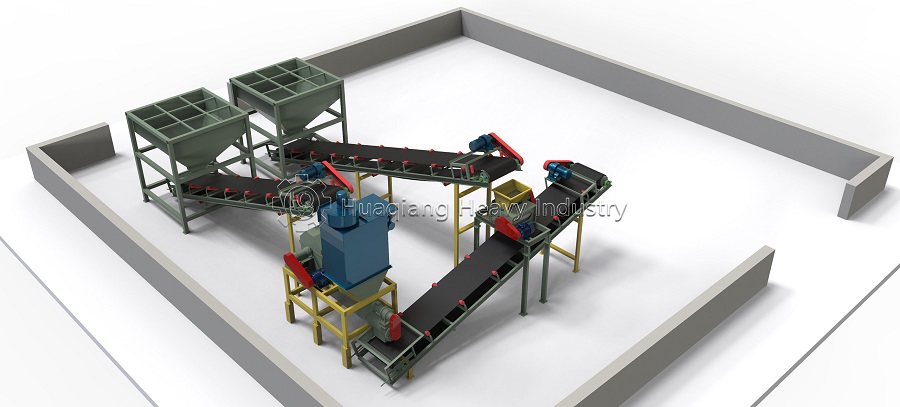
Compound fertilizers, on the other hand, use completely different "ingredients." They are carefully formulated chemical raw materials according to strict nutrient recipes, such as urea for nitrogen, monoammonium phosphate for phosphorus, and potassium chloride for potassium. Just as a chef precisely measures seasonings according to a recipe, the first step in compound fertilizer production is accurately proportioning these basic raw materials.
The second step: Core Transformation – Different “Cooking” Methods
This is the core of the entire production process, and different fertilizers follow completely different technological routes.
Organic fertilizer follows the “biological transformation” route, professionally known as fermentation and composting. This process is like an industrialized upgrade of traditional farmyard manure—raw materials are fed into specialized fermentation tanks or piled into long strips, and periodically turned by a turning machine to provide ample oxygen for aerobic microorganisms in nature. Microorganisms multiply rapidly and decompose organic matter, generating high temperatures of 60-70°C. This high temperature effectively kills pathogens, insect eggs, and weed seeds, while simultaneously transforming unstable organic matter into stable humus. This stage is crucial because “raw manure” that is not fully decomposed is absolutely unusable.
Compound fertilizer, on the other hand, follows the “chemical synthesis” route. During the mixing process, the various proportioned raw materials undergo a series of complex chemical reactions with the help of a small amount of water or steam, initially forming a viscous mixture, preparing for the next stage of shaping. Step 3: Granulation – A Magnificent Transformation from Powder to Granules
For convenient storage, transportation, and application, fertilizers need to be transformed from powder to granules. There are several main granulation methods:
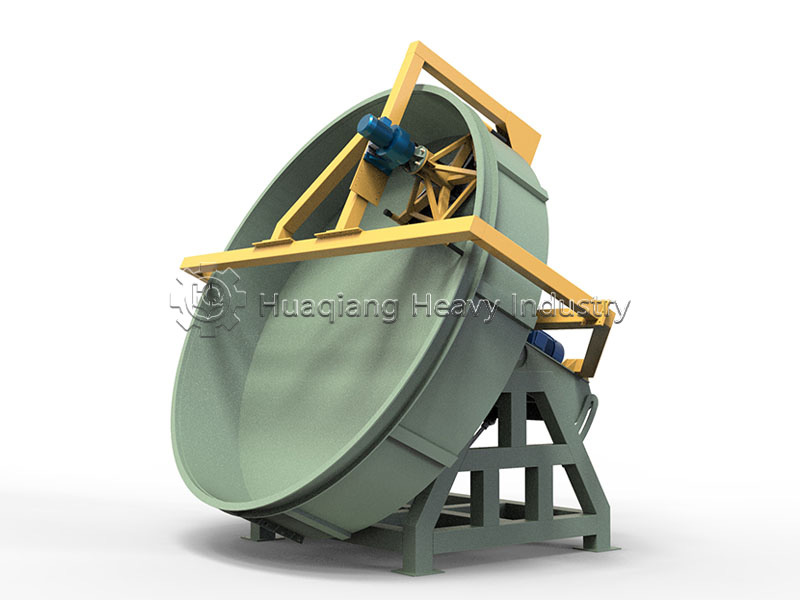
Disc granulation: The most intuitive method, like "rolling dumplings"—material is placed in a large, tilted disc, which is rolled while liquid is sprayed, causing small particles to gradually adhere and grow larger, forming relatively rounded granules. This method is particularly suitable for organic fertilizer production.
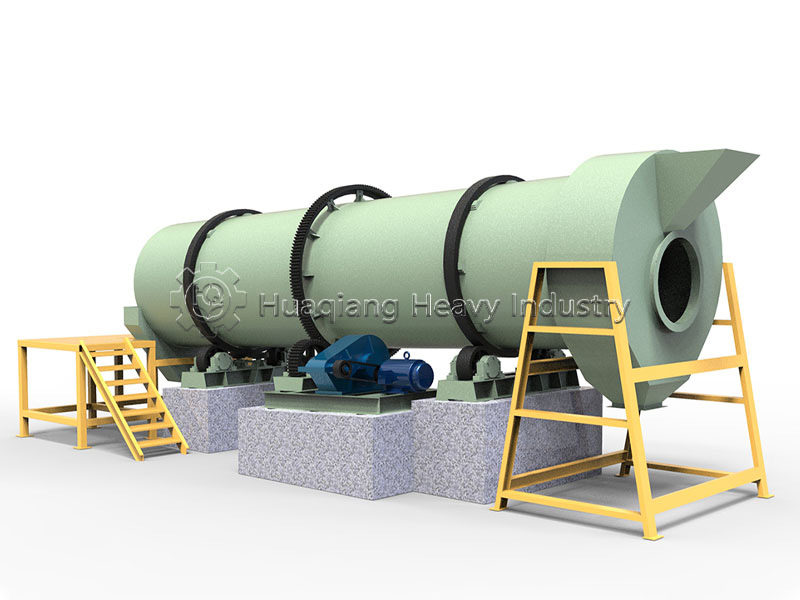
Drum granulation: Completed in a long, slowly rotating cylinder, this method offers higher output and more uniform granules, making it the mainstream choice for modern large-scale compound fertilizer production.

Double roller press granulator: Similar to "pressing noodles," dry powder material is directly extruded through die holes using strong mechanical force, forming regular, uniform columnar granules. This method has lower energy consumption, but the granules are relatively hard and dissolve relatively slowly.
Step 4: Drying and Post-processing – "Shaping" and "Polishing"
The newly formed granules are still relatively "delicate" and require further processing to become qualified products.
The first step is drying. The soft, wet granules enter a dryer, where they come into full contact with hot air, reducing the moisture content to below national standards and significantly improving granule strength.
Next comes cooling. The hot granules enter a cooling device and are cooled to near room temperature by cold air. This prevents clumping during subsequent storage and facilitates direct packaging.
Finally, sieving. Multiple layers of vibrating screens separate the finished granules of the correct size. Granules that are too large are crushed and reprocessed, while powders that are too fine are returned to the granulation process, ensuring that "granules are stored properly" with virtually no waste.
Step 5: Finished Product Inspection and Packaging – The Final "Quality Control"
After the above processes, the fertilizer is basically formed, but it requires one final crucial step before leaving the factory:
First is quality inspection. The laboratory takes samples from the production line and rigorously tests various indicators such as nutrient content, moisture, and particle size to ensure full compliance with national standards and product label commitments.
Some high-end fertilizers also undergo coating treatment, with a special slow-release material or anti-caking agent wrapped around the granule surface to improve fertilizer efficiency or storage performance.
Finally, automated packaging. Qualified granules are precisely weighed using a fully automated packaging scale, packed into bags, and sealed. Bags of finished fertilizer are thus produced, ready to be shipped nationwide to support agricultural production.
Understanding the fertilizer production process not only satisfies our curiosity but also helps us make more informed choices when selecting and using fertilizers. Whether it's organic fertilizer "converted" by microorganisms or compound fertilizer "synthesized" through chemical processes, the core purpose of standardized production is the same: to provide crops with safe, efficient, and convenient nutrients. As growers, choosing qualified products from reputable manufacturers is an important safeguard for your harvest.
The granulation methods introduced in the simple explanation represent the core technologies used in modern fertilizer production. The disc granulator machine is often the preferred choice for organic fertilizers, using a tumbling action to create smooth, spherical pellets from fermented materials. For large-scale compound fertilizer production, the rotary drum granulator is the industry workhorse, agglomerating powders into uniform granules through a wet, tumbling process. A different approach is fertilizer granules compaction, achieved by a double roller press granulator as the centerpiece of a roller press granulator production line. Here, dry powder is compressed under high pressure into dense flakes or irregular granules without any heat or binders. For producing simple, cylindrical pellets on a smaller scale, a flat die pelleting machine offers a low-cost, versatile solution. Each of these technologies—from the tumbling disc granulator machine to the high-pressure double roller press granulator—transforms raw materials into the valuable, easy-to-use granules that nourish our crops, making modern agriculture possible.