
2026-03-06
Among fertilizer and feed pellet products, columnar pellets are gaining increasing favor from producers and users due to their unique physical structure and performance advantages. Unlike traditional spherical pellets, columnar pellets, formed by room-temperature extrusion using a flat die pelleting machine, exhibit superior performance across all dimensions, including fertilizer release, practical application, storage, and transportation. This article will analyze in depth why columnar pellets are becoming the preferred form for organic fertilizer, bio-fertilizer, and feed production, focusing on five core advantages.
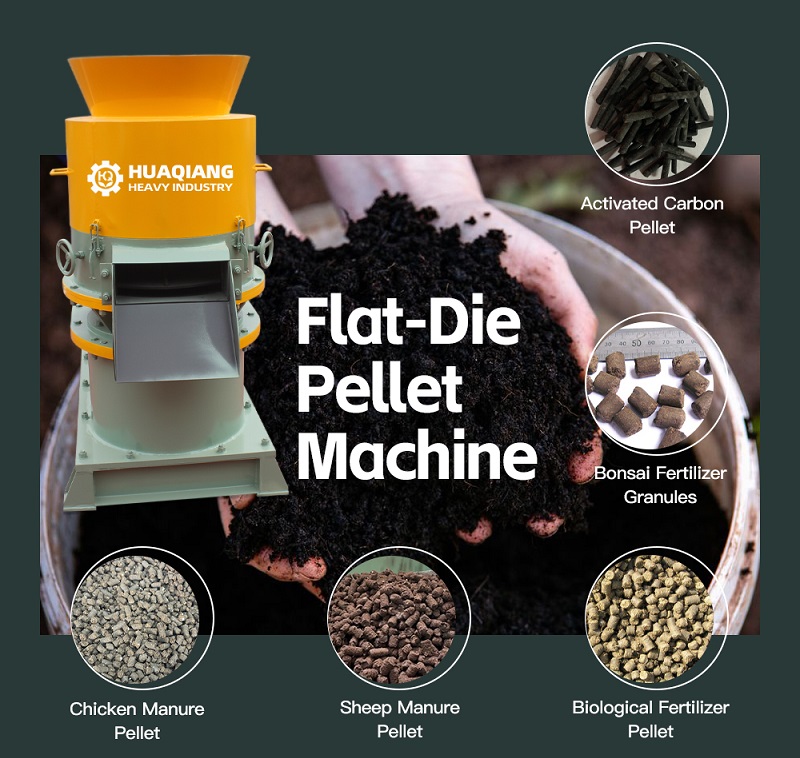
More Scientific Fertilizer Release, Achieving Slow-Release Effects
The cylindrical shape of columnar pellets gives them a unique porous structure. During the extrusion molding process, the material is densified under high pressure, but still retains uniform microporous channels inside. After being applied to the soil, columnar pellets do not rapidly disintegrate and release all nutrients like some loose pellets; instead, they slowly absorb water through the micropores, releasing nutrients layer by layer. This characteristic naturally endows it with slow-release and controlled-release functions—the nutrient release rate matches the crop growth cycle, preventing root burn in the early stages and nutrient deficiency in the later stages, increasing fertilizer utilization by 20%-30%. For organic fertilizers, the columnar shape also provides a continuous "food source" for soil microorganisms, resulting in a more lasting soil improvement effect.
Excellent physical properties, high hardness and no pulverization: The flat die granulator uses high-pressure extrusion molding at 10-30MPa, making the density and hardness of the columnar particles far exceed those of traditional granulation processes. Actual test data shows that the hardness of columnar particles can reach 2-3 times that of traditional wet-process granules. The direct benefits of this characteristic are: almost no powder is generated during packaging, transportation, and loading/unloading; the molding rate remains above 95%; and storage and transportation losses are reduced by more than 80%. For farmers, application is dust-free and irritating, spreading is even and smooth, and mechanized fertilization operations are effortless.
Easier storage and transportation, no sticking or clumping: The regular cylindrical shape and smooth surface of the columnar particles give them excellent flowability during stacking and storage. With a small contact area between granules, they are less prone to clumping due to moisture absorption. Even in high-humidity environments, columnar granules remain loose, eliminating the need for frequent turning or the addition of anti-caking agents. This advantage is particularly important for users in rainy southern regions or those requiring long-term storage—the granules remain separate upon release and can be applied directly without secondary processing.
.jpg)
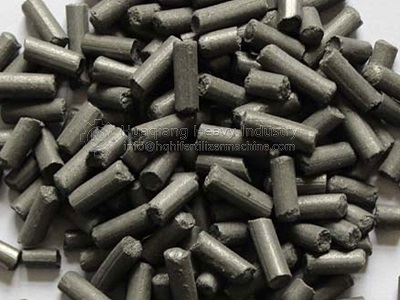
Higher Raw Material Activity Preservation, Higher Added Value
Utilizing the ambient temperature extrusion process of a flat die pelleting machine, columnar granules do not undergo high temperatures throughout the forming process, perfectly preserving the active ingredients in the raw materials. For bio-organic fertilizers, the survival rate of functional bacteria can reach over 90%; for biomass fuels, the calorific value is not lost due to high-temperature processing; for feed, heat-sensitive nutrients such as vitamins and enzymes are fully protected. This gives columnar granule products a significant competitive advantage in the market, allowing them to be priced 15%-25% higher than ordinary granules.
Flexible application scenarios, customizable specifications: The diameter of the columnar pellets can be flexibly selected within the range of 2-12 mm, and the length is controlled within 2-8 mm by the cutting device, truly achieving "customization on demand":
2-3 mm: Suitable for seedling substrates and foliar fertilizer application, with moderate dissolution speed.
4-6 mm: The golden specification for base fertilizer of field crops, with the best slow-release effect.
8-10 mm: Dedicated for fruit trees and forest trees, with a nutrient release cycle of up to several months.
Feed pellets: Customized according to animal mouth size, with good palatability and high feed intake.
Biomass fuel: Uniform columnar shape ensures more complete combustion and stable calorific value release.
From the scientific release of fertilizer efficacy to the convenient and efficient storage and transportation; from the perfect preservation of activity to the flexible customization of applications—every advantage of columnar pellets stems from the unique room-temperature extrusion process of the flat die pelleting machine. It changes not only the form of the product, but also the entire value chain from production to use.
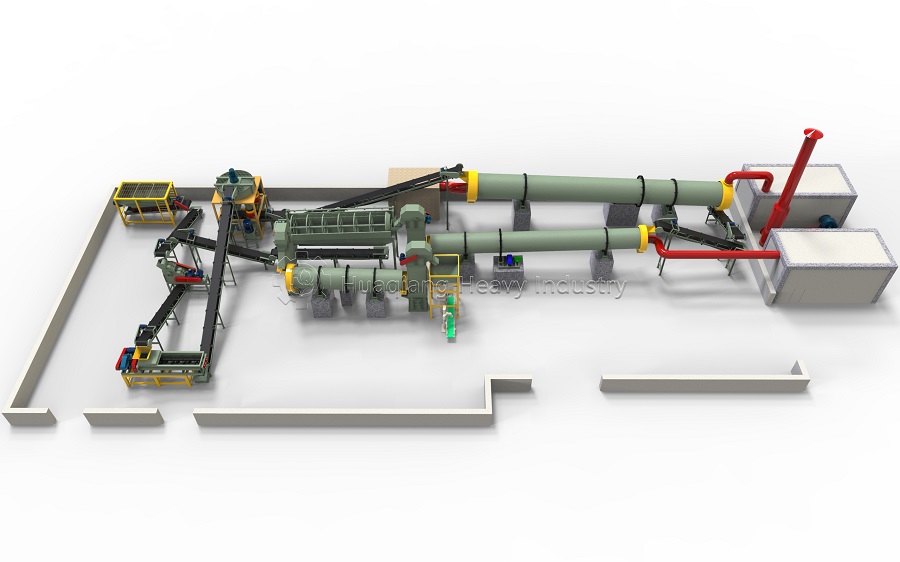
The distinct advantages of columnar pellets are directly enabled by the specific technology of the flat die pelleting machine, which is a form of extrusion granulation. This method achieves fertilizer granules compaction by forcing material through a stationary die under high pressure, creating dense, cylindrical pellets. This contrasts with other granulation methods. A rotary drum granulator uses a wet agglomeration process to form spherical granules. A disc granulator for shaping also produces spheres through a tumbling action. A complete roller press granulator production line, utilizing a double roller press granulator, achieves fertilizer granules compaction between two counter-rotating rollers, often producing pillow-shaped or irregular granules. While each technology has its merits, the flat die pelleting machine offers a unique combination of low investment, energy efficiency, and the ability to produce the specific columnar form with its inherent slow-release and high-hardness advantages. This makes it the technology of choice for producers targeting markets that value these specific product characteristics, from organic slow-release fertilizers to durable biomass fuels and palatable animal feeds.