
2026-03-16
In fertilizer production, dry granulation technology is gaining increasing popularity among overseas companies due to its advantages such as no drying required, low energy consumption, and no wastewater discharge. However, many purchasers fall into selection pitfalls when faced with two mainstream dry granulation equipment: double roller press granulators and flat die pelleting machines. Choosing a double roller press results in loose granules due to high raw material moisture content, while choosing a flat die pelleting machine leads to frequent downtime due to high capacity requirements. This article will clarify the selection logic for overseas fertilizer companies from three dimensions: core parameters, applicable raw materials, and operation and maintenance costs.
Comparison of Core Equipment Parameters: Differences in Capacity and Granule Morphology
The working principle of a double roller press granulator is to forcibly compress material into granules using two counter-rotating rollers. The roller surfaces are distributed with semi-circular grooves. Under high pressure, the material is squeezed into these grooves and formed into flattened spherical granules upon exiting the machine. The particle size is typically 3-10mm, and the forming rate can reach over 95%. The single-machine capacity ranges from 1 to 4.5 tons/hour, with a power of 15-45 kW, suitable for continuous batch production.
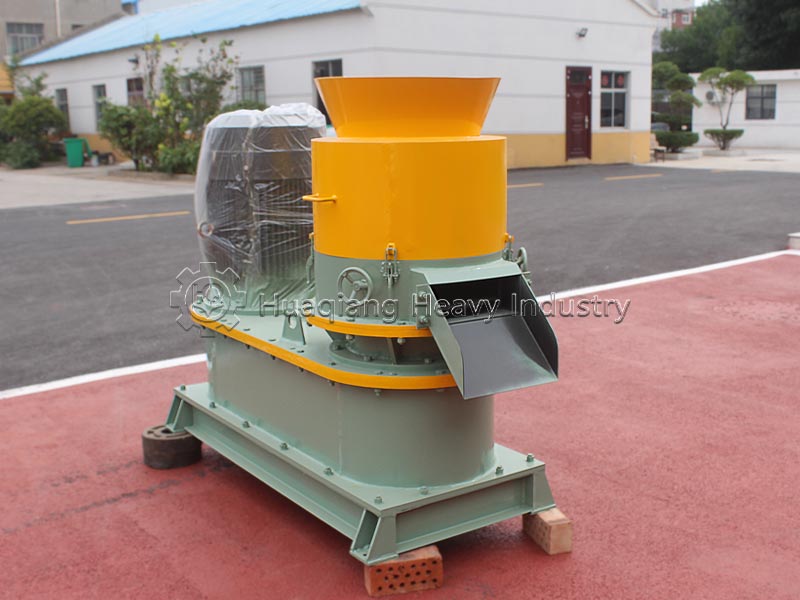
The flat die pelleting machine uses the interaction of a rotating flat die and pressure rollers to extrude material from the die orifice, which is then cut into cylindrical pellets by a cutter. The pellet size is adjustable from 1.5 to 12 mm, with a forming rate exceeding 90%. The single-machine capacity is 1 to 3.5 tons/hour, with relatively lower power, and it can operate continuously for 24 hours.

Applicable Raw Materials: From Single to Composite Materials
The two types of equipment have significantly different raw material compatibility. The roller extrusion pelleting machine has a wide range of raw material adaptability, capable of processing various types of materials such as NPK compound fertilizer, organic-inorganic mixed raw materials, rare earth elements, and potash fertilizer, making it particularly suitable for the production of complex compound fertilizer formulations. Its biggest advantage is "dry process at room temperature," but the raw material moisture content must be strictly controlled between 2% and 5%; excessive moisture will result in loose pellets.
flat die pelleting machine are more suitable for single organic fertilizer raw materials, such as well-rotted livestock and poultry manure, straw powder, and mushroom residue. The moisture content of the raw material is ideally 8%-10%, and should not exceed 15%. For organic materials with high fiber content (≤40%), flat die pelleting machine can achieve directional fiber arrangement through die extrusion, resulting in higher particle density. However, they have stricter requirements for raw material particle size, needing to be controlled within 2-4mm, and are not suitable for frequent formula changes.
Operating and Maintenance Costs: A Trade-off Between Investment and Maintenance
From an investment cost perspective, flat die pelleting machine have a lower entry barrier—the price of a 1-2 ton/hour model is approximately 30,000-80,000 RMB, only 50%-60% of the cost of a roller granulator with the same capacity. Replacement of wear parts (flat die and pressure rollers) is simple, and workers can complete the task independently after training. The average annual maintenance cost is approximately 10,000-20,000 RMB.
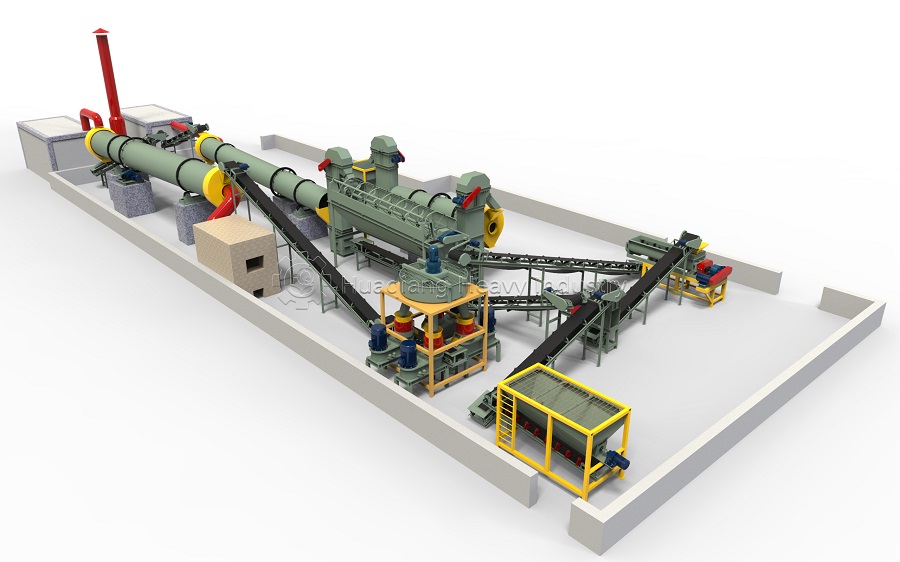
Roller extrusion granulators have a higher initial investment, but the rollers have a long lifespan (using high-wear-resistant alloys), and there is no need for frequent die replacements. The transmission system is relatively complex, requiring professional maintenance, but it offers stronger continuous production capacity and is suitable for large-scale stable production.
Real-world Selection Case: Determining Equipment from Needs
Taking a palm oil processing company in Malaysia as an example, they planned to produce organic-inorganic compound fertilizer using hollow fruit bunch fiber and inorganic NPK, aiming for oblate spheroidal granules with a compressive strength ≥20N. The raw material contained approximately 30% fiber and 12% moisture. Trial runs verified that a roller extrusion granulator could fully compress the fiber and powder, achieving the required granule strength without the need for binders.
Meanwhile, a livestock cooperative in Vietnam processed fermented pig manure to produce pure organic fertilizer, aiming for cylindrical granules for use as a base fertilizer for vegetables. The raw material was pure organic matter with a high fiber content. A flat die pelleting machine with a 6mm die diameter was ultimately chosen, ensuring smooth granulation and granule density that met local market demands.
Selection Recommendations and Customized Services
Choosing a roller extrusion granulator means embracing the advantages of a dry process—strong raw material compatibility, high granule strength, and no binders—suitable for NPK compound fertilizer companies with complex formulations and a need for continuous production. Choosing a flat die pelleting machine means "low investment, simple operation, and convenient maintenance," making it suitable for start-up pure organic fertilizer plants with a single raw material.
The detailed comparison between double roller press and flat die granulators highlights the critical importance of aligning equipment choice with raw material characteristics and production goals within the spectrum of dry fertilizer granulation technology. Both machines achieve fertilizer granules compaction without heat, but through different mechanisms. A double roller press granulator, the core of a roller press granulator production line, excels at processing complex NPK blends and materials with moderate fiber content, producing high-strength, oblate granules. In contrast, a flat die pelleting machine is ideal for purer, fibrous organic materials, creating dense cylindrical pellets. It's also important to contrast these dry methods with wet granulation technologies. A rotary drum granulator and a disc granulator machine both rely on tumbling and added moisture or steam to form spherical granules, a fundamentally different approach that requires subsequent drying. The choice is therefore not simply about "dry" versus "wet," but about the precise match between the granulator's compaction or agglomeration mechanism and the specific physical and chemical properties of the feedstock, ensuring optimal particle formation, strength, and production efficiency for the target fertilizer market.
Our company provides customized services from single-machine trial to complete line integration. Free trial runs with different raw materials can be scheduled to verify the compatibility between the equipment and the material before making a decision. Whether you prefer the precise extrusion of rollers or the flexibility and convenience of a flat die, we can provide the optimal solution to match your actual needs.