
2026-03-11
In compound fertilizer production, quality control in the granulation stage directly determines the product's market competitiveness. Insufficient granule strength leads to severe pulverization during storage and transportation; uneven particle size affects the effectiveness of mechanized fertilization; and excessive nutrient deviation may cause agricultural damage. Establishing a comprehensive quality control system from raw materials to finished products is crucial to ensuring that every batch of products can withstand market scrutiny.
Compound fertilizer granule quality control should focus on three core indicators: compressive strength ≥10N (refer to GB/T8571) to ensure that the granules are not easily broken during handling and storage; particle size deviation controlled within ≤±0.2mm to ensure accurate application by fertilizer applicators; and single nutrient deviation ≤±0.5% to avoid localized nutrient imbalances in the fertilization area. For large-particle compound fertilizers (particle size 4.75-100.0mm), it is also necessary to pay attention to controlling the aspect ratio between 1.0 and 3.0.
The quality of raw material pretreatment directly affects the granulation effect. All solid raw materials must be pulverized to a fineness of 80-120 mesh to ensure uniform mixing of powders with different densities. If the particle size difference between nitrogen, phosphorus, and potassium raw materials is too large, organic-inorganic stratification is likely to occur during granulation, leading to uneven nutrient distribution within the granules. An electronic batching system is used in the proportioning process to ensure that the metering error of each component is ≤±0.1%. Moisture control is crucial: the moisture content of the material before granulation must be controlled between 10% and 25%, judged by the specific range of "can be formed into a ball by hand and does not crumble when dropped," which needs to be finely adjusted according to the characteristics of the raw materials.
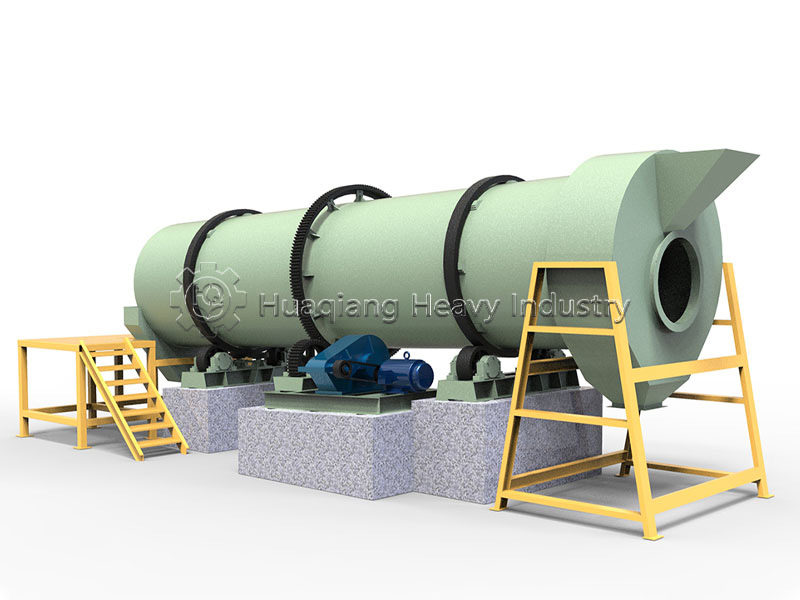
Different granulator models have different parameter settings. When using a rotary drum granulator, the steam pressure should be controlled at 0.2-0.4 MPa, the granulation temperature at 60-80℃, and the granulation residence time controlled by adjusting the drum rotation speed (10-15 r/min) and tilt angle (2°-4°). When using a double roller press granulator, the roller pressure should be controlled at 15-30 MPa, the roller speed at 5-15 r/min, and the material moisture content at 15%-20%.
The amount of binder added needs precise control: natural binders (starch, bentonite) should be used at 2%-5%, and chemical binders (PVA, CMC) at 0.5%-2%. Excessive use should be avoided to prevent the granules from having a hard core and being difficult to dissolve. For organic-inorganic compound fertilizers, special attention should be paid to ensuring that the granulation temperature does not exceed 80℃ when the organic matter content is ≥20%, to prevent organic matter carbonization.
The wet granules after granulation need to be dried at a low temperature—using 60-80℃ hot air with a large air volume for rapid dehumidification to avoid nitrogen loss and granule cracking due to high temperature. After drying, the granules are graded and screened. Qualified granules (2-4mm) are cooled and packaged, while unqualified fine powder and coarse granules are returned to the granulator. The proportion of recycled materials must be carefully controlled: the recycling ratio should ideally be controlled between 20% and 30%. Excessive ratios will increase system load and reduce particle strength. Some companies use large-particle melting recycling technology, heating and dissolving oversized particles from screening into a slurry for return to granulation. This avoids dust and noise from mechanical crushing and improves product roundness.
Establish a strict online monitoring system: sample and test particle size distribution and particle strength every 30 minutes, and nutrient content every 2 hours. Testing methods should comply with GB/T standards: particle size according to GB/T24891-2010 sieving method, moisture according to GB/T8576-2010 oven drying method, and nutrients according to GB/T15063-2020. The testing focus differs for different types of compound fertilizers: high-nitrogen compound fertilizers require monitoring of ammonia volatilization stability and thermal decomposition risk; high-phosphorus compound fertilizers focus on the impact of phosphate crystallization on agglomeration strength; and organic-inorganic compound fertilizers require additional testing of organic matter content and microbial activity.
The essence of end-to-end quality control is to move the quality control checkpoint forward—starting from the raw materials entering the factory, using data to drive precise control of every link, so that every compound fertilizer granule can withstand testing and win the market.
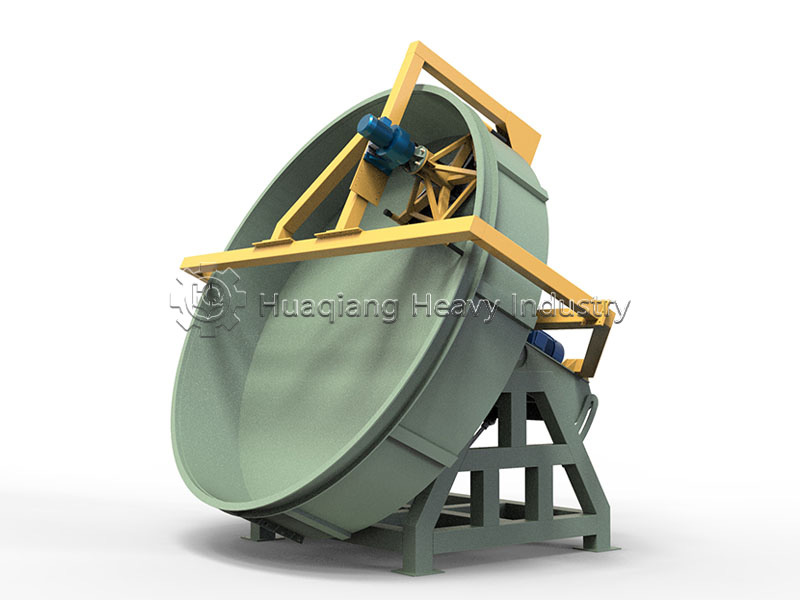
The rigorous quality control parameters described apply universally, but the specific methods for achieving them vary significantly depending on the chosen fertilizer granulation technology. For processes aiming to produce high-density granules through pressure, a double roller press granulator (the core of a roller press granulator production line) acts as a fertilizer compactor, achieving fertilizer granules compaction via immense mechanical force. Here, controlling roller pressure and material moisture is critical for achieving the target compressive strength of ≥10N. In contrast, a rotary drum granulator relies on precise control of steam pressure and temperature to agglomerate material into spheres, demanding careful monitoring of the granulation environment to ensure nutrient uniformity. A disc granulator machine offers a gentler tumbling action, where operators adjust the disc angle and rotation speed to control particle size deviation. For small-scale or specialty applications, a flat die pelleting machine provides a simple extrusion method, where die selection and pressure settings are paramount. Ultimately, regardless of whether the equipment is a massive rotary drum granulator or a compact flat die pelleting machine, the principles of end-to-end quality control—starting with precise raw material pretreatment and extending through continuous process monitoring—are the keys to producing granules that consistently meet the market's demanding standards for strength, size, and nutrient content.