
2026-03-20
With the deepening implementation of the "dual carbon" goal, the granulation process, as a major energy consumer in the production of compound fertilizers and organic fertilizers, is facing unprecedented pressure for green transformation. Traditional granulation equipment, due to its outdated technology and low energy efficiency, not only drives up production costs for enterprises but also becomes one of the main sources of carbon emissions in the industry. From equipment modification to process optimization, green and energy-saving upgrades for granulators have become an essential path for enterprises to achieve cost reduction and efficiency improvement, and to respond to national policies.
The energy consumption pain points of traditional granulation production lines are obvious. Disc granulators, which mainly use wet granulation, can produce granules with good sphericity, but they must be equipped with a drying process—the hot air furnace accounts for 60%-70% of the total energy consumption. A production line with an hourly output of 5 tons often has a total installed power exceeding 90kW, and the energy consumption per unit product is as high as 32kWh/ton. Some old roller extrusion equipment also suffers from ineffective energy consumption due to low motor efficiency and crude pressure control. More seriously, the exhaust emissions from coal-fired drying face the risk of being phased out in areas with strict environmental regulations.
Energy-saving retrofits at the equipment level are the first step in cost reduction. The widespread adoption of variable frequency motors has freed granulators from "full-load idling"—by adjusting motor speed in real time to match the actual load, no-load power consumption can be reduced to less than 10% of full-load, and single-stage energy consumption is reduced by more than 8% compared to traditional methods. For extrusion granulation equipment, the use of ceramic-coated screws or high-hardness alloy roller sleeves not only improves wear resistance but also reduces frictional heat generation, lowering drive energy consumption.

At the core component level, zoned drive technology is changing the power distribution logic of traditional granulators. Taking large rotary drum granulators as an example, by dividing the drum drive into multiple independent motors, the output can be dynamically adjusted according to the material filling rate, avoiding energy waste caused by "overpowered motors." Some high-end models have also introduced vacuum devolatilization technology, removing moisture and volatiles through negative pressure in recycled material granulation, eliminating the pre-drying stage and resulting in significant energy savings.
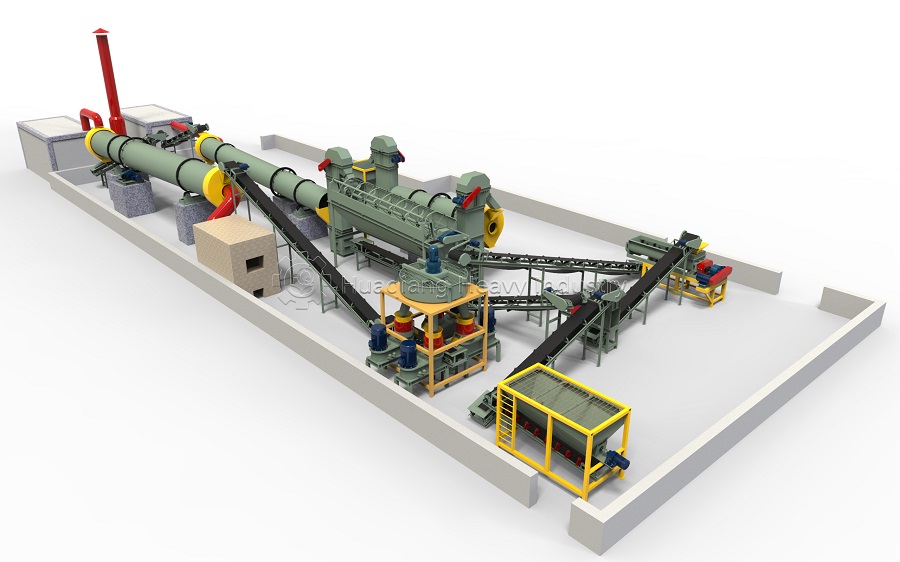
Process optimization often leads to a dramatic reduction in energy consumption. Disc granulators, through precise control of material moisture content and atomized spraying, achieve "steam-free conditioning"—directly utilizing the material's own moisture for granulation, eliminating the investment and energy consumption of steam boilers. Meanwhile, double roller press granulators, based on a dry forming principle, eliminate the need for a drying process. A 5-ton-per-hour production line consumes only 8.5 kWh/ton, saving over 70% energy compared to the wet disc process. This double roller press granulator is particularly advantageous when processing raw materials such as ammonium sulfate and potassium chloride—no binder is needed, and the granules achieve a compressive strength of 20-30 N, truly achieving "zero drying and zero emissions."
For scenarios where wet processes are necessary, low-temperature drying technology becomes a key breakthrough. Controlling the drying temperature at 65-80℃, combined with high-volume rapid dehumidification, can save 15%-20% energy compared to traditional 120℃ drying while ensuring microbial survival rates.
Intelligent control pushes energy saving to new heights. The PLC control system collects temperature, pressure, and current data in real time, automatically adjusting the feed rate, rotation speed, and heating power through built-in algorithms. Taking a disc granulator machine as an example, when the sensor detects fluctuations in material moisture content, the system automatically adjusts the disc tilt angle and rotation speed to prevent a surge in return material caused by parameter imbalances—for every 5% reduction in return material rate, unit product energy consumption decreases by 8%-10%. One company, by introducing an intelligent control system, reduced its energy consumption per ton of granulation from 32kWh to 24kWh, a reduction of 25%, saving over 400,000 yuan in electricity costs annually.
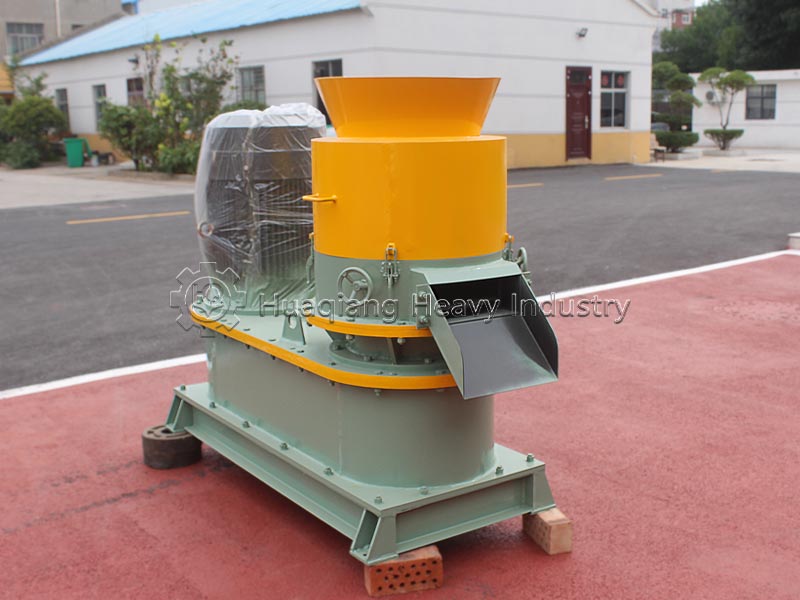
The upcoming Level 1 energy efficiency standard for granulators, to be released in 2026, will impose stricter requirements on equipment energy consumption. The standard will not only assess unit product energy consumption but also incorporate no-load power consumption and standby power consumption into the evaluation system. For small and medium-sized equipment such as flat die pelleting machines, the key to improving energy efficiency lies in motor efficiency and transmission optimization; while for large-scale production lines, adopting a combination of "roller extrusion + intelligent control" will become the mainstream path to achieving the standard.
The push for green transformation is driving innovation across all fertilizer production machine technology. The energy consumption pain points of traditional rotary drum granulation production lines, with their energy-intensive drying stages, are being addressed through multiple avenues. For wet granulation processes, a rotary drum granulator itself can be optimized with variable frequency drives and zoned drive technology. However, the most dramatic energy savings come from switching to dry granulation methods. A double roller press granulator, the core of a roller press granulator production line, achieves fertilizer granules compaction through high mechanical pressure, completely eliminating the need for thermal drying and slashing energy consumption per ton by over 70% compared to wet disc processes. This makes it an ideal choice for processing materials like ammonium sulfate and potassium chloride. Even within wet granulation, process optimizations like "steam-free conditioning" for a disc granulator machine and low-temperature drying for a rotary drum granulator significantly reduce energy use. For smaller-scale or specialty applications, a flat die pelleting machine offers a simple, low-energy extrusion method. The integration of intelligent control systems across all these technologies—from the massive rotary drum granulator to the compact flat die pelleting machine—further optimizes energy consumption by dynamically adjusting parameters based on real-time conditions. The future of granulation lies in this synergy of advanced machinery and smart control, proving that green manufacturing and economic competitiveness are not mutually exclusive but mutually reinforcing.
Green is not about cost, but about competitiveness. From equipment modification to process optimization, every energy-saving upgrade of a granulator contributes tangible carbon emission reductions per ton to the "dual carbon" goal.