
2026-07-11
I. What is Regenerative Agriculture?
Regenerative agriculture is an agricultural production philosophy centered on restoring and improving soil health. It goes beyond mere "sustainability"—maintaining the status quo—and pursues "regeneration"—revitalizing degraded soil and making agricultural ecosystems better than before.
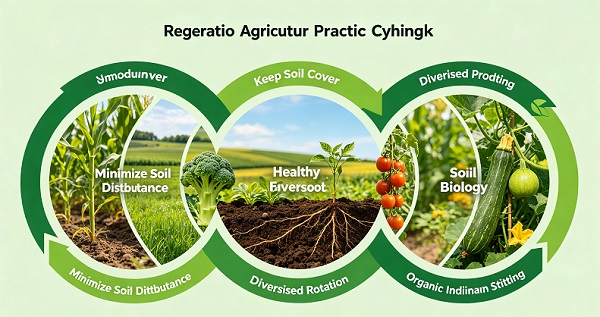
Five core principles form the practical framework of regenerative agriculture: minimizing mechanical disturbance to the soil (no-till or reduced tillage); maintaining soil surface cover (crop residues or cover crops); ensuring a constant presence of living roots in the soil; implementing diversified planting and crop rotation; and integrating livestock farming into land management.
Regenerative agriculture seeks to work in synergy with the natural nutrient, carbon, and water cycles. Through nature-based solutions, it increases crop yields while simultaneously enhancing soil organic matter, promoting soil carbon sequestration, and improving soil health.
II. The Profound Impact of Regenerative Agriculture on Fertilizer Machinery Design
The rise of regenerative agriculture is fundamentally redefining the design logic of fertilizer machinery.
1. From Broadcasting to Precision Strip Application: Reducing Soil Disturbance
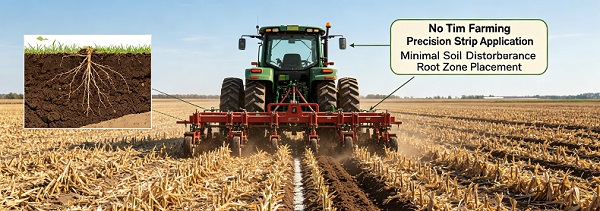
Regenerative agriculture requires minimizing mechanical disturbance to the soil. Traditional fertilizer spreaders, with their wide operating area and deep soil turning, directly conflict with this principle. Future fertilizer machinery must evolve towards precision strip application and deep loosening—delivering fertilizer precisely to the crop root zone with minimal disturbance to the topsoil, while preserving surface cover.
2. From Single Chemical Fertilizer to Synergistic Organic-Inorganic Application
Regenerative agriculture encourages managing soil fertility by enhancing soil organic matter and biological nitrogen fixation, rather than relying on indiscriminate inputs of chemical fertilizers. This means fertilizer machinery needs to be compatible with various forms of inputs, including organic fertilizers, compost, bio-fertilizers, and green manure. For example, electric compost spreaders are already in use in regenerative agriculture, enabling precise return of organic matter to the field while reducing reliance on fossil fuels.
3. Lightweight Design: Reducing Soil Compaction
Soil compaction caused by mechanical operations is a core concern in regenerative agriculture. Research shows that lighter agricultural machinery can significantly improve soil quality. The design trend of fertilizer machinery is shifting from "heavy-duty, high-horsepower" to lightweight and low ground pressure—wider tracks or tires, lighter weight, and more intelligent load distribution will become standard features of the next generation of fertilization equipment.
4. Integration of Cover Crop Management and Fertilizer Application
Cover crops are one of the core practices of regenerative agriculture. The termination of cover crops and fertilizer application often need to be completed within the same window. This has spurred demand for multi-functional combined operation machinery—for example, integrating a roller crusher and a fertilizer applicator into a single machine, completing cover crop termination and basal fertilizer application in one operation.
III. Responses from Fertilizer Production Enterprises
The rise of regenerative agriculture has presented fertilizer production enterprises with clear directions for equipment upgrades: developing composite operation machinery for the synergistic application of organic and chemical fertilizers; developing low-disturbance, high-precision fertilization equipment; promoting electrification and intelligent transformation; and designing modular, scalable equipment platforms to adapt to diverse inputs.
Regenerative agriculture is not a regression to "returning to the primitive," but rather a technological upgrade centered on soil health. This requires fertilizer machinery to shift from the extensive logic of "spreading fertilizer" to the intensive logic of "precisely delivering nutrients to where they need to be, without harming the soil." This is both a challenge and a historic opportunity for the fertilizer machinery industry to transform and upgrade.
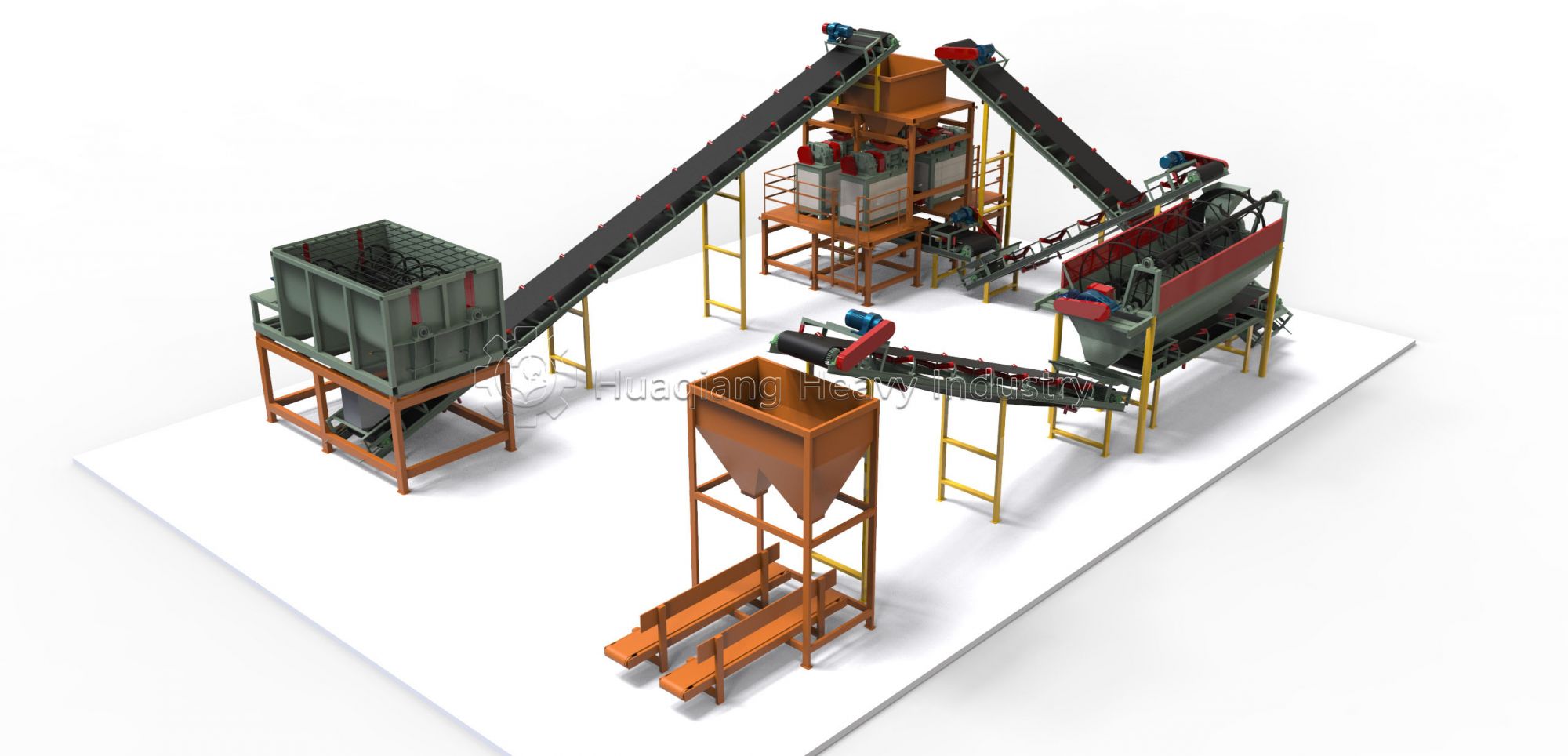
Regenerative agriculture is not a niche movement—it is a fundamental rethinking of how we produce food, and it demands a parallel evolution in the machinery that serves it. The shift from broad‑acre broadcasting to precision strip application, from single chemical fertilizers to organic‑inorganic synergy, and from heavy‑duty compaction to lightweight low‑ground‑pressure designs is already underway. This transformation directly influences every stage of fertilizer production and application. In the granulation plant, the focus is shifting toward producing granules with optimal fertilizer granules compaction and uniform nutrient release—whether through a rotary drum granulator, a disc granulator machine, or a fertilizer compactor (roller press) for dry extrusion. The entire npk fertilizer production line must adapt to handle diverse feedstocks, including composted organics and bio‑based materials, which is driving innovation across the organic fertilizer granulator series and the npk fertilizer manufacturing process. Downstream, fertilizer coating machine technology is being refined to produce controlled‑release and stabilized granules that match crop uptake patterns, reducing nutrient losses to the environment. Upstream, the animal manure processing line and fertilizer blending system are becoming more modular and precise, enabling custom blends that support soil biology and structure. The fertilizer granulator machine itself is being redesigned for lower energy consumption and better handling of variable‑moisture organic materials, while the automatic fertilizer packaging machine ensures that every bag delivers consistent, high‑quality product ready for precision application. Ultimately, regenerative agriculture is not a threat to fertilizer machinery—it is a catalyst for innovation. The equipment that will thrive in this new era is the one that helps farmers build soil health, not just apply nutrients. By embracing this paradigm, manufacturers can turn the regenerative revolution into a strategic opportunity, creating machines that are lighter, smarter, more versatile, and truly aligned with the future of sustainable farming.