
2026-07-03
Large-particle urea (typically 2-4 mm in diameter) has dominated the global urea trade due to its advantages such as high particle hardness, resistance to agglomeration, and suitability for mechanized fertilization. Its production equipment has undergone decades of technological iteration, evolving from early spray tower granulation to fluidized bed granulation, achieving leapfrog improvements in both single-line capacity and product quality. This article analyzes this from three dimensions: historical evolution, current mainstream equipment, and future trends.
I. Technological Evolution: From Tower Granulation to Fluidized Bed Granulation
Since the 1970s, large-particle urea granulation processes have been developed by foreign engineering companies, resulting in numerous patented technologies. Representative processes include atomized fluidized bed granulation by Hydro of Norway, jet fluidized bed granulation by Toyo Engineering Corporation (TEC) of Japan, and the material curtain coating method by the Tennessee Watershed Administration in the United States. In 1983, the world's first industrial-scale fluidized bed granulation plant went into operation in New Zealand, with a designed capacity of 470 t/d. China's production of large-particle urea began in 1993—Hainan Fudao first fully imported large-particle granulation technology, and the plant started operation in 1996. In 1997, PetroChina Ningxia Petrochemical built a 1740 t/d plant using the TEC process. In 1998, Jinling Petrochemical achieved the first complete localization of most of its equipment, significantly reducing construction investment, and since then, China's large-particle urea production has entered a period of rapid development.
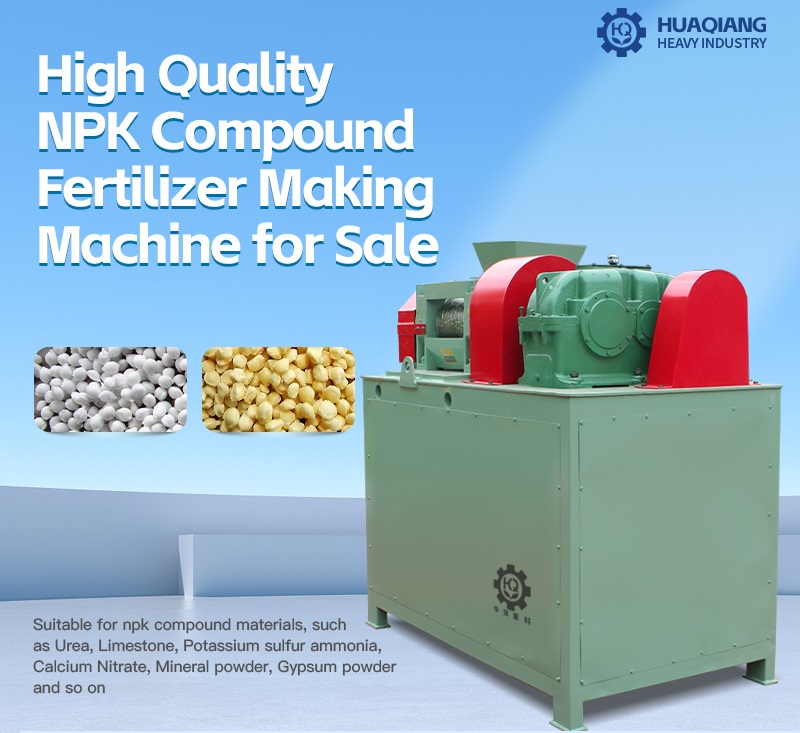
II. Current Mainstream Equipment: Fluidized Bed Granulation Technology Dominates
Currently, the mainstream technology for large-particle urea granulation worldwide is fluidized bed granulation. Its core equipment is the fluidized bed granulator—using fine urea particles as seed crystals, hot air is introduced from below the distribution plate to form a fluidized bed. Nozzles inside the bed atomize and spray approximately 96% urea solution, causing the seed crystals to grow layer by layer. After granulation, the particles are cooled and screened; unqualified particles are returned to the granulator as seed crystals. This technology has a large production capacity and can be integrated with large-scale urea synthesis plants. Japan's TEC jet fluidized bed granulation technology has been implemented in multiple plants in China, with a maximum design capacity of 2640 t/d. As of now, China has built 28 large-particle urea production plants, with a maximum single-line capacity of 3600 t/d and a total capacity exceeding 18.2 million tons/year. As of June 2015, there were 34 effective fluidized bed large-particle urea plants.
III. Market Size and Future Trends
In 2024, China's domestic large-particle urea production reached 11.7786 million tons, an increase of 761,100 tons over the previous year. The urea market size is projected to reach 14 million tons in 2025, with a compound annual growth rate of approximately 5.5%. Globally, the large-particle urea market size was approximately US$2.34 billion in 2024 and is projected to reach US$3.45 billion by 2032. Large-particle urea already accounts for 60%–70% of agricultural base fertilizer.
The future trends show three main directions: First, continuous breakthroughs in bio-based coating materials and intelligent controlled-release technology; second, environmental policies driving upgrades in granulation tail gas treatment; and third, the evolution of production processes towards low emissions and high efficiency. Single-line capacity continues to expand, with units exceeding 3000 t/d proving their operational reliability.
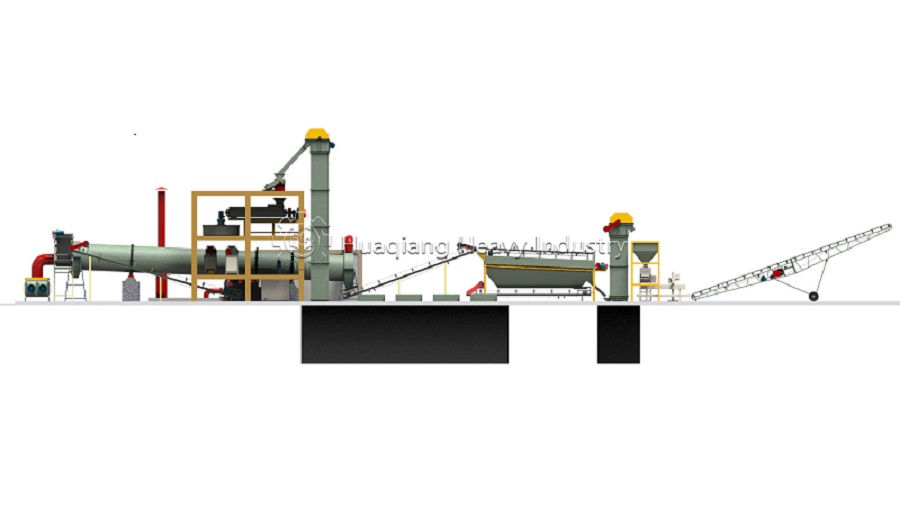
Overall, fluidized bed granulation technology will remain the mainstream for a considerable period, while greening, large-scale production, and intelligentization will be the core directions for equipment iteration. We provide R&D and manufacturing of large-particle urea granulation equipment, offering complete solutions for fluidized bed granulators and tail gas treatment systems—from small and medium-sized units to large-scale production lines exceeding 3000 t/d—helping you achieve low-emission, high-efficiency, green, and intelligent production, seizing the growth opportunities in the global large-particle urea market.
The technological evolution of large‑particle urea granulation—from spray towers to fluidized bed systems—exemplifies how advanced fertilizer production machine technology continuously pushes the boundaries of capacity, quality, and environmental performance. The same principles of controlled particle growth, precise temperature management, and efficient heat exchange that make fluidized bed granulation the gold standard for urea are equally applicable to other fertilizer products. For instance, fertilizer granules compaction in a fertilizer compactor (roller press) or disc granulator machine can benefit from seed‑layer growth concepts to improve sphericity and strength, while rotary drum granulator systems can adopt fluidized bed‑inspired air distribution designs to enhance drying and cooling uniformity. In a complete npk fertilizer production line, the integration of these granulation technologies with precise npk fertilizer formula processing enables manufacturers to produce high‑quality compound fertilizers with tailored release profiles and consistent nutrient distribution. Looking ahead, the convergence of fluidized bed granulation with digital control, low‑emission tail‑gas treatment, and bio‑based coatings will drive the next generation of fertilizer equipment—not only for urea but also for NPK, organic‑inorganic blends, and specialty fertilizers. By leveraging these cross‑technology synergies, producers can achieve higher throughput, better product consistency, and lower environmental footprint, securing their competitive edge in the rapidly evolving global fertilizer market.