
2026-02-28
In NPK compound fertilizer production, the core factor determining product competitiveness is the precision of the batch ratio. Any deviation in the ratio of nitrogen, phosphorus, and potassium can lead to uneven fertilizer effectiveness and inconsistent crop growth, or even result in substandard products, entire batches being scrapped, and ultimately, a loss of farmer trust. Huaqiang's fully automated batching system addresses this core pain point at its source with a dynamic batching error of ±0.5%. This article will detail techniques for improving batching precision, helping you use automation to ensure the consistent quality of every batch.
Uneven fertilizer effectiveness harms crops. The nitrogen, phosphorus, and potassium ratio is the soul of compound fertilizer. Inaccurate batching can result in vastly different nutrient contents in different areas of the same bag of fertilizer—applied to the field, some areas may grow excessively while others are deficient, leading to uneven crop growth and directly impacting yield and quality.
Low pass rates increase costs. A batch of products deemed substandard due to ingredient mixing errors signifies wasted raw materials, wasted production time, and a sharp increase in rework costs. For large-scale production lines, a 1% mixing error can result in losses of tens of thousands of yuan.
Reputation collapses, market share is lost. The agricultural input market is fiercely competitive, and farmers vote with their feet. Once a product is proven to have unstable fertilizer effects, years of accumulated market trust can crumble instantly, making recovery extremely difficult.
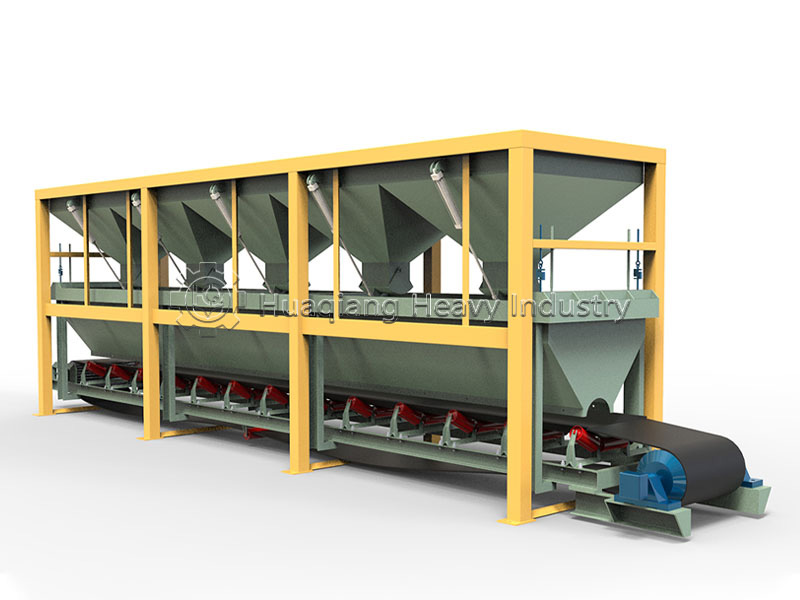
Core Advantages of the Automatic Mixing System:
Multi-compartment design, multi-purpose. It can be configured with 3-6 raw material compartments, storing urea, monoammonium phosphate, potassium chloride, fillers, and trace elements respectively, meeting different formulation needs. Each compartment is independently controlled, without interference.
High-precision sensors, error ±0.5%. Utilizing imported weighing sensors with a dynamic sampling frequency of up to 100 times per second, it monitors the feeding amount in real time and compares it with the set value, automatically adjusting the feeding speed to ensure the final ratio is completely consistent with the target ratio.
Automated control, reducing human error. Operators input the formula (e.g., 15-15-15) on the touchscreen, and the system automatically weighs and dispenses all raw materials simultaneously. No manual intervention is required throughout the process, completely eliminating errors caused by operational negligence.
Data is recordable, and products are traceable. Each batch's batch data is automatically stored, including raw material usage, proportions, and time. For quality traceability, data can be retrieved with a single click, ensuring clear accountability and verifiable records.
Good equipment requires proper use and maintenance to maximize its precision advantages.
Tip 1: Regularly calibrate sensors. Weighing sensors are the "eyes" of the batching system. It is recommended to calibrate them quarterly with standard weights to ensure accurate measurement data. Calibration records should be archived for future reference.
Tip 2: Clean silo discharge ports. Urea is prone to moisture absorption and clumping, ammonium phosphate has poor flowability, and potassium chloride easily generates dust—these raw material characteristics can cause bridging or blockage at the discharge ports. After each shift, check and clean all silo discharge ports to ensure unobstructed flow.
Tip 3: Adjust the feeding speed according to the raw materials. Different raw materials have significant differences in flowability and density, requiring corresponding feeding parameters to be set in the control system. Urea has a fast flow rate, so the initial feeding speed can be appropriately reduced to avoid material slugging; ammonium phosphate has a slow flow rate, requiring increased vibration or anti-bridging force.
Tip 4: Use a twin-shaft mixer. Accurate batching is only the first step; uniform mixing is equally crucial. Huaqiang's twin-shaft horizontal mixer can achieve a uniformity of over 95% for multiple raw materials within 1-2 minutes. It is recommended to extend the mixing time by 10-15 seconds to ensure uniform dispersion of trace components.
Tip 5: Establish a formula database. Pre-store commonly used formulas (such as corn fertilizer, wheat fertilizer, and fruit tree fertilizer) in the control system for direct recall during production, avoiding potential errors from each input.
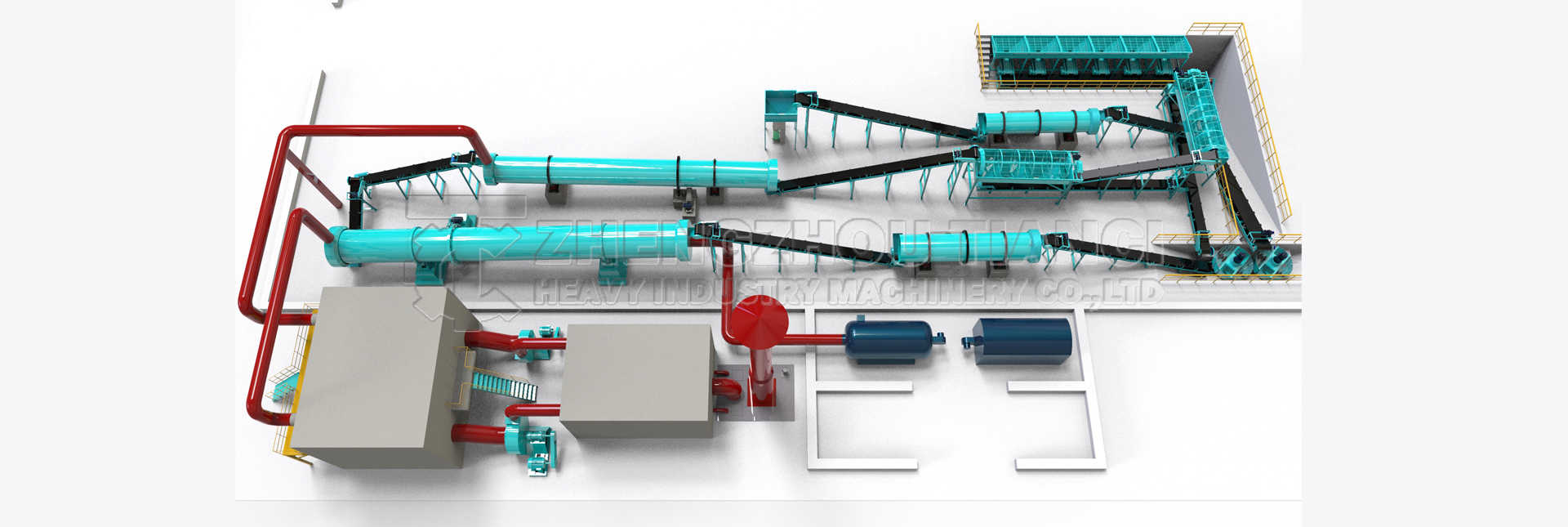
System Integration: Full Automation from Batching to Finished Product
Huaqiang's automatic batching system is not an isolated device, but rather the "brain" of the entire production line. It can seamlessly integrate with front-end crushers, back-end mixers, and granulators: The crusher processes raw materials to a fineness of 80 mesh or higher, providing a foundation for precise batching. The batching system automatically adds materials according to the formula, with errors controlled within millimeters. The mixer quickly and evenly mixes the batched materials, leaving no dead zones. The granulator forms uniform granules from the mixture, completing product shaping. The entire line, from feeding to packaging, requires only 2-3 people to monitor, achieving one-button operation of "crushing-batching-mixing-granulation".
In NPK compound fertilizer production, even minor deviations in the batching process can snowball and amplify in later stages, ultimately affecting the quality of the entire batch. Huaqiang's fully automatic batching system, with an extreme precision of ±0.5%, locks in errors at the source, ensuring consistent quality in every batch. When your fertilizer earns farmers' trust due to its uniform fertilizer effect, and when market reputation brings you a steady stream of orders, you will understand: precise batching is worth every effort.
Once the precisely blended mixture from the automated batching system is ready, the next critical stage in the npk fertilizer manufacturing process is granulation. The choice of granulator determines the final physical form of the product. For high-volume, traditional compound fertilizer production, a rotary drum granulator is the industry standard, using steam to agglomerate the powder into dense, rounded particles. For applications requiring a dry process or producing high-density granules, a double roller press granulator (the core of a roller press granulator production line) acts as a fertilizer compactor, achieving fertilizer granules compaction through immense mechanical pressure without heat. For premium spherical organic or compound fertilizers, a disc granulator machine offers excellent control over particle size. For very small-scale or specialty applications, a flat die pelleting machine provides a simple, low-cost granulation solution. The precise, uniform blend from the batching system is the ideal feed for any of these granulators, ensuring consistent granule quality, high strength, and reliable nutrient release, thereby completing the transformation from precisely measured raw materials to a high-value, market-ready product.