
2026-03-04
In the production of fertilizers, feed, and biomass pellets, flat die pelleting machines are becoming a "star equipment" for small and medium-sized production due to their unique room temperature extrusion process. They eliminate the need for high-temperature drying and the addition of large amounts of binders, using only mechanical pressure to shape powdery materials into high-quality columnar pellets, with a stable forming rate exceeding 95%. This article will provide an in-depth analysis of the five core granulation characteristics of flat die pelleting machines, helping you understand how equipment characteristics determine pellet quality.
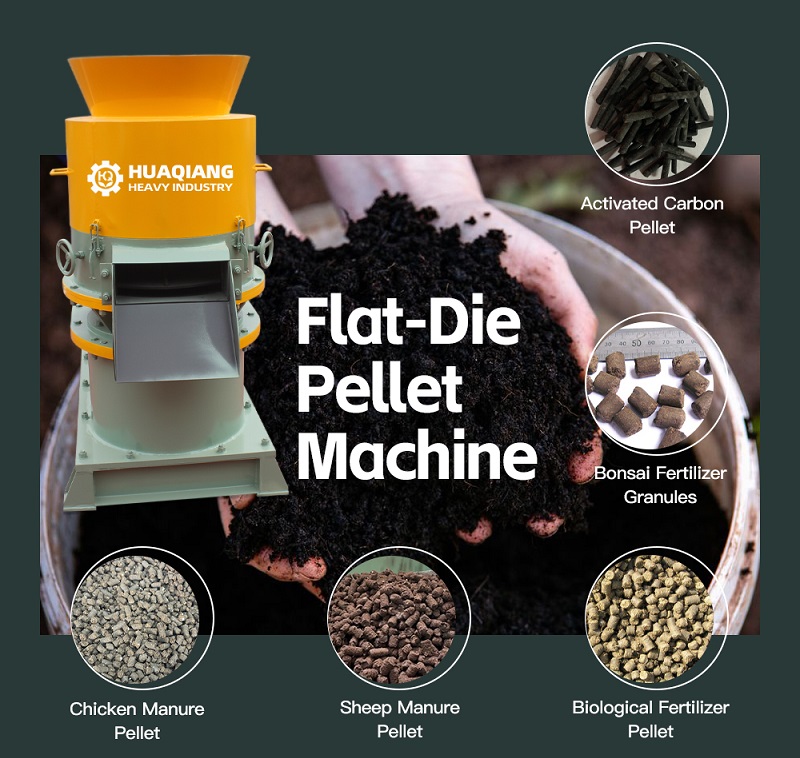
Room Temperature Extrusion Molding Preserves Active Ingredients
The core process of flat die pelleting machines is "room temperature extrusion"—materials are forcibly extruded between pressure rollers and a flat die, forming columnar pellets through the die holes. The entire process does not involve high-temperature heating. This characteristic is particularly crucial for heat-sensitive raw materials: functional bacteria in organic fertilizers, active enzymes in bio-fertilizers, and vitamins in feeds can all be inactivated or decomposed at high temperatures. Room temperature granulation maximizes the preservation of the active ingredients in the materials, giving the product true "biological value." Simultaneously, the elimination of the drying process significantly reduces energy consumption, aligning with green production principles.
With a forming rate exceeding 95% and extremely high raw material utilization, the entire series of flat die pellet mills maintains a pelleting forming rate of over 95%. The technical logic lies in the fact that material is forced to fill the die orifice under high pressure, forming dense pellets after extrusion with almost no powder residue. This high forming rate directly reduces the workload of return material processing, avoiding raw material waste. One user reported that after using the flat die mill, the amount of returned material from screening decreased from 20%-30% in wet pelleting to less than 5%, significantly improving production efficiency.
Flexible and adjustable pellet specifications to meet diverse industry needs. The die orifice diameter of the flat die pellet mill can be selected within the range of 2-12 mm, while the cutting device can precisely control the pellet length between 2-8 mm. This means that the same machine can produce different specifications of products—2-3 mm feed pellets, 4-6 mm organic fertilizer pellets, and 8-10 mm biomass fuel pellets—by changing the die and adjusting the cutter, offering versatility and flexible response to market demands.
Simple structure, low energy consumption, and outstanding economic efficiency: The flat die pellet mill's structural design prioritizes simplicity and efficiency. A motor drives the pressure rollers to rotate, and the material is extruded between the rollers and the flat die, eliminating the need for complex drying and cooling systems. Motor power ranges from 3 kW to 55 kW, matched to requirements, with single-unit output ranging from tens of kilograms to 5 tons per hour. Compared to drum pellet mills requiring steam heating or disc pellet mills requiring drying, the flat die pellet mill reduces energy consumption per ton of product by over 40%, offering advantages in both initial investment and operating costs.
Wide raw material adaptability, no need for large amounts of binders: The flat die pellet mill is highly adaptable to various raw materials: organic fertilizer (composted chicken manure, cow manure, mushroom residue), compound fertilizer raw materials, feed (grains, oilseed cake), and biomass (wood chips, straw) can all be processed. Its working principle allows the material itself to form pellets under high pressure, eliminating the need for large amounts of chemical binders. For organic fertilizer production, this means the finished product has a near 100% organic matter content and is of pure quality; for feed production, it avoids the negative impact of additives on animal health.
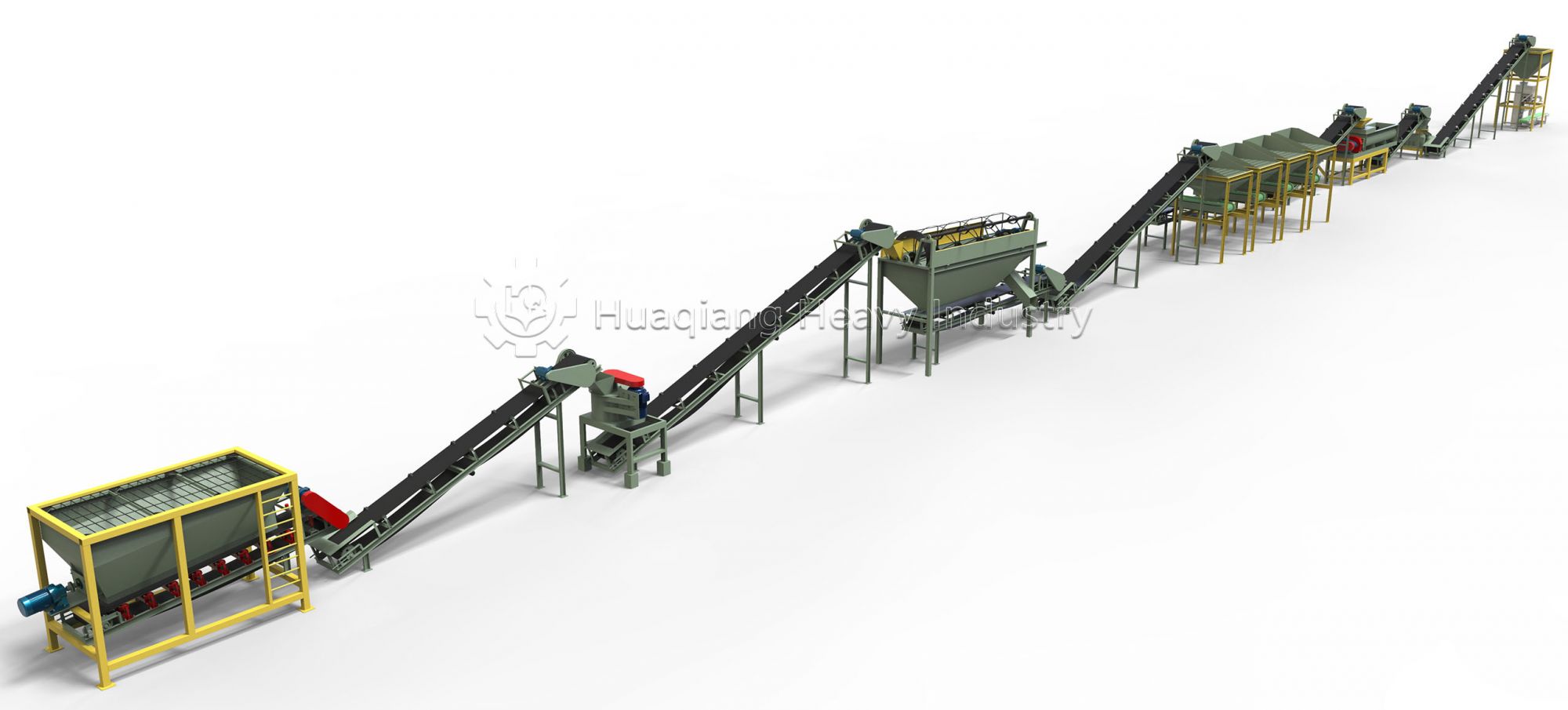
Technical Principle: Precision Matching of Pressure Roller and Flat Die
The working principle of the flat die pellet mill can be summarized as "extrusion molding": After the material enters the pelleting chamber, it is forced by the rotating pressure roller against the perforated flat die, and extruded from the die holes under high pressure of 10-30MPa, forming dense cylindrical strips. A cutter below the die cuts the extruded strips, obtaining cylindrical pellets of uniform length. The gap between the pressure roller and the flat die can be flexibly adjusted through an adjustment mechanism to ensure stable molding of materials with different properties. This design guarantees pelleting quality while reducing the stringent requirements on raw material moisture and fineness.
From room temperature extrusion that preserves activity to an ultra-high molding rate of over 95%; from flexibly adjustable pellet sizes to broadly compatible raw material adaptability—every design feature of the flat die pellet mill responds to the core demands of producers: producing the highest quality pellets with the simplest process. Whether for small farms producing their own feed or for commercial organic fertilizer plants, this equipment helps you quickly enter the pellet product market with a very low economic barrier.
The flat die pelleting machine represents a distinct and highly effective branch of extrusion granulation machine technology, specializing in columnar fertilizer granulation technology. It achieves fertilizer granules compaction by forcing material through a stationary die with rotating rollers, creating dense, cylindrical pellets. This contrasts with other granulation methods. A rotary drum granulator, for example, relies on wet agglomeration to form spherical granules, often requiring subsequent drying. A disc granulator for shaping also produces spheres through a tumbling, wet process. A complete roller press granulator production line uses high pressure between two counter-rotating rollers to compact material, often producing pillow-shaped or irregular granules. The flat die pelleting machine carves its own niche by offering a simple, low-cost, and energy-efficient method for producing uniform cylindrical pellets from a wide variety of materials, making it ideal for small to medium-scale producers in the fertilizer, feed, and biofuel sectors who value versatility and low operating costs.