
2026-03-03
In the fertilizer production field, equipment selection is the first step determining the success or failure of a project—the right selection leads to high production efficiency, stable product quality, and a quick return on investment; the wrong selection results in frequent downtime, quality fluctuations, and uncontrolled costs. From raw material pretreatment to finished product packaging, each stage has its core equipment, and each type of equipment needs to be precisely matched according to the characteristics of the raw materials, production scale, and product positioning. This article will focus on six major production stages to outline the key points for selecting fertilizer machinery and equipment, helping you get on the right track from the very first step.
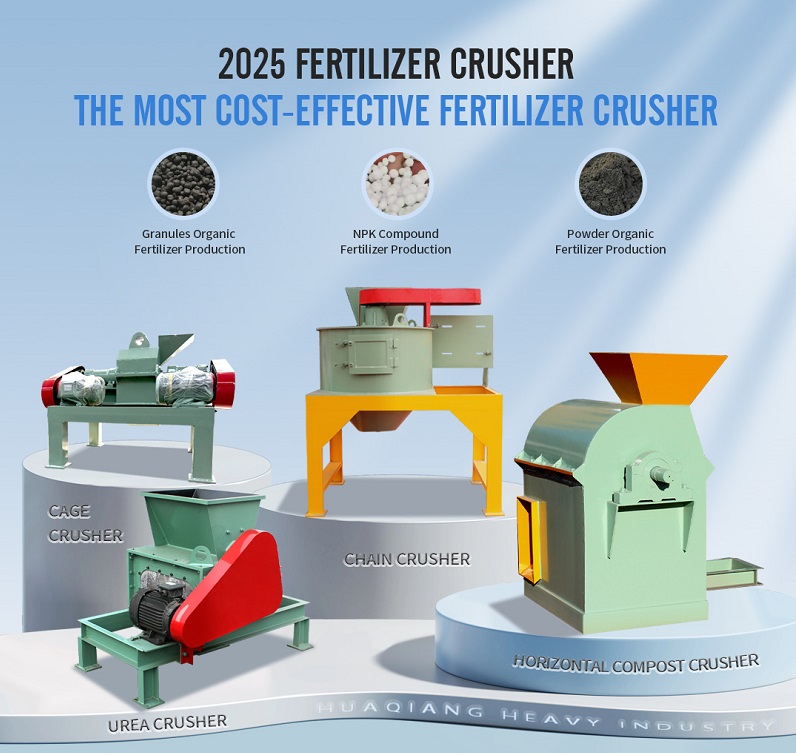
I. Raw Material Pretreatment: Selection of Crushing Equipment
Crushing is the "first process" in fertilizer production, and the selection criteria are mainly based on the raw material's form and moisture content.
Semi-wet material crusher: Raw materials such as chicken manure and cow manure that retain high moisture content after fermentation (25%-55%) require this type of equipment. Its screenless design prevents clogging, making it the first choice for processing high-moisture raw materials.
Straw Crusher: For coarse fibrous materials such as corn stalks and wheat straw, the straw needs to be chopped to 3-5 cm to adjust the carbon-nitrogen ratio. The blade-type cutting structure effectively prevents tangling.
Chain Crusher: For dry materials that have hardened into clumps after composting, the high-speed chain crushes the clumps, offering high output and adjustable fineness.
II. Fermentation and Composting: Selection of Turning Equipment
The core of the fermentation process is uniform oxygen supply, temperature control, and mixing. The selection of the turning machine needs to be combined with site conditions and raw material characteristics.
Flock Turner: Suitable for small to medium-scale, open-air operations. Flexible movement and moderate investment make it an entry-level choice for small farms.
Chain Trench Turner: Standard equipment for large-scale production. It moves along the fermentation trough track, enabling continuous and automated operation, significantly reducing manual labor.
Hydraulic Turner: Specialized for high-moisture materials such as chicken manure. Powerful hydraulic drive and deep turning allow for easy handling of clumps with a moisture content of over 70%.
Double-Helix Turning Machine: Specialized equipment for bio-organic fertilizer fermentation. Low-speed, gentle stirring avoids friction-induced heating that kills the bacteria, resulting in a higher viable bacteria count in the finished product.
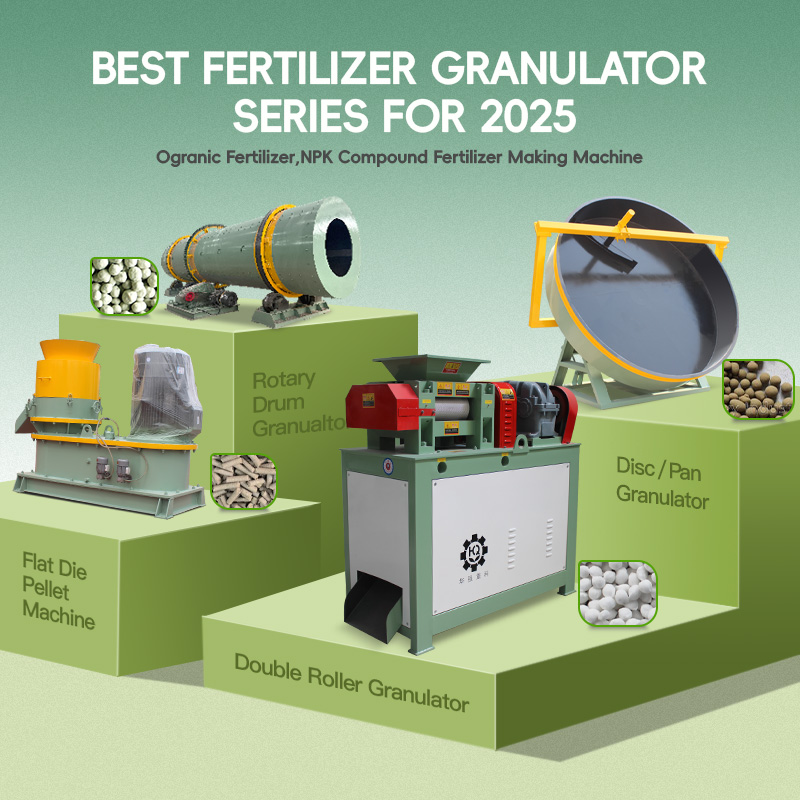
III. Granulation and Forming: Selection of Granulation Equipment The granulation process determines the final form and market positioning of the product. Selection must consider the characteristics of the raw materials and the target particle size requirements.
Disc Granulator: The first choice for pure organic fertilizer granulation. It utilizes the material's own viscosity to roll into spheres, producing smooth, round granules without the need for binders, achieving a forming rate of over 95%.
Double-Roller Press Granulator: Ideal for compound fertilizers or moisture-sensitive materials. Dry extrusion forming eliminates the need for drying, resulting in low energy consumption and lower investment.
Roller Granulator: Standard equipment for large-scale compound fertilizer production. It uses steam or water mist to agglomerate materials into spheres, offering high output and high particle strength, suitable for production lines of 10 tons/hour or more.
IV. Drying and Cooling: Ensuring Particle Stability Particles produced by wet granulation must be dried for safe storage.
Rotary Dryer: Used in conjunction with the granulator, it uses hot air to reduce the moisture content of the granules to below 10%. When selecting a drying cylinder, the diameter and length must be matched to the production capacity to ensure drying effect.
Rotary Cooler: High-temperature granules after drying need to be immediately cooled to within 5°C of room temperature to prevent moisture absorption and clumping after packaging. Coolers are usually arranged in series with the dryer.
V. Screening and Packaging: Completing the transformation from product to commodity
Vibrating Screen: Grading the granulated material. Qualified granules enter packaging, while oversized granules and fine powder are returned for reuse. Single-layer screens are used for simple grading, while multi-layer screens can separate multiple sizes simultaneously.
Fully Automatic Packaging Machine: Selected according to material form—granular fertilizer uses a dual-speed feeding packaging machine, while powdered fertilizer requires an arch-breaking device to prevent clogging. Packaging accuracy ±0.2 kg/bag, speed matched to front-end production capacity.
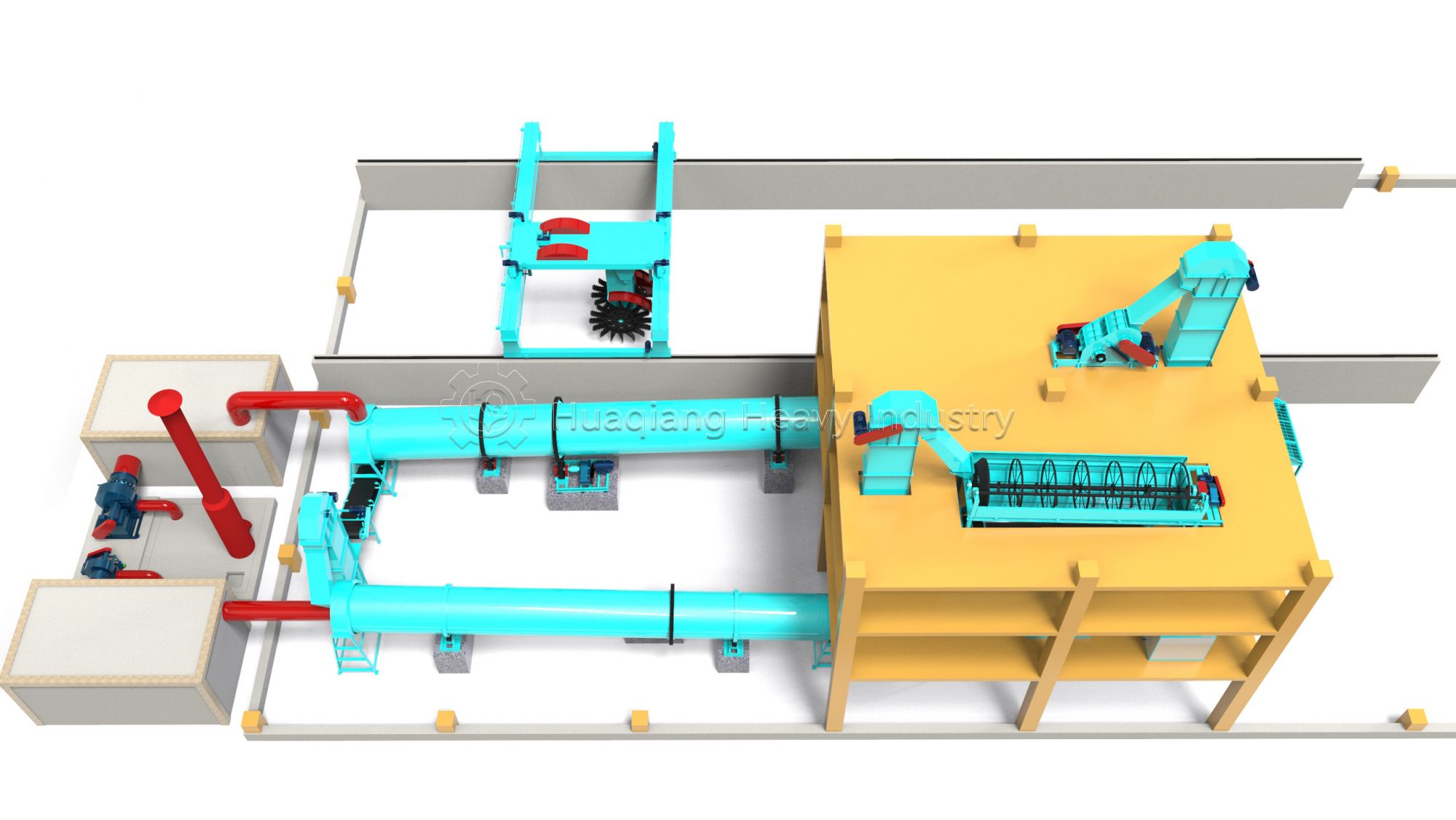
VI. Auxiliary Equipment: Enhancing Automation Level
Ingredient Batching Machine: Multi-compartment design allows for precise control of various raw material proportions according to the formula, with an error of ±0.5%. It is a core component in the production of compound fertilizers and blended fertilizers.
Conveyors: Belt conveyors, screw conveyors, and bucket elevators are selected based on material characteristics and conveying distance to achieve seamless connection between each stage.
Dust Removal Equipment: Pulse jet bag filters or cyclone dust collectors collect dust generated during crushing, screening, and packaging, which is both environmentally friendly and allows for raw material recycling.
VII. Selection Based on Scale: Avoiding Overkill
Small Production Line (1-5 tons/hour): Suitable for farm use or small workshops. Recommended equipment: Small windrow turner + semi-wet material crusher + disc granulator + simple packaging machine. Investment: tens of thousands to over one hundred thousand yuan; land area: 100-300 square meters.
Medium Production Line (5-10 tons/hour): The mainstream choice for professional organic fertilizer plants. Recommended equipment: Chain trough turner + chain crusher + drum granulator + dryer and cooler + automatic packaging machine. Investment: hundreds of thousands of yuan; land area: 500-1000 square meters.
Large Production Line (10-50 tons/hour): Standard configuration for large-scale production centers. Recommended equipment: Multiple compost turners + multi-stage crusher unit + large granulator + drying and cooling system + fully automated packaging line. Investment exceeds one million RMB, occupying over 2000 square meters.
From raw material intake to finished product output, the equipment selection at every stage affects the final return on investment. Huaqiang Heavy Industry covers the entire process of fertilizer machinery and equipment, providing customized configuration solutions from single machines to complete production lines. Whether you are processing chicken or cow manure, whether your target is powdered or granular fertilizer, and whether your capacity is 5 tons or 50 tons, you can find the most suitable equipment combination. Choosing the right equipment is choosing the shortcut to efficient production.
The selection of the right granulator is a pivotal decision in any fertilizer project. For pure organic fertilizers where spherical, premium granules are the goal, a disc granulator machine is often the ideal choice, utilizing the material's natural adhesion. For large-scale production of traditional NPK compound fertilizers, a rotary drum granulator remains the industry workhorse, offering high capacity through its wet agglomeration process. When energy efficiency and a dry process are paramount, particularly for heat-sensitive materials, the double roller press granulator—a type of fertilizer compactor—is the clear winner. A complete roller press granulator production line achieves fertilizer granules compaction through high mechanical pressure, eliminating the need for drying. For very small-scale or specialty applications requiring simple, cylindrical pellets, a flat die pelleting machine provides a low-cost, flexible entry point. Understanding these distinct paths—from the tumbling action of the disc granulator machine to the high-pressure compaction of the double roller press granulator—is essential for aligning equipment capabilities with your raw materials and market goals.