
2026-08-20
The "disintegration degree" of fertilizer particles refers to the speed and extent to which the particles disperse, break apart, and release nutrients upon contact with water after being applied to the soil. This indicator directly determines whether crops can obtain nutrients in a timely manner during critical growth stages. One of the core variables determining the disintegration degree is the mechanical pressure applied to the material during the granulation process.
I. How Mechanical Pressure Shapes the Physical Structure of Particles
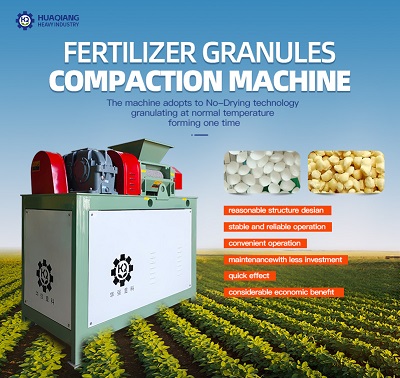
The effect of granulation pressure on fertilizer particles is essentially the process by which compressive force alters the internal pore structure and intergranular bonding forces of the particles. Taking roller extrusion granulation as an example, there is a "minimum critical pressure" for granulation pressure—research shows that 10 MPa is the minimum pressure threshold required for particle formation during extrusion granulation. To meet the requirements for particle strength while considering energy consumption, 15 MPa is usually chosen as the granulation pressure in experiments. Increasing the pressure between the rollers can significantly improve particle hardness, making the particles more dense and compact.
However, higher pressure is not always better. Excessive granulation pressure will cause the particles to become too compact, with internal pores being compressed significantly, making it difficult for water to penetrate into the particle. The denser the granules, the longer it takes for them to disintegrate upon contact with water, and the slower the nutrient release rate.
II. Hardness and Dissolution Rate: A Set of Key Experimental Data
Different granulation processes apply varying mechanical pressures, directly leading to significant differences in granule hardness and dissolution rate. A systematic study of compound fertilizers produced using four different granulation processes provides a clear quantitative comparison: Compound fertilizer granules produced using the novel needle-shaped granulation process have the lowest compressive strength (only 16.18 N), the shortest dissolution time, and the fastest dissolution rate. Compound fertilizer granules produced using the rotary drum granulation process have the highest compressive strength (45.77 N), the longest dissolution time (925.33 seconds), and the lowest dissolution rate. This data intuitively reveals the negative correlation between granule hardness and dissolution rate: for every increase in hardness, the dissolution time increases exponentially.
Another study also confirmed the same pattern: granule crush resistance is closely related to particle size and granulation process; by altering the physical properties of the granules, the dissolution behavior and nutrient release rhythm of compound fertilizers can be controlled.
III. How Disintegration Affects Agronomic Effects
Differences in disintegration ultimately affect crop yield and nutrient utilization efficiency. In the aforementioned study, the novel needle-shaped granulated compound fertilizer, which dissolved fastest and had the lowest compressive strength, demonstrated the best yield-increasing effect in field corn trials—a yield increase of 44%, with nitrogen, phosphorus, and potassium utilization rates increasing by 41%, 23%, and 18%, respectively.
However, it is important to emphasize that not all scenarios require "the faster the better." Fast-dissolving fertilizers are suitable for topdressing applications where fertilizer demand is urgent, while slow-release fertilizers require appropriate particle strength to control the nutrient release rhythm. Large-particle slow-release fertilizers achieve slow nutrient release precisely through a combination of reasonable granulation pressure and slow-release agents.
IV. Process Balance: Precise Control of Pressure, Hardness, and Disintegration
For fertilizer producers, understanding the relationship between mechanical pressure and disintegration is crucial for finding the optimal balance between "strength" and "release." Too low a pressure results in insufficient granule strength and easy pulverization during transportation; too high a pressure makes the granules too dense, causing slow disintegration and affecting fertilizer efficacy. Granule formulations with a disintegration rate of approximately 4.34 g/min have been proven to achieve a reasonable disintegration rate while maintaining a certain granule strength.
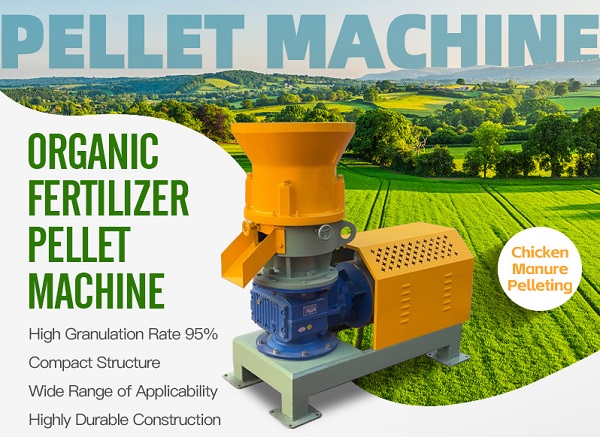
Granulation pressure is not a fixed parameter but a critical lever that directly shapes the physical structure, disintegration behaviour, and ultimately the field performance of fertilizer granules. For npk fertilizer manufacturing process and npk fertilizer production line operations, selecting the appropriate granulation equipment is paramount — the rotary drum granulator offers high throughput with moderate pressure, producing granules with good strength and controlled release, while a fertilizer compactor or fertilizer granules compaction system applies higher mechanical force, ideal for dense, slow‑release products that require enhanced durability during storage and transport. The organic fertilizer granulator series (including disc, drum, and extrusion types) provides flexible pressure adjustments to suit different raw materials and target disintegration rates — from fast‑release for top‑dressing to slow‑release for base applications. The key lies in process optimisation: fine‑tune the roller gap, rotation speed, and feed moisture to achieve a granule hardness that balances mechanical strength with a disintegration rate of approximately 4‑5 g/min, ensuring timely nutrient availability without excessive dust or caking. Furthermore, combining pressure control with binder selection and coating technologies allows manufacturers to design customised release profiles for specific crops and soil conditions. Ultimately, mastering the pressure‑disintegration relationship transforms granulation from a simple shaping step into a powerful tool for precision nutrient management — enhancing both fertiliser efficiency and crop yield while minimising environmental losses.
This requires manufacturers to fully consider the nutrient requirements and application methods of the target crop when selecting equipment and setting process parameters—using precise granulation pressure to control the appropriate degree of disintegration, ensuring that each fertilizer granule releases the most needed nutrients at the most suitable time.