
2026-03-17
In fertilizer and organic fertilizer production, particle compaction effect directly determines the product's strength, uniformity, and market competitiveness. However, many companies face the dilemma of "different effects from the same machine" when dealing with materials with vastly different characteristics, such as livestock and poultry manure, straw, and NPK compound raw materials: the particles are dense when processing chicken manure, but loose and brittle when processing straw; ammonium sulfate granulation is smooth and efficient, but potassium chloride granulation frequently encounters jamming. The root of the problem lies in the significant differences in the physical properties of different raw materials, requiring differentiated compaction parameters and equipment selection. This article will analyze how to optimize the compaction process based on the characteristics of the raw materials.
The Influence of Raw Material Characteristics on Compaction Effects
The three core characteristics of raw materials—moisture content, particle size, and viscosity—jointly determine the compaction effect. Moisture content is a key variable: water forms liquid bridges between particles, enhancing bonding when appropriate, but causing material adhesion when excessive. Particle size distribution affects particle bulk density: a higher proportion of fine powder results in a larger contact area between particles and tighter bonding. Viscosity determines intermolecular forces: raw materials with high organic matter content are more viscous and easier to compact; mineral raw materials require high pressure assistance.
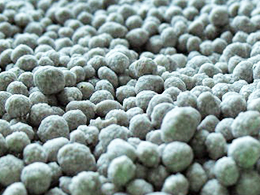
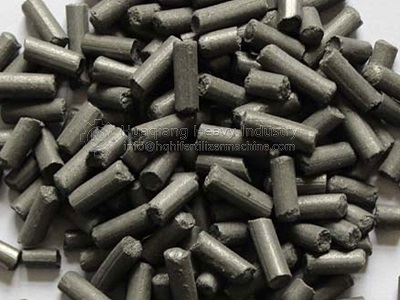
Compaction Parameter Control for Different Raw Materials
For high-moisture raw materials (such as fresh livestock and poultry manure with a moisture content >15%), they must be pre-dried to 8%-12%. If granulated directly, the moisture is trapped inside the granules during extrusion, making them prone to mold and cracking during subsequent storage. Low-temperature, high-volume drying can be used, with the temperature controlled at 60-70℃ to avoid organic matter loss.
For high-fiber raw materials (such as straw and rice husks), the elasticity of the fibers makes the granules difficult to compact. The solution is a "high-pressure, low-speed" strategy—increasing the roller pressure of the roller extrusion granulator to 25-30 MPa and reducing the roller speed to 8-12 r/min, extending the time the material is compressed between the rollers. Simultaneously, the raw material needs to be crushed to 2-5 mm; excessively long fibers are prone to entanglement in the equipment.
For highly viscous raw materials (such as fermented sludge and certain organic wastes), the material easily adheres to the roller surface, causing "roller wrapping." At this point, the moisture content needs to be appropriately reduced to below 8%, or 5%-10% of inert powder (such as fly ash or diatomaceous earth) should be added to the raw materials to break up the continuous viscous layer. If a rotary drum granulator is used, the steam temperature can be appropriately increased to soften the material and reduce adhesion through thermal action.
For low-viscosity mineral raw materials (such as phosphate rock powder and potassium salts), the intermolecular forces between particles are weak, requiring high-pressure forced bonding. A roller extrusion granulator can plastically deform mineral particles under 30MPa pressure, forming dense particles. Adding a small amount of bentonite (2%-3%) can significantly improve particle strength.
Equipment selection recommendations: Choose according to material conditions. For high-fiber, high-elasticity raw materials, a roller extrusion granulator is preferred—its high-pressure, slow-speed compaction method effectively overcomes fiber rebound, and the output particle strength can reach 20-30N. For easily agglomerated, heat-sensitive raw materials, the steam-assisted process of a rotary drum granulator is more advantageous—it reduces material viscosity through thermodynamic plasticization while avoiding damage to the particle structure caused by mechanical extrusion. For pure organic fertilizer and biomass fuel, flat die pellet mills, through their die extrusion molding method, can produce high-density, smooth-surfaced cylindrical pellets.
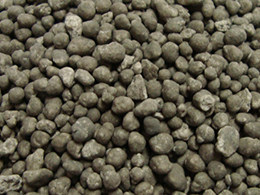
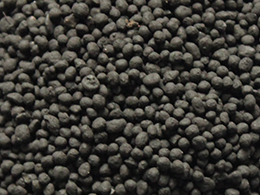
Customized Raw Material Adaptation Solutions
The complexity of raw materials means that a "one-size-fits-all" solution does not exist. Our company has a raw material analysis laboratory that can conduct compaction effect tests on customer-provided samples and issue process parameter reports including optimal pressure, speed, and moisture range. For special raw materials, we also offer die customization services—such as designing conical die holes for high-fiber materials and adding roller surface coatings for easily sticky materials.
From chicken manure to phosphate rock powder, from sawdust to potassium chloride, the essence of pellet compaction is the scientific control of "tailoring to the material." Understanding raw material characteristics, optimizing process parameters, and selecting the right core equipment are crucial to ensuring that every investment translates into stable and reliable product quality.
The analysis of material-specific compaction parameters reinforces that achieving optimal fertilizer granules compaction is not a one-size-fits-all process. Each raw material demands a tailored approach, often dictating the choice of core equipment. For high-fiber, elastic materials, a double roller press granulator within a roller press granulator production line excels, using high pressure to overcome fiber rebound and create dense, strong granules. Conversely, for heat-sensitive or easily agglomerated materials, the gentler, steam-assisted tumbling action of a rotary drum granulator is often more effective, using heat and moisture to bind particles without mechanical stress. For purely organic materials like manure or biomass, a flat die pelleting machine provides a simple, robust method for producing dense cylindrical pellets. For producing premium spherical granules from a variety of blended materials, a disc granulator machine offers excellent control and a gentle agglomeration process. The key takeaway is that selecting the right technology—whether a high-pressure double roller press granulator, a versatile rotary drum granulator, or a simple flat die pelleting machine—must be driven by a deep understanding of the raw material's physical properties. This material-centric approach ensures optimal particle strength, uniformity, and production efficiency, turning the challenge of diverse feedstocks into a competitive advantage.