
2026-03-05
In organic and compound fertilizer production, granulators are the core equipment determining product form and production capacity. Disc granulators and drum granulators, as the two most widely used models, are suited to drastically different production scenarios due to differences in structural design and working principles. The core of enterprise selection is not "which is better," but "which is more suitable." Clarifying the differences between the two, combined with one's own production capacity, material characteristics, and market demand, is essential to maximizing the value of the equipment.
I. Working Principle: Precise Particle Control and Batch Shaping
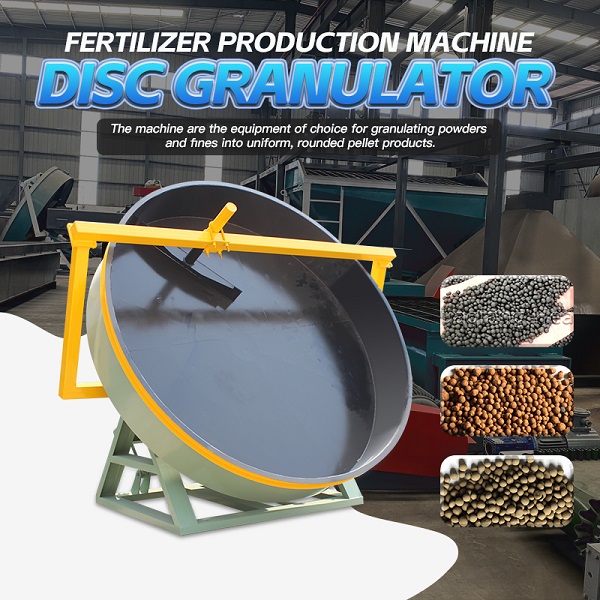
Disc granulators use an inclined disc driven by centrifugal force. Material spirals upward within the disc, gradually agglomerating into spheres through sprayed binder. Operators can precisely control particle size by adjusting the disc's tilt angle, rotation speed, and water spray volume. Particle roundness can reach over 90%, allowing for direct packaging without secondary screening, resulting in excellent marketability.
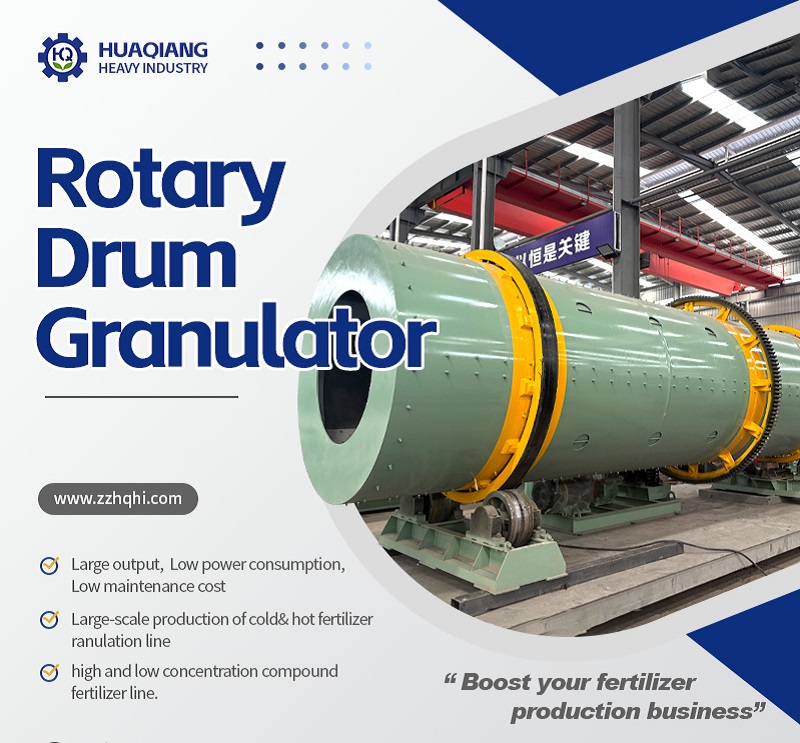
Drum granulators, on the other hand, use a horizontal cylinder with axial tumbling as their core. Lifting plates elevate the material and scatter it, agglomerating it through repeated collisions. The material stays in the drum for a relatively long time, and humidity is regulated by steam or water mist. This makes it suitable for continuous, large-scale production. However, the sphericity of the particles is typically between 75% and 85%, requiring screening equipment to ensure qualified particles are selected.
II. Production Capacity Positioning: Small and Precise vs. Large and Comprehensive
Disc granulators have a production capacity of 0.5-5 tons per hour, and a single machine can meet the needs of a small production line with an annual output of 10,000-30,000 tons. They have a low investment threshold and require little space, making them ideal for startups, family farms, or small-batch production (such as fertilizers for fruits and vegetables, or flower fertilizers).
Drum granulators have a production capacity of 5-50 tons per hour and can achieve continuous feeding and discharging. They are standard equipment for large-scale production lines with an annual output of over 50,000 tons. Although the investment per machine is higher, labor and depreciation costs are diluted in large-scale production, resulting in a lower overall cost per ton of product.
III. Material Suitability: Loose Materials and High-Moisture Materials
Disc granulators are best suited for loose materials with a moisture content of 18%-25%, such as well-rotted chicken manure, straw residue, and mushroom residue. Material rolls into pellets within the disc, eliminating the need for large amounts of binders and resulting in a high organic content in the finished product.
Drum granulators, on the other hand, can process highly viscous materials with a moisture content of 25%-35%, such as fresh livestock and poultry manure, municipal sludge, and industrial waste. Through steam heating and powerful tumbling, even highly viscous raw materials can be stably granulated, offering wider material adaptability.
IV. Cost and Maintenance: Each Has Its Advantages
Disc granulators consume only 8-12 kWh of electricity per ton of material, with a purchase cost of 30,000-80,000 RMB, resulting in low initial investment and operating costs. Operation is simple; novices can learn to operate them after short training, and replacement costs for wear parts (such as scrapers) are low.
Drum granulators consume 12-18 kWh of electricity per ton of material, with a purchase cost of 21,750–43,500 USD for medium-sized equipment. The equipment is larger and requires more components, necessitating a professional operating team; an automated control system is recommended. However, in large-scale production, the investment per unit capacity is actually lower than that of disc granulators.
V. Selection Recommendations: Match Based on Needs
Select Disc Granulator:For annual production below 30,000 tons, prioritizing rounded, high-end granules, processing loose organic materials, with limited budget and no professional maintenance team.
Select Drum Granulator:For annual production above 50,000 tons, processing highly moist and viscous materials, requiring continuous large-scale production, nationwide market coverage, and professional maintenance capabilities.
From the refined roundness of fruit and vegetable fertilizers to the resource utilization of urban sludge—both granulators have their strengths. Choosing the right equipment means choosing the right path to the market.
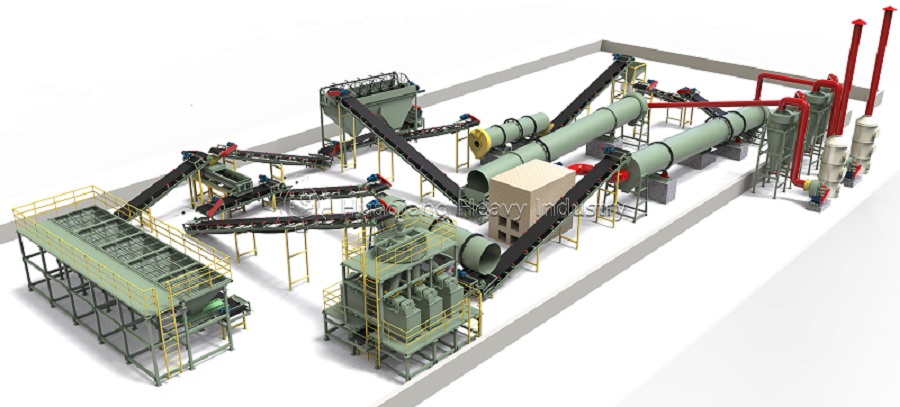
The choice between a disc and drum granulator is fundamental, but it's also important to recognize other specialized granulation technologies that offer distinct advantages. For dry compaction, a double roller press granulator (a type of fertilizer compactor) is the core of a roller press granulator production line, achieving fertilizer granules compaction through high mechanical pressure without heat or binders. This contrasts with the wet agglomeration of a rotary drum granulator and the tumbling action of a disc granulator for shaping. For very small-scale or specialty applications requiring simple cylindrical pellets, a flat die pelleting machine provides a low-cost, flexible entry point. Each technology—whether the high-volume rotary drum granulator, the precision shaping of a disc granulator for shaping, or the dry compaction of a double roller press granulator—carves its own niche. The optimal selection depends on a holistic assessment of your raw materials (moisture, viscosity), production scale, product goals (sphericity, density), and budget, ensuring the chosen granulator aligns perfectly with your overall manufacturing strategy.