
2026-06-24
Compound fertilizers are mainly classified into three types based on their potassium and nitrogen sources: urea-based, sulfur-based, and chloride-based. While they may appear similar in nutrients, they differ fundamentally in raw material selection, production equipment, and applicable crops. Choosing the right type yields better results; choosing the wrong type can lead to reduced yields or even total crop failure.
I. Raw Material Ratio and Production Process
Urea-based compound fertilizer uses urea as its nitrogen source and potassium chloride as its potassium source. The biggest challenge in its production process is temperature control—urea begins to soften and melt above 65℃, and above 75℃, it adheres extensively to the cylinder wall. The granulation stage temperature is generally controlled at 55-60℃, and the drying air temperature needs to be reduced to 130-150℃. Furthermore, urea-based compound fertilizers are prone to producing biuret during production; excessive biuret content can burn roots and seedlings.
Sulfur-based compound fertilizer uses potassium sulfate as its potassium source and has a chloride ion content of less than 3%. Its core process is the low-temperature conversion of potassium chloride—potassium chloride and sulfuric acid are heated in a reaction tank to convert into potassium bisulfate, which is then neutralized with ammonia and granulated. The biggest challenge of this process lies in equipment corrosion: concentrated sulfuric acid and reaction intermediates severely corrode ordinary steel, requiring the reactor to be lined with enamel or acid- and heat-resistant bricks + butyl rubber composite lining.
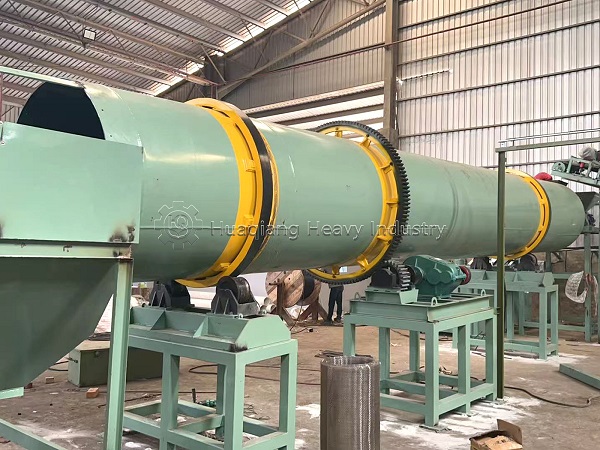
The potassium source for chlorine-based compound fertilizers is potassium chloride, which can be divided into single-chlorine (nitrogen source: urea) and dual-chlorine (nitrogen source: ammonium chloride) types. Chlorine-based compound fertilizers do not remove chloride ions during production, resulting in a high chloride content. The process is the simplest—potassium chloride is widely available, inexpensive, and has moderate viscosity, making it easily produced using conventional rotary drum or disc granulation equipment. National standards stipulate that chlorine-containing compound fertilizers must be labeled with chloride ion content: low chloride (3%-15%), medium chloride (15%-30%), and high chloride (above 30%).
II. Applicable Crops and Application Contraindications
Sulfate-based compound fertilizers have the widest range of applications, suitable as base fertilizer, top dressing, seed fertilizer, and foliar fertilizer. Sulfur is the fourth most important nutrient element after nitrogen, phosphorus, and potassium, effectively improving sulfur deficiency in soil. Especially suitable for chlorine-sensitive cash crops such as tobacco, potatoes, grapes, watermelons, citrus, and tea.
Chlorine-based compound fertilizers, however, have clear harmful effects on chlorine-sensitive crops—reducing the combustibility of tobacco, decreasing the starch content of tubers, and affecting the sugar content of grapes and watermelons. Common chlorine-sensitive crops include: tobacco, potatoes, sweet potatoes, grapes, watermelons, citrus, tea, peppers, cabbage, and lettuce. However, chloride ions have a promoting effect on fiber crops such as hemp; it can be safely applied to field crops such as rice, wheat, and corn. Chlorine-based compound fertilizers should not be used as seed fertilizer or foliar fertilizer to avoid fertilizer damage.
Urea-based compound fertilizers are generally high-nitrogen products (nitrogen content above 20%). Their nitrogen element is amide nitrogen, which needs to be converted into ammonium nitrogen and nitrate nitrogen by microorganisms after being applied to the soil before it can be absorbed. In areas with lower temperatures, it should be applied in advance. When used as seed fertilizer, it must be separated from seeds.
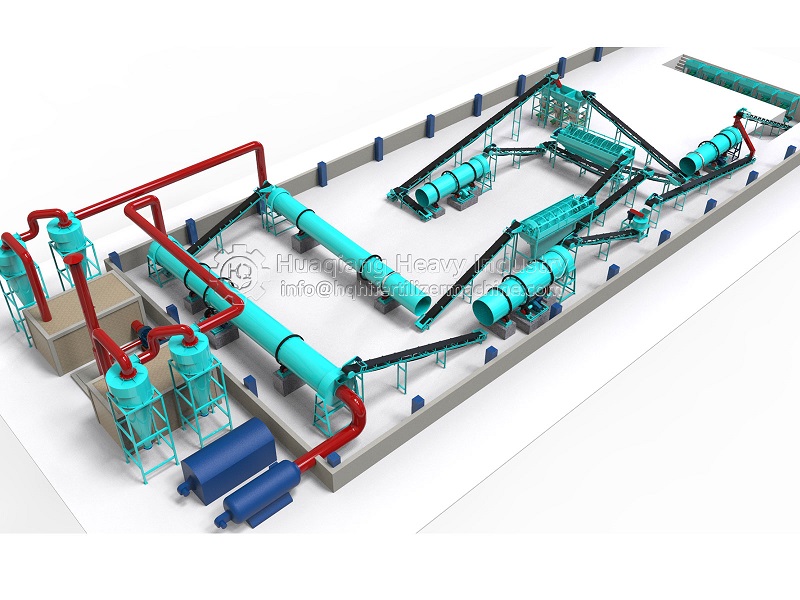
Understanding the differences between urea‑based, sulfate‑based, and chlorine‑based compound fertilizers is essential for both agronomic success and production efficiency. The choice of potassium and nitrogen sources directly influences not only the suitability for specific crops but also the manufacturing process itself. For instance, urea‑based formulas demand precise temperature control during fertilizer granules compaction to prevent urea melting, while chloride‑based fertilizers are more tolerant and can be efficiently produced using a rotary drum granulator or disc granulator machine with simpler drying settings. Sulfate‑based production, on the other hand, requires corrosion‑resistant equipment due to acid conversion, but it delivers superior quality for chlorine‑sensitive cash crops. When planning an npk fertilizer production line, the choice of granulation technology – whether a fertilizer compactor (roller press) for dry extrusion or a disc/drum system for wet granulation – must align with the raw material characteristics and target product quality. Equally important is the npk fertilizer formula processing step, where precise batching of urea, potassium chloride, or potassium sulfate determines the final nutrient ratio and chloride content. In practice, matching the fertilizer type to the crop’s tolerance and the production line’s capability ensures both optimal field performance and cost‑effective manufacturing – a win‑win for growers and producers alike.
III. FAQ
Q: How to quickly determine which fertilizer to use? A: Consider the crop – for chlorine-sensitive crops (tobacco, potatoes, grapes, citrus, etc.), sulfur-based fertilizers are essential; for field crops (rice, wheat, corn), chlorine-based fertilizers are a better choice due to their higher cost-effectiveness.
Q: How do I check the packaging?
A: Look for the "chloride ion content" label. Fertilizers labeled "potassium sulfate type" or "sulfur-based" are sulfur-based; those labeled "low chlorine," "medium chlorine," or "high chlorine" are chlorine-based.
Q: Can urea-based and chlorine-based fertilizers be mixed?
A: Yes, but be aware that urea-based fertilizers contain biuret, and chlorine-based fertilizers contain chloride ions. Combining both poses a greater risk to chlorine-sensitive crops. It is recommended to prioritize sulfur-based fertilizers.