
Equipment Introduction
The rotary drum screener, also known as a rotary drum screener, is a specialized static screening device for grading finished products and separating return materials in organic fertilizer and compound fertilizer production lines. Unlike vibrating screens, it operates without severe vibration, relying on a low-speed rotating drum to complete particle grading. The Huaqiang GS series is a standard model in the fertilizer industry.
Core Advantages
1. Smooth and low-vibration operation; no high-strength concrete foundation required; suitable for installation on factory floors and simple ground surfaces.
2. Self-cleaning and anti-clogging design: Material continuously tumbles with the drum, automatically removing adhering material; suitable for dried wet fertilizer granules; optional beater completely eliminates screen clogging.
3. Modular segmented screen; single/double layer multi-stage grading; easy screen replacement.
4. Low breakage and low noise; low-speed operation (10~22 r/min); fertilizer granule breakage rate is far lower than vibrating screens.
5. Optional sealed and environmentally friendly design; equipped with a fully enclosed dust cover, preventing dust leakage during screening.
6. Compatible with all production lines, covering hourly capacities from 1 to 25 tons, matching fertilizer production lines from 10,000 to 500,000 tons. The core process function is to separate the dried and cooled fertilizer into three categories: qualified finished products, fine powder return materials, and large lumps: qualified granules are sent to the coating/packaging section, while fine powder and large lumps are returned to the granulator for secondary processing, achieving zero loss of raw materials.
Equipment Structure
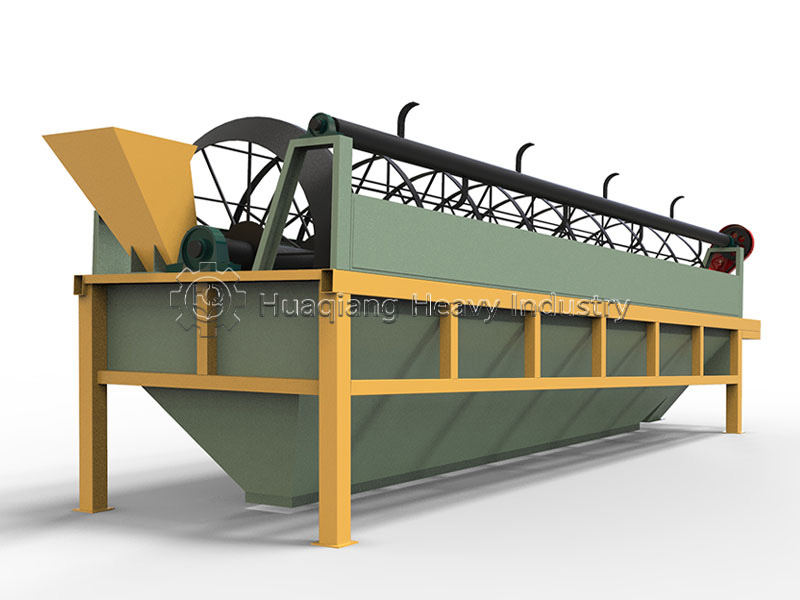
The drum screen can be divided into three main parts:
1. Frame Section
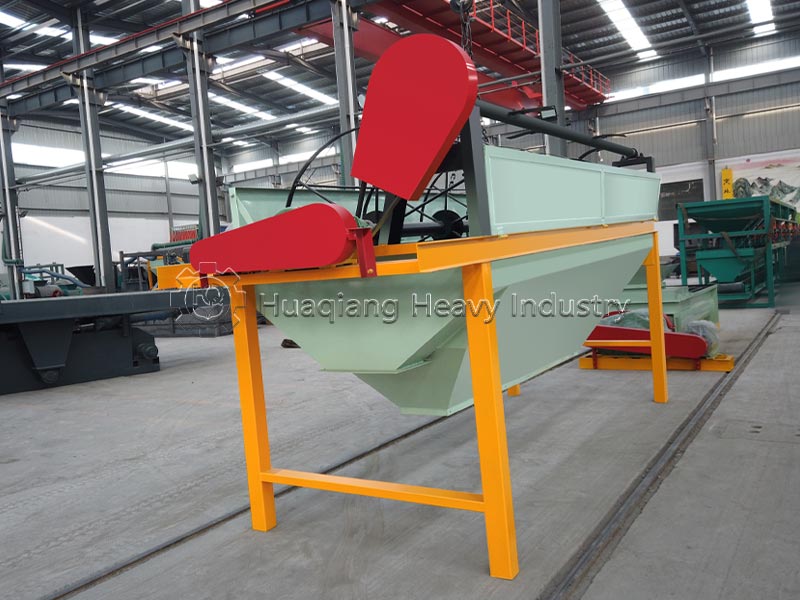
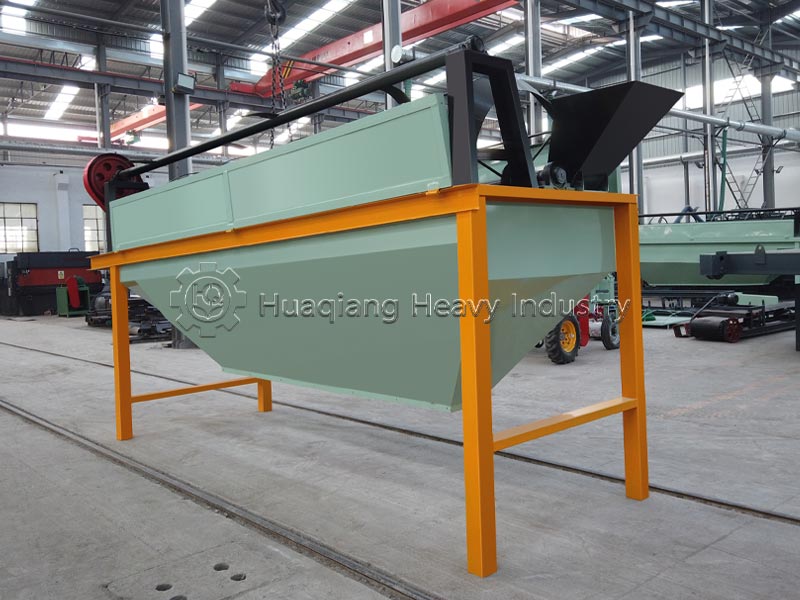
The frame is welded from high-quality steel plates and channel steel, forming the foundation for the entire equipment. The steel frame is welded from shaped steel, making it sturdy and durable. The drum assembly is installed at an angle to the ground on the frame.
2. Transmission Screening Section (Core)
This section consists of the drive wheel, coupling, main shaft, drum, and combined screen. The screen is installed and welded to the drum on the main shaft. The screen is composed of several circular flat steel rings, with a cross-sectional area much larger than the screen bars of other screening equipment, resulting in a longer service life. The drum is usually cylindrical, and the inner wall may be equipped with lifting plates to assist material movement.
3. Transmission Connection Section
The electric motor drives the pulley, V-belt, and reducer to rotate the main shaft. The transmission reducer and the main working parts are driven by sprockets and chains, facilitating assembly and maintenance. 4. Feeding, Discharging, and Sealing Section
This includes the feed inlet, discharge outlet, and sealing cover. The feed inlet is located at the higher end of the inclined roller, and the discharge outlet is located at the lower end. Multiple discharge funnels can be installed to collect materials of different particle sizes, depending on the grading requirements.
Working Principle
The drum is driven by a motor and reducer to rotate at low speed. The entire machine is arranged with a slight inclination. Material enters the drum from the high-end feed inlet:
1. The lifting ribs inside the drum rotate with the drum body, continuously lifting and dropping fertilizer granules, loosening clumps;
2. Qualified granules and fine powder with a particle size smaller than the screen mesh size pass through the screen and fall into the corresponding hopper below;
3. Large clumps and oversized coarse particles cannot pass through the screen and move along the inclined drum wall to the end, exiting from the coarse material outlet;
4. An optional beating device continuously taps the outer wall of the screen, automatically removing adhering wet fertilizer and preventing clogging even after long-term use;
5. The three types of materials are continuously discharged through separate channels and transported to the packaging and granulation return sections respectively.
Applicable Raw Materials (Fertilizer Industry Only)
Materials that can be stably screened:
1. Granular fertilizers: Organic fertilizers, bio-fertilizers, compound fertilizers, BB fertilizers, extrusion granulation/drum granulation finished granules;
2. Semi-dry organic materials: Fermented and decomposed chicken manure, cow manure, mushroom residue, crushed straw;
3. Powdered return materials: Fine powder from screening, powder with detached coating;
4. Lumpy impurities: Granulation lumps, uncrushed hard clumps.
Materials not suitable: Moisture content > 40%; High-viscosity slurry; Long fiber entangled materials; Large hard stones with a particle size > 30mm.
Application of Rotary Drum Screening Machines in Fertilizer Production Lines
(I) Complete Process Chain: Granulator → Rotary Drum Dryer → Rotary Drum Cooler → Rotary Drum Screening Machine; Screening into three stages:
1. Qualified uniform granules → Rotary wrapping machine → Automatic packaging machine;
2. Fine powder return → Screw feeder, return mixer, and secondary granulation;
3. Large lumps/agglomerates → Crushed and re-granulated by crusher.
(II) Supporting Logic:
1. Post-cooling section: Screens and cools the finished product, removes defective granules, and improves the appearance of the fertilizer product;
2. Closed-loop recovery of fine materials and lumps, reducing raw material waste and increasing finished product yield;
3. Single machine replaces multi-stage screening, requiring fewer pieces of equipment and allowing for a compact workshop layout.
Standard Operating Procedures and Full-Cycle Maintenance
(I) Start-up and Shutdown Procedures (Original Manufacturer's Manual)
1. Start-up: Must be started under no-load; tighten all bolts before starting, check reducer and bearing oil levels; after confirming the drum rotation direction is correct during no-load operation, feed material evenly;
2. Shutdown: First stop the front-end feeding equipment, completely empty the material in the drum before disconnecting the power; stopping the machine while material is present is prohibited.
(II) Graded Lubrication and Maintenance
1. Daily Inspection: Clean fertilizer adhering to the screen, check the tightness of the V-belt and whether the discharge chute is blocked;
2. Quarterly Lubrication: Add/replace lubricating grease to the main shaft bearing housing every 3 months;
3. Quarterly Oil Change: Add oil to the reducer for the first time, and replace all gear oil with brand new oil every 4 months thereafter;
4. Annual Overhaul: Conduct a comprehensive inspection of screen damage and chain wear, and replace aged and vulnerable parts.
(III) List of Vulnerable Parts
Combined screen, main shaft bearing, V-belt, drive sprocket and chain.
Summary table of common faults and solutions for drum screeners
| Fault Phenomenon | Main Cause | Solutions |
|---|---|---|
| Sieve holes blocked; Sieving efficiency drops | Material humidity is too high, easy to block sieve holes; Improper sieve mesh tension; Abnormal operation of cleaning mechanism with poor cleaning effect | Manually clean sieve holes periodically; Reduce material feeding humidity; Adjust sieve mesh tension properly; Use secondary vibration for anti‑blocking; Tighten tension bolts; Install hammer striking device according to material working conditions |
| Excessive equipment noise | Loose bolts and fasteners on all parts of equipment; Abnormal noise caused by vibration during operation | Fully check all fasteners on machine body; Retighten loose bolts and fittings to eliminate vibration source |
| Wrong rotation direction (drum reverses) | Incorrect connection of motor power cable, causing equipment reverse rotation | Cut off power supply and check motor wiring; Re‑adjust and correct power cable wiring to ensure drum forward rotation |
| Motor starts sluggishly; Machine body overheats | Excessive feeding capacity leads to equipment overload; Improper tension of transmission belt (too loose / too tight) | Adjust feeding rate reasonably to avoid overload operation; Optimize transmission belt tension to prevent belt slipping and overheating; Extend service life of belt |
| Poor sieving quality; Classification fails to meet standard | Blocked sieve holes cause poor material passing; Damaged sieve mesh leads to material leakage; Uneven material distribution on sieve surface, partial material accumulation | Clean blocked sieve holes timely; Inspect sieve surface thoroughly and replace damaged mesh immediately; Install distributing device for even feeding, improve sieving uniformity and finished product quality |
| Insufficient equipment rotating speed | Transmission belt too loose; High power transmission loss, unable to reach rated rotating speed | Adjust transmission belt tension timely to guarantee stable power transmission and restore rated working speed |
Target Audience:
1. Professional manufacturers of organic fertilizers, compound fertilizers, bio-fertilizers, and slow-release fertilizers;
2. Large-scale livestock and poultry farming groups with their own manure-to-fertilizer processing workshops;
3. Enterprises engaged in the resource-based and environmentally friendly disposal of sludge and kitchen waste;
4. Fertilizer equipment integrators and production line engineering service providers;
5. Agricultural input foreign trade buyers and overseas small and medium-sized fertilizer processing plants.
Summary of Equipment's Comprehensive Technical Features:
1. Low vibration and easy installation: No heavy concrete foundation required; suitable for retrofitting both new and old workshops.
2. Self-cleaning and anti-clogging design suitable for wet fertilizer: Double cleaning with tumbling and beating ensures stable screening of high-moisture organic fertilizer.
3. Flexible grading: Segmented combined screens allow for simultaneous coarse, medium, and fine three-stage sorting.
4. Excellent finished product protection: Low particle breakage rate during low-speed operation results in better fertilizer product appearance.
5. Simple operation and maintenance: Standardized wear parts and screen clamps allow for quick replacement by a single person.
6. Environmentally friendly and enclosed: Equipped with a fully enclosed dust cover, eliminating dust pollution in the screening section and meeting environmental acceptance standards.
| Model | Barrel | Rotation Speed | Inclination | Power | Production Capacity | Overall dimensions | weight | |
| Diameter | Length | L× W × H | ||||||
| mm | mm | r/min | 0 | kw | t/h | mm | tons | |
| GS1.0×3.0 | 1000 | 3000 | 22 | 2-2.5 | 2.2 | 1-3 | 3500×1400×2200 | 1.5 |
| GS1.2×4.5 | 1200 | 4500 | 17 | 2-2.5 | 3.0 | 3-5 | 5700×1600×2400 | 2.5 |
| GS1.5×5.0 | 1500 | 5000 | 14 | 2-2.5 | 5.5 | 5-10 | 6860×1900×2810 | 3.8 |
| GS1.0×3.0 | 1000 | 3000 | 22 | 2-2.5 | 2.2 | 10-20 | 3500×1400×2200 | 1.5 |
| GS1.6×6.0 | 1600 | 6000 | 12 | 2-2.5 | 7.5 | 10-20 | 7300×2000×3000 | 4.7 |
| GS1.2×4.0 | 1200 | 4000 | 16 | 2-2.5 | 3.0 | 20-25 | 5200×600×2360 | 2.3 |
| GS1.8×6.5 | 1800 | 6500 | 11.5 | 2-2.5 | 7.5 | 20-25 | 9000×2200×3200 | 6.0 |