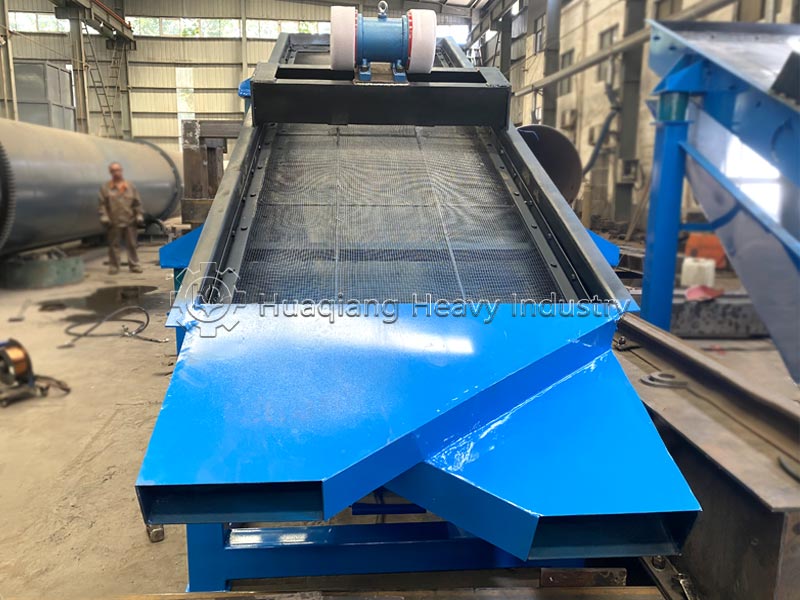
Equipment Introduction
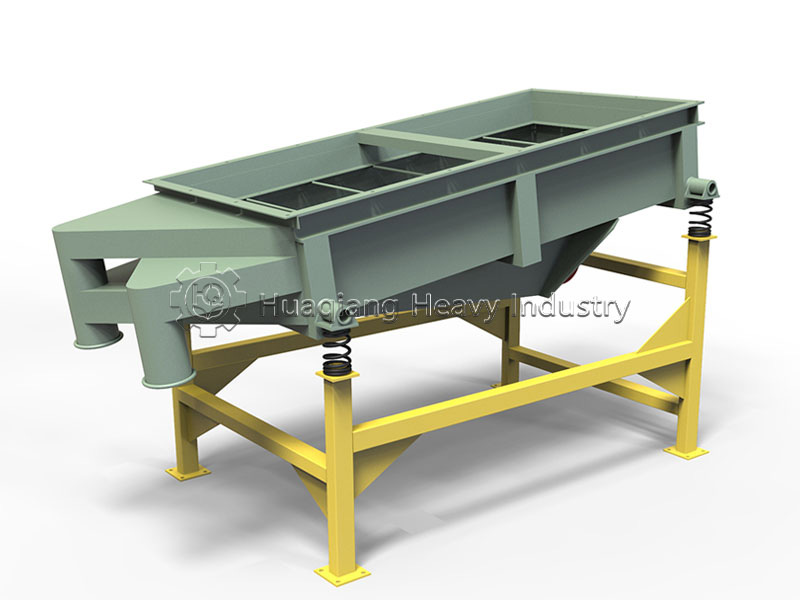
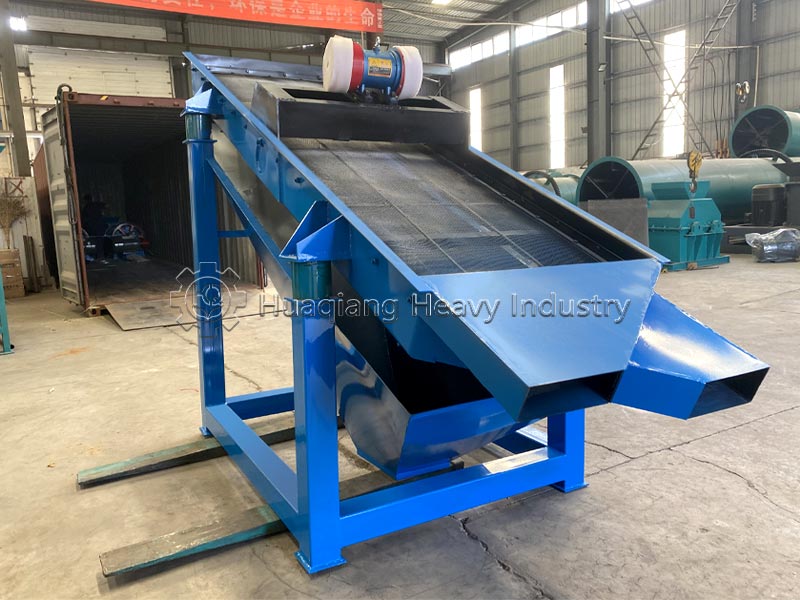
A vibrating screen is a specialized piece of equipment that uses high-frequency vibration generated by a vibrating motor or exciter to precisely classify and screen powdery and granular materials. In organic fertilizer and compound fertilizer production lines, it acts like a precise "ruler," responsible for strictly separating materials according to particle size.
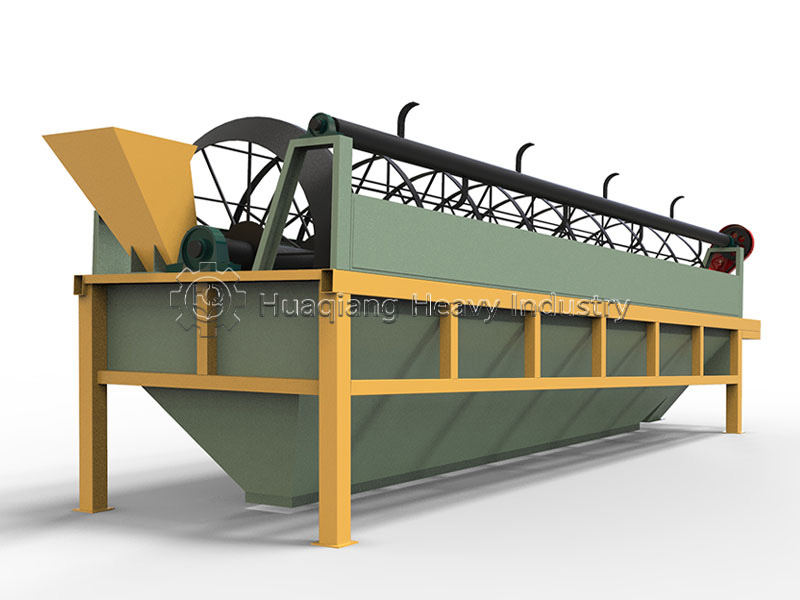
Unlike drum screens, which rely on gravity tumbling for screening, vibrating screens utilize the reciprocating vibration generated by the exciter, giving materials strong penetrating power. They are particularly adept at handling materials with high viscosity, high moisture content, or those requiring high-precision classification. Their screening accuracy typically reaches over 95%, making them a core piece of equipment connecting crushing, granulation, and packaging processes to ensure uniform particle size in the finished fertilizer product.
Vibrating screens are characterized by low energy consumption, high output, simple structure, and easy maintenance, and are widely used in industries such as fertilizers, abrasives, chemicals, pharmaceuticals, building materials, and food.
Equipment Structure Composition
Although vibrating screens come in various types, their core structure is common and mainly consists of the following components:
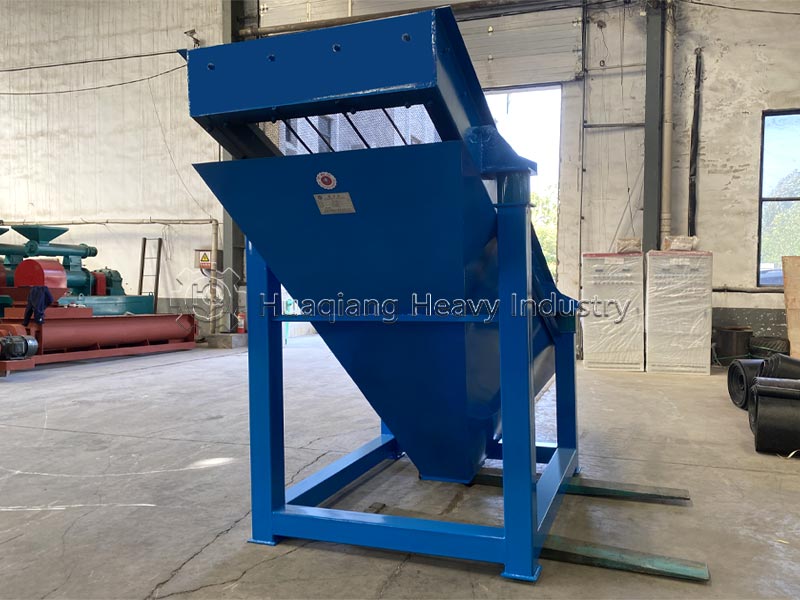
1. Screen Box: A rigid frame constructed from welded or bolted steel plates, serving as the main support for the screen mesh and vibration system. The screen box is connected to the base via heavy-duty damping springs or rubber vibration isolation supports, ensuring free vibration while minimizing vibration transmission to the ground.
2. Screen Mesh: The screen mesh is the core working component that directly contacts the material. Materials include stainless steel woven wire mesh, perforated plates, polyurethane screen plates, or bar screen surfaces. Single-layer or multi-layer (up to 5 layers) screens can be configured according to process requirements to achieve simultaneous grading of 2-6 particle sizes.
3. Vibration Source: Vibration motor: Mostly used in small and medium-sized screens. Eccentric blocks are mounted at both ends of the motor shaft; the excitation force and amplitude are changed by adjusting the angle of the eccentric blocks.
4. Vibration Exciter: Primarily used in large mining screens, driven by a standard motor via a universal coupling. Internal gears rotate an eccentric wheel to generate vibration force.
5. Damping System: Employs steel helical springs, rubber springs, or composite springs to support the screen box and absorb vibration energy, preventing resonance transmission and reducing operating noise.
6. Feeding and Discharging System: Includes a buffer feed hopper, dust cover, observation port, and multiple graded discharge ports. The dust cover and sealing rings ensure fully enclosed operation, meeting environmental protection and cleanroom requirements.
Working Principle of the Equipment
The working principle of the vibrating screen is based on the synergistic mechanism of "vibration throwing" and "probabilistic screening":
1. Vibration Generation
Power is transmitted from the motor to the vibrator via a V-belt. The vibrator generates excitation force, causing the screen box to vibrate in an approximately circular or linear trajectory. Linear vibrating screens use two motors rotating in opposite directions to generate linear excitation force, causing the material to jump linearly on the screen surface; circular vibrating screens generate circular motion through a single-axis eccentric block.
2. Material Throwing and Segregation
After the material enters the screen surface evenly from the feed inlet, it is thrown up and propelled forward in a jumping motion under the action of high-frequency vibration. The material layer is loosened during vibration, resulting in stratification of particles of different sizes.
3. Sieving and Grading
Particles smaller than the screen openings quickly pass through the screen and fall down, becoming undersize material; materials larger than the screen openings flow along the screen surface towards the discharge port. Through the superposition of multiple screens, materials can be separated into multiple particle size grades in one pass. 4. Rapid screening features: Some fertilizer-specific screens utilize the principle of probability, with screening time only half that of ordinary screens, and a processing capacity per unit screen area twice that of ordinary screens.
Applicable Raw Materials (Fertilizer Industry Exclusive)
Materials that can be stably screened:
1. Granular fertilizers: Rotary drum/disc granulation organic fertilizer, compound fertilizer, BB fertilizer, slow-release coated granules, urea granules;
2. Semi-wet organic materials: Well-rotted chicken manure, cow manure, mushroom residue, crushed straw (moisture content ≤35%);
3. Powdered return materials: Screening fine powder, talc powder with coating detachment;
4. Lumpy impurities: Granulated hard lumps, incompletely crushed raw material clumps.
Materials that are prohibited from being conveyed: Moisture content >40%, highly sticky mud, extra-long fiber straw, sharp and extra-large hard stones (easily tearable screens).
Application of Equipment in Production Line
1. Core Position in Organic Fertilizer Production Line
The vibrating screen plays a crucial role as a "precision filter" in the organic fertilizer production line. It is typically installed after granulation and before packaging, serving as the final checkpoint to ensure the quality of the finished product.
Complete Processing Flow:
Raw Material Pretreatment → Fermentation and Composting → Crushing → Batching and Mixing → Granulation → Drying → Cooling → Vibrating Screening → Coating → Packaging
2. Specific Functions in Production Line
(1) Separation of Finished Product and Return Material
After drying and cooling, the granulated particles enter the vibrating screen. Finished products meeting specifications pass through the screen to the next process, while unqualified oversized particles or fine powder are returned to the production line for reprocessing.
(2) Multi-level Grading
Through double or multiple layers of screens, materials are separated into various particle size grades (such as large lumps, finished products, and fine powder) in one pass.
(3) Final Quality Control
Installed before the packaging machine, it performs a final inspection of the products before they enter the warehouse, ensuring that no impurities are discharged. 3. Advantages Compared to Rotary Drum Screens
| Comparison Item | Vibrating Screener | Rotary Screener |
|---|---|---|
| Sieving Method | Vibrating throwing | Gravity tumbling |
| Sieving Accuracy | High (up to 95% and above) | Medium |
| Floor Space | Small | Large |
| Start‑Stop Response | Fast | Relatively slow |
| Multi‑layer Classification | Available | Available |
| Suitable Materials | Sticky, high‑moisture materials requiring fine classification | Materials prone to sieve hole blockage |
The application of vibrating screens directly determines the level of refinement of the final product. Fertilizers screened by vibrating screens not only have uniform particle size but also a smooth surface, greatly enhancing the product's marketability.
Standard Operating Procedures and Full-Cycle Maintenance
(I) Start-up and Shutdown Procedures
1. Start-up: Must be started under no-load; before starting, tighten all screen frame and motor bolts, check for broken springs and screen tension; run under no-load for 3 minutes, observe amplitude and noise levels, then feed material evenly, prohibiting large-scale instantaneous feeding;
2. Shutdown: First shut down the upstream conveyor equipment, completely empty the material from the screen surface before disconnecting power, strictly prohibiting stopping the machine with material on, which could overload the motor.
(II) Graded Maintenance Procedures
1. Daily Inspection: Clean the screen of fertilizer blockage, check for cracks in the vibration damping springs, and observe the motor temperature rise to ≤60℃;
2. Weekly Maintenance: Add special vibration grease to the vibrating motor bearings, and tighten the eccentric block counterweight bolts;
3. Quarterly Maintenance: Disassemble the screen frame to thoroughly clean accumulated fertilizer, check screen wear and the integrity of the bouncing balls;
4. Annual Overhaul: Replace aging springs and damaged screens, and test the insulation performance of the vibrating motor. (III) List of vulnerable parts: Polyurethane/manganese steel screen, rubber vibration damping spring, vibration motor bearing, bouncing cleaning ball, sealing dustproof strip.
Common Faults, Causes, and Standardized Solutions
| Fault Phenomenon | Root Cause | Professional Solutions |
|---|---|---|
| Poor sieving effect, coarse material mixed with a large amount of fine powder | Damaged sieve mesh / loose pressure plate; over‑biased feeding flow; missing bouncing balls | Repair or replace sieve mesh, install central diversion chute, reduce feeding speed, replenish mesh‑cleaning bouncing balls |
| Frequent sieve hole blockage, sharp drop in screening efficiency | High fertilizer moisture, no self‑cleaning bouncing balls | Install built‑in bouncing balls, regularly blow sieve mesh with compressed air |
| Material runs to one side, uneven discharge | Biased feeding distribution; inconsistent excitation force of two‑side motors; fatigue collapse of one‑side spring | Adjust diversion chute for central feeding, correct motor eccentric counterweight, replace failed springs |
| Motor / bearing temperature >75℃, abnormal noise | Bearing oil shortage, deteriorated lubricating grease; fertilizer dust entering seal | Drain old grease, fill special lithium‑based grease for vibration, replace shaft‑end sealing parts |
| Severe whole‑machine resonance, spring fracture | Long‑term overload operation; inconsistent eccentric block counterweight; uneven foundation ground | Reduce feeding load, unify counterweight on both sides, level equipment installation ground, replace springs |
| Rapid tearing and wear of sieve mesh | Hard agglomerates in material, heavy impact from feeding drop height | Install buffer baffle at feeding inlet, replace thickened polyurethane wear‑resistant sieve mesh |
| Model | ZS1×3 | ZS1.2×4 | ZS1.4×5 |
| Screening area(m2) | 3 | 4.8 | 7 |
| Prod capacity(t/h) | 3-5 | 5-8 | 8-15 |
| Motor power(kw) | 1.5 | 2.2 | 1.5×2 |
| Vibration Frequency(r/min) | 960 | 960 | 960 |
| Amplitude | 4-6 | 4-6 | 4-6 |
| Dimensions, LxWxH | 3.4×1.5×2.7 | 4.1×1.6×3.8 | 5.4×1.7×4.1 |
| Equipment Quality | 1850 | 3500 | 4500 |