
Equipment Introduction
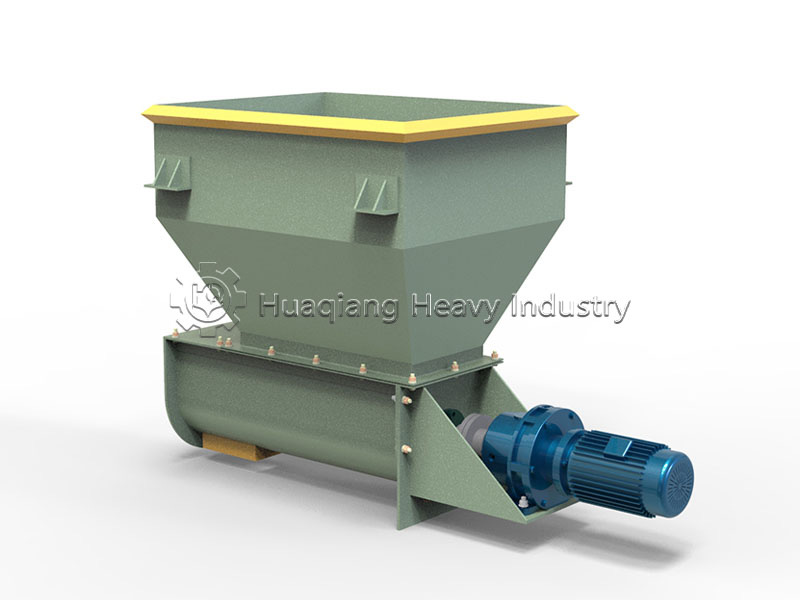
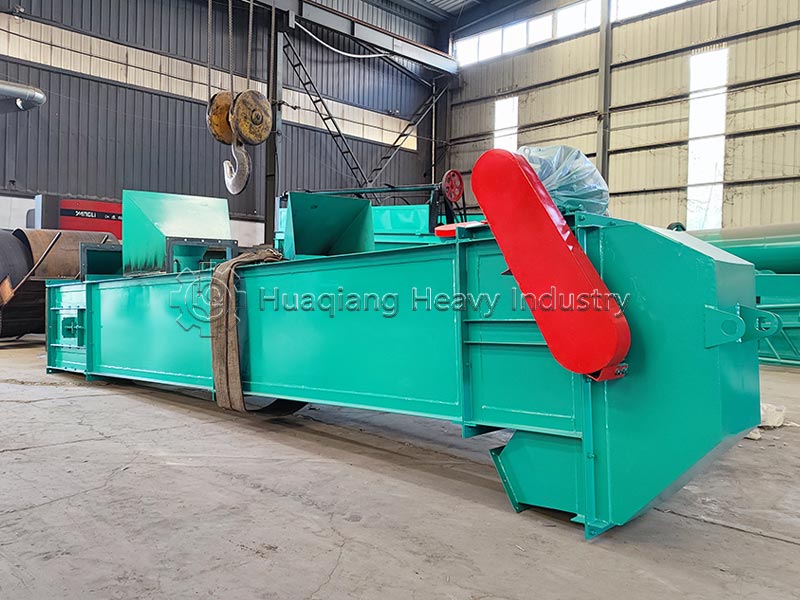
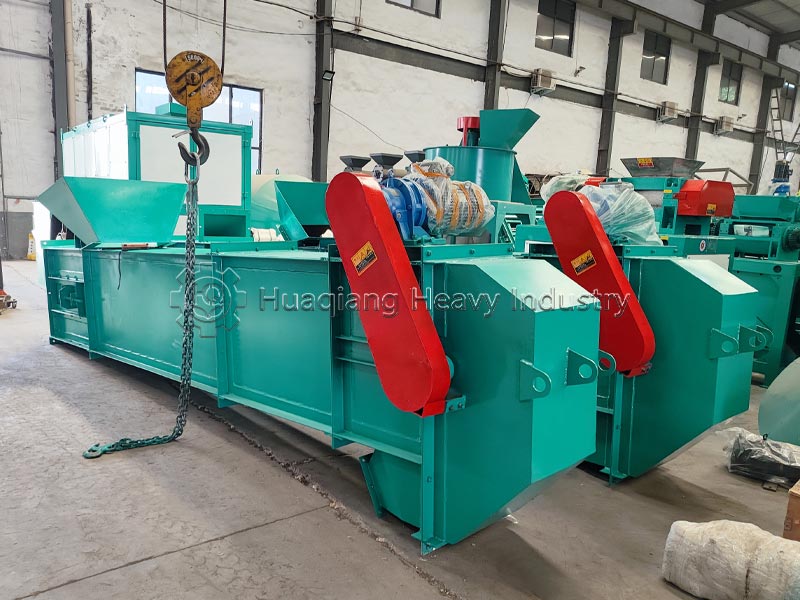
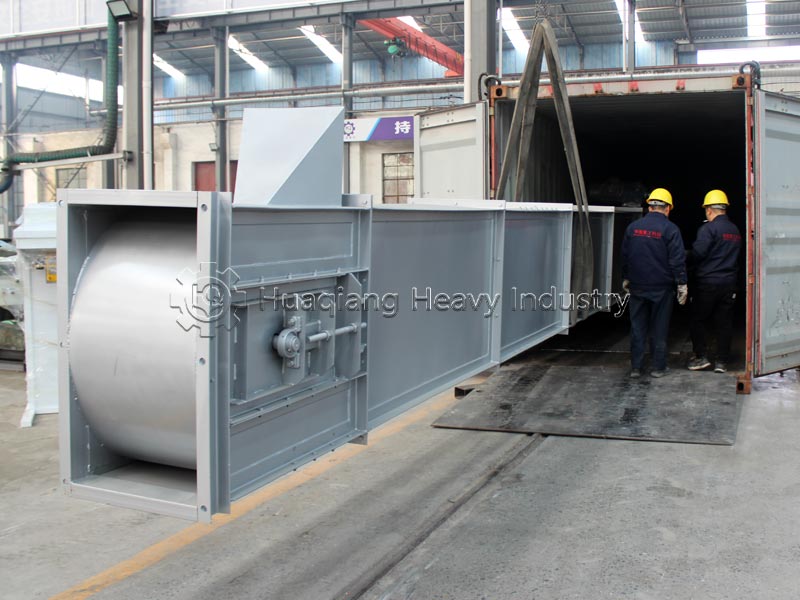
The bucket elevator is a core piece of vertical, enclosed, continuous bulk material conveying equipment. It relies on circulating buckets within the casing to vertically transfer materials from a low to a high position. It is widely used in complete production lines for organic fertilizer and compound fertilizer, and is also applied in the grain, chemical, mining, and building materials industries.
1. Core Advantages
1) Minimal Footprint: Pure vertical conveying, occupying only a small amount of ground space, suitable for compact factory layouts;
2) Fully Enclosed and Dustproof: The entire machine is sealed with steel plates, preventing dust leakage and meeting the environmental protection requirements of fertilizer plants;
3) Low Energy Consumption and Stable Conveying: Low vertical lifting resistance, with power consumption per unit material far lower than belt-driven inclined conveyors;
4) Full Range of Models: Available in three types: TD belt type, TH chain type, and NE plate chain heavy-duty type, suitable for dry powder, wet granules, and high-temperature lumpy materials;
5) Adjustable Height: Standard lifting height 4–40m, with support for customized height increases, compatible with silos, dryers, wrapping machines, packaging machines, and other equipment;
6) Low Breakage Design: Shallow/deep hoppers are available, gently scooping and unloading, with a fertilizer granule breakage rate of <1%.
2. Applicable Scenarios
| Applicable Materials | Max Allowable Material Temperature |
|---|---|
| Dry non‑corrosive powder & granular organic fertilizer, grain, feed | Normal temperature belt ≤60℃, heat‑resistant belt ≤200℃ |
| Moderately abrasive compound fertilizer, fermented hot wet fertilizer, small‑lump raw materials | ≤250℃ |
| High‑output, high‑density, highly abrasive ore, heavy‑duty compound fertilizer | ≤250℃, for heavy‑load long‑distance conveying |
Equipment Structure Composition
The entire machine is divided into five major systems: the machine head, intermediate cylinder, machine base, traction hopper assembly, and drive tensioning system. The structure is standardized and components are interchangeable:
1. Machine Head Assembly (Upper): Includes drive motor, reducer, head wheel (drive roller/sprocket), discharge port, and maintenance platform with guardrail; the power system drives the traction components in a cyclical motion, and the arc-shaped section of the machine head completes material unloading.
2. Intermediate Enclosed Cylinder: Segmented flange-connected steel plate shell, housing the traction components and hopper running channels, with observation and maintenance doors on the side; fully enclosed to prevent dust leakage and material spillage.
3. Machine Base Assembly (Bottom): Includes feed inlet, tail wheel (tensioning roller/sprocket), screw manual tensioning mechanism, and cleaning and maintenance port; the tensioning device adjusts the belt/chain tension to prevent slippage and deviation; the bottom allows for cleaning of clumped residual material.
4. Traction and Hopper Assembly (Core Conveying Unit)
1. Traction Components: Three types: belt, ring chain, and plate chain;
2. Hoppers: Shallow hopper (for moist, sticky materials), deep hopper (for dry, free-flowing particles), stamped from wear-resistant steel plate, bolted to the traction components;
5. Supporting Auxiliary Components: Anti-deviation limit switch, backstop (to prevent material backflow during shutdown), material level monitoring switch, sealing dustproof pad, shock-absorbing base, lubricating nozzle.
Working Principle of the Equipment
The working principle of a bucket elevator mainly consists of four continuous stages: loading, lifting, unloading, and empty bucket return.
1. Loading (Feeding): Material enters from the feed inlet at the bottom of the equipment and is loaded into the buckets using either a scooping or inflow method. Scooping is suitable for powdery or granular materials, where the buckets directly scoop up material as they pass through the bottom storage area; inflow is suitable for lumpy or abrasive materials, where the material flows directly into the buckets.
2. Lifting: The buckets, filled with material, are driven by a traction component (belt or chain) to move upwards at a constant speed along the ascending channel within the enclosed casing. The entire process is continuous.
3. Unloading After the hopper is lifted to the top and passes the head wheel, it is thrown into the discharge port in one of three ways, depending on the material characteristics and equipment type:
1) Centrifugal unloading: Utilizing centrifugal force to throw the material out; suitable for dry, free-flowing powdery or granular materials.
2) Gravity unloading: The material slides down under its own weight; suitable for lumpy, abrasive, or moist materials.
3) Mixed unloading: A combination of both.
4. Empty Hopper Return After unloading, the empty hopper continues to be carried by the traction component around the top and returns to the bottom along the descending channel (unloaded branch), re-entering the loading area. This cycle repeats continuously, achieving continuous vertical conveying.
The entire process is completed within a sealed casing, effectively preventing dust leakage.
Applications of Bucket Elevators
Bucket elevators have extremely wide applications and are indispensable vertical conveying equipment in modern industrial production:
1. Fertilizer and Organic Fertilizer Industry: Bucket elevators are core vertical conveying equipment connecting various processes in organic fertilizer, compound fertilizer, and BB fertilizer production lines. They are used for the vertical conveying of crushed raw materials, mixed ingredients, granulated particles, and dried and cooled finished products between different equipment. In the organic fertilizer production process, bucket elevators are responsible for lifting materials from a lower level to a higher level for the next process.
2. Grain Processing and Storage: Used for the vertical conveying and storage of materials such as grains, cereals, and flour.
3. Feed Processing: Used for the vertical conveying of various powdery and granular raw materials and finished products in feed mills.
4. Mining and Metallurgy: Used for the lifting and conveying of materials such as ores, coal, and crushed ore.
5. Building Materials and Cement: Used for conveying building material raw materials such as cement, sand, coke dust, limestone, and dry clay.
6. Chemical and Power Industries: Used for the vertical transport of materials such as fertilizers, chemical raw materials, and coal. Bucket elevators can lift almost all bulk materials.
Equipment demand groups
Bucket elevators are intended for all industrial users who need vertical bulk material transportation, mainly including:
1. Fertilizer production enterprises: organic fertilizer factory, compound fertilizer factory, BB fertilizer factory, high-tower fertilizer factory, used for vertical transportation of raw materials and finished products.
2. Grain and feed processing enterprises: upgrading and warehousing of grain drying lines and feed processing lines.
3. Cement and building materials companies: efficient warehousing of raw materials, clinker, and finished cement products.
4. Chemical and mining enterprises: vertical transportation of granular and powdery chemical raw materials and ores.
5. Port and logistics warehousing: loading, unloading and silo stacking of bulk materials.
Equipment Operation and Maintenance Methods
(I) Operating Procedures
| Stage | Operation Key Points |
|---|---|
| Before Startup | Check tension of traction components and tightening status of all bolts; confirm good bearing lubrication and reliable back‑stop device; inspect feed inlet and discharge outlet for blockages |
| Startup | Start main unit under no‑load first, turn on feeding equipment after stable rotation; loaded startup is strictly prohibited |
| During Operation | Maintain even feeding and avoid fluctuating feed volume; monitor electric current, bearing temperature rise (≤65℃) and running noise; check for dust leakage and belt deviation |
| Shutdown | Stop feeding first, shut down main motor after materials inside machine base and hopper are fully discharged; full‑load shutdown is strictly prohibited |
(II) Maintenance and Upkeep
| Maintenance Cycle | Maintenance Content |
|---|---|
| Daily | Check for material accumulation and blockage inside machine base; clean adhered materials at feed inlet and discharge outlet; inspect tension of belt / chain |
| Weekly | Check all fasteners and bolts; verify function of back‑stop device; apply grease to open gears and chains |
| Monthly | Inspect wear of head pulley, tail pulley and bearings; check loose bolts and deformation condition of buckets |
| Quarterly | Replace gear oil of reducer; fully inspect elongation of traction components, shorten or replace them if necessary |
| Yearly | Test verticality of machine casing; inspect and replace heavily‑worn buckets, chains or belts |
Application of Equipment in Production Lines
1. Core Position in Organic Fertilizer and Compost Production Lines
The bucket elevator is the vertical conveying link throughout the entire fertilizer production line. Its performance directly determines the continuity and efficiency of the entire production line.
Location in the complete processing flow:
Raw material pretreatment → Bucket elevator → Crushing → Bucket elevator → Batching and mixing → Bucket elevator → Granulation → Bucket elevator → Drying → Bucket elevator → Cooling → Bucket elevator → Screening → Bucket elevator → Coating → Bucket elevator → Packaging
2. Specific role in the production line
Process connection: Elevates materials from lower equipment to higher equipment, realizing a three-dimensional workshop layout.
Continuous production: Supports 24-hour continuous and stable operation, ensuring uninterrupted production line operation.
Land saving: Vertical conveying significantly reduces the floor space occupied by horizontal conveying equipment.
Sealed conveying: The sealed casing prevents material dust from flying, improving the working environment.
3. Special requirements in organic fertilizer production
Bucket elevators for organic fertilizer production need to be specially designed for material characteristics:
Using rolling components on the buckets to strike the buckets, improving material discharge efficiency.
Utilizing the inclined guard plate structure at the bottom of the buckets to reduce material accumulation at the bottom of the casing, solving the blockage problem.
Equipped with a vibration damping base to eliminate operating vibration.
4. Automated Control: Modern bucket elevators support optional sensors for misalignment, temperature, and stall detection, providing a foundation for remote monitoring and intelligent early warning. Key components such as the drive motor can be explosion-proof, and a casing with explosion-proof function is optional.
Bucket elevators are an irreplaceable core piece of vertical conveying equipment in modern bulk material handling systems. Through the coordinated circulation of buckets, traction components, and rollers/sprockets, they achieve continuous lifting of large quantities and high heights with a minimal footprint. In fertilizer production lines, they connect various height-difference nodes from raw material warehousing to finished product packaging, serving as crucial equipment for ensuring the automated and continuous operation of the entire line. Proper selection (TD/TH/NE), maintaining uniform feeding, and implementing regular tensioning and lubrication maintenance are fundamental guarantees for ensuring long-term stable operation and a trouble-free lifespan of over 20,000 hours.