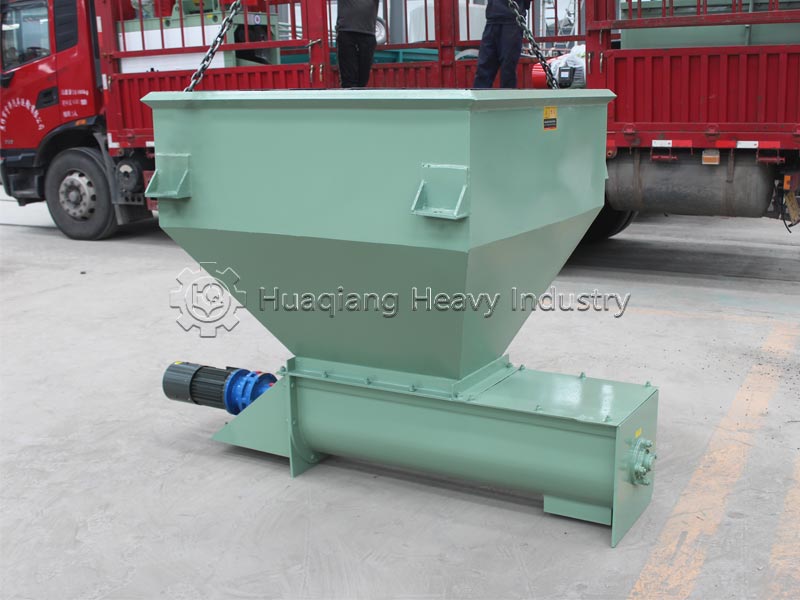
Equipment Introduction
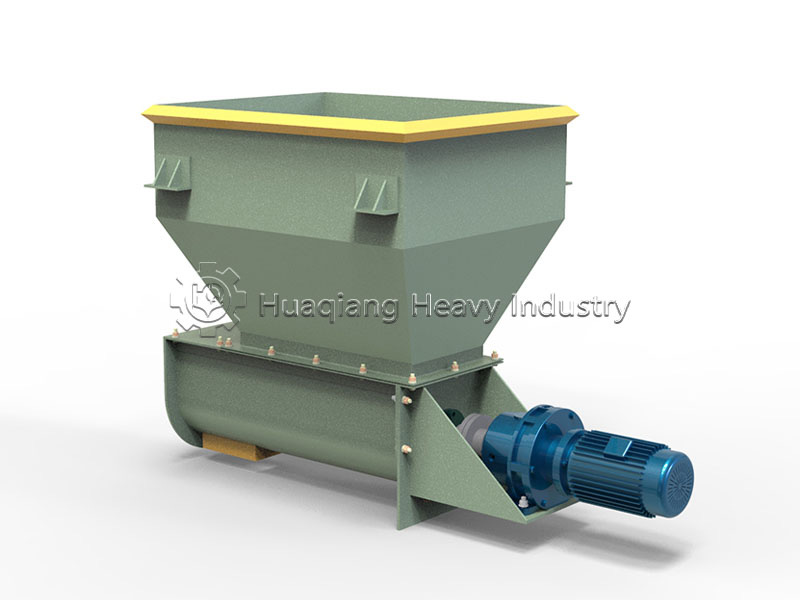
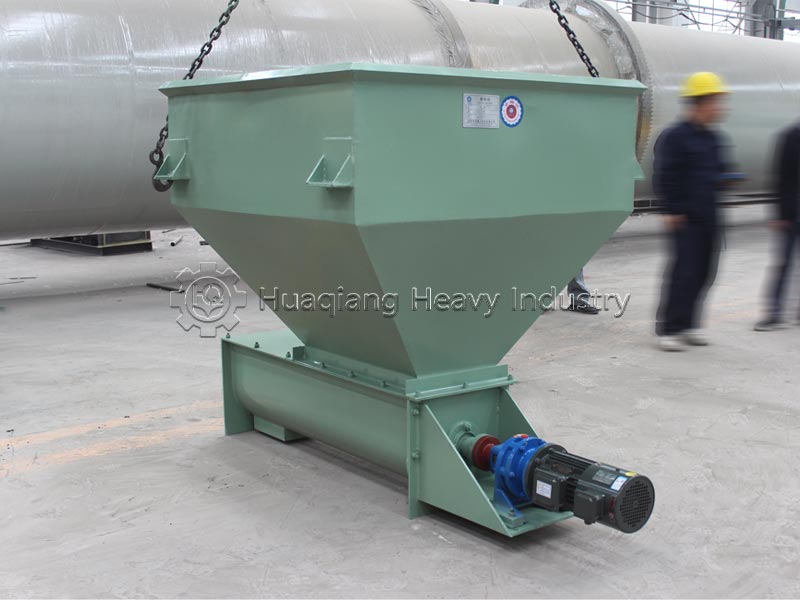
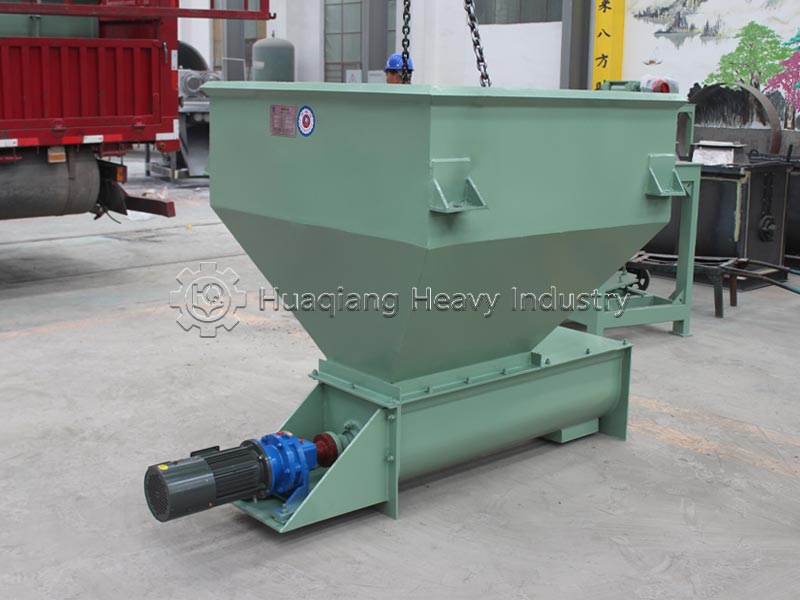
A screw feeder, also known as a uniform feeder or helical feeder, is a specialized feeding machine used to uniformly, continuously, and quantitatively feed materials from silos or storage equipment to downstream receiving equipment.
Its core difference from a regular screw conveyor lies in its functional positioning: a screw conveyor focuses on "transportation," while a screw feeder focuses on "feeding"—not only transporting materials but also controlling the flow rate and ensuring uniformity. Simply put, a screw conveyor moves materials from point A to point B, while a screw feeder feeds materials into the next process step at a set speed and stable flow rate, acting as a "front-end regulator" in the production line.
Screw feeders are characterized by simple structure, good sealing, high conveying efficiency, safe and reliable operation, and low noise. Their diameter typically ranges from 200-500mm, and they are suitable for materials with temperatures below 200℃, with an inclination angle generally less than 20°. A single-tube screw feeder can achieve a feeding capacity of 0.4-200 tons/hour, with an accuracy error controllable to approximately 0.5%.
Equipment Structure
The screw feeder consists of the following core components:
| Material / Function Configuration | Function Description |
|---|---|
| Hopper | Stores the material to be coated; an arch-breaking device can be installed to prevent material bridging |
| Screw Shaft & Blades | Core working components; blades are available in low-carbon steel (for sticky materials), hard-surface cored (hard core), carbide cored (for highly abrasive materials), and full hard-face surfacing types |
| Cylinder / Trough | Commonly made of Q235 carbon steel plate; stainless steel cylinder is available as an option |
| Drive Unit | Motor + reducer combination; variable-frequency speed control enables precise flow regulation |
| Riding Ring & Supporting Roller Device | The riding ring is an integral cast-steel component, ensuring smooth rotation and preventing offset wear; enables quantitative feeding |
| Bearing & Seal | Head, tail and intermediate hanger bearings support heavy-duty materials; sealing components prevent dust leakage |
Working Principle
The screw feeder operates based on the principle of screw conveying.
Basic Working Process: The motor drives the screw shaft to rotate via a reducer. Material falls from the feed hopper into the housing and is uniformly pushed axially by the rotating screw blades, finally exiting from the discharge port.
Quantitative Control Principle (Core): Modern screw feeders integrate weighing and quantitative control. The material is weighed by a weighing bridge, and a digital speed sensor at the tail continuously measures the running speed. The speed and weight signals are sent together to the controller. The controller compares the actual flow rate with the set flow rate and outputs a signal to control the frequency converter to change the drive speed, making the feeding flow rate approach and maintain the set flow rate, thus achieving quantitative feeding. The feeding screw adopts a variable pitch structure and an outlet overflow method, effectively solving the problem of material overflow.
Anti-bridging design: To address the problem that organic materials with high fiber content and moisture content are prone to caking and forming "bridges" in the silo, the uniform feeder adopts a double-spiral forced feeding structure or a vibrating feeder + anti-bridging device. The spiral blades rotate continuously, actively pushing the material towards the discharge port, while breaking the material accumulation state at the bottom of the silo, thus eliminating bridging and arching at the source.
Suitable Materials
The screw feeder is suitable for conveying non-sticky bulk materials in powder, granular, and small lump form.
✅ Suitable materials: Cement, coal powder, grain, fertilizer, ash, sand, coke, feed, flour, etc.
⚠️ Materials requiring attention:
High-moisture, high-viscosity materials (e.g., fresh chicken manure, dehydrated sludge): Requires forced arch breaking + wear-resistant lining.
Fibery materials (e.g., straw, mushroom residue): Requires a shearing device to pre-break long fibers.
Powdered materials (e.g., fine powder after fermentation): Requires dustproof sealing + precise metering.
❌ Materials not suitable for conveying: Large pieces of material, easily perishable, easily agglomerated, and highly viscous materials.
Application of Equipment in Fertilizer Production Lines
The spiral uniform feeder is a core piece of equipment in the batching section, standard equipment on the entire organic fertilizer/compound fertilizer production line:
1. Automatic batching system: Multiple feeders are connected in parallel, respectively conveying nitrogen, phosphorus, potassium, and organic matter powders for precise proportioning;
2. Uniform feeding for granulation: Feeding is performed from the rear end of the mixer discharge, stably feeding into the disc/drum granulator to ensure uniform granulation;
3. Coating powder supply: Talc powder and anti-caking powder are quantitatively fed to the coating machine;
4. Fine powder return from screening: A small flow rate is uniformly returned to the bottom of the fine powder silo and fed back to the mixer for re-granulation;
Standard process flow: Raw material storage silo → Spiral uniform feeder → Batching mixer → Spiral conveyor → Granulator → Dryer → Cooler → Screening machine → Fine powder feeder return
Common Equipment Problems and Solutions
| Fault Phenomenon | Possible Cause | Solution |
|---|---|---|
| Spider-web Blockage | Material contains large lumps, moisture content is too high, or foreign objects enter; material bridging and clogging occur inside the hopper | Control material moisture and lump size; install vibration devices or arch breakers; clean foreign materials inside the hopper regularly |
| Uneven Discharge | Screw blades are worn or deformed; the gap between blades and the trough is uneven | Replace or repair worn blades; adjust the blade gap; check the straightness of the screw shaft |
| Motor Overload / Shutdown | Excessive material feed rate; severe mechanical jamming; motor protection relay trips | Reduce feed rate; clear jammed material; check the motor, reducer and electrical protection settings |
| Mechanical Vibration | Installation alignment is incorrect; anchor bolts are loose; unbalanced load exists | Recheck installation alignment; tighten anchor bolts; balance the material feed and load distribution |
| Hanger Bearing Overheating | Bearing lubrication is insufficient; misalignment causes abnormal friction; bearing seal is damaged | Replenish or replace grease; check shaft alignment; replace damaged seals and bearings |
| Screw Shaft Deformation / Fracture | Long-term overloading; material jamming causes excessive torque; shaft material or welding quality is insufficient | Avoid overloading; remove jammed material in time; repair or replace the screw shaft and strengthen welding quality |
| Flange Connection Leakage | Flange sealing surface is damaged; gaskets age or are incorrectly installed; bolts are unevenly tightened | Replace damaged gaskets; clean the sealing surface; tighten flange bolts diagonally and evenly |
As a key piece of equipment in industrial bulk material handling, the core value of a screw feeder lies in its "uniform, stable, and controllable" feeding capability. When selecting a screw feeder, the characteristics of the material and production capacity requirements should be closely considered, prioritizing material compatibility and variable frequency speed control. During operation, daily lubrication and blade wear monitoring are crucial. When encountering malfunctions, material blockage and motor overload are the two most common problems. These can be significantly reduced by properly controlling the speed, maintaining uniform feeding, and strictly preventing foreign objects from entering.