
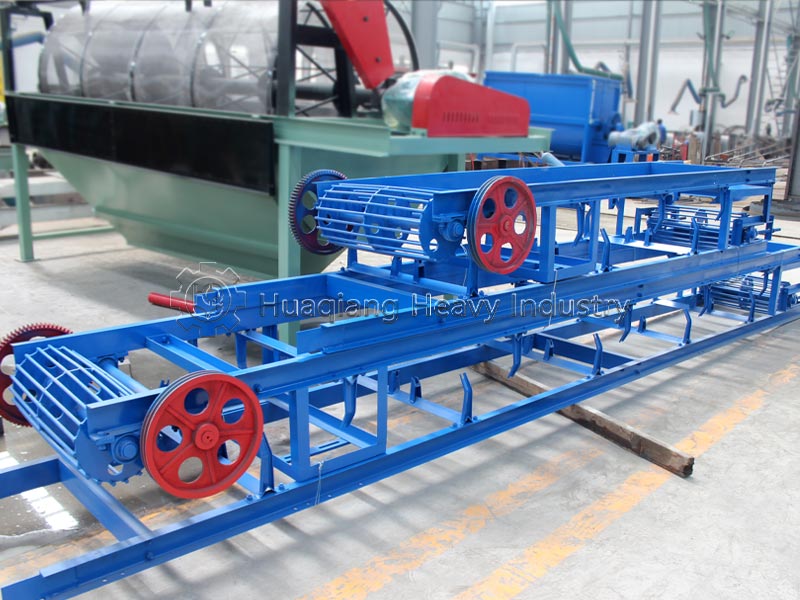
Equipment Overview
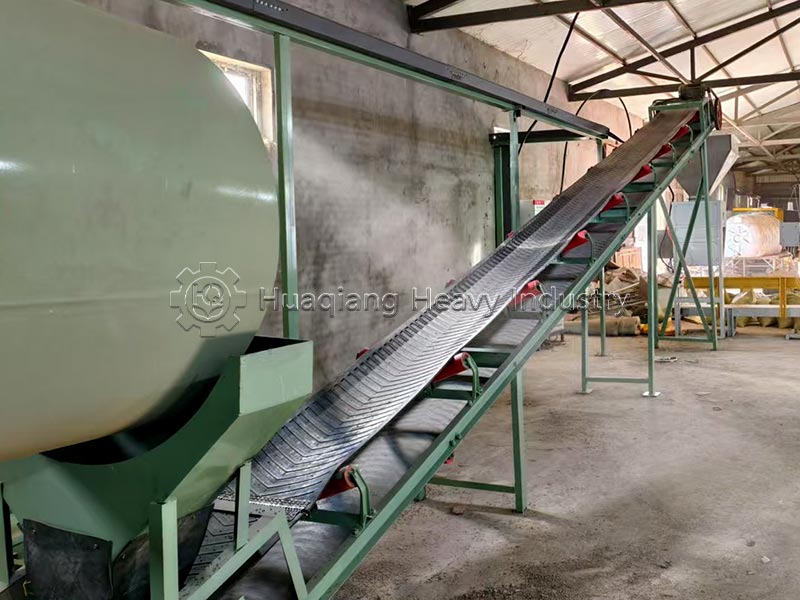
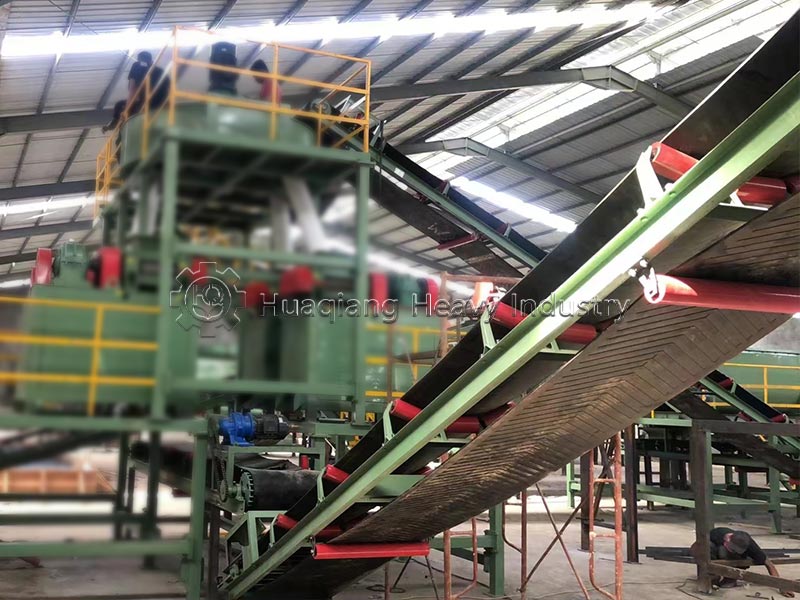
A belt conveyor is a continuous conveying device that uses a flexible conveyor belt as both the material carrier and traction component, relying on the principle of friction drive to achieve continuous material transport. It is one of the most fundamental and core conveying equipment in modern industrial production and logistics systems, often referred to as the "arteries" of the logistics system.
A telescopic belt conveyor is a special conveying device that adds a telescopic mechanism to a standard belt conveyor. It can freely extend and retract along its length, achieving a flexible connection between fixed loading/unloading points and variable target points (such as inside trucks or containers). Its segmented, nested design, resembling a telescope, allows for significant adjustment of the operating length.
Equipment Structure Composition
| Equipment Type | Structural Parts / Unique Modules | Function Description |
|---|---|---|
| Ordinary Belt Conveyor (Core General‑purpose Structure) |
Conveyor Belt | Flexible load‑bearing component for carrying bulk materials. Common materials include rubber, PVC, PU, steel wire rope, etc. Model can be flexibly selected according to material characteristics and actual working conditions. |
| Drive Unit | Composed of motor, reducer, coupling, fluid coupling and brake. It is the core power source of equipment, providing driving force for belt rotation. | |
| Pulley Group | Including head drive pulley, tail bend pulley and snub pulley. Rely on friction to drive the belt for continuous rotation and ensure stable conveying operation. | |
| Idler Group | Divided into trough‑shaped carrying idler, buffer idler and V‑type return idler. Main function is to support conveyor belt and effectively reduce equipment running resistance. | |
| Tensioning Device | Adopts screw or weight‑counterweight structure. Continuously maintain proper belt tension, ensure sufficient friction between belt and pulley and prevent slipping. | |
| Frame & Auxiliary Devices | Including head hopper, guide chute, head/tail cleaner, skirt board, guard rail, emergency stop and other safety protection devices to guarantee stable and safe equipment operation. | |
| Telescopic Belt Conveyor (Exclusive Additional Structure) |
Telescopic Mechanism | Constructed by 2‑5 sections nested frame. Driven by steel wire rope traction or chain drive to realize overall telescopic function and meet different conveying distance requirements. |
| Belt Storage Bin | Adopt 2‑fold structure to adapt to belt length change. Specially store redundant belt during telescopic travel and ensure smooth telescopic operation. | |
| Lifting Device | Adopt hydraulic or electric lifting system. Adjust discharging‑end height within 800‑2200 mm to adapt to different vehicle types and stacking‑unloading heights. | |
| Traveling Mechanism | Equipped with heavy‑duty universal wheels or rail travelling system. Support flexible equipment movement and accurate positioning for multi‑station loading‑unloading operations. | |
| PLC Control System | Integrate functions of equipment telescoping, lifting, forward‑reverse rotation, stepless speed regulation and fault alarm. Realize intelligent and integrated precise control of the machine. |
Applicable Raw Materials
1. Fixed Belt Conveyor Compatible Materials (All Types of Fertilizer)
1) Powdered Raw Materials: Fermented chicken manure powder, humic acid, bentonite, coated talc powder, chemical fertilizer powder;
2) Granular Materials: Granulated organic fertilizer, compound fertilizer, cooled coated finished granules;
3) Lump Materials: Straw, mushroom residue, oilseed cake, small pieces of fermented compost;
4) Finished Bagged Materials: 5kg/20kg/50kg bagged fertilizer; Limitations: Large hard stones and highly sticky mud clumps are prone to clogging; direct conveying is not recommended.
2. Telescopic Belt Conveyor Compatible Materials
Only suitable for bagged finished fertilizer (10–60kg woven bags/coated bags) and boxed fertilizer; cannot convey powdery or bulk granules (expansion joints easily leak powder, no sealed structure).
Summary table of common faults and solutions for belt conveyors
| Equipment Classification | Fault Phenomenon | Main Causes | Solutions |
|---|---|---|---|
| General Faults of Ordinary Belt Conveyor | Belt Deviation | Mis‑installed pulley / idler, crooked belt joint, assembly error, uneven tension | Adjust positions of head‑tail pulleys and idlers to guarantee installation accuracy; adjust tension device; add self‑aligning idlers; standardize feeding position |
| Belt Slippage | Insufficient tension, worn drive pulley, wet belt surface, overload operation | Increase tension via tensioning device; clean pulley surface and inspect rubber lagging; control feeding capacity; install snub pulley to wrap angle if necessary | |
| Belt Tearing / Rupture | Long‑term wear without replacement, sharp foreign object jamming, poor joint quality, overload impact | Regularly inspect & replace aged belt; remove trapped foreign objects; adopt vulcanized joint for higher strength; install iron remover & anti‑tearing protection device | |
| Idler Jam / Abnormal Noise | Bearing oil shortage, seal failure & dust ingress, idler wear | Periodically inject lubricating grease; replace damaged idlers; select premium idlers with good sealing performance | |
| Reducer Overheating / Oil Leakage | Insufficient / deteriorated lubricant, damaged bearing, aged seal | Check oil level & oil quality regularly and replace on schedule; repair or change bearings; renew sealing parts | |
| Special Faults of Telescopic Belt Conveyor | Poor Telescoping / Stuck Movement | Deformed guide rail, loose / broken steel wire rope, worn chain | Inspect & correct guide rail; adjust or replace steel wire rope / chain; lubricate sliding contact parts |
| Lifting Malfunction | Insufficient hydraulic oil, pump failure, stuck solenoid valve | Refill hydraulic oil; overhaul oil pump and valve group; inspect electric control circuit | |
| Belt Deviation in Telescopic Section | Center‑line misalignment of each frame, uneven idlers inside belt storage bin | Calibrate alignment of each frame section; adjust idler group inside belt storage bin |
1. Complete production plants for organic fertilizer, compound fertilizer, and bio-fertilizer;
2. Large-scale livestock groups with their own manure-to-fertilizer workshops;
3. Enterprises engaged in the resource-based and environmentally friendly disposal of sludge and kitchen waste;
4. Fertilizer equipment integrators and production line engineering installation companies;
5. Grain, feed, building materials, and chemical powder processing plants.
Target Customers for Telescopic Belt Conveyors:
1. Finished product storage and agricultural input logistics transit warehouses for fertilizer plants;
2. Fertilizer trading distributors and wholesale distribution centers for bagged fertilizers;
3. Agricultural input e-commerce warehousing and express logistics loading and unloading companies;
4. Small and medium-sized agricultural input stores that only need to handle bagged fertilizers and do not process bulk raw materials.
In summary, belt conveyors form the "basic framework" of industrial material handling, boasting advantages such as simple structure, large capacity, long distance, and low energy consumption. They are widely used in heavy-duty and long-distance scenarios in mining, ports, manufacturing, and agriculture. Telescopic belt conveyors, on the other hand, act as the "flexible arm" at the end of the logistics chain. Building upon ordinary belt conveyors, they add adaptive length and height adjustment capabilities, specifically addressing the high-frequency, variable, and labor-intensive process of vehicle loading and unloading.
The two are not substitutes but rather complementary and synergistic: belt conveyors construct the main logistics channels of the production line, while telescopic conveyors complete the final link in loading and unloading. In modern smart factories and intelligent logistics systems, both are deeply integrated with automated sorting, robotic palletizing, and WMS/WCS systems, jointly forming an efficient, continuous, and flexible material handling ecosystem.
| Belt Width (mm) | Conveying length(m) Power(kw) | Conveying speed (m/s) | Delivery quantity (t/h) | ||
| 500 | ≤12 3 | 12-20 4-5.5 | 20-30 5.5-7.5 | 1.3-1.6 | 78-191 |
| 650 | ≤12 4 | 12-20 5.5 | 20-30 7.5-11 | 1.3-1.6 | 131-323 |
| 800 | ≤6 4 | 6-15 5.5 | 15-30 7.5-15 | 1.3-1.6 | 278-546 |
| 1000 | ≤10 5.5 | 10-20 7.5-11 | 20-40 11-22 | 1.3-2.0 | 435-853 |
| 1200 | ≤12 7.5 | 10-20 11 | 20-30 15-30 | 1.3-2.0 | 655-1284 |