Equipment Introduction
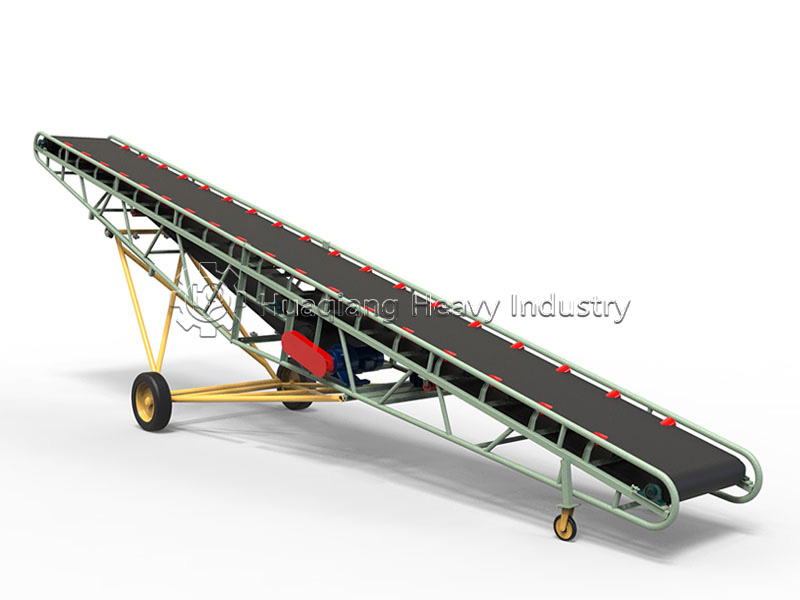
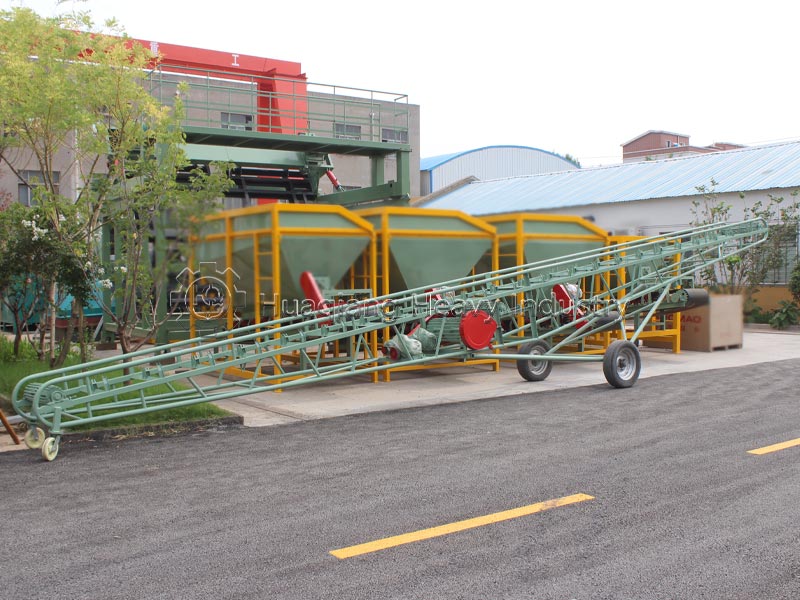
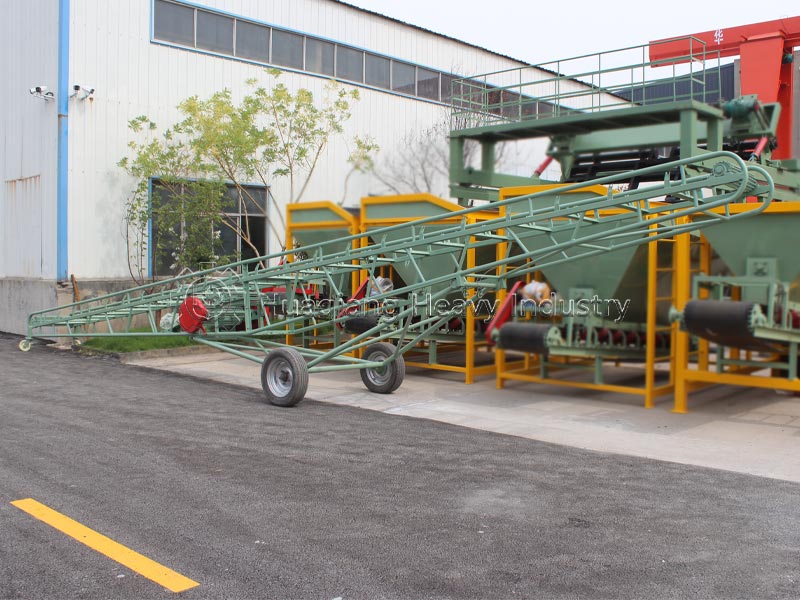
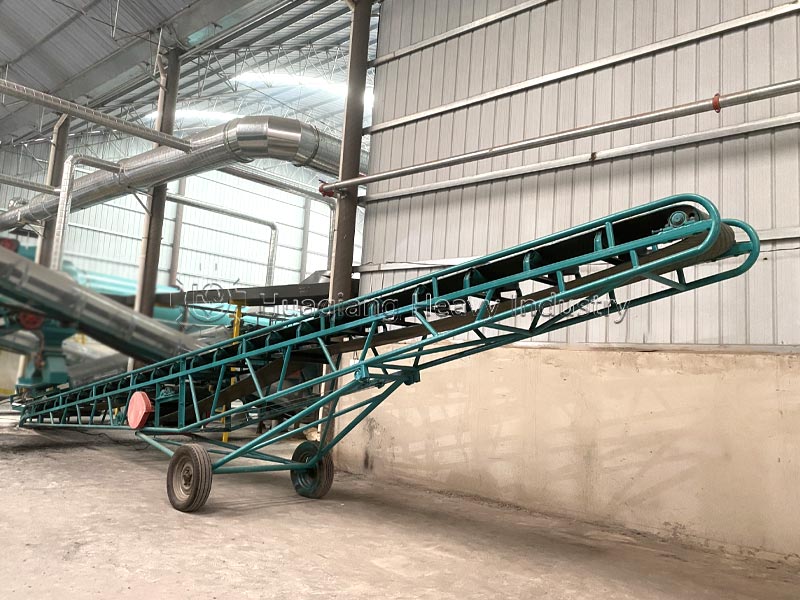
The mobile belt conveyor is a lightweight, continuous bulk material conveying device with its own wheels, free movement, and adjustable tilt and height. Based on a standard fixed belt conveyor, it integrates a walking mechanism and manual/hydraulic lifting supports. It requires no civil engineering foundation and can operate simply by plugging in electricity. Primarily designed for multi-point temporary transfers, truck loading and unloading, and flexible material loading in workshops, it is a versatile auxiliary conveying device for fertilizer plant stockpiles, temporary raw material transfers, and bagged fertilizer loading and unloading.
Core Advantages
1. Movable: Standard configuration includes omnidirectional/solid tires, allowing for single-person operation and easy switching of work positions;
2. Adjustable Height and Inclination: Freely adjustable within a 10°–22° tilt range, adaptable to trucks, silos, and varying feed inlets;
3. Zero Construction Costs: No concrete foundation required; simply place the machine on-site for immediate operation;
4. Multi-functional: Capable of conveying bulk granules, powdered raw materials, and bagged fertilizers. Optional anti-slip side belts prevent slippage of high-moisture fertilizers;
5. Flexible Space Layout: Can be moved to a corner of a warehouse when not in use, without occupying a fixed workstation on the production line;
6. Variable Frequency Dual-Speed Options: Two speed settings, suitable for bulk material conveying and bagged finished product transfer. Key differences between fixed and telescopic belt conveyors:
1. Compared to fixed belt conveyors: They have wheels, are movable, have a conveying length ≤20m, and are only used for temporary transfers, not as a permanent process link in the production line;
2. Compared to telescopic belt conveyors: They do not have nested telescopic frames, the overall length is fixed, and the unloading position is changed only by moving the entire machine. They are cheaper and have a simpler structure; telescopic conveyors are only used for bagged loading and unloading deep inside the vehicle, while mobile belt conveyors can handle both bulk and bagged loading in various scenarios.
Equipment Structure Composition
The complete machine is divided into four main modules: a standard belt conveyor unit, a moving and walking unit, a lifting and adjusting unit, and safety auxiliary accessories:
1. Basic Belt Conveyor Unit (Universal with Fixed Belts)
1) Conveyor Belt: Fertilizer plants use three types: ordinary trough rubber belt (dry granules), herringbone anti-slip sidewall belt (high-moisture organic fertilizer, steep incline), and acid and alkali resistant rubber belt (high-salt compound fertilizer);
2) Idler System: trough-type load-bearing idlers, return flat idlers, feed buffer idlers, and self-aligning idlers (to prevent deviation);
3) Roller Assembly: head drive roller and tail redirecting roller; the drive roller surface is coated with rubber to increase friction;
4) Drive Unit: motor + reducer, mostly using a central drive layout, lowering the center of gravity of the whole machine, preventing tipping during movement and lifting;
5) Tensioning Device: manual tensioning at the tail screw, adjusting belt tension to prevent slippage;
6) Sweeper, guide chute, and side baffles to prevent powder spillage and dust.
2. Dedicated Mobile Walking Unit
1) Walking Wheel Set: Front swivel casters, rear solid load-bearing rubber wheels; pneumatic tires are optional for heavy-duty models;
2) Brake Locking Device: Each wheel is equipped with a foot brake, locking during operation to prevent the machine from sliding;
3) Towing Hook: Forklift/tractor towing for long-distance transport within the factory area.
3. Lifting and Adjustment Unit (Core Feature Structure)
1) Light-duty models (≤10m): Manual screw lifting bracket, hand-crank adjustment of discharge height;
2) Medium and large-duty models (≥10m): Hydraulic lifting cylinder, electric one-button lifting, discharge height adjustable from 1.5–8m;
3) Diagonal Brake Stabilizing Legs: After lifting to the correct position, the auxiliary legs are lowered, ensuring no shaking of the machine during operation.
4. Safety Accessories
Emergency stop switch, deviation protection, backstop (to prevent material backflow during shutdown), dust baffle, grounding protection cable.
Working Principle
The mobile belt conveyor operates based on the principle of friction drive, similar to a conventional belt conveyor:
1. Power Output: The motor's speed is reduced and torque increased via a reducer, driving the head drive roller to rotate;
2. Friction Traction: A tensioning device maintains sufficient positive pressure between the conveyor belt and the drive roller, generating friction to drive the belt continuously;
3. Material Loading: Material is evenly fed onto the conveyor belt through the feed hopper, supported by trough rollers and moving synchronously with the belt;
4. Unloading and Return: After reaching the head of the conveyor, material is unloaded by gravity; the empty belt is deflected back via the tail deflector roller, returning to the feed end for the next cycle.
Mobility Characteristics: Before operation, the equipment is pushed to the target position via the traveling mechanism, and the support legs are lowered and locked; the frame tilt angle (typically 10°–26°) is adjusted via the lifting device according to the height of the truck bed or hopper to achieve precise docking.
Application Scope
1. Core Scenarios for Fertilizer Production Enterprises
1) Temporary Transfer of Raw Material Stockpiles: Transfer of outdoor manure and straw stockpiles to the feed inlets of crushers and mixers, eliminating the need for fixed conveyor belts;
2) Auxiliary Feeding of Production Lines: Temporary transfer of fine powder from screening and drying/cooling sections, adaptable to temporary production line modifications;
3) Loading and Unloading of Trucks in the Factory Area: Unloading of bulk raw materials into storage, and direct loading of bagged finished fertilizers onto trucks for transport;
4) Simple Fertilizer Production Workshops in Small-Scale Livestock Cooperatives: Replaces manual shoveling and transportation due to variable site conditions and frequent workstation adjustments;
2. Other Industry Scenarios
Grain storage, feed processing plants, small construction site sand and gravel transfer, and temporary sorting and loading/unloading of agricultural supplies.
Target Audience and Selection Recommendations
1. Core Target Audience
1) Grain Storage and Processing Enterprises: Grain depots, drying towers, and feed mills require seasonal, high-frequency bulk grain loading and unloading;
2) Sand and Gravel Aggregate and Mining Enterprises: Quarries and manufactured sand plants require temporary transportation that frequently relocates as mining operations progress;
3) Logistics and Warehousing Enterprises: E-commerce warehouses, express delivery distribution centers, and third-party logistics providers require flexible loading and unloading across multiple vehicle positions and vehicle types;
4) Construction Enterprises: Earthwork projects and demolition projects require material lifting equipment that can be quickly deployed in confined spaces;
5) Ports and Freight Forwarding Enterprises: Bulk cargo terminals and barge operation areas require mobile supplementary equipment that works in conjunction with fixed loading and unloading lines.
2. Key Selection Considerations
| Consideration Dimension | Model‑selection Suggestions |
|---|---|
| Material Characteristics | For bulk materials (grain, sand & gravel): adopt trough idlers plus rubber patterned belt; for packaged goods: adopt flat belt plus parallel idlers |
| Moving Frequency | For frequent site transfer: choose pneumatic tires plus towing chassis; for infrequent movement: choose universal casters plus lightweight aluminum frame |
| Lifting Mode | Heavy‑duty / frequent lifting: select hydraulic oil cylinder; light‑duty / low‑cost: select manual screw rod |
| Power Configuration | Places with mains power: choose electric motor (0.75‑15kW); field operation without power supply: gasoline / diesel engine drive is optional |
| Environmental Adaptability | Grain industry: adopt galvanized / stainless steel material for anti‑corrosion; mining industry: adopt thickened wear‑resistant rubber belt and heavy‑duty steel frame |
Application Technology of Mobile Belt Conveyor in Fertilizer Production Line
Production Line Connection Logic: Complete Fertilizer Main Line: Raw Material Warehouse → Fixed Belt Conveyor → Crusher → Mixer → Granulator → Dryer → Cooler → Coating Machine → Screening → Finished Product Warehouse
Mobile Belt Conveyor Connection Points:
1) Raw Material Stockpile → Mobile Belt Conveyor → Crusher Inlet (Temporary feeding for outdoor composting, can be moved at any time);
2) Screening Fine Powder Outlet → Mobile Belt Conveyor → Front-end Mixer (Fine powder is recycled for re-granulation, temporary setup without civil engineering);
3) Packaging Machine Outlet → Mobile Belt Conveyor → Truck Cargo Box (Flexible loading of bagged fertilizer, adaptable to different vehicle types and parking locations).
Summary table of common faults and solutions for mobile belt conveyors| Fault Classification | Fault Phenomenon | Main Causes | Solutions |
|---|---|---|---|
| Belt System Faults | Belt Deviation | Unlevel frame, mis‑installed pulleys & idlers, uneven feeding | Lower supporting legs then re‑calibrate frame level; adjust head‑tail pulleys and roller positions; ensure centered feeding from hopper |
| Belt Slippage | Insufficient tension, wet driving pulley surface, overload operation | Adjust tensioning device; clean water and dirt on pulley surface; control feeding volume; prohibit overload startup | |
| Belt Wear & Tearing | Sharp foreign objects trapped in belt, overdue replacement, poor belt joint quality | Remove foreign objects inside equipment timely; regularly inspect belt joint status; replace worn, aged and damaged belt promptly | |
| Idler Abnormality & Jamming | Lack of lubrication for idler bearing, seal failure & dust ingress, resulting in idler damage | Inject lubricating grease to idler bearings periodically; clear dust accumulation; repair or directly replace damaged idlers | |
| Moving & Lifting‑mechanism Faults | Lifting Malfunction | Insufficient hydraulic oil volume, hydraulic system failure, rust & jamming of manual lifting screw rod | Refill hydraulic oil to standard level; inspect and eliminate oil pump faults; clean rusty screw‑rod parts and fully lubricate |
| Difficult Travelling | Insufficient tire air pressure, jamming of caster bearings, uneven ground at operation site | Check and inflate tires to rated pressure; lubricate or replace stuck wheel bearings; prefer flat‑ground operation | |
| Frame Shaking During Operation | Support legs not fully lowered and locked, loose & uneven operation ground | Ensure all supporting legs land and lock firmly; pad and level loose ground to stabilize equipment |
Mobile belt conveyors are an organic combination of stationary belt conveyors and motorized chassis. Their core competitive advantages lie in their simple structure, lack of foundation requirements, immediate usability, and adjustable height, filling the gap in flexible conveying between fixed conveyor lines and temporary work sites. In fields such as grain storage, mining, logistics loading and unloading, and construction, mobile belt conveyors have become indispensable motorized conveying equipment by reducing manual handling, shortening material transfer distances, and improving loading and unloading efficiency. When selecting a model, key considerations should be given to frame rigidity, lifting method, tire/wheelset configuration, and belt material to ensure the equipment maintains reliability and durability under both frequent movement and continuous operation.