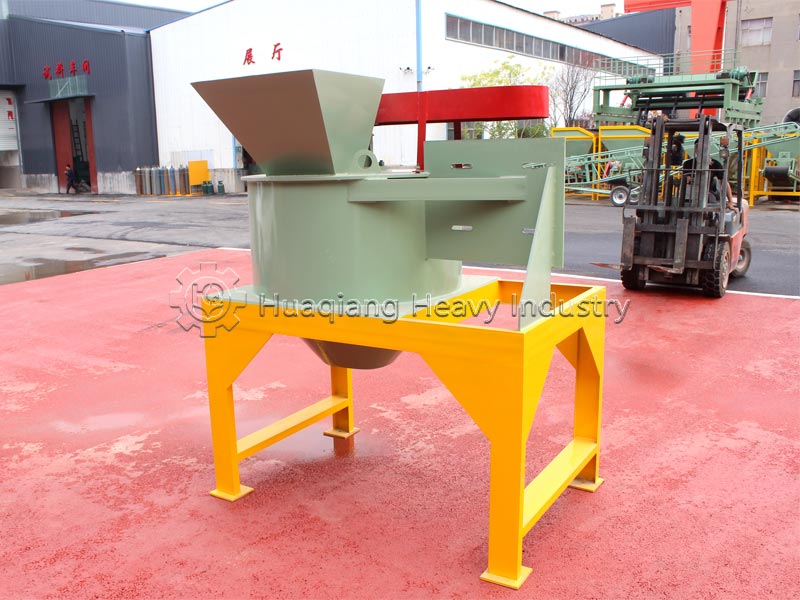

Equipment Introduction
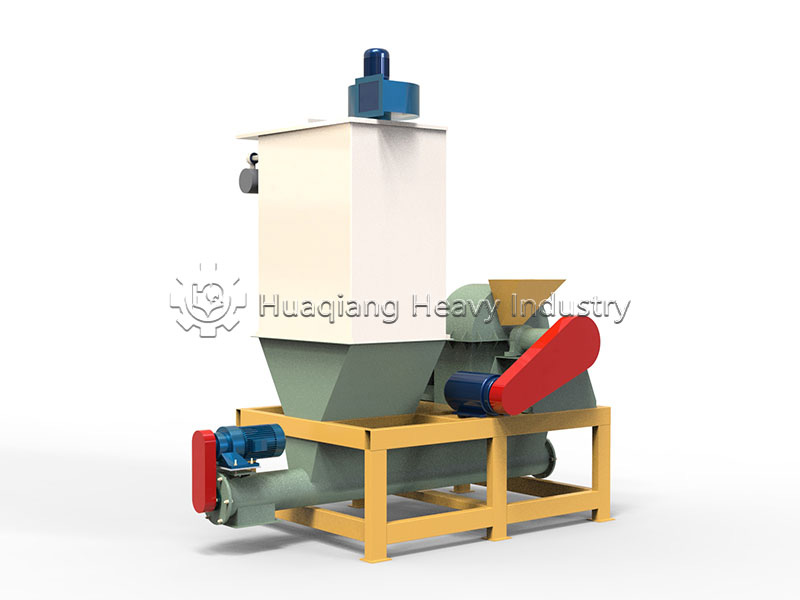
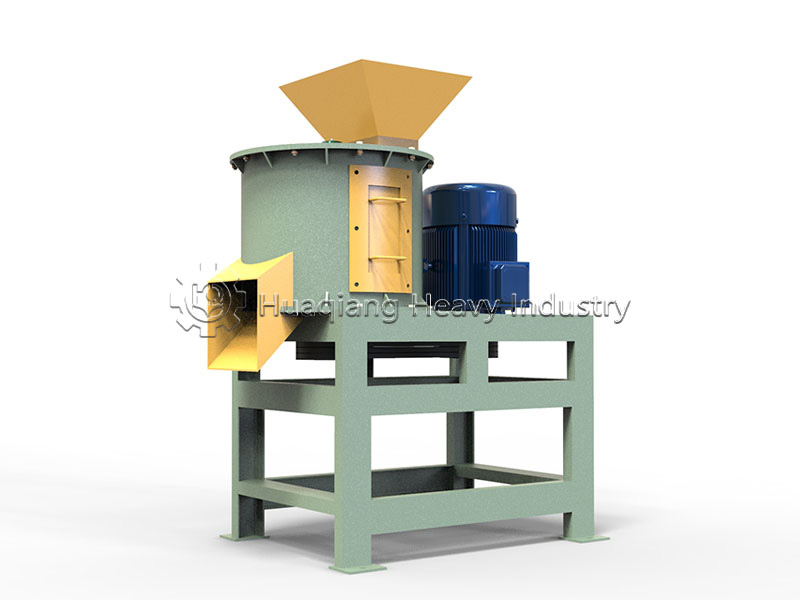
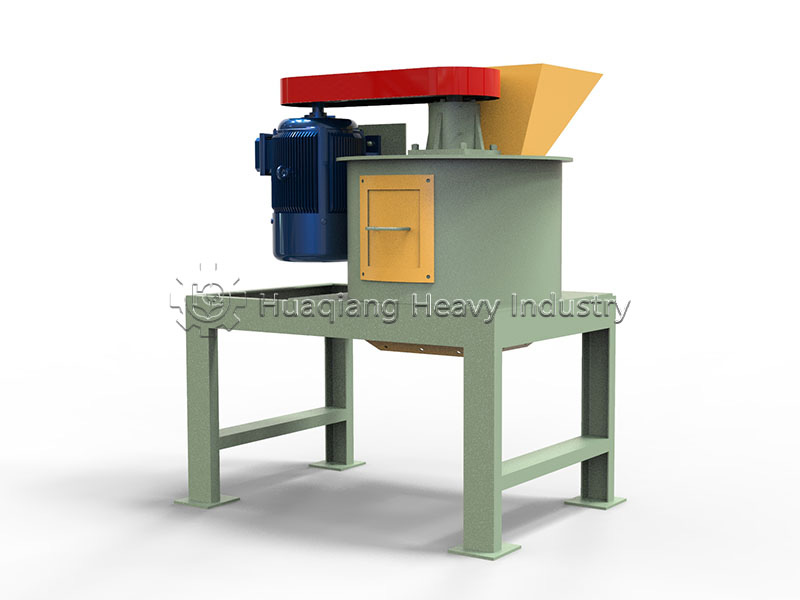
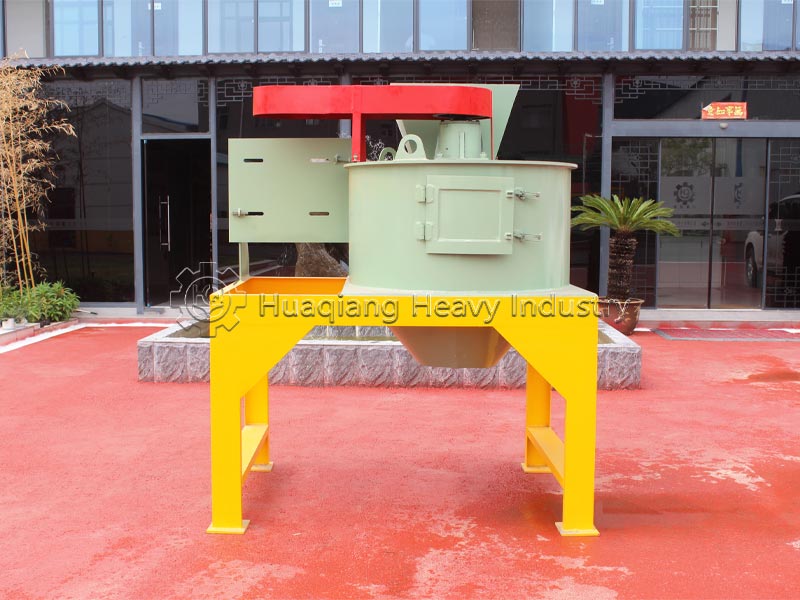
Chain crushers are one of the most commonly used crushing equipment in the compound fertilizer and organic fertilizer industries. They are impact crushers that use a high-speed rotating chain to crush material blocks.
Chain crushers are available in two structural forms: vertical and horizontal. The vertical type has a single rotor, while the horizontal type has a double rotor. During the crushing process, the equipment uses high-strength, wear-resistant, hard alloy chains with synchronized rotation speeds, suitable for crushing raw materials and return materials. This machine features a reasonable inlet and outlet design, uniform material crushing, minimal material sticking to the walls, and easy cleaning.
Particularly noteworthy is the strong adaptability of chain crushers to materials with high moisture content. They are less prone to clogging, ensure smooth material feeding, and overcome the drawback of materials adhering to the inner wall of the machine casing, which can prevent production. Horizontal chain crushers can crush undried phosphate fertilizers containing 14% moisture and 6% free acid, as well as various phosphate and potassium compound fertilizers, enabling continuous production in the crushing process.
Equipment Structure
Its robust and easy-to-maintain design comprises the following main components:
1. Power System: Includes an electric motor and coupling, providing rotational power to the equipment.
2. Rotor Assembly: The core component, consisting of the main shaft, upper and lower bearing seats, and rotor disc.
3. Crushing Components: High-strength, wear-resistant carbide chains and hammers/hammers mounted on the rotor disc.
4. Machine Body: Includes the feed hopper, machine casing (with a movable door for easy maintenance), and the lower frame supporting the entire equipment.
Working Principle of the Equipment
The chain crusher is an impact crusher that crushes materials by impacting them with a high-speed rotating chain.
Its complete working process is as follows:
1. Material Intake and Diversion
After entering the feed inlet, the material is divided into two paths and falls into the two rotors respectively.
2. Initial Impact Crushing
The material enters the casing and collides with the high-speed rotating chain, being violently crushed by the impact. The material is then whipped by the chain on one rotor and flies towards the other rotor.
3. Repeated Impact Crushing
The material undergoes multiple impacts and compressions within the casing:
1)Crushing by the impact of the high-speed rotating chain
2)Crushing through collisions between material particles
3)Rebounding from impact against the inner wall of the casing and colliding with the chain again.
4. Multi-Stage Fall Crushing
During its fall, the material undergoes several impacts, becoming powder or fine particles.
5. Finished Product Discharge
The crushed material that meets the required standards is discharged from the bottom of the machine.
6. Particle Size Adjustment
The particle size can be adjusted by increasing or decreasing the number of chains. When the crusher is fully loaded with the chain and operating at its optimal load, the material can be crushed to less than 1 mm. The circumferential speed of the chain head is generally 28~78 m/s.
Applications of the equipment:
1) Compound fertilizer/organic fertilizer production: Used for raw material crushing and return material pulverization; a standard component of fertilizer production lines.
2) Environmental protection industry: Processing municipal solid waste, sludge, and residues from waste incineration.
3) Chemical industry: Pulverizing certain medium-hardness chemical raw materials with a certain viscosity or moisture content.
Raw Material Requirements for the Equipment
The chain crusher can process the following types of raw materials:
| Raw Material Type | Typical Materials | Feasibility Description |
|---|---|---|
| Chemical Fertilizer Raw Materials | Urea, Ammonium Nitrate, Ammonium Chloride, Potassium Nitrate, Compound Fertilizer, Large-particle Chemical Fertilizers | Suitable for crushing brittle chemical fertilizer materials; moisture content should be controlled according to equipment model to avoid caking and blockage. |
| Organic Fertilizer Raw Materials | Fermented organic fertilizer, livestock and poultry manure, sludge blocks | Suitable for high-moisture fibrous organic materials; recommend using semi-wet material crusher to reduce sticking and blocking risks. |
| Mineral Raw Materials | Medium-hardness block materials such as shale, stone, coal gangue, clay, etc. | Suitable for medium-hardness materials; high-hardness materials will accelerate wear of hammer blades, liners and rotors. |
| Operation Stage | Detailed Content | Standard / Notes |
|---|---|---|
| Foundation Installation | Install the equipment on horizontal concrete foundation and fix with anchor bolts | Foundation shall be horizontal; bolts shall be tightened securely |
| Ensure vertical alignment between main unit and horizontal plane during installation | Verticality of main unit shall meet requirements | |
| Installation Inspection | Check whether bolts at each part are loose and main access doors are closed tightly | Tighten all loose bolts |
| Electrical Configuration | Arrange power cables and control switches according to equipment power rating | Cable specification shall match equipment power |
| Test Run Acceptance | Perform no-load test run (3~5 min); formal production can start if test run is normal | No-load test run for 3~5 minutes |
| Pre-start Preparation | Fully check chain tightness (over-tight causes abrasion; over-loose leads to jumping) | Chain tightness shall be moderate |
| Check wear condition of hammer blades | Replace severely worn blades | |
| Check lubrication status of bearings | Bearings shall be well lubricated | |
| Remove hard impurities such as metal blocks and stones from raw materials | Avoid damage to blades and equipment | |
| Confirm complete safety guards; operators shall wear protective equipment | Safety protection shall be in place | |
| Operation Process | Run under no load for 3~5 minutes; start feeding only after confirming no abnormalities | No-load test run for 3~5 minutes |
| Adopt uniform and continuous feeding; avoid one-time massive feeding | Feed uniformly and continuously | |
| Keep watch during operation; monitor motor temperature | Motor temperature shall not exceed 75℃ | |
| Keep watch during operation; monitor bearing temperature | Bearing temperature shall normally be lower than 60℃ | |
| Adjust parameters such as rotation speed and sieve aperture according to material characteristics | Parameters shall match material characteristics | |
| Prohibit reaching into feeding inlet by hand or tools during equipment running | Safe operation; prohibit violation | |
| Post-shutdown Operation | Stop feeding first; cut off main power after residual materials inside machine are fully discharged | Stop feeding before shutdown |
| Clean residual materials inside equipment after power cut | Keep interior of equipment clean | |
| Check wear of chains, blades and loose status of bearings | Daily inspection for wear and looseness | |
| Bearing Lubrication | Grease filling once per shift | Once per shift |
| Lubricant model: No.3 Lithium-based Grease | Model: No.3 Lithium-based Grease | |
| Filling volume: 1/3 ~ 1/2; replace grease periodically | Fill 1/3~1/2 and replace on schedule | |
| The injected grease must be clean and sealing shall be kept well | Grease clean, sealing in good condition | |
| Chain Inspection | Open access door before shift to check whether fixing bolts of chain or sprocket are severely worn | Inspect before each shift |
| Replace when wear exceeds 1/3 of diameter | Replacement standard: wear >1/3 diameter | |
| Sag of chain middle part shall remain 20~30mm | Sag: 20~30mm | |
| Wear Parts Replacement | Check wear level of vulnerable parts regularly; replace worn parts timely | Inspect frequently and replace timely |
| Single chain plate can be replaced separately with low cost | Single plate replaceable | |
| Long-term Shutdown Maintenance | If shutdown exceeds 15 days, clean chains and sprockets and apply anti-rust oil | Maintenance required if idle >15 days |
| Anti-rust oil coating position: metal parts such as chains and liners | Coat metal components | |
| Regular Tightening | Adjust chain sag to 20mm to avoid plastic deformation caused by long-term tension | Adjust sag to 20mm |
| Newly installed sprockets tend to loosen and must be inspected frequently | Frequent inspection for new sprockets | |
| Tighten anchor bolts every month | Frequency: once per month |
Application of the Equipment in the Production Line
Chain crushers are typically located after the batching system and before the granulation system. In organic fertilizer production lines, they are responsible for crushing fermented compost materials to a suitable fineness for granulation (usually below 3mm), ensuring a high pelleting rate in subsequent granulation.
1. Location in the Organic Fertilizer Production Line
In a complete organic fertilizer production line, the chain crusher is located after fermentation and before mixing and granulation, performing the crucial functions of breaking up agglomerates and refining materials.
Complete Processing Flow:
Raw materials such as livestock and poultry manure → Turning and fermentation → Crushing and refining by chain crusher → Uniform batching by twin-shaft mixer → Forming by disc granulator or roller extrusion granulator
2. Application in Compound Fertilizer Production Lines
Chain crushers are one of the most commonly used crushing equipment in the compound fertilizer industry, suitable for:
Raw material crushing
Return material (unqualified products) crushing
Crushing agglomerated compound fertilizer
3. Application Features
Can handle high-moisture manure, not prone to clogging
Screenless design, particle size controlled by adjusting chain speed
Anti-winding structure, can handle long-fiber materials
Target Users of the Equipment
Chain crushers are primarily intended for the following user groups:
1. Compound fertilizer/blended fertilizer manufacturers: processing granular compound fertilizers, superphosphate, heavy calcium carbonate, phosphate fertilizers, and other lumpy raw materials and returned materials;
2. Organic fertilizer manufacturers: crushing fermented lumpy organic materials;
3. Phosphate fertilizer/chemical fertilizer raw material processing plants: processing phosphate fertilizer raw materials containing water and free acids;
4. Chemical enterprises: crushing medium-hardness lumpy chemical raw materials;
5. Building materials and mining enterprises: processing ores, coal lumps, and other medium-hardness materials;
6. Environmental treatment enterprises: crushing and processing organic waste from waste and sewage treatment plants.
The core advantages of the equipment
| Advantage | Description |
|---|---|
| High Wear Resistance | Adopts high-strength wear-resistant alloy hammer blades and crushing plates, extending service life. |
| Liner Anti-sticking Design | The machine is equipped with rubber liners / anti-sticking plates to reduce material adhesion and facilitate cleaning. |
| Suitable for High-moisture Materials | Can handle materials with relatively high moisture content and is not easy to block. |
| Adjustable Discharge Size | Discharge particle size can be adjusted by reducing the gap between hammer blades, and can reach below 1mm. |
| Easy Maintenance | Quick-opening access door is adopted for easy internal inspection and maintenance. |
| Low Vibration & Low Noise | Equipped with dual rotors and balanced structure, it reduces vibration, lowers noise and ensures stable operation. |
| Dual-motor Drive | The two rotors are driven by independent motors, improving crushing efficiency. |
| Model | Maximum size of entering graule (mm) | Size after crushing | Motor power | Prod capacity |
| LP500 | ≤60 | <Φ0.7 | 11 | 1-3 |
| LP600 | ≤60 | <Φ0.7 | 15 | 1-5 |
| LP800 | ≤60 | <Φ0.7 | 15 | 2-8 |
.jpg)