
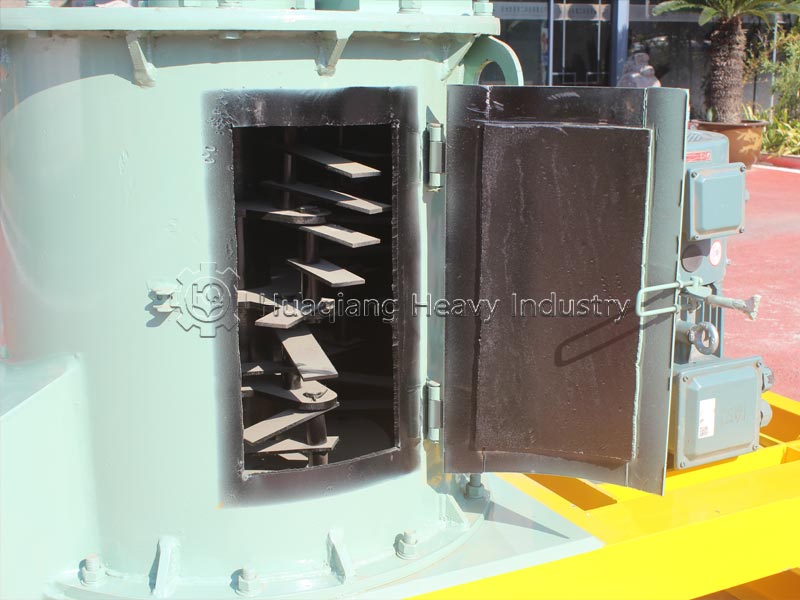
Equipment Introduction
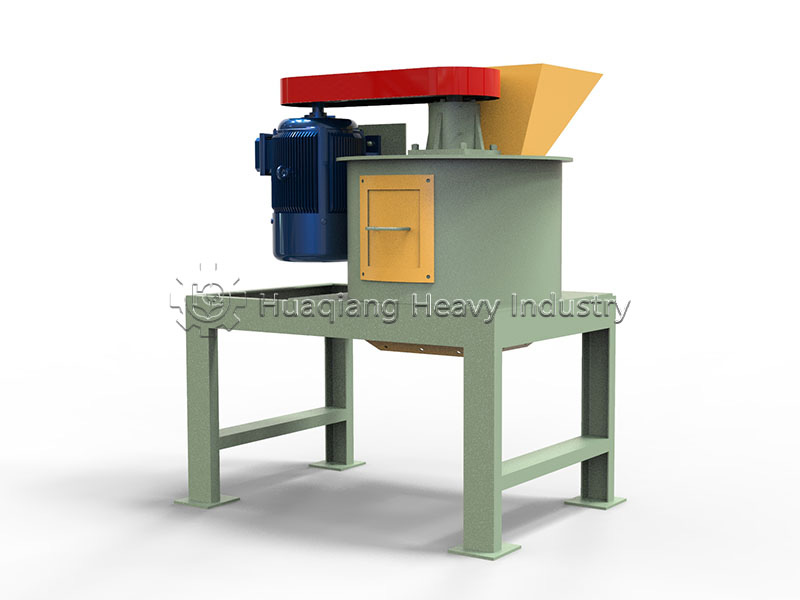
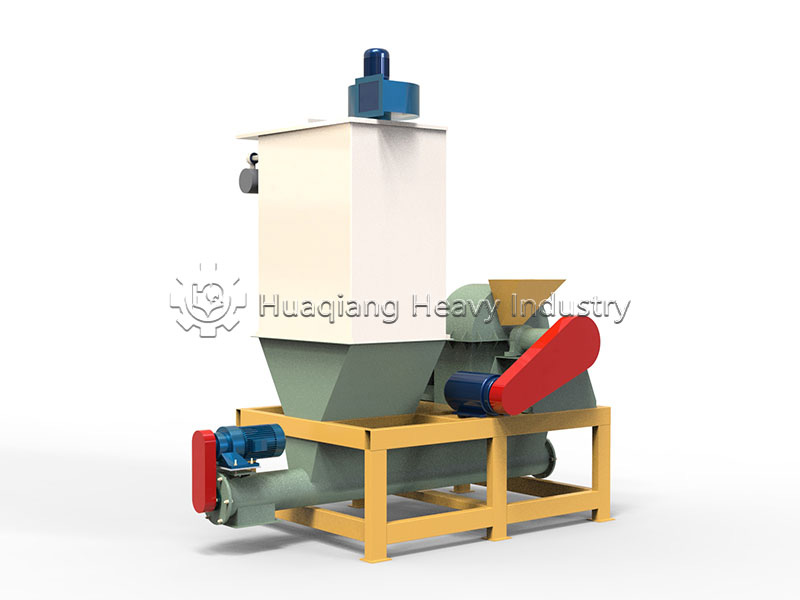
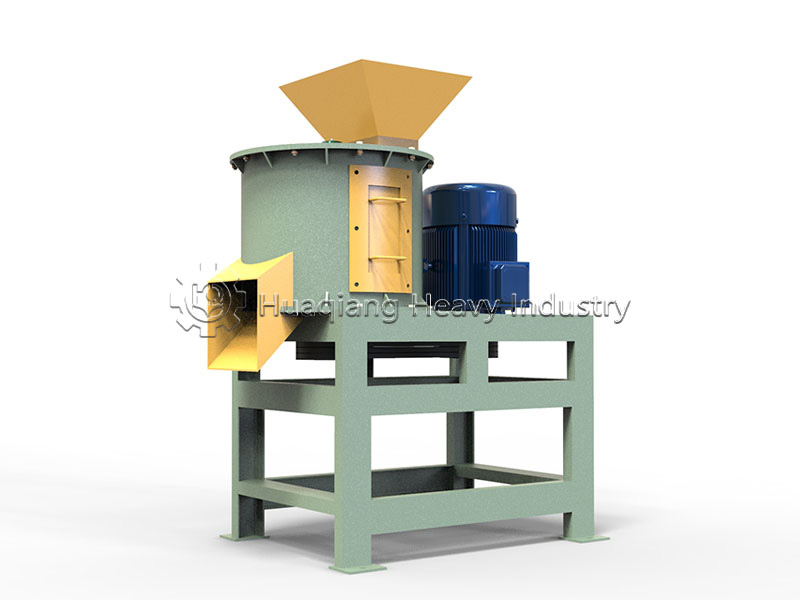
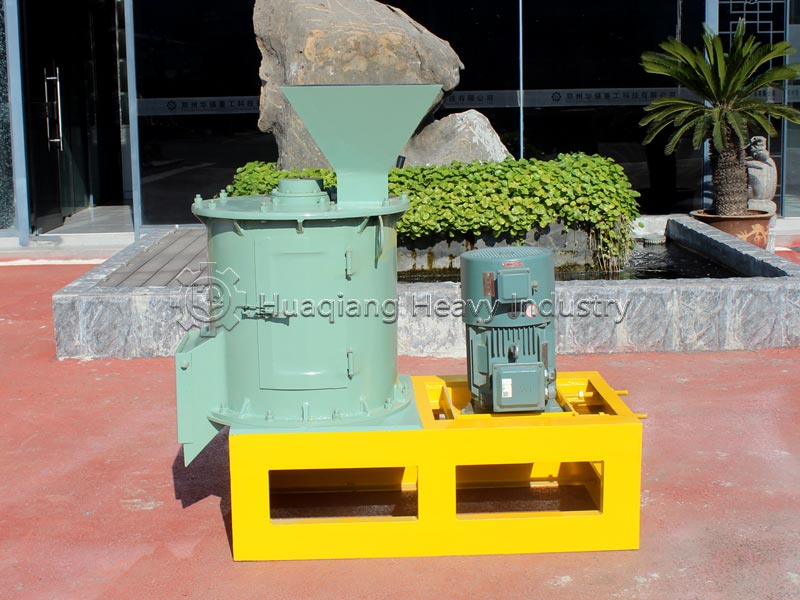
The half-wet material crusher, also known in the industry as a double-stage screenless crusher or a high-moisture organic fertilizer crusher, is a specialized impact-shear fine crushing equipment developed for high-moisture, high-fiber organic materials. It has been patented and fundamentally solves the industry pain points of traditional hammer crushers and cage crushers, such as screen clogging, cavity sticking, and drastic capacity reduction caused by wet materials.
Core Positioning and Classification
1. Model Classification
1) Single-stage half-wet crusher: Suitable for small workshops and small-capacity pre-processing, with a single rotor and single-layer blades;
2) Double-stage double-layer half-wet crusher (market mainstream): Features a double-rotor, double-layer crushing structure connected in series, with crushing efficiency twice that of the single-stage model. Suitable for large-scale organic fertilizer production lines. The Huaqiang Heavy Industry BSFS series is the standard representative model;
3) Stainless steel corrosion-resistant model: For processing salty, acidic sludge and fermented kitchen materials.
2. Core Key Features: The machine features a screenless, screen-bottom-free design, eliminating the problem of wet materials clogging the screen plates; it is suitable for high-moisture materials with a moisture content of 25%~55%, allowing for continuous crushing without pre-drying; the double-layer rotor composite crushing mechanism combines impact, shearing, and material feeding mechanisms, resulting in outstanding cutting performance for fibrous materials.
3. Key Differentiation from Cage Crusher
| Equipment | Applicable Moisture Content | Core Materials | Structure | Disadvantages |
|---|---|---|---|---|
| Semi-wet Material Crusher | 25%~55% | Livestock manure, mushroom residue, straw, sludge (high-moisture & fibrous materials) | Double-layer series rotors with blades / hammer pieces | Not suitable for dry and hard agglomerated chemical fertilizers |
| Cage Crusher | ≤12% | Urea, ammonium phosphate, dry slag (brittle materials) | Concentric reverse double-cage steel rods | High-moisture materials easily stick and cause blockage |
Core Advantages of the Equipment:
1. Screen-bottom-free anti-clogging design ensures continuous operation with high-moisture materials without jamming, preventing engine stalling and motor burnout;
2. Double-layer, double-stage crushing provides a large crushing ratio and uniform output particle size (adjustable from 0.5~5mm);
3. High-alloy wear-resistant blades with shifting and gap adjustment technology extend the service life of vulnerable parts by 3 times;
4. Enclosed casing with a dust collection interface ensures controllable dust;
5. No pre-drying treatment is required, shortening the organic fertilizer process and reducing investment in supporting equipment;
6. Single-person operation with a hydraulically opened cover structure for convenient internal cleaning and maintenance.
Equipment Limitations
1. Not suitable for high-hardness ores or large, hard, agglomerated fertilizers;
2. Long-fiber materials are prone to slight entanglement with the rotor, requiring pre-screening and segmentation;
3. Blade wear accelerates when processing high-mud and sandy materials.
The structure of the equipment
The half-wet material crusher is mainly composed of the following four parts. Each part works together to ensure the stable operation of the equipment in a high-humidity environment:
1. Rack part
The frame is the load-bearing foundation of the entire equipment. It is welded with high-quality carbon steel plates and channel steel. After strict product certification and specific process requirements, it has sufficient rigidity and stability to withstand the impact load and vibration generated during the crushing process. The normal operation of all machinery is inseparable from solid frame support.
2. Rotor broken part
This is the core working component of the equipment. It adopts an upper and lower double-layer rotor blade (double-stage rotor) structural design. The rotor has a novel structure and reasonable design. After the material enters the crushing chamber from the feed port, it is initially crushed into fine particles by the upper rotor, and then transported to the lower rotor for further crushing into fine powder, achieving the best crushing effect of "material powder, hammer powder". The crushing effect is twice that of other similar products. The upper and lower double-layer blade crushing system cooperates with the crushing plate to continuously grind the materials to meet the particle size requirements required for granulation.
3. Breaking plate adjustment device
By adjusting the distance between the crushing plate and the rotor blade, the fineness and output of the crushed material can be flexibly controlled. The gap between the hammer head and the tooth tip of the crushing plate is usually 1.5 times the maximum discharge particle size. This adjustable structure allows the equipment to adapt to production scenarios with different raw materials and different particle size requirements.
4. Transmission connection part
Using a flexible belt transmission system, the motor drives the pulleys and belts to directly transmit power to the main shaft, causing the main shaft to rotate at high speed to achieve the crushing effect. The flexible transmission design has a certain overload protection capability. When encountering unbreakable hard objects or excessive instantaneous load, the belt slippage can be used to protect the motor and spindle from damage.
In addition, some high-end models are also equipped with a centralized oil injection and lubrication system, which can inject lubricating oil without stopping the equipment during normal operation, further improving maintenance efficiency.
Working Principle of the Equipment
The half-wet material crusher is primarily designed based on the principle of high-speed impact and grinding. Its core working method is as follows:
1. Two-stage rotor series crushing (mainstream model)
The equipment mainly adopts a two-stage rotor series operation design:
First-stage crushing: After entering through the feed inlet, the material first enters the upper rotor crushing zone. Under the violent impact of the high-speed rotating hammers (blades), the material is initially crushed into fine particles.
Second-stage fine crushing: The initially crushed material is then thrown into the lower rotor crushing zone, where it is further finely crushed by the high-speed hammers. During this process, the material particles collide and grind against each other at high speed within the inner cavity.
"Hammer-to-material, material-to-material" effect: Through two-stage crushing, the material is simultaneously subjected to the impact of the hammers and the mutual collision and grinding between particles, achieving a dual crushing effect of "hammer-to-material, material-to-material".
Finished product discharge: The final product is a fine powder that meets the requirements, which is discharged directly from the outlet.
2. Single-Rotor Reversible Type
In addition to the two-stage rotor type, this equipment also exists as a "single-rotor reversible" type, used for grinding materials with specific moisture contents.
3. Core Operating Features
Screenless Particle Size Control: The equipment has no screen or sieve bottom; the output particle size is controlled by adjusting the gap between the hammers and the liner.
High-Speed Rotation: The main shaft rotates at high speed driven by an electric motor, generating a powerful impact force.
Continuous Operation: Supports continuous feeding and uninterrupted operation.
Applicable Raw Materials for the Equipment
The half-wet material crusher can process a wide variety of raw materials, mainly including:
1. Organic Waste
Livestock and poultry manure (chicken manure, pig manure, cow manure, sheep manure, etc., fermented and decomposed); urban sludge; distiller's grains; medicinal residue, traditional Chinese medicine residue; mushroom residue, fungal residue; peat moss; rural straw waste; biogas residue; kitchen waste
2. Minerals
Coal gangue; slag
3. Moisture Content Adaptability
The half-wet material crusher has a strong adaptability to the moisture content of materials. The main technical parameters are as follows:
Moisture content of bio-fermented organic fertilizer materials can reach 25%–55%
Materials with a moisture content between 20% and 50%
Some models can handle materials with a moisture content between 15% and 65%
Some equipment claims to be able to handle materials with a moisture content between 30% and 60%
It can be used to process high-moisture materials with a moisture content between 10% and 55%
4. Raw Material Application Boundaries
While half-wet material crushers are widely adaptable, the following precautions should be taken:
When the material moisture content exceeds 65%, excessive viscosity can easily cause clumping and blockage at the feed inlet.
If the raw material contains hard objects such as stones or metal, it may damage the blades.
If the material contains long fibrous materials (such as long straw), they can easily become entangled in the cutter shaft.
Equipment Applications
1. Organic Fertilizer Granule Production Line Pretreatment: Fermented and decomposed organic materials are finely crushed, resulting in uniform particle size for easy mixing with nitrogen, phosphorus, and potassium inorganic fertilizers. This improves the granulation rate of disc/extrusion granulation and reduces residual material loss.
2. Composting Secondary Fermentation Section: Large pieces of decomposed material are crushed, increasing the specific surface area, accelerating microbial fermentation, and shortening the decomposition cycle.
3. Livestock and Poultry Manure Resource Utilization Project: Manure from livestock farms is directly crushed after fermentation, eliminating the drying process and reducing the energy consumption and equipment investment of the entire production line.
4. Urban Organic Solid Waste Treatment Station: Kitchen waste, garden waste, and municipal sludge are crushed after fermentation to produce organic nutrient soil and substrate fertilizer.
5. Microbial Fertilizer and Bio-organic Fertilizer Processing Plant: Microbial residue and fermented organic matter are finely crushed to ensure uniform dispersion of microorganisms and improve fertilizer quality.
Complete Operation and Maintenance Process of Half-Wet Material Crusher
| Module Classification | Item Name | Detailed Content / Operation Standard |
|---|---|---|
| Pre-start Inspection (Daily) | Hardware Safety Check (Power Off) | Check all bolts without loosening & falling off; Hammer blades free of bending, fracture and looseness, fixing pins intact; Proper tension of V-belts with standard compression of 10~15mm; Clean feeding, crushing and discharging chambers to remove lumps and metal impurities; Confirm inspection doors, safety protection devices installed properly. |
| Lubrication System Check | Main bearing oil level within standard range; Replace deteriorated, carbonized or contaminated grease; Keep all grease nipples unobstructed to ensure normal grease supply. | |
| Material Pretreatment Check | Material moisture controlled at 25%~50%, install material buffer bin; Magnetic separator works normally to prevent foreign impurities; Pre-screen bulk materials, feeding particle size shall not exceed maximum allowable value of equipment. | |
| Standard Startup & Operation Procedure | Pre-start Confirmation | Confirm all pre-inspections completed, close safety control circuit. |
| No-load Startup | Start main unit under no load, idle for 3~5 minutes. | |
| No-load Inspection | Listen for abnormal noise and violent vibration; Check normal bearing temperature and correct rotor rotation direction; Stop machine immediately if reversed. | |
| Feeding Operation | Feed materials uniformly at low speed after stable no-load running. Forbid one-time large feeding surge; Feed stably during continuous production, avoid long-term overload operation. | |
| Operation Monitoring & Abnormal Handling | Motor Current Monitoring | Normal range: 70%~90% of rated current; Abnormality: sustained over-limit or sharp fluctuation; Emergency handling: reduce feeding volume; stop machine immediately if no improvement. |
| Bearing Temperature Monitoring | Normal range: ≤70℃; Abnormality: >70℃, rapid temperature rise & hot surface; Emergency handling: shutdown for lubrication inspection; possible causes: bearing wear, rotor eccentricity. | |
| Motor Temperature Monitoring | Normal range: ≤80℃; Abnormality: hot housing with burnt smell; Emergency handling: shutdown for cooling; Check phase loss, overload and blockage of heat dissipation. | |
| Discharge Particle Size Monitoring | Normal: 0.5~5mm, uniform without large lumps; Abnormality: increased proportion of coarse particles; Emergency handling: shutdown to adjust liner clearance and check hammer blade wear. | |
| Whole Machine Vibration Monitoring | Normal: slight vibration, stable ground feet; Abnormality: fierce shaking & loose ground feet; Emergency handling: recheck rotor balance, hammer blades and foundation fixation. | |
| Standard Shutdown Procedure | Stop Feeding | Stop feeding equipment first; run main unit under no load for 3~5 minutes to empty materials inside crushing chamber. |
| Power Off | Shut down after material discharge; cut off main power and hang maintenance warning sign. | |
| Post-shutdown Cleaning | Open inspection door, clean sticky materials inside chamber to prevent material crusting. | |
| Periodic Maintenance | Daily Maintenance | Clean powder residue inside equipment; Inspect hammer blades, belts and bolt appearance; Standard: no material residue, intact blades, no belt cracks. |
| Maintenance Every 100~200 Working Hours | Fully check wear of hammer blades; clean feeding device, calibrate rotor balance; Standard: blade wear within allowable range, rotor free of vibration. | |
| Weekly Maintenance | Clean liner plates, refill lubricator, calibrate hammer blade clearance, fasten bolts; Standard: bearing cavity filled to 2/3, clearance meets discharge particle size requirement. | |
| Quarterly Maintenance (Every 3 Months) | Thoroughly clean bearings and replace all grease; Standard: drain old grease completely and fill with high-temperature lubricating grease. | |
| Maintenance After 2000 Working Hours | Deep overhaul: rotor balance, main shaft clearance, circuit and dust removal pipeline; Standard: rotor stable without vibration, circuit free of aging, pipeline unobstructed. | |
| Periodic Maintenance | On-demand Maintenance | Replace hammer blades when worn to 1/3 or replace as whole set; Standard: mixing old and new blades prohibited; Recheck rotor balance after replacement. |
| Special Lubrication Specification | Lubrication for New Machine Commissioning | Fill lubricating grease completely before first startup of new machine. |
| Regular Grease Replacement | Main bearing grease replacement every 3 months; Under 24h continuous production, supplement grease every 7 days. | |
| Oil Usage Standard | Mixing different lubricating greases is strictly forbidden, to avoid grease failure leading to dry wear of bearings. |
Typical Application Process Layout of half-wet Material Crusher in Production Line
(I) Complete Organic Fertilizer Production Line Supporting Process
Organic raw material collection (chicken manure/mushroom residue/straw) → High-temperature fermentation and composting → Screening and impurity removal + iron removal → Fine crushing by half-wet material crusher → Batching and mixing by twin-shaft mixer (addition of nitrogen, phosphorus, and potassium inorganic fertilizer) → Granulator (drum/extrusion granulation) → Rotary drum dryer → Cooler → Finished product grading and screening → Coating → Automatic packaging
Equipment function: Crushes large fermented materials with a moisture content of 30%~35% into uniform fine powder, solving the pain points of uneven mixing and poor granulation of wet materials. The screenless structure avoids material blockage and production stoppage. (II) Composting Secondary Fermentation Process Layout
Fermentation Raw Materials → Primary Compost Maturation → half-wet Material Crusher → Secondary Fermentation Chamber → Screening → Nutrient Soil/Substrate Fertilizer Finished Product
Equipment Function: Crushes large clumps of composted material, increases material porosity, accelerates microbial decomposition, and shortens the secondary fermentation cycle by more than 30%.
(III) Short-Line Process for Manure Resource Utilization
Livestock Farm Manure Sedimentation Tank → Simple Drying → half-wet Material Crusher → Direct Granulation and Packaging
Equipment Advantages: No need for supporting drying equipment, simplifies the production line, and reduces equipment investment and operating energy consumption.
(IV) List of Upstream and Downstream Supporting Equipment
1. Front-end Supporting Equipment: Belt conveyor, bucket elevator, automatic feeding loader, drum screen, permanent magnet separator, uniform feeder;
2. Back-end Supporting Equipment: Twin-shaft horizontal mixer, rotary drum granulator, double-roller extrusion granulator, drum dryer, cooler, grading vibrating screen, automatic quantitative packaging machine;
3. Auxiliary Supporting Equipment: Cyclone dust collector, induced draft fan, complete machine electrical control cabinet, high-pressure cleaning fan, vibration damping base.
Common Equipment Faults and Solutions
| No. | Maintenance Stage | Maintenance Items | Technical Requirements | Acceptance Criteria |
|---|---|---|---|---|
| 1 | Daily Maintenance | 1. Check bolts and fastening parts 2. Check hammer blades and liners 3. Check lubrication condition 4. Check motor and electrical components 5. Clean equipment appearance and feeding area |
1. All bolts shall not be loosened or missing 2. Hammer blades, liners and locking pins shall be intact 3. Lubrication points shall be well lubricated 4. Motor operation and electrical protection shall be normal 5. No material accumulation or dust affecting operation |
1. No abnormal noise, no looseness, no leakage 2. Safety protection devices are complete and effective 3. Equipment surface is clean without obvious residue |
| 2 | Weekly Maintenance | 1. Check wear of hammer blades and liners 2. Check V-belt tension and wear 3. Check sealing and lining plates 4. Check safety door and inspection door |
1. Hammer blade wear shall not exceed 1/3 of thickness 2. V-belt tension shall allow 10~15mm depression 3. Liner plates shall be firmly installed without looseness 4. Safety door shall be closed reliably and interlocked normally |
1. Hammer blades and liners can continue to be used 2. Transmission parts are normal and reliable 3. Safety protection is sensitive and effective |
| 3 | Monthly Maintenance | 1. Check rotor operation and clearance 2. Check bearing temperature and grease condition 3. Check wear of lining plates and crushing chamber 4. Check electrical circuits and control components |
1. Rotor shall rotate flexibly without abnormal friction 2. Bearing temperature shall not exceed 70℃ 3. Lining plates shall not be severely worn or deformed 4. Circuits shall be insulated and connectors shall be fastened |
1. Rotor clearance meets particle size requirements 2. Lubrication is normal and bearings operate stably 3. Electrical system is safe and reliable |
| 4 | Quarterly Maintenance | 1. Replace grease and clean bearings 2. Check wear of main shaft and bearing housing 3. Check and adjust belt drive system 4. Inspect foundation and anchor bolts |
1. Old grease shall be completely drained and replaced 2. Main shaft and bearing housing shall not have abnormal wear 3. Belt pulley alignment deviation shall be corrected 4. Anchor bolts shall be tightened reliably |
1. Lubrication system is thoroughly maintained 2. Transmission system operates without abnormal vibration 3. Foundation fastening meets requirements |
| 5 | Annual Overhaul | 1. Disassemble and inspect rotor assembly 2. Check main shaft, bearings and locking sleeves 3. Replace severely worn hammer blades and liners 4. Check motor alignment and electrical system |
1. Rotor shall be inspected for cracks and deformation 2. Bearings shall be replaced if damaged 3. Hammer blades shall be replaced in groups when worn out 4. Motor alignment and insulation shall meet standards |
1. Rotor dynamic balance meets operation requirements 2. All worn parts are replaced or repaired 3. The equipment runs smoothly without abnormal vibration |
| 6 | Lubrication Management | 1. Lubricate before startup 2. Replace grease regularly 3. Check grease quality and filling amount 4. Prevent mixing different greases |
1. Confirm all lubrication points before production 2. Main bearing grease shall be replaced every 3 months 3. Grease shall not be deteriorated, carbonized or contaminated 4. Different types of grease shall not be mixed |
1. Lubrication records are complete 2. Bearings are well lubricated without overheating 3. Grease brand and replacement period are clear |
| 7 | Spare Parts Management | 1. Prepare wearing parts inventory 2. Store hammer blades, liners and bearings 3. Establish replacement records 4. Confirm spare part specifications before replacement |
1. Spare parts shall be stored dry and rust-proof 2. Hammer blades shall be placed in groups by weight 3. Replacement time, quantity and reason shall be recorded 4. Specifications shall match the equipment model |
1. Spare parts are complete and available 2. Records are traceable and managed by dedicated personnel 3. Replacement quality meets technical requirements |
Target Customers for Equipment:
1. Large-scale organic fertilizer production enterprises: Plants producing organic fertilizer from livestock and poultry manure, bio-fertilizers, and humic acid fertilizers; core purchasing group.
2. Small and medium-sized livestock and poultry farms supporting fertilizer processing plants: Chicken farms and pig farms with self-built manure resource utilization processing workshops.
3. Urban solid waste treatment enterprises: Kitchen waste treatment stations, municipal sludge treatment centers, and garden waste resource utilization bases.
4. Manufacturers of microbial inoculants and substrate nutrient soil: Enterprises processing seedling substrates, flower nutrient soil, and microbial residue.
5. Organic fertilizer complete equipment engineering companies: General contractors for fertilizer production lines and equipment export manufacturers.
6. Small-scale composting stations in villages and towns, and agricultural cooperatives: Small-scale production lines for centralized fermentation and fertilizer production by individual households.
7. Enterprises utilizing agricultural and sideline waste such as medicinal herb residue, distiller's grains, and sugarcane filter mud.
| Model | BSFS-40 | BSFS-60 | BSFS-90 | BSFS-110 |
| Prod capacity(t/h) | 1~2 | 2~4 | 4~8 | 10~15 |
| Particle size | 0.5~5 | 0.5~5 | 0.5~5 | 0.5~5 |
| Power | 22 | 30 | 37 | 45 |
| Overall Dimensions L×W×H | 960×560×850 | 1632×1560×1180 | 2120×2040×1800 | 2160×2276×1880 |
.jpg)